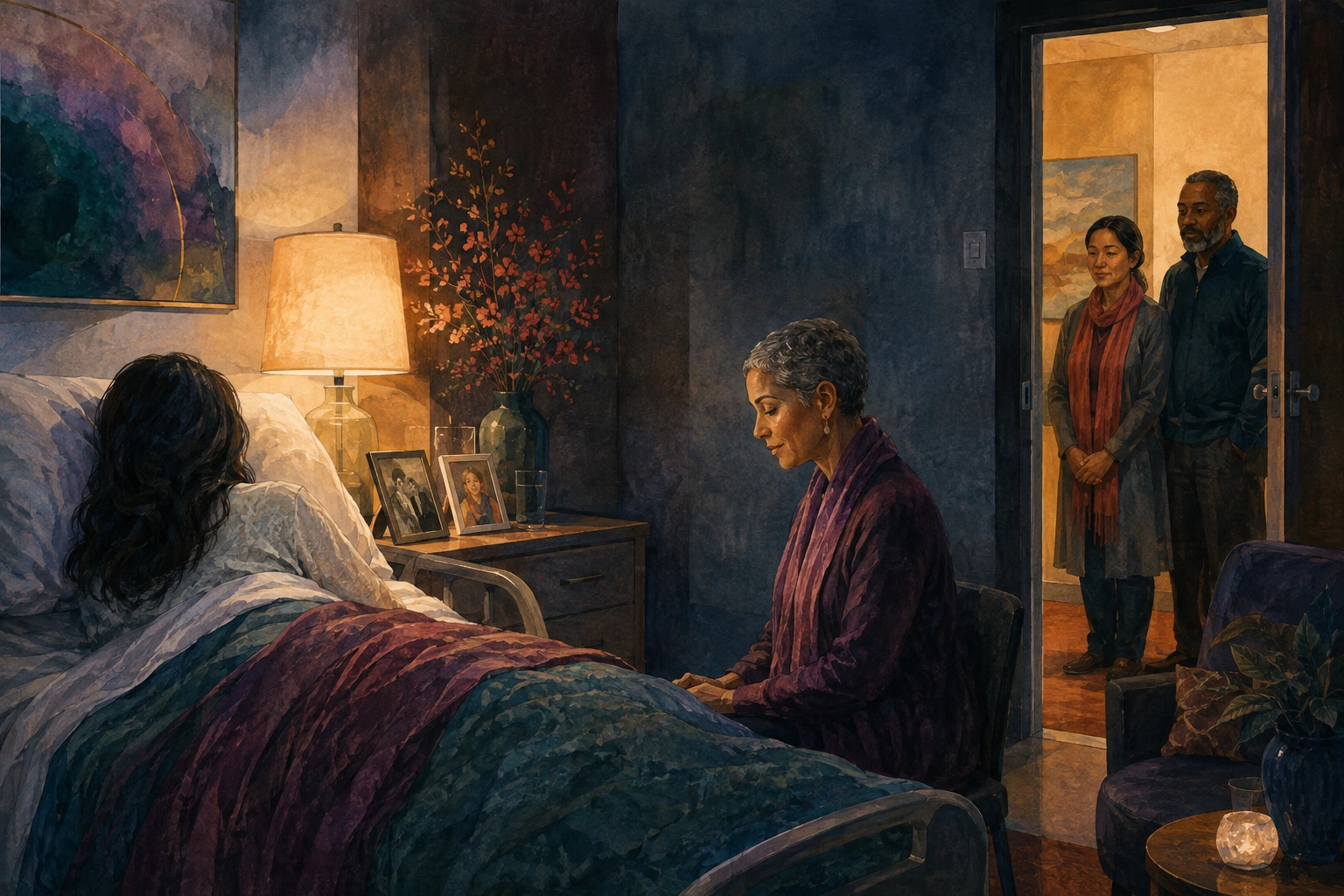
Figure 11.1. Below the level of her eyes.
Sujata: a dying mother's war with God. Everything her tradition provides is already in the room - a family that prays, a community that knows the rites, a caregiver trained in her own theology - and every part of it is reaching her as an instruction. What is a caregiver to do when he is, to the person in the bed, the visible representative of the arrangement she believes has cheated her?
A hospital side room, seen from the doorway end and a little above (Figure 11.1). The bed is to the right, angled away from the door, and the woman in it is drawn from behind: the back of her head, one shoulder, one hand outside the sheet, her head turned towards the window wall and no part of her face visible. Two framed photographs stand on the locker, angled to face the bed, their fronts turned away from the reader, so what she is looking at is not drawn. Beside the bed the spiritual caregiver sits on a visitor's chair drawn below the mattress line, leaning neither in nor back, carrying nothing at all - no book, no folder, no bowl, no beads - and his eyes sit below the level of hers. At the open doorway, and not through it, two family members stand close together at full standing height, one with hands joined. They are the tallest figures in the panel and the only faces the reader can see, and they are looking at the bed. The reader is given every face but hers, and the one figure who has brought nothing into the room is the only one drawn lower than she is.
2. Case card
Table 11.1. Case card: a dying mother's war with God.
Case title | A dying mother's war with God |
Care context | A palliative unit in a Dutch hospital; three weeks of visits every other day, then a final intervention in the dying phase |
Primary care recipient | Sujata (pseudonym), in her early thirties, second-generation Surinamese-Hindustani, married, mother of a daughter and a younger son, working until recently in a profession that rewarded precision and argument |
Spiritual caregiver | Unnamed here by choice. A Hindu spiritual caregiver attached to the palliative unit and to a Centrum voor Levensvragen (Centre for Life Questions, the Dutch service through which spiritual caregivers reach people outside institutional settings); theologically trained as a paṇḍit and academically trained in Hindu spiritual care, with years of practice in dying and bereavement |
Other significant participants | Her husband; her sister; her parents and siblings, all within reach; the nursing staff of the unit, who made the referral; the treating physicians, who had ended curative treatment |
Tradition or worldview | Sanātana Dharma, practised - fasts kept at Navrātri, weekly pūjā, mantras taught to the children - and, on her own account, held as a contract |
Presenting concern | Terminal illness in the middle of life, expressed as rage at the divine and as an unbearable attachment to the mother-role; referred by nursing staff as agitation |
Stage of care | The last weeks of a palliative admission, running into the hours of the death itself |
Central spiritual-care tension | Everything the tradition provides is available to her - a family that prays, a community, a caregiver trained in her own theology - and every part of it is arriving as an instruction. The care has to be offered inside a tradition the person is at war with, by somebody who represents it |
Relevant care dimensions | Bodily, psychological, social, ethical, existential and spiritual, across person, marriage, family and ward |
Confidentiality note | Composite and adapted. The care recipient's name is new, and was changed twice: the source record's own name for her was already a pseudonym, which this book does not treat as protection, and the first replacement collided with a name a second chapter had assigned to a different person. Her exact age, her occupation and its specialism, the diagnosis and the sites of its spread, the ward, her children's ages, her household and the wording of her own comparison to the people she met at work are altered, generalised or omitted. Her community of origin is kept, being analytically load-bearing. The spiritual caregiver is deliberately left unnamed rather than given a pseudonym. Weather, light and interior detail are invented. The mapping is held privately and appears nowhere in this book |
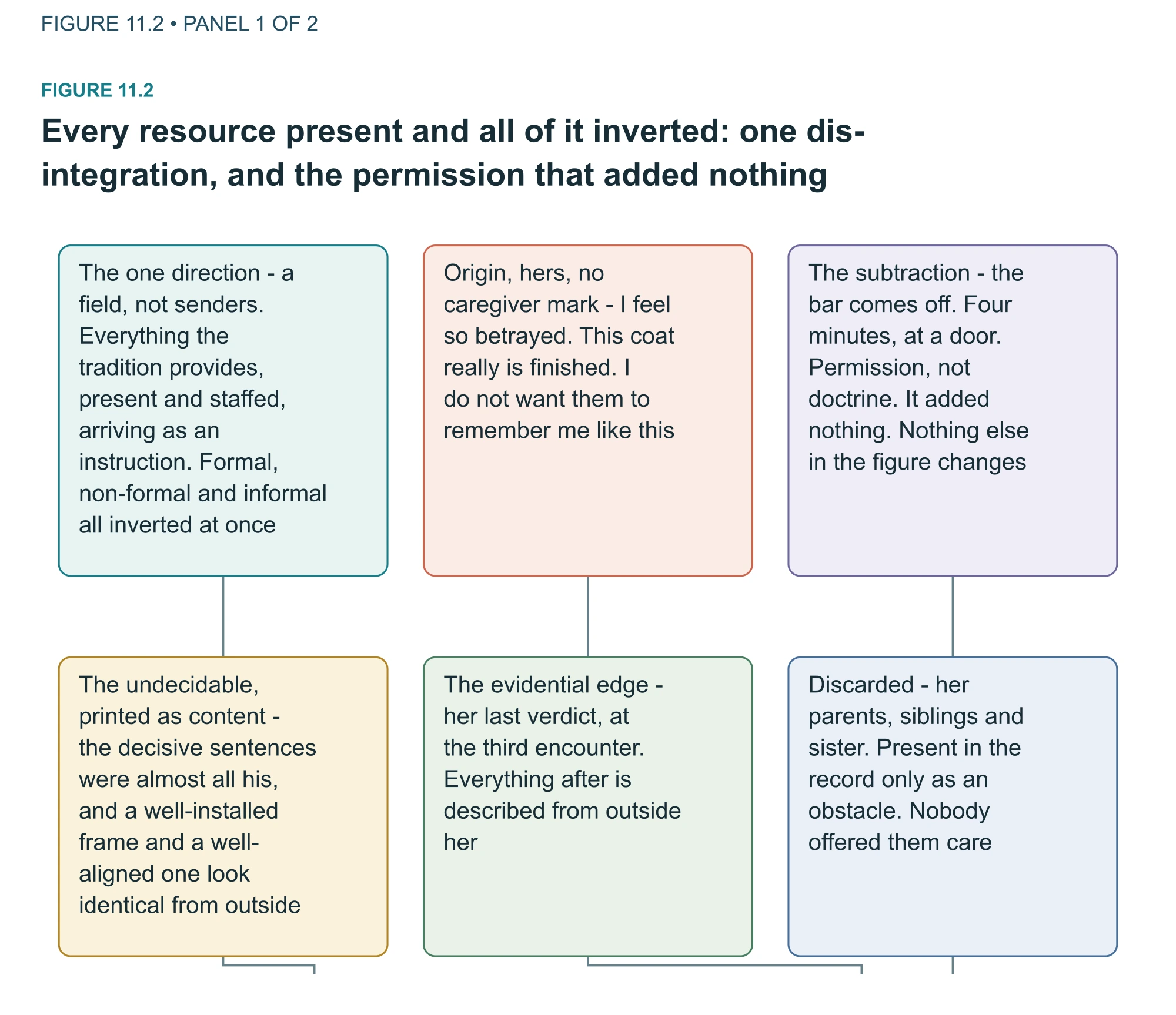
Figure 11.2. Every resource present and all of it inverted: one dis-integration, and the permission that added nothing.
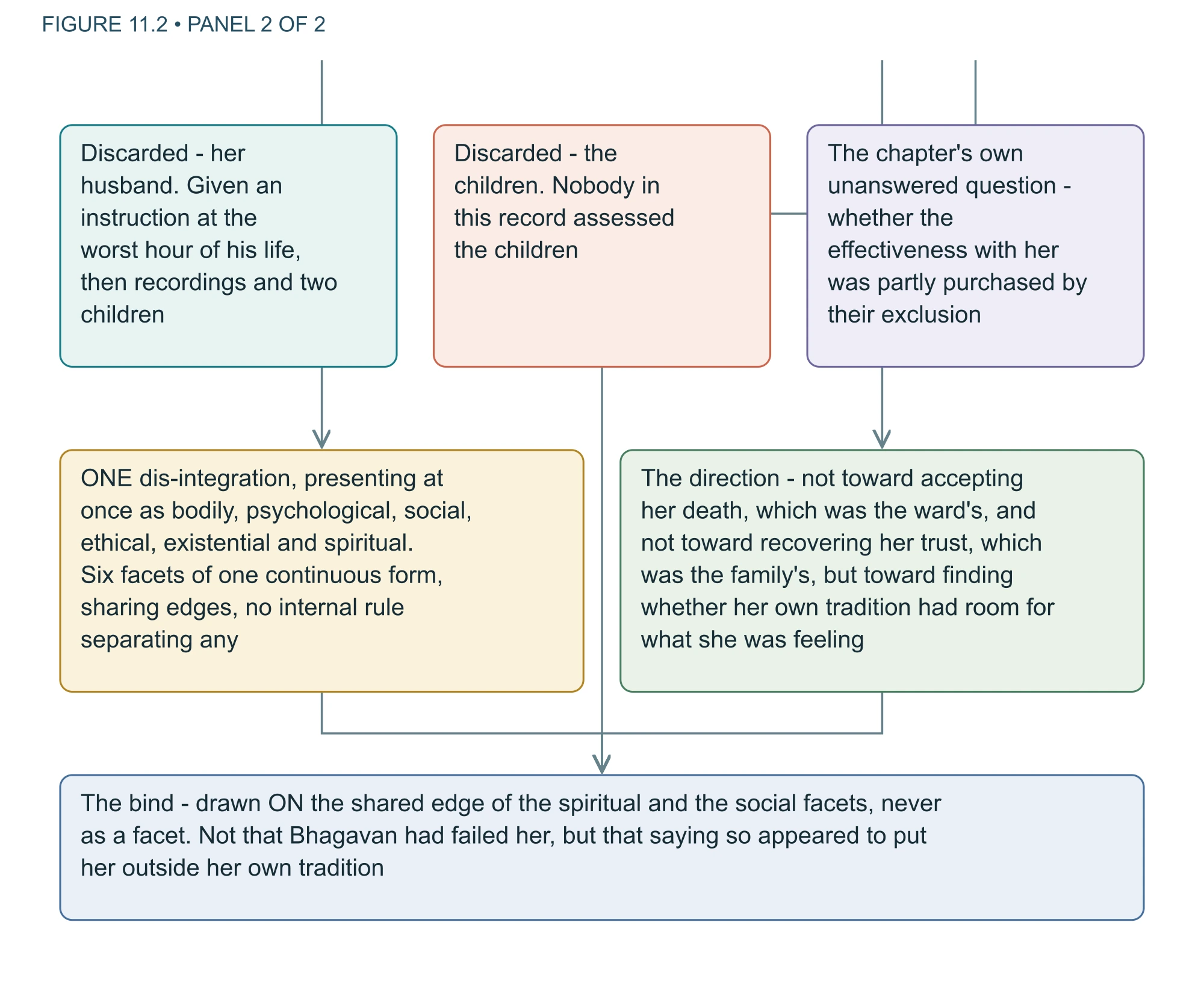
Figure 11.2. Every resource present and all of it inverted: one dis-integration, and the permission that added nothing.
3. Learning objectives
After completing this chapter, readers should be able to:
• Read a referral for what it is. Recognise a spiritual referral that has arrived disguised as a behaviour problem - agitated, aggressive, refuses acceptance - and describe both the job such a referral silently attaches and the cost of declining it without saying so out loud.
• Distinguish rage at the divine from the absence of the divine. Account for anger addressed to God as a form of relationship with God rather than its failure, and explain what changes in a bedside when that anger is met as devotion instead of as symptom.
• Run the 4H pattern on a death that cannot be averted. Name what is to be released, what binds the person to it, the horizon of flourishing still genuinely available, and the discernment brought alongside - without letting the death itself become the thing to be fixed.
• Assess attachment in a dying parent without converting the assessment into a reproach. Locate the boundary between karuṇā and satya in a specific exchange, and defend a judgement about where a particular sentence falls.
• Judge the offer of a rite, a mantra or a scriptural image at the end of life. State, for each, the consent conditions, the adaptations available and the circumstances in which it should not be used at all.
• Name the hazards of a matched placement. Explain why a caregiver who shares the care recipient's tradition faces a raised rather than a lowered risk of imposition, and identify the counter-move for each hazard.
• Test their own reading against the alternatives. Set the ward's account, the family's account and the care recipient's own account of the same three weeks beside one another, and say what each can see that the others cannot.
4. Key concepts
Working definitions only; the fuller treatment belongs in the glossary.
• Vidveṣa-bhakti (विद्वेष-भक्ति), devotion-through-enmity. The tradition's own recognition that a quarrel conducted with God is a relationship with God. It is what allows a caregiver to meet an accusation against the divine without either defending the divine or agreeing that the relationship has ended.
• Moha (मोह), attachment or deluded clinging. Not love, and the distinction is the whole of the difficulty: the conviction I am the only one who can do this for them is a claim about the world that grief has made, and it can be examined without the love in it being denied.
• Karuṇā (करुणा) andsatya (सत्य), compassion and truth. The two goods that pull against each other at a deathbed. Soft comfort that withholds a true and useful description is a failure of satya; a true description delivered without regard for what the person can carry is a failure of karuṇā.
• Total pain. Saunders' founding hospice insight that pain at the end of life is not a physical fact with a spiritual annexe, but one suffering with a spiritual dimension inside it. It is the field's own statement of the anti-additive point, and it is why flawless symptom control can leave a person entirely un-helped.
• The deficit reflex. The trained impulse, everywhere in a palliative setting, to read a situation as a problem to be reduced. Carried unexamined into spiritual care it makes refractory suffering and unsettled faith read as care-failures, and it is the first thing a caregiver has to notice in himself.
• The Coherent View, and the non-imposition clause. The alignment of a person's inner and outer life is toward the view they can own, never the caregiver's. At the end of life the clause bites hardest, because this is where a caregiver's own consolations press most insistently to be offered.
• Matched placement. The deliberate provision of a caregiver who shares the care recipient's tradition. It lowers the threshold for offering and raises the cost of declining, and both movements run in the same direction - which is why it is a distinct kind of placement with its own hazard rather than simply a better version of an unmatched one.
• Sadgati (सद्गति), a good passage. The tradition's name for what the last hours are for. It is the horizon against which the fifth encounter of this case is to be judged, and it is not the same thing as a peaceful death.
Part I - Entering the case
The reader meets the ward, the family and the woman in the bed before the chapter says anything about what any of them mean. Sections 5 to 7 set the context, the people and the question the caregiver is actually holding; the analysis is deliberately withheld until the encounters are over.
5. Introduction to the care context
Spiritual care at the end of life begins where the rest of the clinical team has run out of moves, and a Dutch palliative unit is the setting in which that is most visible and most easily mistaken for a handover. When cure is off the table, palliative medicine turns honestly to comfort - to the relief of pain and breathlessness and nausea - and this case opens on exactly that boundary: there are no curative options left; treatment is now purely palliation. What remains standing when relief has done all that relief can do is the spiritual caregiver's terrain. It is not a smaller terrain than the medical one, and it is not the medical one with a layer added on top. The reason it matters here more than anywhere is that everything surrounding the bed is organised to reduce something, and a person whose suffering is not reducible will be read by that surrounding as a failure - hers, or the caregiver's, or both.
The unit in this case was good at what it was for, and the quality is what set the trap. The staff were skilled, the rooms were quiet, and the task was agreed by everybody in the building. What such a unit has no design for is a patient who refuses the frame - who does not want comfort, does not accept that the task is comfort, and says so at volume.
That is worth stating before anything else, because the referral in this case was not a spiritual referral. Nobody on the ward identified a spiritual need. What the ward identified was a behaviour, and the words in the handover file were clinical: agitated, aggressive, refuses acceptance, possible delirium. A spiritual caregiver was called because a woman had become difficult to nurse.
This is the ordinary route, and it carries a hazard that a practitioner does well to see in advance. A referral phrased as a behaviour problem arrives with a job attached to it, and the job is to settle the patient. Everything that followed in this case depended on the caregiver declining that job in the first four minutes without saying so out loud, because saying so would have cost him the ward.
The second feature of the context is the one that distinguishes this case from the case at Chapter 12, and the two are placed together in this cluster for that reason. Sujata was second-generation Surinamese-Hindustani. The Netherlands has a long-settled Surinamese-Hindustani population with temples, priests, funeral practice, and well-worn routes through a death; her family were inside it. She had grown up with the Rāmāyaṇa and the Bhagavad Gītā. She kept the fasts. She had taught her own children mantras. Nothing in her tradition was out of reach.
And every bit of it was being used against her. The family who came to the ward came with a formula - trust Bhagavān - and each repetition landed as an instruction to stop feeling what she was feeling. The tradition was not absent, as it would be for the couple at Chapter 12, seven thousand kilometres from anyone who knew what to do. It was fully present, fully staffed, and had been converted by everybody's good intentions into a demand.
A caregiver arriving into that has a problem of position rather than of knowledge. He knows the theology. He is, to her, the theology - the visible representative of the arrangement she believes has cheated her. Whatever he says first will be heard as the family's sentence said again in a professional voice.
The third feature is time, and it is the feature most easily underestimated. The prognosis was weeks. There would be no long working-through, no slow building of a relationship across months, no opportunity to try an approach and abandon it. Anything the caregiver did would have to be done with a person who was dying while he did it, and any error would be made on somebody who did not have time to recover from it. That constraint sits underneath every judgement in this case, including the ones that look bold.
6. Background
The care recipient. Sujata was in her early thirties. She was second-generation Surinamese-Hindustani, born and educated in the Netherlands, and she had worked until recently in a profession built on precision, argument and the orderly assignment of responsibility. She was known as articulate, exacting and fair, somebody who took charge of situations. She had married, had two children, and had built the life she had planned to build.
Her identity sat squarely in the gṛhastha (गृहस्थ, the householder stage, the second of the four āśramas or life stages, given to family, work and building). She was the pivot of her household. She was proud of what she had made. The thought of leaving it unfinished ran straight into the part of her character that finished things.
Two years before, cancer had been diagnosed. After treatment she had appeared clear. Some months before this admission it had returned and spread, and there were no curative options left. The pain required opioids. She had wasted physically, and the contrast between the body in the bed and the force of the person inside it was the first thing a visitor noticed. Life expectancy was some weeks.
There was no psychiatric history. What the ward was seeing was existential despair and anticipatory grief in a person with an unusual amount of fight in her. She was hyperalert. She would not sleep, because sleep meant losing control and possibly dying without saying goodbye. As soon as the light went, the panic came.
Socially she had everything a person is supposed to have: parents, sisters, a husband, a community. She held all of them at a distance with her anger, and the reason she gave, when she gave one, was that she could not bear to watch them cry. Their tears made the thing real.
Religiously she was literate. She could quote. Her devotion had been to Krishna and to Durgā, and she now described them as cruel figures who separate a mother from her children. Her faith, on her own account, had rested on an arrangement: live by dharma and you will be protected. She had lived by it. She had not smoked, had not drunk, had prayed. The prognosis had not merely frightened her; it had exposed her as somebody who had been keeping her side of a bargain that the other party had never signed.
Her rage was therefore precise rather than diffuse. She was not raging at the universe. She was raging at a specific party to a specific agreement, and she was doing it in the vocabulary of somebody used to putting a case.
The spiritual caregiver. He was a Hindu spiritual caregiver attached to the palliative unit and to a Centrum voor Levensvragen, a Centre for Life Questions - the Dutch arrangement through which spiritual caregivers reach people beyond the walls of an institution. He had been trained theologically as a paṇḍit and academically in Hindu spiritual care, and he had spent years at deathbeds. He sat in the ward's multidisciplinair overleg, the multidisciplinary team meeting, where he was the one person present whose brief was not the body.
He is not named in this book. The source record names him, and the record's name is not a pseudonym; a caregiver who is named beside a case is a route back to the patient, and the chapter therefore leaves him as he.
Two things about his position are worth having in mind before the first encounter. The first is that he was, unavoidably, the lightning conductor. For Sujata he stood for the religion that had let her down, which meant that her fury at the divine had somewhere to land, and it was going to land on him. He had to be willing to be the target without taking it personally and without defending himself, which is harder than it reads.
The second is that he was the only person in the building who could stand in the storm. Her family loved her and were destroyed by her; they could not receive her rage, because they were bleeding from the same wound. The nurses were responsible for her comfort and were being told, in effect, that their comfort was an insult. He was close enough to hear what she was actually saying and far enough away to remain upright while she said it, and nobody else in the building was in that position.
He described his own working posture in two words that are worth carrying into the encounters. The first was upekṣā (उपेक्षा, equanimity; the fourth of the four brahmavihāras or sublime attitudes, and not to be confused with indifference), by which he meant that when a dying woman called God a sadist he would neither argue nor disapprove but remain the witness, sākṣī (साक्षी). The second was that equanimity was to be held together with karuṇā (करुणा, compassion), and never instead of it. He also held, and it cost him something to hold, that he would not tell her what she wanted to hear.
The wider circle of care. Her husband, a man in his thirties who was about to raise two children alone and who, at the time of the referral, had been given nothing to do. Her sister. Her parents and siblings, who came often and prayed. The nursing staff, who made the referral and whose word for what they were seeing was aggression. The treating physicians, who had stopped curative treatment and whose remaining question about her was whether she needed more sedation.
7. The presenting situation
The referral reached the spiritual caregiver as a request to help with a patient who had become, in the ward's word, unmanageable in her grief.
What the ward believed the problem was: agitation, possibly delirium, certainly a refusal to accept the situation, and a level of distress that was disrupting the unit and exhausting the family.
What her family believed the problem was: that she had lost her faith. She had had the shrine at home taken down. She had thrown out images of the devatās. She became aggressive when anybody told her to trust Bhagavān, and somebody told her to trust Bhagavān most days.
What Sujata said the problem was, when asked directly: that she had kept the rules and had been cheated, and that her children were going to be ruined, and that she was not going to pretend otherwise for anybody's comfort.
The immediate concerns were not diagnostic. The pain was being managed. What was not being managed was the nights: panic as soon as the light failed, and a refusal of sleep medication for fear of not waking. And underneath the nights sat a question the ward had no way to reach, which was what she was going to do with the days she had left - whether they would be spent fighting everybody in the room, or on something she would have chosen if anybody had offered her a choice.
There was one more thing, and it was not visible from the corridor. The family's response to her anger was to correct it, and the corrections came daily, from people who loved her, in a formula nobody in the room could hear as anything but piety. Whether being corrected was the incidental irritation it looked like, or the thing she was actually caught in, is a question the encounters settle and this section should not.
Decision point. The nursing staff have asked you to settle a patient. Her family have asked you to restore her faith. She has thrown the gods in the bin and will not look at you. You have some weeks at most, and she is spending them furious. What do you do in the first four minutes, and whose brief are you working to?
Part II - The care encounters
Five encounters: four across three weeks, and the last in the hours of the death itself. Each runs on the compact sequence the case chapters use throughout - what the caregiver expected, what happened, what he noticed in himself, what was actually going on, what he might have done, what he did, and what it provisionally teaches. Read them as a story first. The chapter's own reading begins at section 12 and not before.
8. Session one: the doorway
Before the encounter. Late morning, and the light on that side of the building was the flat grey that Dutch winter light is when it has nothing to reflect from. The caregiver had been given four things by the nurse who caught him at the desk: a woman in her thirties, weeks to live, two small children, and a note in the file that used the words agitated and aggressive.
He stood in the corridor for a moment and did what he did before every room, which was to put his own alarm down somewhere he could pick it up later. He expected to be thrown out. He also noticed, and made himself notice, that he was already slightly annoyed at the file, and that the annoyance was not hers to receive.
The encounter. The room had medical equipment on one side and photographs of two children on the other, and the photographs had been arranged so that they faced the bed. She was lying with her head turned away from the door before he had opened it, which meant she had heard the footsteps and had decided about him in advance.
He stayed where he was, one pace inside the door.
'I see that I am not welcome,' he said. 'Or is it Bhagavān who is not welcome?'
Her head came round.
'Bhagavān?' The scorn was practised. 'If He exists, He is a sadist. Look at me. I am in my thirties. I have two small children. What kind of Bhagavān does this?'
He came a little further in and sat down, which put his eyes below the level of hers.
'A Bhagavān you are entirely right to be furious with.'
'They have sent you to tell me it is His will, haven't they. That I should accept it.' She had raised herself on one elbow to say it. 'Spare me the sermon. I did everything by the rules. Pūjā. The fasts. Dāna. Is this my reward?'
'I am not here to defend Bhagavān,' he said. 'He can look after Himself. I am here because your anger is justified. In our tradition you are allowed to quarrel with Bhagavān. Arjuna did it. Draupadī did it. Your anger is not unbelief. You are shouting at Him because you know He is there. If He were air, you would not be this angry.'
She did not answer for a while. When she did the voice had changed and had lost its edge.
'I feel so betrayed,' she said. 'I thought He would look after us.'
'Tell Him that. Shout it, if you need to. He can take it.'
Inner response. In his own words afterwards. I had my answer ready before I opened the door and I had to put it down. Everything in my training wanted to explain karma to her. That would have been for me, not for her. What I felt when she called Him a sadist was not shock; it was recognition, because I have said worse in my own life and not out loud. The hard part was staying in the chair and not making it better.
What is happening here? Stop before reading on, and notice.
Something in this exchange did the work, and it is worth deciding for yourself what it was before the chapter tells you. Was it the naming of Arjuna and Draupadī, which gave her precedent? Was it the refusal to defend, which removed the opponent she was braced for? Was it the last line - if He were air, you would not be this angry - which reclassified her rage without asking her to give it up? Or was it simply that a man came into the room and did not flinch?
And notice a question the record does not ask. He told her that her anger was justified. He is a paṇḍit; he was speaking with the authority of the tradition she was quarrelling with. What is the difference, from where she was lying, between being told to accept and being told that her refusal is permitted? Both are rulings, and both are his to make.
Decision point. He could have defended the tradition, which he believed in and which was being slandered in front of him. He could have offered a prayer, which is what she had assumed he came for and what the family wanted. He could have addressed the nights, which is what the ward wanted, and which was a real problem with a real remedy. He did none of those. He said the one thing that put him on the wrong side of the argument he had been sent to win.
What followed. No plan was made and nothing was resolved. She was still angry when he left, and she was still refusing the sleep medication that night. What changed was small and can be stated exactly: she had said the word betrayed out loud to somebody who did not correct her, and when he asked whether he might come back the following day she said that he might.
Practice insight. Where a person's anger is aimed at the divine, the caregiver's first decision is whether to stand between the two. Standing between them looks like loyalty and functions as obstruction. What this encounter suggests, without establishing it, is that the anger can be handed back to the person as evidence of the relationship rather than of its loss. Whether that move is available where the caregiver does not share the tradition, or where the person has no tradition to be angry at, this case does not show and the reader should not assume.
9. Session two: whose were they?
Before the encounter. Two days later, mid-afternoon. Somebody had opened the window a hand's width and the room smelled faintly of wet pavement. She was calmer, and the calm was worse than the rage had been, because it had grief under it rather than fight.
She was looking at the photograph of her daughter and had been looking at it for some time.
The encounter. 'Who will plait her hair?' she said, without looking round. 'Who comforts my son when he falls? My husband cannot do it. Not the way I do. I am abandoning them.'
'That is the heaviest pain there is,' he said. 'A mother's pain.'
'I cannot die. They are mine. They need me.'
He waited, and then he asked for permission before he asked the question.
'May I ask you a hard question? Whose were they before they came into your body?'
She stopped.
'... Bhagavān's, I suppose.'
'And whose are they when you are asleep?'
'Still... but I am their mother.'
'You are the guardian of their souls. You were given them to make a start for them. But you are not the owner. That is moha (मोह, deluded clinging; the attachment that mistakes a role for the self). You believe you are the only source of their lives. But they have their own karma, their own path.'
'That sounds hard.'
'It is the only truth that offers any comfort. Can you trust that the Bhagavān who gave them to you will also care for them when you are not physically here? Can you exchange the role of owner for the role of guardian?'
Inner response. In his own words afterwards. I was frightened while I was saying it. There is a version of that sentence which is simply cruelty, and the difference between the two versions is not in the words. I remember thinking that if I had misjudged her I would have taken from a dying woman the one thing she was still holding, and that she did not have the weeks it would take to recover from it. I asked permission first because I wanted the option of stopping. I am not sure I would have stopped.
What is happening here? Stop again.
Notice what he did not say. He did not say her love was excessive. He did not tell her to let go. He asked two questions and let her produce the answer herself - and for somebody who lives by argument, a conclusion she has reached cannot be dismissed as a sermon.
Now notice what that same fact makes possible. A person who lives by argument can be argued into things. She was in her last weeks, on opioids, sleeping badly, and the man asking the questions was the only person in the building who was not flinching. Whose moha is being described, and who has the standing to describe it? Would you make that move at that speed with a person who had six months rather than three weeks? And if the answer is no, what exactly is time doing to the ethics of it?
There is a third question, which the record raises nowhere. She never disputed the frame. A woman celebrated for arguing accepted, inside four exchanges, a theological reading of her own motherhood offered by a paṇḍit, and neither she nor anybody else ever returned to it. That is either a sign that it was true, or a sign of how much authority was in the room.
Decision point. The choice was one of timing rather than of content. He had the intervention from the beginning; the question was whether the first encounter had bought him the standing to use it. Brought too early it damages; brought too late it takes away the chance to let go. He judged that the doorway conversation had earned it. He would say afterwards that he had judged, not known.
What followed. She said very little for the rest of that visit and he did not fill the silence. She did not tell him he was right and she did not tell him he was wrong. The following day she asked a nurse whether it was possible to record something on a telephone and keep it.
Practice insight. A reframe that the person constructs herself is more durable than one she is given, and questions are the instrument for producing it. That is a technique, and like every technique it is separable from the judgement about whether to use it. This encounter offers no rule for that judgement. What it offers is the observation that the caregiver asked permission before the question, and that he could not afterwards say what he would have done had she refused.
10. Sessions three, four and five: the coat, the ripe cucumber, and permission
Three encounters are taken together here because they are one movement: a fear of the physical event addressed, then a rite offered against the fear that returns at night, then the last hours themselves. The decision point the template asks for stands where it belongs, inside the fourth.
Session three: the coat
Before the encounter. Later that week, early evening, the corridor lights already on and the window black. She was in more pain and physically weaker; the person in the bed had contracted since the first visit. Death had stopped being an argument and had become a piece of information about the near future.
The encounter. 'Does it hurt?' she said. 'The moment it stops?'
'The body lets go. That is hard work. But you do not stop.'
'I am afraid of the dark.'
'Do you remember the Gītā, 2.22? As a person casts off worn-out garments and puts on others that are new, so the embodied self casts off worn-out bodies and enters into others that are new.'
She looked at her own arms, thinned to nothing.
'This coat really is finished, isn't it.'
'It is too tight. It does not fit your energy any more. The soul wants to be free. You are not dying. You are moving house. You are taking off a coat.'
She was quiet, and then: 'I do not want them to remember me like this.'
'Then let us leave them something that is not the coat,' he said. 'The voice. Shall we record messages for their birthdays?'
Inner response. In his own words afterwards. When she said this coat really is finished I knew the image had landed, and I also knew that I had not comforted her. She had simply agreed to look at her own body for the first time without fighting it. I was aware that we had perhaps ten minutes of that clarity, and that what I did with the last of it mattered more than what I had done with the first.
What is happening here? She is not consoled here; she is re-genred. Death stops being annihilation and becomes an action - one takes something off. For a person who reasons, that is digestible in a way that it will be all right could never have been.
But the metaphor is doing two jobs at once and only one of them is hers. It answers her fear. It also commits her to a metaphysics, in the last weeks of her life, at the moment she is least able to examine it. And the same image will shortly be given to a small child. What happens to a child of that age who is told that his mother has gone to find a new coat?
Decision point. The turn at the end of the encounter was the consequential one, and it was made in a few seconds. I do not want them to remember me like this is a statement of powerlessness, and he had the choice of receiving it as feeling or converting it into an act. He converted it. He would say later that he did so because a person with days left needs something to do more than she needs to be understood, and that he was not certain this was true.
What followed. The recordings were made over the days that followed, in pieces, whenever she had the breath for it - one for each of a run of future birthdays, and one that was not for a birthday. Her husband held the telephone. Nobody has ever told this book what is on them and nobody asked.
Practice insight. Acting for someone whose response you will not see is a recognisable form of karma yoga (कर्म योग, action performed as duty and released from its fruit), and it converts helplessness into agency at the point where helplessness is otherwise total. Note what makes it possible here: not the theology, which she could have refused, but a sentence of hers that the caregiver was listening closely enough to catch.
Session four: the ripe cucumber
Before the encounter. A night visit, called by the ward. Dusk had done what dusk did to her. She was in a half-waking state, restless, picking at the sheet, and the room was too bright in the way hospital rooms are at night, one hard light over the bed and nothing else. There was no possibility of a conversation and both of them knew it.
The encounter. He dimmed the light and set down what he had brought.
'It is me,' he said. 'I have Tulsī water with me.'
'Dark,' she whispered. 'Frightened.'
'We will put a light on with sound. Do you still know the Mahā-Mṛtyuñjaya?'
'Om Tryambakam...'
'Yes. That one. The mantra of the cucumber. The one that comes away from the stem without pain, when it is ripe. You are ripe, Sujata. You do not have to pull. Let go.'
He recited it in rhythm, and went on reciting it. She tried to join in and could not hold the words, and after a while her breathing came into time with the rhythm of his voice and stayed there.
Inner response. In his own words afterwards. This is the part of the work that no method describes. There is no assessment to make at three in the morning with somebody who cannot finish a sentence. You either have something to do with your hands and your voice or you have nothing. I have thought since about whether you are ripe was mine to say. I said it because it was true of her body and because she needed permission from somewhere. It is the sentence in this case I am least sure of.
What is happening here? The register has changed completely and nobody announced the change. Two visits ago this was an argument between two literate people. Now it is sound, and touch, and a dimmed lamp.
The mantra works on at least two levels at once and they are not the same kind of level. Rhythmic recitation slows the breath, and a slowed breath quiets a frightened body; that is physiology and it would have worked on an atheist. And the image inside the mantra - urvārukam iva, like a cucumber, which is drawn from the stem without violence when it is ripe - replaces being torn away with coming away. That is theology, and it would not have worked on anybody at all who did not hold it.
Which of the two was doing the work here? The case does not separate them, and a practitioner who assumes the answer is the theology should ask why the same rhythm calms a person who believes none of it.
Decision point. The choice was whether to reach for ritual at all, and it is a real choice rather than a fallback. Cognitive work was over. He could have sat quietly, which is defensible; he could have called for more sedation, which the ward would have supported. He chose to do something audible, and he chose a text that told her to stop pulling.
What followed. She settled. The nights after that were not peaceful but they were survivable, and she began to accept sleep, which she had refused for weeks. Whether she was accepting sleep or rehearsing something else is not recorded, and the two are not easy to tell apart.
Practice insight. In the last phase, ritual is not what is left when the conversation fails; it is the appropriate instrument for a person who can no longer hold a sentence. But note the condition attached to it in this case. You are ripe is not a piece of liturgy. It is a personal ruling on the readiness of a particular dying woman, and it was made by somebody who had earned the standing to make it across three previous visits. The same words from a stranger at the same bedside would have been an intrusion.
Session five: permission
Before the encounter. The last hours. It was daytime and the blinds were half down; somebody had turned off the overhead light and left the small one on above the sink. Her breathing had gone into the cycles that families are never warned about and that are unmistakable once heard - deepening, then shallowing, then a pause long enough to make everybody in the room look up.
She was no longer responsive. Her husband was at the bedside. Her sister stood behind him with her hand on his shoulder.
The encounter. The caregiver did not go to the bed. He went to the husband.
'She can probably still hear you,' he said. 'Hearing is the last sense to go. She is waiting for permission.'
The husband bent over her, weeping.
'Go, my love. I will look after them. I promise. It is all right.'
The caregiver leaned close to her right ear and said the name.
'Rām... Rām... Go towards the light. Your children are safe. Your work is done.'
Some time later the breathing stopped.
'Om Śānti, Śānti, Śānti.'
Inner response. In his own words afterwards. The heaviest thing I did in this case I did to a man who had not asked me for anything. I put the release of his wife in his mouth and I did it in front of her sister. I believed it was right. I also knew that if he had refused, or had frozen, he would have carried that for the rest of his life, and that I would have caused it.
What is happening here? The intervention is not aimed at the dying woman. It is aimed at her husband, and the reasoning behind it is systemic: in a family of this kind a person does not die as an individual but as a member of a system, and while she felt she was deserting her post, loyalty held her in the struggle. Only the person to whom the duty was owed could discharge her from it.
Now hold that reasoning up to the light. It gives the husband a task at the moment when he would otherwise be a spectator, and the record is clear that this mattered to him afterwards. It also makes a claim that nothing can test. If she settles after he speaks, the reading is confirmed. If she does not, the reading is not disconfirmed; something else was holding her. What does a caregiver owe a family when the frame he is offering them cannot be wrong?
And one more, which the record does not raise. Everything reported about the last hours is reported by the person who directed them. Nobody knows whether she heard the name in her ear. The chapter will come back to this. It should not be resolved here.
Decision point. He could have stayed with the body and the mantra, which is what the family expected of a paṇḍit and what would have been sufficient. He turned instead to the man in the chair and gave him an instruction. The whole weight of the encounter is in that turn.
What followed. She died within the hour, quietly, with her family around her and nobody in the room panicking. The nursing staff recorded a peaceful death. Her husband told the caregiver afterwards that he had been afraid he would not be able to say it.
Practice insight. Where a person is dying inside a family rather than beside one, the decisive intervention may be addressed to somebody who is not the patient. The corollary is a burden: an instruction of this weight given to a man in the middle of his own grief is an act with its own risks, and the case shows only the version where it worked.
11. Follow-up and outcome
She died on the palliative unit some three weeks after the first visit, in the presence of her husband and her sister. She did not die in the state she had been in when the caregiver first came through the door. The rage that the ward had recorded as aggression had not returned after the second week. The panic at nightfall had eased after the fourth encounter and she had accepted sleep again.
Her husband kept the recordings. The chapter has no information about what he did with them, or when, or whether the children have heard them, and there is a case for saying that this is none of the book's business. The caregiver had no further contact with the family after the funeral, which is the ordinary shape of hospital spiritual care in the Netherlands and is not a criticism of anyone.
One thing in those three weeks had been done at the start of them, in a room she was never in. At the multidisciplinary meeting, early in the case, the caregiver described her agitation to the team as existential distress rather than as a symptom. Additional sedation had been under discussion before the referral. The team accepted the description, and the discussion was not resumed.
The reading of this case begins below. Nothing above was written to lead you to it.
Part III - Interpreting the case
The encounters are over. What follows is this chapter's reading of them, and it is one reading among the several section 16 sets out. Compare it with the judgement you formed while the story was still running.
12. Integrative case analysis
Five encounters, and the reading of them starts here. It has an unusual amount to be careful about. Almost every decisive sentence in this case was said by the caregiver, most of them to a woman who had weeks to live and who refused none of them; and the account of the last hours comes from the man who conducted them. The sections that follow are written with that in front of them rather than left to the end.
Care recipient. Sujata asked for nothing, and the Care Trinity has to begin by accommodating that. She had made no request, had named no need in words a service could act on, and would have refused a spiritual referral outright had one been put to her in those terms. What she had done was become audible. Everything set out below is therefore reconstructed rather than reported, and the reconstruction is an interpretive act performed on a woman who never authorised it. A case chapter that forgets this ends up describing a person who was, in the record, mostly being described.
Her own stated position was a grievance and it was precise. She had kept an agreement; the other party had not. It is worth resisting the reflex that hears this as a figure of speech for something more respectable. A transactional theology is a real theology, held by large numbers of serious people in every tradition that has ever promised anything, and hers had served her for three decades: it made a life without catastrophe intelligible as a consequence of her own conduct, which is a considerable thing for an account of the world to do. What the prognosis destroyed was not her faith but her account of how the arrangement worked, and from outside the two are almost impossible to tell apart. Her family could see that the shrine was down and the images were in the bin, and concluded she had lost the first. She had lost the second. Losing the second is what made the first unusable to her, and it is why every offer of the first arrived as an insult.
Beneath the grievance sat a second suffering, named less often and carrying more weight. It was not that she would die but that her children's lives, as she understood them, ended when hers did. The sentence that carries it in the record is not theological at all: who will plait her hair. A caregiver who reaches for the metaphysics here will miss that the specific gravity of the thing is domestic. She was not primarily afraid of annihilation. She was afraid of a Tuesday morning in a house she would not be in.
Her fears were three and they were not the same kind of object, which matters because they needed three different responses and got them. There was the fear of the moment of dying, which was physical and answerable with an image. There was the fear for the children, which was moral and answerable only with an act. And there was the fear that came with the dark, which was neither, and which no conversation reached: it was reached by rhythm.
Her agency is the term of the Trinity most easily misread in this case. She had one instrument left, and it was the one she had used all her working life: she could argue. Illness had taken the body, the job, the household and the future, and had left the capacity to put a case. She used it. The ward's word for a woman using the last instrument available to her was aggression, and the handover note recorded it as a symptom with a possible organic cause. This is the point at which an assessment either sees a person or does not, and nothing technical hangs on it. The question is only whether the behaviour in front of you is a malfunction or a communication, and the answer here was legible to anybody prepared to treat her as somebody making a point rather than somebody producing a sign.
Her resources were real and, as in the other cases of this cluster, the caregiver found them rather than supplying them. She was religiously literate and could quote; the frames later offered to her were frames she was equipped to evaluate, which is not true of every recipient of a theological intervention. She had a husband who did not leave and a sister who stayed in the room. And she retained, to the third encounter at least, the ability to say what she actually thought, which is the thing most reliably lost in the last weeks and the thing on which every judgement in this case depended.
Her life stage supplies the contrast that places this case beside the case at Chapter 12. She was in gṛhastha, and the stage was not voided from inside as it was for Devan and Meera, who had been parents for seventy-two hours and were parents still, of nobody. Hers was cut across in the middle of its proper work, with the work visible, half done, and about to be handed to somebody she did not believe could do it. The āśrama scheme has a shape for a householder stage completed and released; it has nothing to say about one severed at the midpoint, and a caregiver who reaches for the stages as a consolation here will find the scheme is describing somebody else.
One further thing about her position was not visible from the corridor, and it is the hinge of the case. She was not only bearing a betrayal. She was bearing it inside a community that treated the saying of it as a fault. A person can survive believing that Bhagavān has failed her. It is much harder to survive believing that Bhagavān has failed her and that saying so puts her outside her own tradition at the moment she needs it most. That is a double bind, and the ordinary instruments do not have a field for it, because it is not a belief and not an emotion but a relation between the two: the second-order problem of having nowhere to put the first-order one. Everything the first encounter accomplished, it accomplished at that level and not at the level of the theology.
Caregiver. His stance is stated in his own vocabulary and practised from the doorway: upekṣā held together with karuṇā, never instead of it. The pairing is the whole of it. Equanimity alone in that room would have been a wall, and the record contains the version of him that would have produced one, in the ready answer about karma that he was carrying when he arrived and put down before he sat.
His competencies were three and only one of them is a skill. He knew the theology from inside, which meant that when he told her the tradition permitted her quarrel he was not being kind but being accurate, and she could tell the difference. He knew the institution from inside, sitting in the multidisciplinair overleg, the multidisciplinary team meeting, as the one person present whose brief was not the body, and this is where the case's least visible and possibly most consequential intervention was made. And he occupied a structural position rather than a personal one, which is worth naming because a reader will otherwise take the third competence for a quality of the man. The position section 6 described - intelligible to the family's world and outside it, the only person in the building who could hear the accusation without being wounded in the place she was aiming at - is what the field calls the trusted stranger, and it is not a virtue. It is a position, available to a spiritual caregiver precisely because he is neither family nor clinical, which also means it is forfeited the moment he starts behaving like either.
His limitations are the interesting part of this case, and the sharpest of them is inseparable from his first competence. His authority over her was very large. He was a paṇḍit of her own tradition, sitting at the bedside of a woman who had weeks to live and no other religious voice within reach except the one saying trust Bhagavān. Every intervention he made was therefore made from a position she could not easily refuse, and the record contains no instance of her refusing anything. For a woman celebrated for arguing, that is either evidence that he read her exactly right or evidence of how much authority was in the room, and nothing inside the record can tell the two apart. He himself supplies the most honest formulation available: he asked her permission before the guardianship question because he wanted the option of stopping, and he is not sure he would have stopped.
A second limitation is one he named and took to supervision. He was close enough to her in age and life stage for identification to be live, and he judged that the danger in the case was not that he would be too hard on her but that he would begin grieving alongside her and lose the only position from which he was of any use. That is worth recording in a chapter about dying as the ordinary cost of the work and not as a sign that anything went wrong.
His use of self is unusually well documented because he reported it, and three moments carry it. In the corridor he noticed that he was already annoyed at the file and that the annoyance was not hers to receive. At the door he had an explanation of karma ready and identified it, correctly, as something that would have been for him rather than for her. He was frightened while he was putting the guardianship question, and he says so: there is a version of that sentence which is simply cruelty, and the difference between the two versions is not in the words. All three are the same competence exercised three times, and it is the same one the case at Chapter 12 shows in a different caregiver: noticing an impulse toward relief, and asking whose relief it would be.
Context. The first structural fact is the one section 5 described without reading. A unit built around a particular kind of dying, and good at it, has no procedure for a patient who rejects the frame, and the rejection therefore presents to the institution as a behaviour rather than as a position. This is not a criticism of palliative care. It is a description of what happens when a service defines its task well enough to be excellent at it: the definition becomes invisible, and a person who declines it looks unwell rather than unpersuaded.
The referral is the second, and the wording section 5 quoted is here a fact about briefs rather than about nursing. A referral phrased as a behaviour arrives with an implicit brief, and the brief here was to settle the patient. Everything that followed depended on the caregiver declining that brief in the first four minutes without announcing that he was declining it, because announcing it would have cost him the ward, and the ward is where the case's institutional intervention had later to be made. It is worth naming this as a routine and unglamorous competence: a spiritual caregiver who cannot decline a brief and keep the referrer will not get a second referral, and a spiritual caregiver who accepts every brief as given is a delivery mechanism for whatever the institution already wanted.
The third fact is the one that places this case in the cluster, and it is the exact inverse of the Chapter 12 case's. Everything section 5 listed - the settled community, the temples and the priests, the worn routes through a death, the texts she had grown up with and the mantras she had taught her children - was present and was staffed. And every part of it was arriving as an instruction. The tradition had been converted, by nobody's malice and everybody's good intentions, from a place she could stand into a set of demands she was failing to meet.
The fourth fact is time, and it is the one most easily underestimated in the reading because it is invisible on the page. Weeks is not a short version of months. It removes the manoeuvre by which most misjudgements in this work are absorbed, which is trying an approach and abandoning it, and it means that any error was made on a person who did not have the time to recover from it. That constraint sits underneath every judgement in the case, including the ones that look like boldness, and section 15 has to decide whether it excuses them or merely explains them.
The care relationship. It began without being requested, in a room whose occupant had decided about him before he opened the door, and it was constituted by a refusal: he declined to defend the party she was accusing. That is a small thing to build a relationship on and it was the only material available, because every other opening had already been used by somebody else and had failed.
The power in the relationship was asymmetrical to a degree worth stating without softening. On one side a woman in the last weeks of her life, on opioids, sleeping badly, holding her family at a distance because their grief made the thing real. On the other a trained man with the authority of her own tradition, arriving every other day, unhurried, and not bleeding. That he used the asymmetry carefully, that the record suggests he read her correctly, and that the outcome was by any measure better than the alternative on offer, does not reduce the asymmetry by anything at all. It is the reason the third encounter matters more than its content suggests. There, for the only time in the case, the decisive material came from her: I do not want them to remember me like this is her sentence, and the recordings are what he made of it. Collaboration in this case is not a disposition running through the work. It is one thing that happened once, at a moment when he was listening closely enough to catch a sentence that was not addressed to him.
Communication and interpretation carried a particular load here, and it is one a caregiver sharing a tradition should expect rather than be surprised by. He was interpreting her to the institution as much as he was attending to her. The re-description he made in the team meeting, from agitation with a possible organic cause to existential distress, is the intervention with the widest consequences in the case, and it was made in a room she was not in, about her, without her knowledge, by somebody exercising a professional judgement she had no opportunity to contest. It went the way she would have wanted. It is still worth noticing that the most protective thing done for her was done in her absence.
What a standard reading would have summed, and what an Integrative reading aligns. A competent standard reading of this case exists and it should be written out at full strength rather than as a straw figure, because it is the reading a good service would in fact produce and it would satisfy most audits.
That reading screens and finds. On any of the ordinary instruments, Sujata registers spiritual distress with an identified religious dimension: anger at God, loss of faith, existential suffering, anticipatory grief, and a nocturnal anxiety with a clear pattern. It then matches provision to finding, and the provision available is unusually good. A psychologist for the anticipatory grief. A palliative physician reviewing the night sedation. A social worker for the children and for what will become of them. Family conversation, since the family are present, willing and numerous. And a spiritual caregiver of her own tradition, which is the best match a service can make and which most services could not have made at all. Nothing is missed. Every domain is covered, every referral is appropriate, and on any comprehensiveness measure the case scores extremely well before anybody has done anything.
And that reading has already gone wrong, in a way this case shows more cleanly than any other in the cluster, and it went wrong at the point that looks most like its success. The standard reading counts a tradition as a resource by its presence. Practising Hindu; religiously literate; devout family in attendance; established community; priest and temple available; a caregiver of the matching tradition on the unit. Every field an instrument possesses for recording spiritual resource is not merely ticked but ticked twice. And in this case every single one of those entries was loaded on the wrong side of the ledger. The devout family were the mechanism of the double bind. The community's routes through a death were the standard she believed she was now failing. The available theology was the sentence being said at her most days. The matching caregiver was, on arrival, the visible representative of the party she was accusing. A summative reading records what is present. It has no column for what a present thing is doing, and it cannot represent a resource that has inverted, because inversion is not a quantity (Figure 11.2).
This is the integral against the Integrative distinction the book states at Chapter 4 and works with throughout, and here the difference is not one of emphasis. Holism by summation adds domains, providers and phases until nothing is left uncovered, and comprehensiveness then stands in for direction. The Integrative question of the same material is different in kind: given everything this person holds, in what direction is her own coherence trying to move, and what is standing across it? The answer took four minutes to find and is not what either the ward or the family had proposed. She was not trying to accept her death, which was the ward's direction. She was not trying to recover her trust, which was the family's. She was trying to find out whether her own tradition had room in it for what she was actually feeling, and every offer of consolation was answering a question she had not asked while confirming her in the fear that the answer was no.
Read that way, the first encounter stops looking like a rapport-building technique and starts looking like the whole intervention. In our tradition you are allowed to quarrel with Bhagavān is not a comfort and does not attempt to be one. It makes no claim about her prognosis, offers no meaning for her suffering, and does not ask her to feel differently about anything. What it does is settle the second-order question: her rage is inside the tradition rather than outside it. Nothing about her situation improved. What changed is that the place she was standing turned out to be somewhere she was permitted to stand, and everything the following three weeks accomplished was built on that and could not have been built without it. A summative reading cannot generate this move, because the move adds nothing. It re-describes a resource the reading had already counted, and re-description is not an item.
And the second half of the differentia is where this case must be honest about itself, because it does not pass as cleanly as the case at Chapter 12 does. Alignment is toward the Coherent View of the cared-for, which is the non-imposition clause of the definition at Chapter 4, and the test of whether a caregiver has honoured it is not what he offered but who ends up holding it. In the case at Chapter 12 the decisive sentence is the mother's, in her own words, produced after a question and built from material she had supplied. In this case the decisive sentences are almost all his. Whose were they before they came into your body. You are not dying, you are moving house. You are ripe. She is waiting for permission. Four propositions of real metaphysical weight, delivered by an authority of her own tradition to a woman with weeks to live, none of them refused, none of them revisited, and one of them delivered to her husband about her while she was unconscious.
What can be said on the other side should be said carefully rather than generously. The frames offered were hers and not imported: BG 2.22 was a text she already accepted, the Mahā-Mṛtyuñjaya was a mantra she could begin reciting from memory, and the guardianship re-description is a move available inside her own theology rather than a piece of borrowed psychology in Sanskrit dress. Twice the material came from her: this coat really is finished is her sentence and not his, and I do not want them to remember me like this generated the only intervention in the case that she can be said to have commissioned. And the one thing he consistently refused to supply is the thing a caregiver in his position is most tempted by, which is an explanation of why this was happening to her. He never gave her a reason for her illness. The karma he did use, at the second encounter, was the children's own path and not hers; the account he had arrived with, of why this was happening to her, stayed in the corridor for three weeks.
But the honest finding is that this case demonstrates the stance under conditions in which its central test is unavailable. Where the recipient has three weeks, is on opioids, has no competing religious voice, and is being attended by a representative of the tradition she is arguing with, the difference between alignment and installation cannot be established from the outcome, because a well-installed frame and a well-aligned one look identical from outside and feel identical to a person who has run out of time to test either. The chapter does not claim the case settles where the line falls. It claims something narrower and more useful: that the case at Chapter 12 can show the line and this one cannot, that the reason is structural rather than a failure of the caregiver, and that a practitioner should be most suspicious of an alignment claim exactly where the conditions for testing it are weakest. That is the reverse of the usual instinct, which grows more confident as the case grows more consonant.
13. Spiritual-care assessment
This case is assessed along an axis the case at Chapter 12 does not need. There the question is what changes between the hour after a death and a living room seven weeks later. Here, everything happened inside three weeks and the useful comparison is not across time but across observers. Three assessments of Sujata were live in the building simultaneously, all three were made by competent people acting in good faith, and two of them were driving the care. Table 11.2 sets them beside each other under the assessment headings this book uses throughout.
The table is written to be lifted. A caregiver who receives a referral phrased as a behaviour can run its three columns on any case, and the value is not in the third column being right. It is in the discipline of writing the first two out in full before the third, because a caregiver who begins at the third column will produce a reading that is merely different from the ward's rather than one that can be explained to the ward.
Table 11.2. Three readings of one patient: the ward's, the family's and the spiritual-care assessment.
Assessment heading | What the ward recorded | What the family believed | What the assessment found |
|---|---|---|---|
Meaning and purpose | Not assessed; outside the unit's remit | That she had lost her purpose along with her faith | Purpose intact and unreachable: she was still oriented wholly to her children, and the orientation had nowhere to go |
Identity and belonging | A patient in the last weeks of a palliative admission | A daughter of the community who had put herself outside it | A woman whose belonging had become conditional on not saying what she felt |
Relationships and community | Family present and supportive; patient rejecting them | That she was pushing away the people who could save her | Distance maintained deliberately, and for a reason she gave: their tears made it real |
Values and moral concerns | Not recorded | That anger at Bhagavān is wrong and must be corrected | A breached contract, held as an injustice rather than a misfortune, and requiring a hearing rather than a correction |
Hope, fear, grief and suffering | Anticipatory grief; distress disrupting the unit | Grief that faith would relieve if she would let it | Three distinct fears, needing three different responses: the moment of dying, the children's future, and the dark |
Beliefs and worldview | Hindu | Hindu, currently lapsed | Hindu throughout, with a transactional account of the arrangement that the prognosis had falsified |
Rituals and spiritual practices | None observed | Abandoned: shrine dismantled, images discarded | Suspended rather than abandoned; the mantra was still in her memory and available in the third week |
Sources of strength | Family, faith, community | Family, faith, community | The same three, all three inverted, and one that nobody had counted: her capacity to argue |
Spiritual distress | Recorded as agitation, aggression, refusal to accept, possible delirium | Recorded as loss of faith | A second-order bind: not that Bhagavān had failed her, but that saying so appeared to put her outside her own tradition |
Immediate risks | Escalating distress; need for additional sedation under discussion | That she would die estranged from her faith | That she would be sedated out of the only weeks in which anything could be said, and that she would die inside the bind |
Desired form of support | Settling | Restoration of faith | Not stated by her at any point, and inferred: a hearing that did not end in a correction |
What is known. The referral wording, the prognosis, the medication, the refusal of night sedation and the panic at nightfall are matters of record. Her own account of the contract, her use of the word betrayed, the two sentences she produced in the third encounter and the request about recording something on a telephone are her words, reported.
What is inferred. That the community's presence functioned as pressure rather than support is an inference, and a strong one, drawn from the pattern of her aggression rather than from any statement of hers to that effect. That her practice was suspended rather than abandoned is an inference from the fourth encounter, where the mantra was still available to her, and it may be reading a physiological response as a spiritual position. That her purpose was intact is an inference from what she raged about rather than from anything she claimed.
What remains uncertain, and stays uncertain. Whether the second-order bind is her experience or the caregiver's reconstruction of it. Whether the settling after the fourth encounter was peace, exhaustion or opioid. Whether the last hours were what the record says they were, given that everything reported of them is reported by the person who directed them. Her own last recorded verdict on any of the care dates from the third encounter, and everything after that is described from outside her. A case chapter that presents an assessment as settled where the subject stopped being able to correct it has made the record's convenience into a finding.
What requires another profession. The nocturnal panic sat on a boundary and should be named as one: it was reached by ritual here, and it might equally have been reached by a benzodiazepine, a psychologist, or a lamp left on. The distinction between existential distress and treatable anxiety is not one a spiritual caregiver owns, and the re-description he made to the team was a claim within somebody else's competence as well as within his own. It was accepted, and it was right. It could have been neither, and the fact that the re-description prevented a sedation decision means it must be held to the standard of a clinical opinion rather than of a pastoral impression. Her physical recovery, the opioid regimen, and the children's bereavement support are the responsibilities of others throughout, and the case is silent on the last of these in a way the chapter should not smooth over: nobody in this record assessed the children.
14. Approaches and interventions
Eight interventions were made in this case and three were deliberately withheld. Table 11.3 carries them with the condition each was made under, and it is written so that the last two columns can be read on their own by a practitioner deciding whether a move available in this case is available in theirs.
Two general points govern the table. The first is that none of these interventions is transferable on its own terms. Every one of them was made from inside a tradition the recipient held, by somebody with standing in it, in a sequence in which each move was purchased by the one before it. Lifted out of the sequence they are not interventions but material, and the fourth encounter's you are ripe is the clearest instance: a personal ruling on the readiness of a particular dying woman, earned across three previous visits, and an intrusion in the mouth of a stranger at the same bedside on the same night.
The second is the non-imposition clause, which this case tests from an unusual direction. The book's sharpest question is normally whether a practice rooted in one tradition may be offered to somebody outside it, and Chapter 9 sets out the general answer. Here the recipient was inside the tradition and the danger ran the other way: shared tradition made every offer feel natural, removed the friction that would have prompted a caregiver to ask permission, and made refusal costly for her in a way it would not have been for an outsider. A shared tradition lowers the threshold for offering and raises the cost of declining, and both movements run in the same direction. That is worth stating as a rule, because the literature treats matched provision as the safe case.
Table 11.3. Interventions in this case, with consent conditions and contraindications.
Intervention | Why it might be appropriate | Consent | Relation to worldview | Adaptation | Possible benefit | Possible harm | When it should not be used |
|---|---|---|---|---|---|---|---|
Receiving the accusation without defending the divine | Removes the opponent the person is braced for, and ends the correction cycle | Implicit; nothing is asked of the person | Requires only that the caregiver not need the tradition defended | Available in any tradition, and available without one | The person stops spending her energy on the argument she expected | The caregiver may be heard as agreeing that she has been cheated, which is a position he may not hold | Where the caregiver cannot in fact tolerate it and will defend under pressure; a half-held version is worse than a refusal |
Naming the anger as vidveṣa-bhakti, devotion by way of enmity | Reclassifies the rage as a form of relationship rather than its loss, and resolves the second-order bind | Implicit, and this is a weakness: it is a theological ruling offered without being flagged as one | Only intelligible inside a tradition that has the category | Can be made without the term, as precedent rather than doctrine: others in the tradition have quarrelled and were not cast out | Permission to feel what she was feeling without leaving her own tradition | The category is being extended past its usual scope, and a person who later learns this may feel handled | Where the caregiver lacks standing in the tradition to make the ruling, or where the person's community would contradict it to her face |
The guardianship question: whose were they before they came into your body | Addresses moha as the specific form of the suffering, and produces the reframe from the person rather than for her | Explicitly asked for, and the asking is the model; but see section 15 on what a yes was worth here | Rests on a theology of the soul's independent path that she already held | The question form is portable; the theological content is not | A durable reframe, because she reached it herself | If misjudged it removes the last thing the person is holding, and she may not have time to recover | Where there is no relationship to carry it, where the person's love is being pathologised rather than described, and where the caregiver could not stop if refused |
BG 2.22, the worn garment, as an image for the body | Answers the physical fear of the moment of dying with an action rather than a reassurance | Implicit; offered as a text she knew and could have declined | A text within her own canon, quoted rather than paraphrased | The image travels; the citation does not | Fear of the physical event reduces markedly | Commits the person to a metaphysics at the moment she is least able to examine it, and it passes to her children | Where the person does not hold the metaphysics, and where a child will receive the image without the frame that makes sense of it |
Recorded messages for the children, as karma yoga | Converts total helplessness into an act at the point where helplessness is otherwise complete | Hers: the intervention follows a sentence of her own and she initiated the practical step | Action performed and released from its fruit; she will not see it received | Entirely portable, and secular | Agency restored; a family object that outlives her | The recordings become an obligation for the husband and an event for the children on a date nobody chose | Where the person is being urged into legacy work to relieve the people around her, and where no one will steward the result |
Mahā-Mṛtyuñjaya recitation with dimmed light and Tulsī water | The instrument for a person who can no longer hold a sentence; the urvārukam image replaces being torn away with coming away | Implicit and thin: she was semi-conscious, and prior familiarity with the mantra is the only warrant | The mantra was in her memory and she began it herself | The rhythm alone will settle breathing without a word of Sanskrit; the image requires the tradition | Breathing entrains to the recitation; anxiety falls; sleep becomes possible after weeks of refusal | Ritual delivered to someone who cannot consent is easily the caregiver's comfort rather than the recipient's | Where the person has not previously held the practice, and where the caregiver is reaching for it because he cannot bear the silence. Recite; do not instruct. No breath retention and no paced-breathing instruction is appropriate here: a patient on opioids in the last days of an advanced cancer has a respiratory reserve that will not tolerate it, and entrainment achieves the effect without the risk. Appendix D carries the practice detail and the general contraindications |
Discharge of duty spoken by the husband | In a family of this kind the dying person is held by a loyalty only the person owed it can release | None sought from her; his was assumed rather than asked | Rests on a systemic reading rather than a doctrinal one | Widely available, and used in secular deathbed practice as permission-giving | She settled; he had something to do at the moment he would otherwise have been a spectator | An instruction of this weight given to a man inside his own grief is an act with its own casualties, and refusal or freezing would have been carried for life | Where the family member has not been prepared, where the relationship is ambivalent or abusive, and where the caregiver has not considered that he may be creating the obligation he is describing |
Re-description to the medical team: existential distress, not a symptom | The highest-leverage intervention in the case, and the only one made in a room she was not in | Not sought, and not obtainable | Neutral; a professional judgement in an institutional forum | Available wherever the caregiver holds a seat at the team meeting | She was not sedated, and the weeks in which everything else happened remained available | A pastoral impression carrying the weight of a clinical opinion; if wrong, a treatable anxiety goes untreated | Where the caregiver cannot articulate what would change his mind, and where the alternative reading has not been genuinely tested with the team |
Three interventions were deliberately not made, and they carry as much as the eight. He did not offer prayer at the first meeting, which is what she expected and what the family wanted, and doing so would have confirmed her reading of him within thirty seconds. He did not explain karma, although he arrived with the explanation prepared, and this is the single most consequential omission in the case: an account of why the illness had come would have answered the question she was shouting and would have been, in her situation, indistinguishable from a verdict. The book's rule on this is developed at Chapter 15 and stated at its plainest here: karma is re-divided as saṃcita, prārabdha and āgāmī so that what is being borne is borne as prārabdha, with titikṣā (तितिक्षा, patient endurance) and samatva (समत्व, evenness of mind), while agency is kept in āgāmī, what is still being made. It is never an answer to is this a punishment. And he did not address the nights during the first two encounters, although the nights were a real problem with an available remedy and were the thing the ward most wanted fixed. Attending to them early would have been competent and would have made him the ward's instrument. He reached them in the fourth encounter, from a position that made the reaching possible.
15. Ethical tensions and limitations
The tension the record itself names is the boundary between karuṇā and satya, between the soft comfort that leaves a person where she is and the hard truth that may move her or may break her. That is a real boundary and this case sits on it. But it is not the sharpest thing here, and a chapter that stopped at it would have taken the case's own framing at face value.
The consent that was asked for and could not be refused. He asked permission before the guardianship question, and the asking is the most conscientious moment in the case. It is also the moment where the case's ethics are thinnest, and he is the one who makes it so: he wanted the option of stopping, and he is not sure he would have stopped. Set beside that the position of the person consenting. She was in her last weeks, on opioids, sleeping badly, and the man asking was a paṇḍit of her own tradition and the only person in the building who had not flinched at her. What is a yes worth under those conditions? The book's answer cannot be that consent is void wherever the parties are unequal, because at a deathbed they always are, and a rule that voids it there abolishes spiritual care. The answer available is narrower. Consent obtained where refusal is costly places the whole weight of the judgement back on the caregiver, and it should be recorded as having done so rather than treated as having distributed it. He asked. He carried the decision anyway. The asking made her a participant in something he would have done regardless, and there is a version of that which is respect and a version which is procedure, and this case does not distinguish them.
Permission is also a ruling. The narrative raises this at the first encounter and it is not disposed of. He told her that her anger was justified and that the tradition permitted her quarrel. From where she was lying, what is the difference between being told to accept and being told that her refusal is allowed? Both are pronouncements, both are his to make, and both derive their force from the same authority. That the second was liberating and the first would have been crushing is a fact about their content, not about their form. The uncomfortable consequence is that the case's founding move is an exercise of exactly the authority the case elsewhere treats as the hazard. This book cannot resolve that by preferring the outcome. What it can say is that a caregiver making a permitting ruling should know he is ruling, and should be able to say what he would have done had she asked him on what authority he was ruling, which the record does not show her doing and does not show him having prepared for.
Speed as an ethical variable, not a mitigating circumstance. The narrative asks whether the guardianship question would have been put at that speed to somebody with six months, and answers that it would not. This is worth pressing rather than passing over. If the compression of the timeline is what licensed the move, then the ethics of the move are a function of the prognosis, and prognoses are wrong. If the compression merely explains the move without licensing it, then the move was made too fast and worked anyway, which is a different finding and one a chapter should be willing to record. The honest position is that this case does not tell us which, and that a practitioner tempted to reason from it should notice that the reasoning available runs: she had no time, therefore I could move quickly. That is a licence with no upper bound, and every deathbed supplies its premise.
A metaphysics delivered at the point of least resistance. The worn-garment image did two jobs and only one of them was hers. It answered a fear of the physical moment of dying, which she had asked about. It also committed her, in the last weeks of her life and while she was in pain, to a specific account of what happens afterwards, at the moment she was least able to examine it and least able to bear an argument about it. She had thrown out the images of the devatās some weeks earlier; she was not, on the evidence, in settled possession of her own metaphysics. And the image did not stop with her. A small child was told that his mother had gone to find a new coat, and no one in this record has any idea what that has done, or whether the person who supplied the image ever considered that it would be repeated to somebody who could not evaluate it.
A frame that cannot be wrong. She is waiting for permission organised the last hours, gave a grieving husband something to do, and appears in the record to have worked. It is also unfalsifiable in the strict sense. If she settled after he spoke, the reading is confirmed. If she had not settled, the reading would not have been disconfirmed; something else would have been holding her. A caregiver who offers a family a frame that no outcome can refute has given them something valuable and has also given them something they cannot assess, and the two facts do not cancel. This chapter's position is that such frames are sometimes the right thing to offer at a deathbed and that a caregiver owes it to himself to know which ones they are, because the property that makes them unfalsifiable is also what makes them impossible to learn from.
The instruction given to a man who had asked for nothing. The heaviest act in the case was performed on the husband. He was told, in front of his wife's sister, at the worst hour of his life, that he must release her. He did it and was afterwards glad. Had he frozen, or refused, or said the words and then watched her go on struggling for nine hours, he would have carried it for the rest of his life and the caregiver would have caused it. Nothing in the record suggests this was weighed in advance. It is weighed afterwards, in the caregiver's own account, which is the right instinct arriving in the wrong order.
The evidential limit, which is also an ethical one. Everything reported of the last hours is reported by the person who directed them. Her last recorded words on any of the care date from the third encounter. The nursing staff recorded a peaceful death, and it was in the interest of everybody present to read it as peace. This is not an allegation against the caregiver, whose account is candid about its own hardest moments and who volunteers the material that damages his case. It is a structural feature of nearly all deathbed practice literature and it deserves to be said once, in a chapter that presents such a case as a teaching model: the outcome measures in a case of this kind are supplied by the intervening party, and no case study of a good death can certify itself. The chapter therefore claims for this case only what the observable record supports. She was not additionally sedated. The rage recorded as aggression did not return. She accepted sleep after weeks of refusing it. The recordings exist. Whether she arrived at śānti or at exhaustion is beyond what anyone in that room could have established, and the difference matters most to the person who no longer had a voice.
Cultural stereotyping, in the direction the literature under-describes. The hazard in a matched placement is not that the caregiver will misread the tradition. It is that he will read it correctly and infer the person from it. He did not: the reading he built was of her particular quarrel with a particular arrangement, not of what a Surinamese-Hindustani woman of her generation might be expected to believe. But the family's error is precisely the inference, made lovingly and by people entitled to make it, and it is worth naming that the community's misreading of her was a misreading of her, not of Hinduism. The formula they used was theologically unobjectionable. It was pastorally catastrophic, and the difference between those two judgements is the whole subject of this book.
The family were also unattended. Her parents and siblings lost a daughter and a sister across those three weeks, were told nothing about how to be with her, and are present in this record only as an obstacle. Nobody offered them care. Her husband was given an instruction and, after the funeral, a set of recordings and two children. The case ends at the funeral because that is the ordinary shape of hospital spiritual care in the Netherlands, and the ordinary shape is a limitation of the service rather than a decision of the caregiver's, which does not make it less of a limitation. The children were never assessed by anyone.
What must remain in human hands, and what could responsibly be supported by technology? This case contains one piece of technology and it worked. A telephone recorded a dying woman's voice for birthdays she would not see, and it did what no amount of counselling could have done, because what made it valuable was that the voice was hers. Hold that beside the obvious extension, which is already technically available: a system that models a dead mother's voice and generates new messages for birthdays nobody recorded. The distance between the two is one step and the step is the whole of the difference, because the first is an act she performed and released, in the structure of karma yoga, and the second is an artefact produced about her after she can no longer author anything. Chapters 24 to 27 take this up; the case supplies the boundary in its cleanest form.
Three of this case's functions could be supported by a system and should be named without defensiveness. A screening instrument would have flagged spiritual distress here on the first day, several days before a nurse happened to ask for help, and the referral in this case was luck. A well-designed agent could have recited the Mahā-Mṛtyuñjaya at three in the morning at a tempo that entrains breathing, and the fourth encounter's own analysis concedes that the rhythm would have calmed an atheist. Documentation, and the interpretive translation of a spiritual reading into terms a medical team will accept, is text work that a system could support and that consumes a great deal of a caregiver's week.
And three could not, for reasons this case makes concrete rather than abstract. Being the lightning conductor requires somebody who can be hurt by what is being said, because the value of not flinching is that flinching was possible; a system that cannot be wounded by He is a sadist has not withstood anything and she would have known it. Making the guardianship intervention requires standing of a kind that had been acquired two days earlier, in a single previous visit, by not flinching at He is a sadist - and a willingness to be responsible for having damaged her, and a system that offers the same words offers a technique with nobody behind it. And the institutional re-description that stopped the sedation was made by a person with a seat in a team meeting, professional standing, and something to lose by being wrong. That is the case's most protective act, it is not a conversation with a patient at all, and it is the function least visible on any list of what spiritual caregivers do.
16. Alternative perspectives
Sujata's own. It should be said first that we do not have it. The account of her that this chapter has been reading is a good one, and it is the caregiver's. What she said for herself stops in the third encounter, apart from two whispered words in the fourth, and everything after that is her described. Two things she did say deserve to be left standing without interpretation, because they are the only unmediated evidence of what she thought was happening: I feel so betrayed. I thought He would look after us. And, of her own body, this coat really is finished, isn't it. A reading generous to her would note that the second sentence is a concession, produced by a woman who had conceded nothing to anybody for three weeks, and that she gave it to a man who had earned it. A reading less generous, which the chapter is obliged to keep on the table, would note that a person in her last weeks, exhausted, medicated and outmatched, may simply have stopped arguing, and that a caregiver who has been hoping for a shift is not the ideal instrument for detecting the difference.
The caregiver's. His account is candid and is the reason this case can be taught. He reports being frightened, reports the intervention he is least sure of, reports that he does not know whether he would have stopped, and reports that the identification with her was the real danger rather than the harshness. His view of the case is that the confrontation was warranted, that soft consolation would have failed with this particular woman, and that he did not save her from death but from a death in despair and isolation. The chapter's own view is that he is very probably right about all of that and that the grounds available to him for knowing it were thinner than the confidence with which he acted, which is not a criticism so much as a description of the position. A person with three weeks obliges the people around her to decide on insufficient evidence, and afterwards there is no way to run the case again.
The family's, which this telling has treated badly. They are the antagonists of the narrative and they deserve better than that. They were losing a daughter, a sister and a wife in the middle of her life, they were watching her rage at everything they had all been raised inside, and they had one instrument: trust Bhagavān. It is worth saying plainly that this is not a foolish thing to say. It is a serious theological position, held by serious people, and in most of the deaths this family had witnessed it would have been exactly the right thing to say and would have helped. Their error was not in the theology but in the direction of the traffic: they were saying it to relieve themselves as much as her, and they could not hear what she was saying back because it was unbearable. That is the ordinary condition of a family at a deathbed, and a service that has a professional standing at a safe distance should be slow to score points off people who had neither. They also received nothing. The case allocated one skilled person to the patient and nobody at all to the family around her, and it is worth asking whether the caregiver's effectiveness with Sujata was partly purchased by their exclusion.
The nursing staff's. They too are handled roughly by the narrative and they were not wrong. A palliative unit holds other dying patients and other families; a person shouting is a fact for the whole corridor. Agitated, aggressive, refuses acceptance, possible delirium is bad spiritual assessment and it is not bad nursing: those are observable behaviours, delirium is a real and common differential in advanced disease that must be considered rather than assumed away, and the note was written by somebody with a corridor of other patients. What the ward did well is what the chapter has barely credited: they called somebody. Their view of the outcome would also be different from the caregiver's and no less legitimate. From the nursing station, a management problem became somebody else's project and the unit got quieter, which is a description of the same three weeks with the theology removed, and it is not obviously false.
A paṇḍit's objection to the founding move. The most serious challenge to this case comes from inside the tradition rather than from outside it, and it is aimed at the first encounter. Vidveṣa-bhakti, devotion by way of enmity, is a recognised category, and the figures usually cited for it are adversaries of an incarnate deity whose sustained hostility is held to have carried them to liberation. Whatever its precise scope, it is a category about enemies, and Sujata was not one. She was a devotee in grief. An objector would say that a pastoral convenience has been dressed as a doctrine: that what the caregiver actually offered her was permission, which is defensible on its own terms and needed no textual warrant, and that giving it one was a way of making his own ruling sound like the tradition's. That objection is not answered by the fact that it worked. The chapter's response is a concession rather than a rebuttal. The move was pastorally right and its textual grounding is thinner than the assurance with which it was delivered; a caregiver reaching for it should offer precedent rather than doctrine, which the encounter also did and which needed nothing further.
A secular clinical reading. A psychologist reading this case can account for all of it without a single theological term, and the account is not weak. There is validation and normalisation of an unacceptable emotion in the first encounter; Socratic questioning producing a cognitive reframe in the second; behavioural activation and legacy work in the third; a relaxation intervention using rhythmic auditory entrainment in the fourth; and a family-systems intervention with permission-giving in the fifth. Every move maps onto a technique with a literature behind it. On this reading the Sanskrit is packaging, chosen because it was the packaging she would accept, and what did the work was a skilled practitioner using ordinary instruments well.
The chapter does not refute this and thinks the attempt would be cheap. Two observations are all it offers. The first is that packaging which the person already accepts is not incidental to whether an intervention lands: you are moving house is not a general cognitive reframe available to anyone, it is BG 2.22 said to a woman who had accepted BG 2.22 since childhood, and its authority is exactly what a reframe usually lacks. The second is that the secular reading is stronger at the fourth encounter than anywhere else, and the case concedes it there: the recitation would have slowed the breathing of somebody who believed none of it. The case is genuinely divided between the two readings and it is better teaching to leave it divided. A practitioner who is certain that the theology did the work has not asked why the same rhythm settles an atheist; a practitioner certain that it was technique has not asked why the same technique, offered by her family in the same tradition for three weeks, made her worse.
Part IV - Learning from the case
What the case yields, what it does not yield, and what a reader is asked to do with it. The cross-case findings - what holds when this case is set against two others - are not here; they are at Chapter 13, and they are a different order of claim.
17. Results and conclusions
Everything to this point has been an account of what happened and of how to read it. This section asks the narrower question a teaching case most often skips: of all that the reading has claimed, how much will the record actually bear? This case needs the question more than most, for the reason section 15 established - the outcome measures were supplied by the person who produced them - and a chapter putting the case forward as a model without asking it would be trading on exactly that.
What changed, and what the change can honestly be attributed to. Four things moved. Ranked by how confidently each can be attributed they come out in almost the reverse of the order a reader expects, and the ranking is worth more than any of the four items standing on its own.
The rage stopped presenting, and it stopped early. That is the change most likely to be over-attributed, and a chapter reporting it without qualification would be selling a technique. There is a confound sitting in plain sight: she was dying while all of this happened, and a woman with less breath has less rage available to her. No reading of this case can separate a permission granted in the first week from a body that was failing by the third. What the case can say is narrower and survives the confound. The content of what she said changed before her strength did. In the first encounter she was putting a case against a party to an agreement; by the third she was making a concession about her own body to somebody she had conceded nothing to. That is a change of position rather than of volume, and a wasting body does not produce it.
She accepted sleep after weeks of refusing it, and this is the change the case can attribute least confidently of the four. Three candidates are live and the record cannot rank them: the rhythm of the recitation, the opioid regimen, and simple exhaustion at the end of a third week. The chapter's own analysis has already conceded that the rhythm would have settled the breathing of somebody who believed none of it, which removes the theology from the explanation without settling what replaces it. The honest finding is that the mechanism here is undetermined, and a chapter that reported this as evidence for ritual would be claiming the one thing its own reading of the fourth encounter forbids.
She was not additionally sedated, and this is the change the case can attribute with most confidence, because it is the only one with something like a documented cause. A decision was under discussion before the referral. A person with a seat in the forum re-described the behaviour in front of the people who would take it. The decision was not taken, and the weeks in which everything else in this case happened remained available. It is worth recording what kind of act that was, because it is the opposite of what the case is otherwise about: not a bedside encounter, not theological, not offered to the person at all, but a speech act in a meeting, made by somebody with standing and something to lose by being wrong. The most attributable good in a case celebrated for its bedside work was done at a table, in her absence, and would appear on no record of spiritual care delivered.
The recordings exist, and their attribution is genuinely shared in a way the chapter should not tidy. The sentence that produced them was hers and was not addressed to anybody. The conversion of it into an act was his, made in a few seconds and, on his own account, on a principle he was not certain of. The execution was her husband's, who held the telephone. Three people made that object and only one of them is the subject of the case.
What did not change, and was not going to. Her physical suffering did not move and was not the caregiver's to move. Her estrangement from her family was managed around rather than repaired: they were still, at the end, the people who said trust Bhagavān, and she still could not bear their tears. And the arrangement itself was never renegotiated. Nowhere in the record does she arrive at a revised account of why a person who kept the rules is not protected by them. He never supplied one, deliberately, and she never built one, and a chapter that reads the calm of the last week as a theology resolved has mistaken the absence of an argument for the presence of an answer. Nobody assessed the children. Nobody offered her parents, her siblings or her sister anything at all.
What contributed, and cannot be separated out. Four things, and the case cannot weigh them against each other. A nurse at a desk asked for a person rather than for more medication, and the whole case rests on which of those two things she asked for. The caregiver had a habit of putting his own alarm down outside a room, which took under a minute and made the first four minutes survivable. The service placed him in the multidisciplinary meeting, which is an institutional arrangement rather than a competence and is where the case's most attributable act was made. And she was articulate into the third week. That is not a feature of the care. It is a feature of her, and it is the condition on which every judgement in this case depended; a woman in the same situation with less capacity to put it into words would have received a different case and a worse one.
What remains unknown, beyond the uncertainties already recorded at the assessment. Whether the release spoken by her husband was a gift to him or a debt, which is not answerable at a funeral and would be answerable at eighteen months by somebody who was not there. What a young child did with the information that his mother had gone to find a new coat. Whether she would have recognised the account of her that this chapter has been reading, given that she stopped being able to correct it in the third encounter. And the largest of them, which is structural rather than particular: nobody knows what these three weeks would have looked like with a different caregiver, with none, or with the sedation that was under discussion. That is the comparison the case does not have and cannot construct, and the confidence with which such cases are taught rarely reflects its absence.
What this case teaches about integrative spiritual care, in one sentence that is not a repetition of the analysis. The analysis said that a standard reading counts a tradition as a resource by its presence and has no column for what a present thing is doing. The teaching version is a test rather than a finding: for every item an instrument has scored positive, ask which direction it is currently pushing - and the way to find out is not to ask the person what she believes, which will confirm the score, but to watch what happens in the room when the item is offered. In this case the answer was legible inside four minutes and required no instrument whatever. Everybody who offered her the resource made her angrier, and the people offering it were reading her anger as the reason it was needed.
What must not be generalised from this case, and section 15 has already supplied most of the reasons.
Not that confrontation outperforms consolation. The case's own reflection says that theological challenge worked better than soft comfort with a combative and literate person, and that is true of her and is not a finding about dying people. It also misdescribes the comparison. What is being compared here is not confrontation against consolation but a confrontation offered after a permission against a consolation offered before one, three weeks running, by people she loved. The sequence is the variable, and the sequence does not appear in the summary.
Not that a caregiver of the person's own tradition is the best provision a service can make. This case is the strongest argument in the cluster that a matched placement is a distinct kind of placement with its own hazard, and not simply a better version of an unmatched one. The matching gave him fluency, standing and a text she already held; it also gave him an authority she could not easily refuse, removed the friction that would have made him ask permission, and made every offer cost her something to decline. Table 11.4 sets the two movements side by side, because they are the same movement, and a service that counts only the first has not understood what it has arranged.
Not that vidveṣa-bhakti is available as a warrant. Section 16 concedes the objection rather than answering it: the category is about sustained enmity toward an incarnate deity, and she was a devotee in grief. What was actually offered and actually worked was permission, which needed no textual warrant at all, and a caregiver reaching for the move should offer precedent - others in this tradition have quarrelled and were not cast out - rather than doctrine.
Not that asking permission distributes the decision. He asked, and he is not sure he would have stopped, and both of those are in the record because he put them there. The general form is stated at section 15 and belongs in this list too: consent obtained where refusal is costly returns the whole weight of the judgement to the caregiver, and a caregiver who reasons from the asking to a shared responsibility has used the question to relieve himself.
Not that the prognosis licenses the speed. The reasoning available from this case runs she had no time, therefore I could move quickly, and that is a licence with no upper bound, since every deathbed supplies its premise. Prognoses are also wrong, and the version of this case in which she lives five months is a version in which a question was put at a speed nobody would defend.
Not that an image given to a dying person stays with her. The worn garment went home. It was repeated to a young child by adults who had not been present when it was offered and had no idea what it was answering, and nobody in this record considered that it would be. A caregiver offering a metaphysical image at a bedside should assume it will be transmitted to whoever is left, in a shorter form, by somebody else.
And not that the outcome measures the method. The observable record supports four things and no more: she was not additionally sedated, the behaviour the ward had recorded did not return, she accepted sleep, and the recordings exist. Everything beyond that - the śānti, the peace, the good death - is reported by the person who conducted it, to a chapter that wanted it to be true.
The practical residue of all of that is small enough to lift, and Table 11.4 lifts the part of it that no other case in this cluster supplies: not the moves, which do not travel, but the specific hazard a caregiver walks into when the person in the bed holds the caregiver's own tradition.
Table 11.4. The matched placement: what a shared tradition gives, what the same movement costs, and the counter-move.
What the matching gives you | What the same movement costs, at the same instant | The counter-move, and when to make it |
|---|---|---|
Fluency. You know the texts, the practices and the domestic detail, and you do not have to ask what a word means | You will stop asking. The questions an outsider is forced to ask are the questions that establish what this person in particular holds | Ask the outsider's questions anyway, out loud, early. What does that word mean in your family? A fluent caregiver who never asks has assessed a tradition and not a person |
Standing. What you say about the tradition is heard as the tradition speaking, which is why a permission from you can lift a bind nobody else could reach | A ruling from you cannot easily be argued with, and the person least able to argue is the one in the bed. Permission is a ruling too | Say which chair you are speaking from. This is my reading, and there are others. Offer precedent rather than doctrine wherever precedent will do the work |
A lowered threshold for offering. A text, a mantra or a rite can be offered without the elaborate framing an unmatched caregiver needs | The same lowering removes the friction that would have made you ask permission. Offers become natural, and natural offers are unexamined ones | Restore the friction by rule rather than by feeling. Ask before every offer that carries a metaphysical claim, including the ones that feel obvious |
A raised likelihood of acceptance. What you offer is more likely to land, because it is already hers | A raised cost of declining. Refusing you is refusing her own tradition, in front of one of its representatives, while she is dying | Build a cheap refusal in advance and use it once, early, so that she knows it exists. Offer something small, and accept a no visibly and without repair |
The family's confidence. They will let you in, and they will tell you things | The family's brief. They want the person restored to the tradition, and they will read you as the instrument of it | Decline the family's brief as deliberately as the ward's, and as quietly. Then find out whether anybody is caring for them, because usually nobody is |
Recognition. You will see quickly what is happening, because you have seen it before | Inference. Reading the tradition correctly and inferring the person from it is the error the family made here, lovingly, and it is easier for you than for them | Write down what you expect to find before the first visit, and read it back after the third. The gap is the person |
Your own belonging. The work is not foreign to you and costs you no translation | Your own exposure. When she calls the arrangement a fraud she is calling your arrangement a fraud, and defending it is the one move that ends the encounter | Settle in advance what you will do when your own tradition is attacked in front of you. A half-held equanimity is worse than a declared disagreement |
18. Key learning points
One. A referral phrased as a behaviour arrives with a brief attached, and the first decision is whether to accept it. Section 12 sets out what that cost here, and the shape of the competence is what belongs in a learning point. A caregiver who accepts every brief as given is a delivery mechanism for whatever the institution already wanted; a caregiver who refuses briefs out loud does not get a second referral. Declining the brief while keeping the referrer is the whole of it, and it is unglamorous enough to go unnamed in most training.
Two. Score the direction of a resource, not its presence. Every field an instrument possesses for recording spiritual resource was ticked twice in this case, and every entry was loaded on the wrong side. Presence is what a form can capture, and direction is what a form cannot, and the difference is not subtle here: the same devout family, the same worn communal routes and the same available theology would have been a record of abundant support in a different week of the same woman's life. Inversion is not a quantity, so no amount of better scoring will reach it. The instrument that reaches it is watching what happens when the resource is offered.
Three. The problem may not be the belief but having nowhere to put it. She was not primarily in distress about whether Bhagavān exists. She was in distress because saying what she thought of Bhagavān appeared to put her outside the tradition she needed at the moment she needed it most. That is a relation between a belief and a community rather than a belief, it has no field on any instrument this book knows, and it is reached by a ruling about permission rather than by a conversation about theology. Where every consolation offered to a person is making things worse, this is the first thing to test for.
Four. Anger at the divine is evidence of a relationship, and the caregiver's first decision is whether to stand between the two. Section 8 argues that at the encounter and states its limit, which this learning point keeps rather than widens. Where the person has a tradition with quarrelling in it, and most of them have, the anger has somewhere to be handed back to. Whether the same move is available to a caregiver who does not share that tradition is set as an exercise at section 20 and is not something this case settles. What can be added here is the cost of the move rather than its reach: a permission is a ruling, made on the same authority as the correction it replaces, and a caregiver making one should know that he is ruling and should have an answer ready if he is asked on whose authority.
Five. The matched placement is a distinct kind of placement and not a better one, and section 14 states the reason in a single sentence: a shared tradition lowers the threshold for offering and raises the cost of declining. Both movements run in the same direction, which is the reverse of the direction this book's guidance elsewhere assumes, and it gives the hazard its signature: offers that feel natural, permissions never asked because asking would be odd, and a person with no cheap way of saying no. Table 11.4 is written to be used before a matched placement rather than after it.
Six. The highest-leverage act may be made in a room the person is not in, and it must then be held to the standard of that room. The re-description of agitation as existential distress prevented a sedation decision and preserved the weeks in which everything else happened. It was also a claim inside somebody else's competence, made without her knowledge, by somebody exercising a judgement she had no opportunity to contest. It was right. It could have been wrong, in which case a treatable anxiety would have gone untreated on a pastoral impression. A caregiver who makes such a re-description owes the team a statement of what would change his mind.
Seven. A frame that no outcome can refute is sometimes the right thing to offer and is always impossible to learn from. Section 15 makes the argument on She is waiting for permission and does not need it made again. What follows from it is a habit rather than a prohibition: notice when you have offered a family something they cannot assess, and do not then add it to your own evidence.
19. Reflection questions
These are for the reader rather than about the case. Answer them in writing before going on to Chapter 12: two more cases stand between here and the cluster analysis at Chapter 13, and by the time it arrives the particulars of this one will have blurred into them.
1. In the first encounter the caregiver told a dying woman that her fury was justified. Write down what you would have said at that door. Then ask which brief your sentence was serving - the ward's, the family's, the tradition's, or your own.
2. Whom did you find yourself defending as you read? The caregiver, the family, the nursing staff, or the woman in the bed? The one you did not defend is the one this chapter has probably handled unfairly, and section 16 is where to test that.
3. The guardianship question was put at the second visit, two days after the first, to a woman with three weeks left. If you would not have put it to somebody with six months, say exactly what the extra time was going to be used for. If you cannot, the objection at section 15 is aimed at you.
4. If you share a tradition with the people you care for, take Table 11.4 and mark the row you are most exposed to. If you do not share one, mark the row you think you are protected from, and then ask whether the protection is real or whether it merely moves the hazard somewhere else.
5. Everything reported of the last hours comes from the person who conducted them. Which of your own cases would survive that test, and what would it take to make one of them survive it?
6. He was frightened during the second encounter and says so. When were you last frightened during an intervention, and did you record it anywhere that anybody else could read?
7. The family are the antagonists of this narrative and received no care at all. Whose job was that, in your own service, and who would have noticed if nobody did it?
20. Practice questions and activities
1. Write the handover note as the ward wrote it, in the ward's own register: observable behaviours, a query for delirium, a request for help. Then write the re-description that was made in the team meeting, in terms a medical team would accept, and mark the sentence in your version that a physician could challenge.
2. Run the three columns of Table 11.2 on a case of your own that arrived as a behaviour. Write the referrer's reading and the family's reading in full before you write your own, and notice what changes in your third column because you wrote the first two.
3. Take the standard reading set out at section 12 - five domains, five appropriate referrals, nothing missed - and write the care plan it produces. Then mark the point at which the second-order bind would have been noticed, if it would have been noticed at all.
4. Redesign the first encounter for a caregiver who does not share her tradition. What is available, what is not, and which row of Table 11.4 has just stopped applying to you? Then do it again for a caregiver who shares the tradition but is thirty years older than she is.
5. Draft the three sentences you would say to her parents and siblings, who lost a daughter and a sister across those weeks and were offered nothing. Decide first whether they are yours to say, and what you would do if she had asked you not to.
6. Write the referral you would make for the children, who are unassessed anywhere in this record. Notice how much of a spiritual-care record has to be re-read before it can be written, and how little of it is about them.
7. Role-play the moment of refusal that never happened: she declines the guardianship question. Play it twice, once where you stop and once where you continue, and then say which of the two you believe you would do.
8. Audit the record for its silences. Set down everything a reader wants from this case and does not get: her own account of anything after the third encounter, the family's account of any of it, what is on the recordings, what became of her husband, and whether the ward ever changed how it phrases a referral. Then mark which of those a better caregiver could have supplied, and which no caregiver could.
21. Read more
Grouped as this book groups its reading, and annotated for what each work does in this case rather than for what it is in general. Nothing here is new to the cluster's bibliography, and one of the groupings below is a gap rather than a list, and says so.
Spirituality and spiritual care. Erşahin (2021) for the four-model genealogy of the field and for Swinton's diagnosis of spiritual care as a generic add-on, which is the exact shape of the standard reading written out at section 12. Damberg Nissen, Viftrup and Hvidt (2021) for ontological grounding and the five organically linked phases, which is the nearest the field's process literature comes to the direction question this case turns on, and which would nonetheless have recorded her grounding as robust. Hummel et al. (2009) for the intervention inventory, and specifically for the finding that only two of its ten categories are religious, which is worth holding beside a case in which the religious was organising everything else. Swinton (2007) for why the add-on diagnosis has practical consequences and not only conceptual ones.
The ethics of the deathbed. The rule that a shared tradition lowers the threshold for offering and raises the cost of declining rests here on this case, not on a settled comparative literature. The textual warrant for the use of vidveṣa-bhakti also requires further examination. A caregiver facing the matched-placement question should take it to supervision rather than treating this account as a settled rule.
Clinical and contextual literature. Chochinov (2002) for dignity-conserving care, as the demonstration that coherence can be elicited from a life rather than supplied to it, which is the discipline the second encounter came within a hair's breadth of breaking. Breitbart et al. (2000) for the finding that a wish to die tracks hopelessness and dignity-loss rather than pain, which is the literature standing behind the judgement that her distress was a position and not a symptom. Christakis (1999) for medicine's difficulty with prognostic uncertainty, which is what some weeks was doing to every decision in this case, including the ethical ones. Fricker (2007) on hermeneutical injustice, for the sharpest available account of what it costs a person to have no shared resource for making her own experience intelligible - which is the second-order bind named at section 12, arriving from another discipline and reaching the same finding by a different route.
Ethical and professional guidance. Remen (1997) on serving, fixing and helping, for the plainest short statement of what the ward was offering and of why she experienced it as an insult.
Scriptural and narrative sources. Bhagavad Gītā 2.22 for the worn-garment passage that carries the third encounter, and which should be read whole rather than taken as a single verse, since it arrives in the middle of an argument the caregiver did not make to her. BG 2.48 and 2.50 for samatva and for skill in action understood as non-attachment to the fruit, which is his stance rather than his technique, and which is what allowed him to be the target without defending himself. The Mahā-Mṛtyuñjaya or Tryambakam mantra, whose urvārukam image of the fruit coming away without violence when it is ripe does the work of the fourth encounter, at Ṛgveda 7.59.12.
CHAPTER 12