
Figure 4.1. The door with no walls.
1. The question and why it matters now
Chapter 2 mapped the field of spiritual care and reached a diagnosis at its fault lines: holism is everywhere espoused, and fragmentation everywhere operative. Chapter 3 supplied what the field's own self-descriptions lacked - a foundation - by setting out the apparatus of the Integrative, and arrived at a formulation that has been carried since Chapter 2: spiritual care is the Integrative applied to the inner life of a person in need. That formulation is serviceable as a slogan. It is not yet a definition. A slogan points; a definition fixes. The present chapter discharges the debt the two preceding chapters incurred. It states Integrative Spiritual Care - hereafter ISC - as a definition: an account determinate enough to be taught to a novice, assessed in a practitioner, and ported to a setting - or even to a system (Part V) - that cannot inherit the tacit craft a profession transmits by apprenticeship. The question, then, is neither 'what is spiritual care?' (Chapter 2) nor 'on what foundation is care holistic?' (Chapter 3), but the narrower and harder one: what, precisely, is Integrative Spiritual Care - as a concept, by its differentia, and in its scope?
The distinction between a foundation and a definition is worth making sharp, because the rest of the chapter turns on it. A foundation answers what makes care spiritual: it gives the ground on which the disparate concerns of a suffering person can be held as one. A definition must do something a foundation need not - it must fix extension. It must say who can give ISC, in what settings, across what range of human concern, and, decisively, where its boundaries fall: what ISC is not. Without that second task discharged, the concept is unstable in two opposite directions. Left to contract, it shrinks to a referral sub-speciality - the reading on which spiritual care is simply what the accredited chaplain does when summoned, and nothing else. Left to dilate, it swells until every kindness at a bedside is 'spiritual care' and the term explains nothing - the imperialism objection taken up in §6. The burden of this chapter is therefore a definition tight enough to exclude and broad enough to travel.
Three pressures make that burden urgent now, and each is carried forward from the earlier chapters rather than introduced here. The first is professionalisation. Bodies such as the Dutch Vereniging van Geestelijk VerZorgers have codified spiritual care into a professional standard with stated dimensions, levels and roles (VGVZ 2016, engaged here through the SpiCaQuest competencies note); an Integrative account cannot float free of that codification but must say exactly how it stands to it. The second is the competency turn. Education and palliative-care research increasingly frame spiritual care as a set of competencies to be specified and examined (Ganzevoort et al. 2014; Costeira et al. 2024), a move that promises rigour but risks re-entering the intervention-checklist trap Chapter 3 named through Hummel et al. (2009) - the reduction of a relational practice to a list of assessable units. The third is machine care, the subject of Part V. An agentic or robotic system can instantiate only what has been made explicit; it inherits no craft and reads no room it has not been told to read. For such a system the slogan is useless and only a specification will serve. The demand that the slogan become a definition is thus not an academic tidiness but a precondition of three live developments in the field.
The shape of the answer can be previewed, since the whole chapter is its unfolding. ISC is defined by intent, not by issue-list, by profession, or by process-phase. It is the intent toward the cared-for's Coherent View - the holding of all the aspects, perspectives and purposes of their situation under one understanding, without discarding any. The definition's extension is then a consequence of that intent rather than an independent stipulation, and it is precisely this derivation that lets the definition do the two things a stable concept of spiritual care must do at once: exclude what is not care (proselytising, technique-application, assessment as an end in itself) and travel to where care is needed (any caregiver, any setting, the secular included). How intent fixes extension is the argument of §4; that the field's existing definitions fix extension by every route except intent is the argument of §§2-3, to which we now turn.
Table 4.1. Is this Integrative Spiritual Care, or is it something else? Seven neighbours, and the line the definition draws.
The neighbouring practice | What it does well, and is right to do | The differentia, in the chapter's terms: what Integrative Spiritual Care does that this does not | The test in the room | If the answer is the neighbour and not you |
|---|---|---|---|---|
Person-centred counselling and psychotherapy. The nearest near-match the definition faces, and the one a reader trained in the helping professions feels first. | Rogers held that the conditions for a person's growth lie not in the therapist's techniques or interpretations but in a relational stance: unconditional positive regard, an empathic understanding of the client's world from within, and the therapist's own congruence, offered in trust that the person carries an actualising tendency toward their own resolution (Rogers 1957). It is a disciplined, taught, supervised method that reaches suffering no amount of goodwill reaches. That a secular practitioner arrived independently at a discipline the Integrative names is evidence for the account's reach, not against it. | Two joints, and the chapter draws both. Direction: Rogers's stance is non-directive, supplying no direction at all; the Integrative intent is non-imposing, which is not the same thing. A Coherent View is the holding-together of all the aspects of a situation without discarding any, and that is a direction the caregiver intends and by discernment tells from its counterfeit; the caregiver's regard is 'unconditional toward the person and exacting toward the counterfeit'. Object: the telos of client-centred therapy is internal to the self, the fully functioning person. The object here is the whole of the person's situation, which includes the higher good or niḥśreyasa and liberation or mokṣa, the person's connectedness to a whole that outruns them, and the untranslatable knowing of the sacred that a clinical register brackets by the proper modesty of its remit. | Ask what is in view and being held, not what technique is being used. 'Where they are absent the practice may indeed be counselling and no more; where they are in view and held, it is spiritual care.' If everything on the table can be stated without remainder as this person's growth, you are in the neighbour's house, and there is no shame in the address. | Not a hand-off. Integrative Spiritual Care 'does not replace therapy', the third boundary clause reading 'adjacent practices it accompanies but does not replace'. Where the person needs a method you do not hold, refer for it and keep accompanying; the two run together. Note also that the therapist may hold the intent, since it is a stance and not a credential: person-centred therapy 'is one place the relating intent is found, not the genus of which Integrative Spiritual Care is a species'. |
Clinical treatment and the work of the clinical team. Diagnosis, prognosis, the decisions taken about a body. | It treats what can be treated and weighs what you are not qualified to weigh. Prognosis is the clinician's to give. The definition demotes none of this: clinical treatment is named an adjacent practice, and the boundary is a division of office rather than a ranking of worth. | The clinical frame is answerable for what may be done to the illness. This practice is answerable for whether the whole of the situation, the illness included, is being held as one person's life rather than opened as several files on one patient - the failure the chapter finds in the professional standard, where four listed dimensions never become the one life they are dimensions of. Illness is one aspect among the aspects a person orders for themselves, alongside meaning, relationship, conduct, beauty and transcendence, and the definition will not let the medical aspect be the whole nor be discarded. | The conversation about a patient's fear of dying is the chapter's own test case, since it may be care or clinical assessment on identical words. Ask what your next move would be if the fear resolved. If the move is a change to the treatment, the question is clinical and belongs to someone else. If there is no next move because none was ever the point, you are where you should be. | Carry it to the team in the person's own words, and say out loud in the room that you are doing so. Accompaniment does not pause while the clinical question is answered elsewhere; the boundary clause says accompanies, and accompanying through a handover is the plainest instance of it. |
Assessment, screening and the spiritual-care instrument. Needs assessments, documented interventions, competency inventories, the audit trail. | Empirical definition is what a maturing profession is urged to want. Hummel, Galek, Murphy, Tannenbaum and Flannelly content-analysed twenty-eight articles, extracted two hundred and fifty descriptions of interventions, consolidated them to sixty-six items rated by twenty-five professional chaplains, and resolved the practice into ten categories - and found, usefully, that chaplains and nurses share substantially in what they count as spiritual care (Hummel et al. 2009). Documentation also makes care visible to an institution that funds only what it can see. | The second boundary clause: not assessment or instrumentation pursued as an end, 'which fragments the relation into units'. Competencies and phases are means of the intent and never its definition. The decisive point is that the instrument cannot carry the variable that discriminates care from its counterfeits: intent was not among the sixty-six items and could not be, since 'the same intervention... is spiritual care under one intent and proselytising under another'. Care here is directional, not a checklist totalled - alignment toward a Coherent View and not summation (Chapter 4). | The study supplies its own warning. Presence, which is nearly the whole of care on this definition, registers on the instrument as its flimsiest factor: Cronbach's alpha of.675, formed of the two bare items 'being present' and 'being available'. So ask what is complete at the end of the encounter. If a form is complete and nothing of the person is more held together than it was, the form is what happened. | Nobody to refer to; the instrument is yours. Complete the screening your service requires, treat it as a means, and refuse the inference from a completed instrument to care given. Where an institution wants more than that from you, you have met the open question the book itself owns and hands to Chapter 6: whether the intent can be made assessable without being made a checklist. |
Religious ministry: rite, sacrament, doctrine, and the offices of a tradition. | The care carried by religious and spiritual institutions - their elders, ritual specialists, gurus and communities, the temple or the maṭha, a monastic centre and its teaching community, rather than the hospital - is historically among the primary sources of such care, and the Western field tends to recognise only the accredited professional mode (Bindlish, Nandram and Joshi 2025). A rite needs someone authorised to lead it, and no stance substitutes for that authority. | The line does not fall between the religious and the secular. The practice is present 'wherever the intent toward the cared-for's Coherent View is held, whether the one holding it is a certified counsellor, a temple priest or community elder, or a family member at a bedside'. What the first boundary clause excludes is ministry conducted as recruitment: proselytising, 'which discards the cared-for's perspective for the caregiver's'. The same office is care under one intent and its counterfeit under another, and the vestment settles nothing either way. | Whose coherence is being served. If this encounter would count as a success only where the person moved toward your tradition's account of things, the intent has changed owner, and warmth of manner does not alter that. Ask, too, whether their no would be received as an answer or as an obstacle. | Where the person asks for an office you do not hold, ask who they would want and make the contact. This is not an exit from the practice: the professional, the institutional-religious and the family modes are three modes in which one practice is given, so the intent travels with the handover. What is never handed on is the first clause: you do not arrange a visit whose purpose is to change what the person believes. |
Advice, guidance and problem-solving. The caregiver's own account of the situation, offered as counsel. | Advisor is one of the six roles the field's most developed professional standard names (VGVZ 2016), and the chapter keeps it: the roles are 'recovered, not discarded', instances of the one intent at different moments and scales. A person who asks a direct question is owed an answer, and information withheld in the name of non-directiveness is itself a discarding. | The fourth boundary clause: not the imposition of the caregiver's own coherence, 'since the Coherent View is the cared-for's'. The caregiver's office is 'to help the other move toward it, not to supply it'. The fourth principle of the Integrative Paradigm names the failure exactly - the caregiver acts without doership, without the ahaṃkāra, the I-making, 'that would make the other's coherence the caregiver's own project'. Advice crosses the line not when it is given but when what it supplies is your holding-together in place of theirs. | Listen for what you had to discard to make your advice fit. Comfort with chaos - titikṣā, the forbearance that endures the pairs of opposites without being unsettled - is the precondition of the without-discarding clause, 'because the first thing an anxious caregiver discards is whatever in the situation does not yet cohere'. If your account of their situation is tidier than theirs, ask whose need the tidiness met. Watch for translation as well as tidying: rendering their idiom into yours and then attending only to the translation is the same discarding by another route. | There is no neighbour here and nothing to refer: this is the counterfeit of your own practice rather than somebody else's practice. The move is back into the room, and to supervision, which is precisely what you cannot see the need for at the moment you need it. One thing this row does not forbid: declining to underwrite a coherence bought by discarding - a denied diagnosis, the personhood of those the person would exclude - is not imposition but discernment, and the difference is the work of Chapter 6. |
Spiritual care run as a process. The five organically linked phases: identifying needs and resources, understanding them, planning, providing, evaluating (Damberg Nissen, Viftrup and Hvidt 2021). | It answers the field's own loudest complaint, that spiritual care is delivered ad hoc and unsystematically, and gives an ordered practice in place of an improvisation. Four of its five phases are genuinely specifiable, which is what makes a service auditable and a new caregiver trainable. It is also the only rival strategy that already knows care is a movement and not a state. | A sequence fixes when care happens, not what makes it care, and it is intent-neutral by construction. Every phase can be executed to the letter under an intent that is not care at all: 'the proselytiser identifies a spiritual need, understands it as a lack of faith, plans accordingly, provides, and evaluates the result, completing the workflow without a single phase misapplied'. The process account has order without direction, and it is direction the definition supplies - toward this person's Coherent View, and not merely away from crisis. | Ask what has moved. 'A flow-chart completed is not a person's life held together.' The account itself concedes that the one phase which actually is care 'is not easily put into formulae or practice', so the phases you feel most competent in are the administrative four. Where you are most certain you are on schedule, check which phase you are in. | Nothing owed to anyone else; the phases are yours to keep as means. Run the workflow your service requires and refuse the inference from a completed final phase to care given. Watch also who the sequence cannot reach: the family member at a bedside, on whom the field concedes the burden of care most often falls (Moudatsou et al. 2020), never enters a workflow at all, and is inside this definition from the start. |
Ordinary kindness at the bedside. The blanket fetched, the tea, the ten minutes sat down, the name got right. | These are goods. The chapter disparages none of them, a ward without them is worse at everything else it does, and they are frequently the whole of what a person needs in a given hour. They are also the raw material of the informal mode, which this definition counts as care whenever the intent is held. | The third objection's target: if every kindness at a bedside is spiritual care then 'the term explains nothing'. The definition is wide in extension but narrow in intension, so the same kindness is this practice when it is conducted under the intent toward this person's own Coherent View, and is kindness and no more when it is not. The difference lies in the intent and not in the act, which is why it cannot be read off the behaviour by anyone, yourself included, without asking what was intended. | Did anything of the person's situation get related - held together with the rest of what they are carrying - or was the moment simply made kinder? Both answers are respectable. Only one of them is this practice, and a caregiver who cannot say which is not yet doing it deliberately. | Nobody, and nothing to change: keep doing it. What this row governs is the record and the claim. Do not write down as spiritual care what was kindness, because the breadth of who may give this practice is bought entirely by the determinacy of what act it is, and an inflated record spends that determinacy on nothing. |
2. The state of the Western debate
A fair statement of the field must begin by conceding that it already offers definitions, and not only foundations. The temptation, for an account that means to improve on its predecessors, is to present them as gesturing vaguely at something the new account will at last make precise. That would misrepresent the literature. Spiritual care has been defined, repeatedly and with care, along at least five distinct strategies; this section states the strongest version of each in its own terms, reserving for §3 the demonstration that each, considered as a definition, under-determines its object at the level of extension and boundary.
The first strategy is definition by issue-domain - the working clinical definition. On this account spiritual care is care that 'assists individuals in addressing existential, relational, emotional, and religious issues' (Koper et al. 2018, quoted in the competencies note), where spirituality is understood as 'an existential and relational concept concerned with meaning, hope, transcendence, and connectedness... broader than religion' (Peng-Keller 2024). Its strength is clinical legibility: it tells a ward what kind of concern is in view, and distinguishes the spiritual from the narrowly medical without collapsing it into the religious. It is the natural lead for any definition-by-content.
The second is definition by professional standard, of which the most developed instance in the field is the VGVZ 2015 standard, the Beroepsstandaard geestelijk verzorger (VGVZ 2016, via the competencies note). This is the field's most explicit account of scope, and for that reason the chapter's principal sparring partner. It articulates the work along three axes. There are four interrelated dimensions of meaning and worldview - the existential (the encounter with contingency, fragility and the search for coherence), the spiritual (connection to something greater than oneself, whether framed religiously, philosophically or secularly), the ethical (the domain of values, norms and responsible action) and the aesthetic (the meaning-bearing power of beauty in culture and nature). There are three levels of practice - the micro (individual accompaniment through dialogue, ritual and presence), the meso (consultation, moral deliberation and the education of teams) and the macro (organisational identity, policy and societal discourse). And there are six professional roles - companion, representative, ritual leader, educator, advisor and coordinator. No rival account specifies extension as fully, which is why it is the standard against which the Integrative definition must show its difference.
The third strategy is definition by competency (Ganzevoort et al. 2014, on spiritual-care education in an interfaith context; Costeira et al. 2024, on the competencies required in palliative care, both via the competencies note). Here spiritual care is defined operationally, through the knowledge, attitudes, skills and reflective practices that a competent caregiver exhibits across spiritual and religious traditions. The strategy has the virtue of being immediately actionable in training and assessment, and it is the natural route into Chapter 6 on assessment and discernment; it is also the definitional form the contemporary literature increasingly favours, which is what makes its hazards (§3) worth stating with care.
The fourth is definition by process (Damberg Nissen, Viftrup & Hvidt 2021). Rather than a content, a scope or a capability, this account fixes spiritual care as a sequence of organically linked phases - identifying needs and resources, understanding them, planning, providing, and evaluating. Its strength, engaged already in Chapter 2, is that it answers the field's own complaint that spiritual care is delivered ad hoc and unsystematically; it is the strongest available bid for operational coherence, recasting care as an ordered practice rather than an improvisation.
The fifth strategy is definition by lineage, or by synonym-set (Nandram, Bindlish, vander Wal & Kaur, Mapping the Landscape). On this approach the field is fixed extensionally by its predecessor and sibling terms - pastoral care, chaplaincy, religious care, psychospiritual care, holistic care - tracked bibliometrically across healthcare, the military and other settings from 1900 to 2024. The map identifies the field's central thematic clusters, its most influential works, and, in its fifth research question, the explicit gaps in the literature; it is the natural lead for any definition-by-conceptual-history, and it supplies the field-level gap-list that §7 will name as the test bed for this chapter's open question.
These five strategies are, moreover, the definitional labour of no marginal pursuit but of a field that has grown large and consolidated as it has grown, so that imprecision in them is costly at scale. An independent bibliometric survey of the 'spirituality, religion, and health' literature over 1999-2013 found 30,532 indexed articles in the period - of a standing 54,195 references in the database by the end of 2013 - with 6,449 of them carrying 'spiritual*' or 'religio*' in their very title; the rate of publication climbs sharply after 2007, to the point that by 2012 the field was adding an estimated seven new articles a day (Lucchetti & Lucchetti 2014). That output is not confined to the field's own specialist journals: it appears across nursing, palliative care, psychiatry, social science and bioethics, and reaches the highest-impact general venues (the Lancet, Nature, the British Medical Journal), which is to say that the definitional question this chapter presses is live in a literature large enough that leaving it unsettled carries real and widespread cost. One detail of the same survey bears directly on the pressures named in §1: across the period the keyword 'spirituality' came to be used more often than 'religion', the lexical trace of exactly the secularisation and pluralisation that make a definition able to travel beyond religious content urgent now (Lucchetti & Lucchetti 2014; cf. Schipani 2024). The field, in short, has defined spiritual care repeatedly, with care, and at volume - which is precisely why the question is not whether it has definitions but whether any of them fixes the thing a definition must (Note 12).
No Dharmic resource is asserted in this section; per the order of composition this book keeps, the argument stays in the field's own Western register until the Integrative reframe has been made. It is worth registering only that the bridge to Dharma which §5 develops is not imported from outside the literature: the competencies note itself moves from inclusive 'everyone wins' care (Lips-Wiersma, Lund Dean & Fornaciari 2009), through convivialism (Convivialist International 2020), to 'the concept of Dharma, emphasizing the duty to uphold harmony and interconnectedness'. That move is noted here as a prompt the field's own sources raise, and is developed only after §4.
3. Where the debate fragments or stalls
Each of the five strategies just rehearsed defines something real, and none is a failure on its own terms. The issue-domain account tells a ward what kind of concern is in view; the professional standard says what an accredited practitioner does; the competency model says what a trained caregiver can do; the process model says how care proceeds; the lineage account says what the term has meant. The difficulty surfaces only when each is asked to do the work a definition must do - to fix extension and boundary - and it is the same difficulty in five forms. Each, considered as a definition, leaves a residue, and the residues converge.
Take first the issue-list residue, of which Koper et al. (2018) is the clearest case. To say that spiritual care 'assists individuals in addressing existential, relational, emotional, and religious issues' states the territory care moves over but not the act that makes moving over it care. The very same conversation about a patient's fear of dying may be spiritual care, clinical assessment, well-meant advice, or covert proselytising, according to the intent under which it is conducted; the issue-list cannot tell these apart, because intent is precisely what it does not name. A definition that fixes the subject-matter while leaving the act unspecified marks out a field without saying when an act falls inside it.
The role-inventory residue afflicts the professional standard. The VGVZ (2016) account is the field's most developed statement of scope, and its four dimensions of meaning and worldview - existential, spiritual, ethical, aesthetic - are listed, its six roles enumerated. Nothing in the list, however, says how the four dimensions are one person's life rather than four files opened on one patient, nor which of the six roles is operative at a given moment. Worse, by fixing scope through the figure of the accredited geestelijk verzorger the standard cannot reach the field's own admission, reported in the same competencies note, that the burden of spiritual care 'falls on the individual healthcare professional' (Moudatsou et al. 2020) who holds no such accreditation. A definition that identifies the practice with a credential leaves uncredentialed care undefined at the very point the field concedes it is most needed.
The residue can be pressed a step further, and made harder to dismiss, by reading the professional standard's own most integrative self-description at first hand rather than through summary. The competencies note that carries the VGVZ account into this book does not present spiritual care as a bare inventory; its prose reaches, in the field's own voice, for exactly the relating this chapter will make central. Spiritual care, it insists, 'must be seen as a relational, ethical practice rooted in presence, compassion, and respect for the individual's worldview', and 'is not merely a technique or tool but a continual engagement with the person's needs, particularly in times of crisis or suffering' (SpiCaQuest competencies note, glossing Peng-Keller 2024). That is an anticipation, in the mainstream register, of the intent-based account of §4: it locates care in a stance of respect for the cared-for's own frame and expressly denies that a technique or a tool can be its measure. And yet, in the very same document, scope is fixed by enumeration and by nothing else - four dimensions of meaning and worldview (existential, spiritual, ethical, aesthetic; VGVZ 2016, p. 10), three levels of practice (micro, meso, macro; p. 11) and six professional roles (companion, representative, ritual leader, educator, advisor, coordinator; p. 12) - so that what the prose grasps as one continual engagement the framework at once parcels into thirteen listed items across three axes. The residue is thus not the mark of a careless or unreflective account. It survives in the field's most reflective self-statement, which knows that care is a relating and not a tool and can still specify that relating only by listing what it ranges over.
This is the Chapter 2 fault line at its sharpest - holism not merely espoused but articulately theorised, and fragmentation operative all the same - and it is among the strongest evidence the chapter has that the residue is structural rather than a defect of one draftsman's care. An intent cannot be fixed by enumerating the dimensions, levels and roles across which it is exercised, however finely the enumeration is drawn, because the relating is not one more item on any of the three lists; it is the holding-together the lists presuppose and cannot name. The competencies note's own bridge confirms the diagnosis from the other side. Having reached for a care that is 'relational' and rooted in 'respect for the individual's worldview', the note moves, in the field's own words, from an inclusive care in which 'everyone wins' (Lips-Wiersma, Lund Dean & Fornaciari 2009) to 'the concept of Dharma, emphasizing the duty to uphold harmony and interconnectedness' - the field, that is, gestures at the very depth-structure §5 will develop precisely because the enumerative apparatus it has just set out cannot, by itself, say why the four dimensions are one person's life. The reach for a uniting concept is the residue felt as a lack; and it is the intent toward the cared-for's Coherent View, not a further or better list, that §4 offers to supply.
The competency-checklist residue (Ganzevoort et al. 2014; Costeira et al. 2024) is the one the contemporary literature is least guarded against, because the competency turn presents itself as the cure for vagueness rather than a further instance of it. To define care by an inventory of knowledge, attitudes, skills and reflective practices is to repeat, one level up, the trap Chapter 3 identified in Hummel et al. (2009): a list of competencies, like a list of interventions, cannot say why a given item belongs or when the set is complete, and it tends to slice a relational practice into separately assessable units - the instrument-fragmentation fault line of Chapter 2 (Damberg Nissen et al. 2020). The competency turn thus risks re-importing the fragmentation it was meant to professionalise away.
The process residue attends definition by phase (Damberg Nissen, Viftrup & Hvidt 2021), and it is the subtlest of the five, because the process account is the only one of the strategies that already knows care is a movement and not a state. Its five organically linked phases - identifying spiritual needs and resources, understanding them, planning, providing, evaluating - give the field what it has most loudly asked for: an ordered practice in place of an improvisation. But a sequence fixes when care happens, not what makes it care, and as a definition that is fatal in both directions a definition must hold. It cannot exclude. Every one of the five phases can be executed to the letter under an intent that is not care at all: the proselytiser identifies a spiritual need, understands it as a lack of faith, plans accordingly, provides, and evaluates the result, completing the workflow without a single phase misapplied. A phase-sequence is intent-neutral by construction, and so cannot draw the boundary - not proselytising, not instrumentation pursued as an end - that §4 will require of it. And it cannot fix who, for the phases presuppose an institutional slot in which a phase-one assessment is opened and a phase-five evaluation recorded; the family member at a bedside, on whom the field concedes the burden most often falls (Moudatsou et al. 2020), never enters the sequence and is therefore outside the definition's extension at precisely the point the field admits care is most needed.
The residue can be pressed to its sharpest form, which is a circularity, and the account is honest enough to display it. Phase one, 'the identification of spiritual needs and resources', can be entered only once 'the spiritual' has been fixed - so a definition by process presupposes the very definition it is offered as. It tells the caregiver the order in which to do the thing without saying what the thing is, and the concept it borrows for its first phase must be supplied from one of the other four strategies, inheriting that strategy's residue along with it. This is not a charge from outside. Asked how care is actually to be given once the patient has been understood, the account concedes that this 'is not easily put into formulae or practice' (Damberg Nissen, Viftrup & Hvidt 2021) - which is to say that four of the five phases are specifiable exactly because they are administrative, and the one phase that is care resists formula. The definition is most articulate where it matters least. Nor is the account's finest instinct enough to save it, though it comes nearer than any other strategy of §2 to what §4 will claim. Its single stated ambition, 'to help the individual human being through crisis', reaches for an intent the issue-list and the role-inventory leave tacit; and its concept of the patient's ontological grounding (after Giddens 2018) reaches for the cared-for's own frame as the thing care must honour. Yet 'through crisis' names only a terminus a quo - the movement is away from where the person is, and the sequence supplies no account of what it is toward. The process definition therefore has order without direction; and it is direction, not order, that the primary differentia of the Integrative demands (alignment toward a Coherent View, not summation; Chapter 4). A flow-chart completed is not a person's life held together (Note 16).
The lineage residue attends definition by synonym-set. Mapping the Landscape (Nandram, Bindlish, vander Wal & Kaur, n.d.) traces 'spiritual care' through its predecessor and sibling terms - pastoral care, chaplaincy, religious care, psychospiritual care, holistic care - across healthcare, the military and other settings from 1900 to 2024. As a bibliometric map it records, with real precision, how the term has travelled and where its clusters and gaps lie; but by its method it describes usage rather than fixing a concept. It tells us what has been called spiritual care, inheriting thereby every ambiguity of every predecessor, and so cannot adjudicate which of those usages the concept should keep.
The five residues compress to a single statement, which is this chapter's stall. The field can define spiritual care by what it is about (issues), by who does it (roles), by what a doer can do (competencies), by how it proceeds (phases), and by what it has been called (lineage) - by territory, profession, capability, procedure and history - but by none of these does it fix the intent under which any of them becomes care. This is the Chapter 2 diagnosis reappearing one level down: holism is espoused and fragmentation operative, now not in the practice but in the form of the definitions themselves, which discard, by their very structure, the relating intent that would hold the listed parts as one.
It is worth pressing one point before the reframe, because it answers an objection the chapter would otherwise invite: that this stall is an artefact of the author team's own bibliometric lens, a gap manufactured to motivate the alternative about to be offered. It is not. The same fragmentation is recorded, in its own vocabulary, by reviewers with no stake in the present argument. Surveying fifteen years of the field, Lucchetti & Lucchetti (2014) name its standing challenges as those of 'measurement', 'concepts' and 'outcomes', and report among its most persistent criticisms 'an excessive number of instruments and approaches for measuring' the spiritual - the instrument-fragmentation fault line of Chapter 2 stated from outside this book. The conceptual half of the difficulty is sharper still: spirituality, they observe, reporting Koenig, is gauged by measures 'heavily contaminated' with items assessing optimism, forgiveness, gratitude, meaning, peace and general well-being, so that the construct bleeds into whatever positive state lies nearest to hand. A measure can be no cleaner than the concept it operationalises, and the concept has not been fixed. That an independent, field-scale review should diagnose, under the plain headings of measurement and concept, the very non-fixity this chapter locates in the form of the field's definitions is the strongest evidence available that the residue is structural and already recognised, not a charge invented for the occasion (Note 13).
4. The Integrative move
The residue names what a definition of spiritual care must supply and the field's five strategies do not: the intent under which an engagement with a person's situation becomes care. The Integrative reframe supplies it directly, by defining the practice not through its territory, its practitioners, its capabilities, its procedure or its history, but through the act of relating itself. The chapter's central claim can therefore be stated as a definition.
Integrative Spiritual Care is the relational practice of helping a person move toward a Coherent View of their own situation - relating all the aspects, perspectives and purposes of their inner and outer life under a holistic understanding of their context, among all the observers of that context (the cared-for first), without discarding any aspect, perspective or purpose.
The definition is the Integrative, in the author's canonical sense - 'the intent of relating all possible aspects, perspectives and purposes under holistic understanding of any context towards a Coherent View among all observers of the context in focus, without discarding any aspect, perspective and purpose' (Chapter 4) - taken as genus and restricted to a single application: the inner life of a person in need. The differentia of this application is its object and its first observer. The Coherent View at stake is the cared-for's own, not the caregiver's achievement, doctrine or diagnosis; the caregiver's office is to help the other move toward it, not to supply it.
This is the determinate form of an account the author team has already placed in the spiritual-care literature, and the definition above is continuous with it - the same line of thinking, fixed. Bindlish, Nandram & Joshi (2025) propose integrative spiritual care as 'a holistic approach that synthesizes religious, philosophical, and secular perspectives to provide comprehensive support for individuals' spiritual well-being... applied across different cultural and religious settings while preserving the integrity of each individual's beliefs' - a meta-definition derived by design-science research and the classical Tarka method of argument and counter-argument, and validated with field practitioners. The definition stated here inherits that proposal's term, its inclusive multi-worldview ambition and its refusal to privilege one tradition, and sharpens it at one decisive point: where the published account leaves the integrative relation at synthesis, the definition above fixes it as the intent of relating without discarding any aspect, perspective or purpose - alignment toward the cared-for's Coherent View rather than the summation of perspectives (Chapter 4). 'Integrative' thereby acquires here the determinate integrative-not-integral sense the prior meta-definition left open (Note 11).
So defined, the practice fixes what the five strategies could not. Because it defines by intent it states the act the issue-list omitted: an engagement with existential, relational or religious issues is Integrative Spiritual Care if and only if it is conducted under the intent toward the cared-for's Coherent View, which is what distinguishes care from assessment, advice or proselytising over the very same subject-matter. It makes the four VGVZ dimensions one relating rather than four files: the existential, spiritual, ethical and aesthetic are aspects of a single life held together under one understanding, 'without discarding any' - the aesthetic dimension kept, not triaged away as soft. It reads the three levels - micro, meso, macro - as the same intent at three scales, the individual encounter, the team and institution, and the societal horizon, so that organisational and policy work is not a different activity but the same relating widened (a reading §5 grounds in the principle that we are all connected). And it recovers competency as the capacity for that intent rather than a checklist of units - what Chapter 6 will operationalise as discernment - thereby answering, rather than repeating, the open question Chapter 3 left.
The definition's extension follows from its intent rather than being stipulated beside it. As to who: any caregiver in 'any organization that deals with human beings and their interdependence and interconnectedness' (competencies note), not the accredited chaplain alone, since Integrative Spiritual Care names a stance and not a credential - which gives the individual professional, on whom the field concedes the burden falls, a shared frame rather than a private improvisation. As to where and over what range: the whole of the cared-for's situation as they themselves order it - illness, meaning, relationship, conduct, beauty, transcendence - across the micro, meso and macro scales, the secular and non-religious included, because the definition turns on intent toward their Coherent View and not on religious content. And, decisively, as to what the practice is not: it is not proselytising, which discards the cared-for's perspective for the caregiver's; not assessment or instrumentation pursued as an end, which fragments the relation into units; not therapy or clinical treatment, adjacent practices it accompanies but does not replace; and not the imposition of the caregiver's own coherence, since the Coherent View is the cared-for's. These four exclusions are what keep the breadth of 'who' and 'where' from collapsing into the claim that every kindness at a bedside is spiritual care.
This breadth of who has an articulated structure, and here too the definition takes up and grounds the author team's prior account. Bindlish, Nandram & Joshi (2025) distinguish three modes by which spiritual care is in fact provided. Formal care is the professional, academically trained and institutionally accredited practice - the chaplain or spiritual-care counsellor working within a recognised role. Non-formal care is the care carried by engagement with religious or spiritual institutions: their elders, ritual specialists, gurus and communities, the temple or the matha rather than the hospital. Informal care is the care embedded in family and society, given by kin, friends and the everyday structures of a shared life. The Western field, the paper observes, tends to recognise only the first, and to treat the formalisation of spiritual care as simply its professionalisation - so that the non-formal and informal modes, historically the primary sources of such care, go under-acknowledged at exactly the point the field concedes that the burden of care most often falls outside the credentialled role (§3; Moudatsou et al. 2020, via the competencies note). The intent-based definition is what lets all three modes count as one practice rather than three unrelated activities: Integrative Spiritual Care is present wherever the intent toward the cared-for's Coherent View is held, whether the one holding it is a certified counsellor, a temple priest or community elder, or a family member at a bedside. The typology therefore does real work for the definition's scope. It states, concretely, why ISC is a stance and not a credential - the formal mode holds no monopoly on the intent - while the four boundary clauses above keep that breadth from sweeping in every act of kindness; and it supplies the structure within which Part II's account of caregiver formation (Chapter 5) and several of Part III's cases, which turn explicitly on formal and non-formal provision, are read.
Four differentiae state the difference from the nearest near-matches of §2, in keeping with the book's differentia-first discipline. Against definition by issue-domain (Koper et al. 2018), Integrative Spiritual Care is fixed by the intent under which issues are met, not by the issues, and so can say when an existential conversation is care and when it is not. Against definition by professional standard (VGVZ 2016), it fixes scope by concept rather than credential or role: the standard's dimensions, levels and roles are recovered as instances of the one intent, its content kept and only its enumerative form replaced. Against definition by competency or process (Ganzevoort et al. 2014; Costeira et al. 2024; Damberg Nissen, Viftrup & Hvidt 2021), competencies and phases are means of the intent and never its definition; following the primary differentia of the Integrative - alignment toward a Coherent View, not summation (Chapter 4) - care is directional, not a checklist totalled or a flow-chart completed. And against definition by lineage or synonym-set (Nandram, Bindlish, vander Wal & Kaur, n.d.), Integrative Spiritual Care fixes the concept normatively where the map fixes it descriptively: a bibliometric account records what the term and its siblings have been called and so inherits every predecessor's ambiguity, without a criterion for which of those usages the concept should keep, whereas the intent toward the cared-for's Coherent View supplies exactly that criterion and lets the map's own record be read for which strands were care and which were its counterfeit under an older name. In each case the move is the same: territory is replaced by act, role by stance, checklist by capacity for the intent, procedure by direction, and lineage by concept. The resulting definition is abstract enough to travel - to the secular, across professions, and into the machine care of Part V - and determinate enough to exclude, by its four boundaries, what is not care at all.
The fourth differentia deserves pressing at greater length than the other three, for two reasons. The first is that the lineage account is not a rival the chapter discovered in the field but the author team's own bibliometric map, so the relation of the present definition to it is a debt the chapter owes rather than a courtesy it may withhold. Mapping the Landscape (Nandram, Bindlish, vander Wal & Kaur, n.d.) does, with real precision, what a map can do: it tracks 'spiritual care' through its predecessor and sibling terms - pastoral care, chaplaincy, religious care, psychospiritual care, holistic care - across healthcare, the military and other settings from 1900 to 2024, and records where the field's thematic clusters lie and where, in its fifth research question, its gaps fall (Note 4). What a map cannot do, and does not claim to, is adjudicate: it cannot say which of the usages it records the concept should keep and which it should shed, because adjudication is a normative act and description is not, and to sort the map into care and not-care would be to stop mapping. This is the second reason the differentia must be drawn and not merely asserted, for it is the one place where the difference the whole chapter turns on - act rather than inventory - reappears as the difference between fixing a concept and charting a word. The lineage account is silent on the cared-for's frame and on the caregiver's intent by construction, since it is a thesis about how a term has travelled and not about the act any particular use of the term performed; a use of 'chaplaincy' that discarded the patient's world for the institution's and a use that held it are, to the map, the same datum, two occurrences of one keyword.
What the map lacks and cannot supply from within is precisely what §4 has fixed: a concept, determined by intent, against which recorded usage can be measured. Supplied with it, the historian's own record becomes legible in a way the record alone was not. A 'holistic care' that summed a patient's dimensions without relating them, or a 'religious care' conducted as recruitment, can now be recognised as the term worn without the practice - the counterfeit the without discarding clause discriminates from the thing itself (Chapter 4) - so that the concept sheds the ambiguity the map necessarily inherits from every predecessor it tracks. Usage is replaced by concept; but the replacement completes the map rather than rejecting it, for the definition corrects none of the map's data - the map remains the authority on what was called what, and when - and adds only the criterion by which those data can be read as a history of care rather than a history of a word. This is why §7 can name the map's gap-list as the test bed for the chapter's open question rather than as a competing definition. A bibliometric gap is an unpopulated region of usage until a concept says what the gap is a gap in; with the intent-based definition in hand, the field's recorded silences become diagnosable as absences of the relating intent and not merely of a term, and the question whether that intent can be made assessable (§7) is exactly the question of whether those diagnosed gaps can be filled without re-importing the enumerative form the definition was built to escape. The lineage account thus supplies the chapter its evidence and its proving-ground, and receives from the chapter the concept that turns its map into a diagnosis (Note 17).
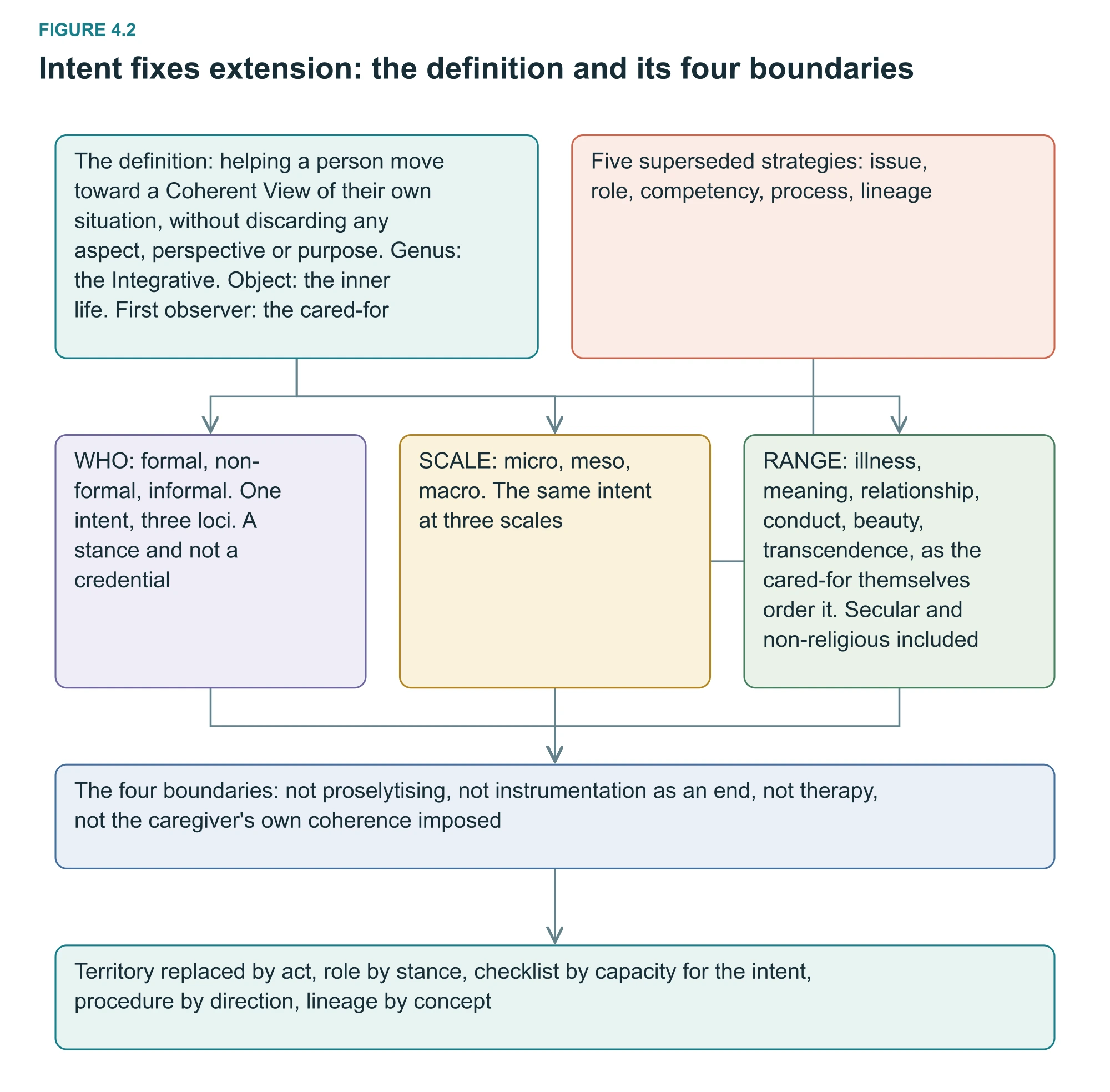
Figure 4.2. Intent fixes extension: the definition and its four boundaries.
5. The Dharmic resource, brought alongside
The definition stated in §4 can stand on its own in the Western register in which it was built; what the Dharmic resource adds is not a premise it lacks but a depth-structure that makes its several claims hang together as one stance rather than as a list of stipulations. The licence to bring that resource alongside is, in this chapter, unusually direct. It is not imported from outside the spiritual-care literature but drawn first by the field's own competencies note, which moves from a holistic and inclusive care in which 'everyone wins' (Lips-Wiersma, Lund Dean & Fornaciari 2009), through the ethics of convivialism (Convivialist International 2020), to 'the concept of Dharma, emphasizing the duty to uphold harmony and interconnectedness' (SpiCaQuest competencies note). What that note gestures at in a sentence, this section develops - transliterated and glossed so that a non-specialist reads it as philosophy, and as a deepening of the definition, never as authority asserted over it. The five principles of the Integrative Paradigm (Chapter 4) supply that depth-structure, and each underwrites a particular clause of the definition.
The first principle, respect for Integral Unity - ekaṃ sad viprā bahudhā vadanti, 'there is one truth, the knowledgeable speak it in many ways' (ṚV 1.164.46) - grounds the definition's hardest internal claim: that the four dimensions the professional standard lists (existential, spiritual, ethical, aesthetic) are one person's life and not four files opened on one patient. If difference among the dimensions is difference of perspective on a single reality, then holding them together is recognition rather than construction, and the unity sought is Integral (alignment toward a Coherent View) and not synthetic (the summation the standard's enumerative form invites). This is the Dharmic form of the definition's insistence that care is 'not a checklist'.
The second principle, the holistic attainment of the four life-goals or puruṣārthas - dharma (righteousness, duty), artha (the means of prosperity), kāma (worldly and relational desire) and mokṣa (liberation) - supplies the range of the definition's scope. Dharma is glossed in the tradition as that which secures both abhyudaya, worldly flourishing, and niḥśreyasa, the higher good - yato'bhyudaya-niḥśreyasa-siddhiḥ sa dharmaḥ (VaiśS 1.1.2). The goods at stake in care are therefore not 'the spiritual' alone, prised off and tended in isolation, but all four held together; this is the Dharmic statement of the definition's 'without discarding any purpose', and the warrant for reading a conversation about a dying patient's unfinished worldly business or severed relationships as fully within spiritual care rather than adjacent to it. The competencies note's own movement, from inclusive care to Dharma as the duty to uphold harmony, is that bridge made explicit; the axiological argument behind it is Chapter 3 §5's, and is made at greater length in Philosophy of the Integrative (Bindlish 2026).
The third principle, that action follows embodied knowing - the amalgamation of gyaan (knowledge), karma (action) and bhakti (dedication), with the equanimity of unattached action itself termed yoga - grounds the noun in the definition: ISC is a practice. Presence is embodied knowing and not a technique selected from an inventory, which is why the capacity the definition requires is formed rather than stipulated. This is the hinge to Chapter 5, where the caregiver's formation is the subject, and it rests on the praxeology stated at Chapter 3 §5 and argued at length in Philosophy of the Integrative (Bindlish 2026).
The fourth principle, that our activities are without doership - the awareness of the observer in us, along the path from Samarpan (devotional surrender) through Santulan (balanced existence) to Sukh (conscious happiness) - grounds the boundary clause that the Coherent View is the cared-for's and not the caregiver's achievement. The caregiver acts without identifying as the doer of the other's healing; this both keeps the definition's first observer the cared-for and disarms the individualisation burden the field concedes, under which the weight of care falls on the single professional and tips into burnout (§1; Chapter 2). The detachment at issue is not coldness but the removal of the ahaṃkāra that would make the other's coherence the caregiver's own project.
The fifth principle, that we are all connected - the striving for Shubh Laabh, welfare for all - grounds the macro scale of the definition. Care widened to the team, the institution and the societal horizon is the same relating, not a different activity, because if all are connected the cared-for's Coherent View is not finally severable from the welfare of the whole. This is the Dharmic ground of the professional standard's macro level and of the collective spirituality others have theorised at the organisational scale (Rocha & Pinheiro 2020), and it is why §4 could read the standard's three levels as one intent at three scales rather than three separate jobs. Taken together, the five principles do not add content to the definition so much as show why its clauses are not arbitrary: unity warrants the holding-together, the four goals fix the range, embodied knowing makes it a practice, doership-lessness keeps the cared-for first, and connectedness widens the scale - one stance, read in depth.
The fifth principle carries a second clause the mapping has so far set to one side. Its canonical statement is that connectedness 'translates into higher comfort with chaos and an epistemological appreciation of indigenous non-translatable knowledge' as well as into the striving for Shubh Laabh (Chapter 4). The welfare clause fixed the definition's scale, widening the one relating outward to the team, the institution and the societal horizon; this second, epistemic clause fixes something orthogonal to scale - the caregiver's stance toward what, in the cared-for's situation, will neither resolve nor translate. Where the welfare half turned the definition outward, the epistemic half turns it inward, onto the texture of the single encounter, and it bears on the definition's hardest phrase. To hold a person's Coherent View 'without discarding any' is not available to a caregiver who must first make the situation orderly, or first render it in their own idiom, before they can hold it at all; and it is exactly the disorderly and the untranslatable that such a caregiver discards first. The two epistemic capacities are therefore not refinements added to the definition but conditions of its central clause.
Take first the comfort with chaos. The suffering brought to spiritual care is characteristically unresolved and often unresolvable - the diagnosis that will not reverse, the grief that will not close, the meaning that does not arrive on cue. A definition that made care contingent on resolution would exclude the very cases the field concedes are most its own. Here a Western interlocutor set well apart from the spiritual-care literature states the epistemic requirement plainly. Wilfred Bion, writing of the analytic encounter, counsels the practitioner to meet the other 'without memory and without desire' (Bion 1970) - without the memory that would assimilate this person to a case already known, and without the desire that would hurry them toward a wished-for outcome - so that what is actually present, its formlessness included, can be received rather than fended off. Bion names the capacity to remain in an unsaturated, not-yet-patterned field, declining the reach for premature closure, as a discipline and not a deficiency: the mind that can contain another's unbearable experience is one that does not collapse the chaos into order before its time. The Integrative definition takes this as internal rather than adjacent. The intent toward the cared-for's Coherent View is defeated, not served, by a caregiver who supplies the coherence in advance; comfort with chaos is the epistemic precondition of the 'without discarding' clause, because the first thing an anxious caregiver discards is whatever in the situation does not yet cohere (Note 2).
The second epistemic capacity concerns not the unresolved but the untranslatable. A person in extremity often knows their situation in an idiom that is not the caregiver's and cannot be carried into it without loss - a tradition's vocabulary, a lineage's practice, a name for the sacred with no equivalent in the clinical or the secular register. Boaventura de Sousa Santos calls the reflex that would translate every such knowing into the dominant idiom, discarding whatever will not go across, epistemicide - the destruction of a way of knowing under the appearance of understanding it - and sets against it an 'ecology of knowledges' in which the untranslatable is granted standing precisely as untranslatable, held alongside rather than converted (Santos 2014). For the definition this is the boundary clause read from the epistemic side. To receive the cared-for's Coherent View 'without discarding any' forbids the caregiver to translate the person's own non-transferable knowing into a register the caregiver finds tractable and then to attend only to the translation; the intent is toward their view in their terms. This is also why §4 could let the definition travel to the secular and the cross-cultural without dissolving into relativism: it asks the caregiver not to share the cared-for's idiom but to refuse to overwrite it (Note 3).
Each capacity has an exact Dharmic name, and the naming shows the two to be one stance rather than two accommodations. The comfort with chaos is titikṣā - the forbearance that endures the dvandva, the pairs of opposites, the arising and passing of heat and cold, pleasure and pain, 'without being unsettled' (BG 2.14-15) - counted in the tradition among the disciplines that ready a knower to receive what is rather than what is wished. The caregiver's titikṣā is not stoic hardness but the steadiness that lets the sufferer's turbulence be present without being managed away. The appreciation of the non-translatable rests on the tradition's own name for the limit of expression: anirvacanīya, 'that which cannot be spoken across' or defined - the acknowledgement that the deepest knowing of a matter may be borne immediately in the knower and not exhausted by any account rendered of it to another. A tradition that holds even its own highest knowing to be finally anirvacanīya has the strongest available reason to honour, rather than overwrite, the untranslatable knowing of the person in its care. Read together with the welfare clause, then, the fifth principle underwrites the definition twice over: connectedness widens the intent to the whole, and comfort with the unresolved and the untranslatable deepens it within the single encounter - so that 'without discarding any' is guarded at once at the scale where care might be narrowed and in the texture where it might be tidied into order or translated into loss.
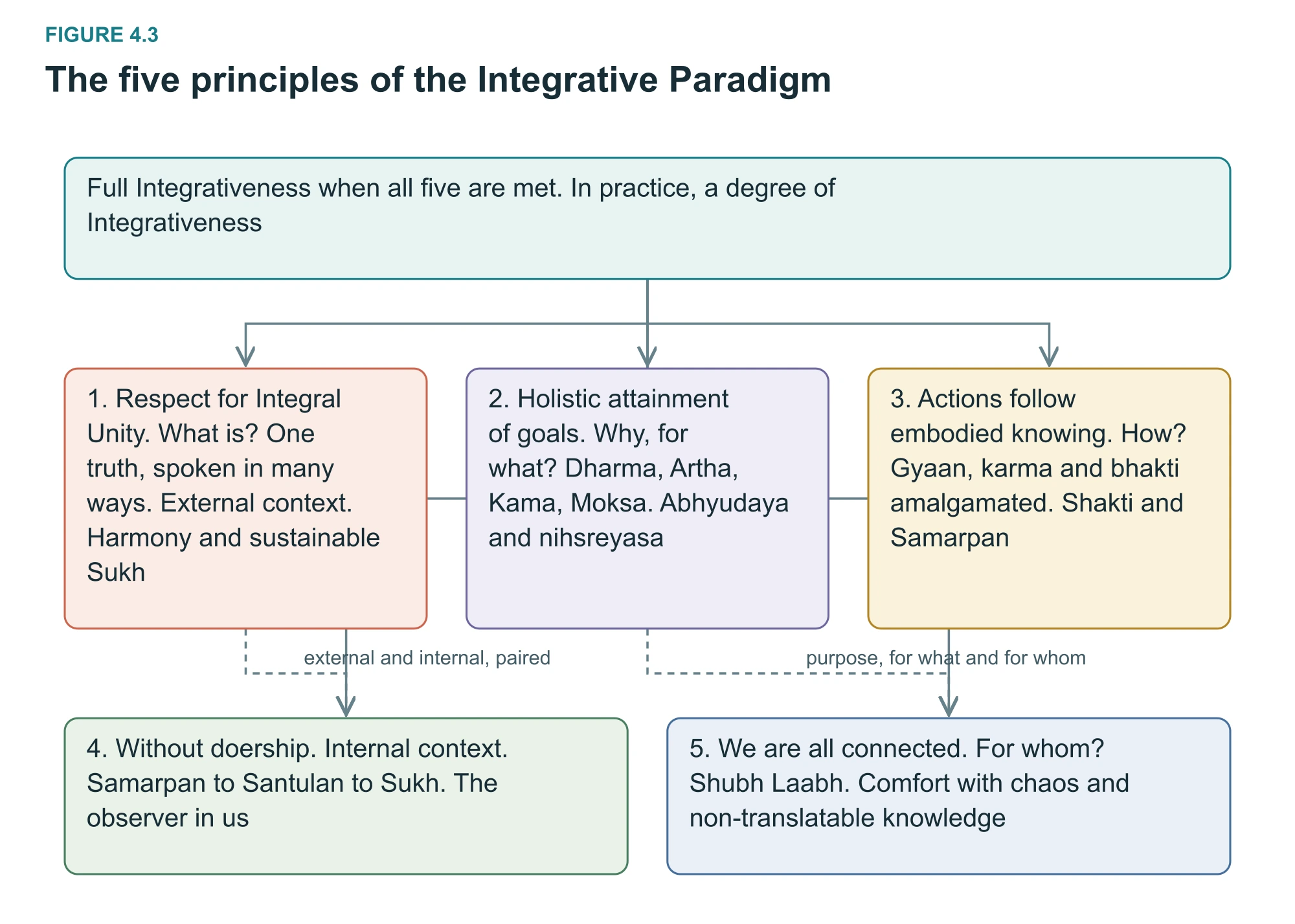
Figure 4.3. The five principles of the Integrative Paradigm.
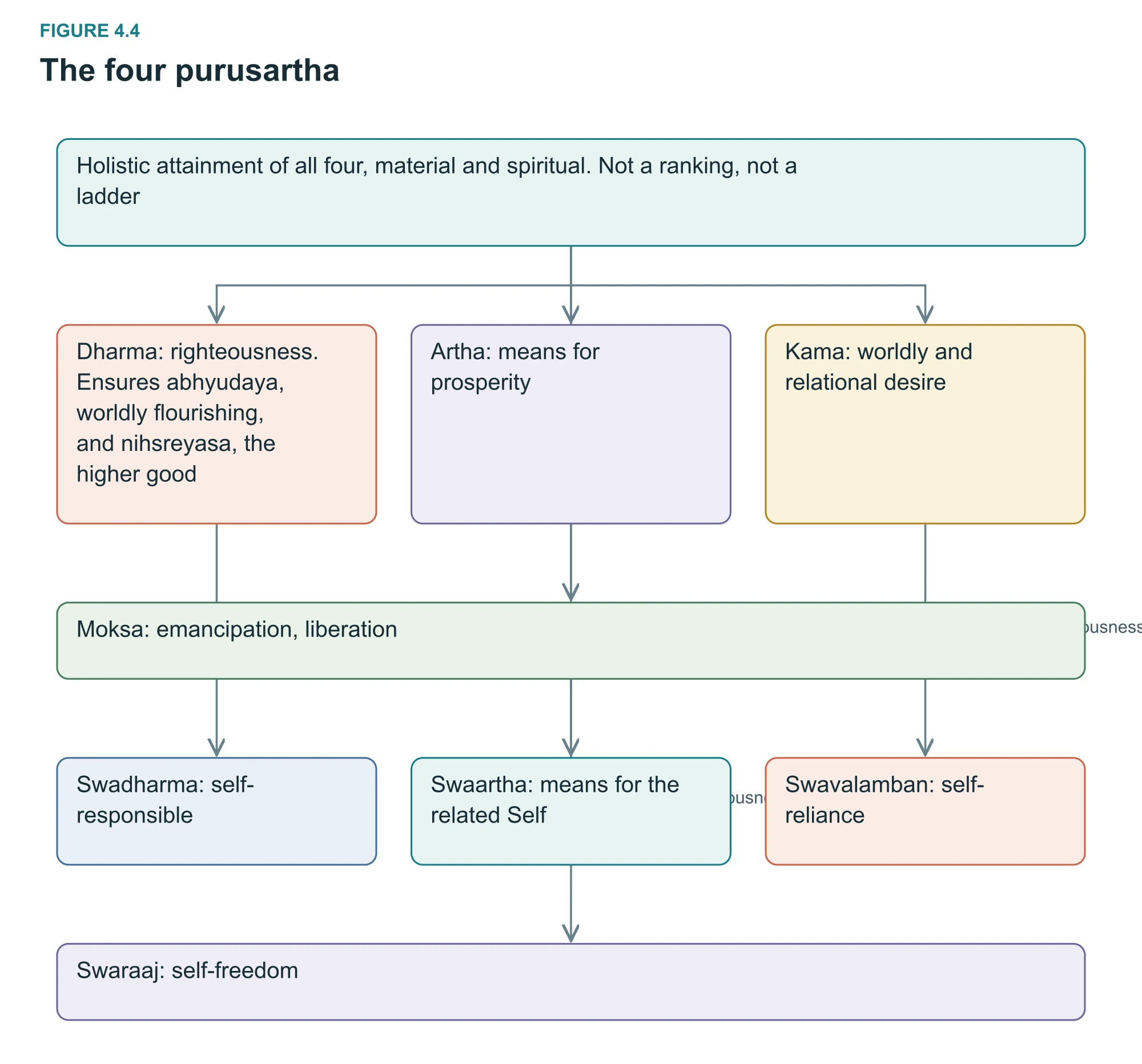
Figure 4.4. The four purusartha.
6. Objections and replies
Seven objections press hard enough on the definition to deserve answers; an eighth, which the Dharmic material of §5 invites, is taken last.
The first objection is that ISC is spiritual care relabelled - a new name laid over the field's existing practice, adding a Sanskrit vocabulary but no content. The reply is that the differentia is the form of the definition, and a change of form does real work. Every account in §2 fixes the extension of spiritual care by territory, role, competency, process or lineage; the Integrative definition fixes it by the intent toward the cared-for's Coherent View. That single change states the act the issue-list omits, recovers the professional standard's content under one relating rather than four enumerated dimensions, escapes the competency-checklist trap that repeats Hummel et al.'s (2009) intervention-list one level up, and ports to the secular and to the machine care of Part V. Relabelling changes the word; this changes what counts as falling inside the concept.
The second objection is that defining care by intent makes it unassessable - that intent is private, and a profession cannot audit what it cannot see. The reply is that intent is assessable through its enactment. The definition cashes out as discernment and presence, which can be observed, formed and supervised; this is the work of Chapters 6 and 7, where the K1-K4 epistemology is applied to assessment (Ch 6 §4) and to the recognition of accompaniment in supervision (Ch 7 §8). What the definition refuses is not accountability but the specific assessment that fragments the relation into stand-alone instruments (Chapter 2; Damberg Nissen et al. 2020). It relocates accountability from checklist-completion to the quality of relating - and whether that relocation can yield an assessable competency set without re-entering the checklist trap is the open question §7 owns.
The third objection is that the scope is imperialistic: if any caregiver in any setting can give ISC across the whole of a person's situation, then every kindness at a bedside becomes spiritual care and the term explains nothing. The reply turns on the structure of the definition, which is wide in extension but narrow in intension. The four boundary clauses of §4 - not proselytising, not instrumentation pursued as an end, not therapy or clinical treatment, not the imposition of the caregiver's own coherence - exclude precisely the acts that breadth of 'who' and 'where' might otherwise sweep in. ISC is not whatever a caregiver does, but only an engagement conducted under the intent toward the cared-for's own Coherent View; the breadth of who may give it is constrained by the determinacy of what act it is, which is the opposite of imperial vagueness.
The fourth objection is that the professional standard's roles and competencies are simply dropped - that an account proud of discarding nothing has discarded the field's most developed statement of scope. The reply is that they are recovered, not discarded. Companion, ritual leader, educator, advisor and the rest are instances of the one intent at different moments and scales; the four dimensions are kept entire, the aesthetic included rather than triaged away as soft. 'Without discarding any aspect, perspective or purpose' applies reflexively to the field's own apparatus: the Integrative move keeps the standard's content and replaces only its enumerative form, which is why §4 could claim to fix scope by concept while leaving the practitioner with everything the standard taught.
A fifth objection is the sharpest the definition faces, and it presses on the very clause that makes Integrative Spiritual Care the cared-for's and not the caregiver's: which Coherent View? If the practice is fixed by the intent toward the cared-for's own coherence, and the caregiver's office is to help the other move toward it without imposing a coherence of their own, then the definition appears to bind the caregiver to underwrite whatever coherence the cared-for is in fact moving toward - including one organised around a factual delusion, a settled resolve on self-destruction, or the exclusion or harm of others, the 'coherent' world of contempt or revenge. The caregiver seems caught between two unacceptable positions. Either they help the person toward such a view, and care collapses into collusion; or they decline, and it is after all the caregiver's normative judgement that fixes what shall count as the cared-for's Coherent View, so that the fourth boundary clause - no imposition of the caregiver's own coherence - quietly fails. A definition that turns on the cared-for's own coherence looks unable to say why the caregiver may ever refuse to serve it.
The reply is that the objection trades on an equivocation the definition's own terms forbid, and dissolves once 'Coherent View' is read as the account fixes it rather than as any felt sense of things having settled. A Coherent View, in the canonical sense the definition inherits, is the holding-together of all the aspects, perspectives and purposes of a situation without discarding any (Chapter 4). That last clause is not decorative; it is the whole discriminating force of the term. A seeming-coherence bought by dropping what will not fit - the reality of one's diagnosis, the personhood of those one would exclude, the future self who must live in the aftermath of the act - has achieved its unity precisely by discarding, and is therefore not a Coherent View at all but its counterfeit: an integral summation (Chapter 4) that looks whole because it has thrown away the pieces that resist. The caregiver who declines to underwrite a coherence-by-exclusion is thus not importing an external value over the cared-for's own; they are holding the person to the full form of their own coherence, refusing on the person's behalf the discarding the counterfeit requires. Realism about the situation is not the caregiver's addition but an aspect of the situation that 'without discarding any' will not let go: a coherence organised around a denied diagnosis is incoherent at the level the definition measures, because it has discarded the diagnosis.
Two of the five principles of §5 make the same point from the axiological side, and show that the constraint is internal to the definition and not smuggled in beside it. By the fifth principle - that we are all connected, and the welfare striven for is Shubh Laabh, welfare for all - the cared-for's Coherent View is, as §4's macro reading already argued, not finally severable from the welfare of the whole; so a 'coherence' organised around another's harm has discarded the connectedness that is itself an aspect of the person's own situation, and fails the definition on its own terms rather than on the caregiver's. And by the second principle - the holistic attainment of the four puruṣārtha, where dharma is that which secures both abhyudaya, worldly flourishing, and niḥśreyasa, the higher good (yato'bhyudaya-niḥśreyasa-siddhiḥ sa dharmaḥ, VaiśS 1.1.2) - a movement toward 'coherence' that sacrifices the higher good, or is bought at the price of the adharmic, is by the definition's own axiology not attainment but its loss. The caregiver's task is therefore neither collusion nor imposition but discernment (the work of Chapter 6): to tell the cared-for's fuller coherence from the counterfeit that mimics it, and to accompany the one without underwriting the other. The fourth boundary clause forbids substituting the caregiver's content for the cared-for's; it does not forbid the discernment that distinguishes a Coherent View from its counterfeit, which is the caregiver's whole competence. Where the person's settled movement is toward self-destruction or the harm of others, the definitional point argued here is only that the intent toward a true Coherent View already carries the resources to refuse the counterfeit without collapsing into imposition; how that refusal is enacted - accompanying without colluding, at the limit where care meets what it cannot mend - is the concrete work of Chapter 10, and of the moral-injury and hostile-seeker cases of Chapters 14 and 21 (Note 14).
A sixth objection grants the chapter its diagnosis and turns it around: the field has not failed to define spiritual care operationally, and one of the definitions it has produced is the very study this chapter has kept at arm's length. Hummel, Galek, Murphy, Tannenbaum & Flannelly (2009) set out, under the plain title 'Defining Spiritual Care', to fix the concept empirically rather than by stipulation. They content-analysed twenty-eight of the most relevant articles from a Medline search of the years 1980 to 2005, extracted two hundred and fifty distinct descriptions of spiritual-care interventions, consolidated these to sixty-six discrete items, and had twenty-five professional chaplains rate each item for the degree to which it belongs to the provision of spiritual care; the pattern of correlations resolved the practice into ten categories - religious, spiritual, counselling, emotional support, advocacy, presence, respect, communication, adjunct therapy and other care (Hummel et al. 2009). This is a definition of exactly the kind a maturing profession is urged to want: inductive, replicable, grounded in measured practitioner agreement rather than in a theorist's intent, and already yielding the useful finding that chaplains and nurses share substantially in what they count as spiritual care. Against it, the objection runs, the intent-based definition offered here looks retrograde - unmeasurable, unfalsifiable, recovering by fiat a unity the data do not display. Why should a field abandon a definition it can operationalise for one it cannot?
The reply is that the study defines spiritual care by recovering, from surveyed behaviour, the set of interventions practitioners agree upon - and that its own results are the clearest exhibit in the literature of the residue §3 named, not a rival to the account that names it. Three features of the paper, read at first hand, make the point. First, the ten categories are separable modules: the practice is returned as a list whose items sit beside one another, and it is precisely the relational core that the method holds most weakly - Presence (Cronbach's alpha =.675), the lowest internal consistency among the cohesive categories, formed of the two bare items 'being present' and 'being available'. What is nearly the whole of care in the account of §4 registers, on the instrument, as its flimsiest factor. Second, and more tellingly, the authors record that the interventions which matter most will not sit in the scheme at all: end-of-life care, they observe, 'represents a critical type of care rather than a specific type of intervention', and active listening 'may not fit into a specific category because it is a universally used therapeutic technique' (Hummel et al. 2009). That is the method reaching its own limit and reporting it honestly - the intent-borne, whole-situation aspects of care are exactly what a taxonomy of discrete interventions cannot hold, and the paper says so. Third, and decisively, a factor analysis of surveyed behaviours can only ever return the behaviours surveyed, and intent is not among the sixty-six items, nor could it be: the same intervention - 'inquiring about a patient's relationship with God' is one of the study's own religious items - is spiritual care under one intent and proselytising under another (§3), so the variable that discriminates care from its counterfeits is the one the instrument cannot carry. The empirical definition is therefore not the intent-based definition's competitor but its confirmation: it fixes the practice by its measurable units and, in doing so, discards by its very method the relating intent that would hold them as one - the Chapter 2 fault line, holism espoused and fragmentation operative, reappearing in the form of a definition built expressly to settle the field.
Two things follow, and both return the objection's own force to the account. The intent-based definition is not 'unmeasurable'; it relocates what is assessed from the completion of a checklist to the quality of relating (Objection 2), which can be formed, observed and supervised - the work of Chapters 6 and 7 - and whether that relocation can yield an assessable set without collapsing back into Hummel et al.'s list is precisely the open research question §7 owns, named honestly rather than assumed away. And the commensurability worry with which the study itself opens - its citation of Habermas (1981) and Bernstein (1984) on whether the discourses of differing life-worlds can be compared at all (Hummel et al. 2009) - is answered not by discovering the common intervention-set across professions but by the common intent the definition names: nurse, chaplain and family member give one practice not because they perform the same catalogued acts but because they may hold the same intent toward the cared-for's Coherent View (§4). The study's welcome finding that spiritual care is shared beyond the chaplaincy is, on the Integrative reading, a finding about shared intent that the intervention-frame could only approximate (Note 15).
A seventh objection presses on the boundary clause that divides Integrative Spiritual Care from clinical treatment, and it is the resemblance a reader trained in the helping professions will feel first. The definition's core - an intent toward the cared-for's own Coherent View, the caregiver's office being to help the other move toward it without imposing a coherence of their own (§4) - is, the objection runs, simply the non-directive stance that Carl Rogers made the ground of client-centred therapy three-quarters of a century ago. Rogers held that the conditions for a person's growth lie not in the therapist's techniques or interpretations but in a relational stance: an unconditional positive regard for the client, an empathic understanding of their world from within, and the therapist's own congruence or genuineness, offered in the trust that the person carries an actualising tendency toward their own resolution which directive intervention only obstructs (Rogers 1957). Every clause of §4 seems to have its Rogerian original - 'the cared-for's own Coherent View' is the client's self-directed growth, 'without imposing the caregiver's own coherence' is non-directiveness itself, and the relating that discards nothing is unconditional positive regard - so that the third boundary clause, that Integrative Spiritual Care is not therapy or clinical treatment, appears to fail from the inside. The practice the definition names would then be person-centred counselling under another description, and 'spiritual' and 'Integrative', with their Sanskrit depth-structure, would do no argumentative work a secular and long-established psychotherapy had not already done. That the neighbouring Chapter 5 will itself name Rogers's core conditions the closest Western near-match to the caregiver's stance only sharpens the charge.
The reply concedes the resemblance and denies the reduction, and the concession is instructive rather than damaging: as the engagement of Bion showed (§5), and as the eighth objection will say of the Stoic convergence, that a secular practitioner should arrive independently at a discipline the Integrative names is evidence for the account's reach, not against its distinctness. Three joints hold Integrative Spiritual Care apart from the therapy it resembles, and each is a joint the definition has already drawn. The first is direction. Rogers's stance is non-directive: it supplies no direction at all, entrusting the client's actualising tendency to find its own, and a therapist who bent that tendency toward one resolution rather than another would, on Rogers's account, have failed the method. The Integrative intent is not non-directive but non-imposing, and the distance between the two is the whole of the fifth objection above. A Coherent View is the holding-together of all the aspects of a situation without discarding any (Chapter 4), and that is a direction - an alignment the caregiver intends, and by discernment tells from its counterfeit - not merely wherever the person is found to be tending. Unconditional positive regard carried to its limit would underwrite the coherence-by-exclusion the fifth objection showed the definition must refuse; the Integrative caregiver's regard is unconditional toward the person and exacting toward the counterfeit, a discernment (Chapter 6) that a purely non-directive stance forbids itself.
The second joint is the object, and it is where the word 'spiritual' earns its keep. The telos of client-centred therapy is internal to the self - the fully functioning person, the client's own growth and self-actualisation. The object of Integrative Spiritual Care is the whole of the person's situation held under a holistic understanding: the four puruṣārtha including mokṣa and the niḥśreyasa or higher good (§5), the person's connectedness to a whole that outruns them (the fifth principle), and the untranslatable knowing of the sacred that a clinical register brackets by the proper modesty of its remit (§5, the anirvacanīya). These are not the self's actualisation renamed; they are aspects of the situation that a secular psychotherapy sets aside by discipline and that the without discarding clause will not release. Where they are absent the practice may indeed be counselling and no more; where they are in view and held, it is spiritual care, and the difference is not a Sanskrit gloss on one act but a wider extension of what is related. The third joint follows and disarms the boundary worry itself: Integrative Spiritual Care does not replace therapy, the boundary clause reading 'adjacent practices it accompanies but does not replace' (§4). Rogers describes a method of psychotherapy; the definition names an intent that a chaplain, a family member - or indeed a Rogerian therapist - may hold, standing to their several practices as an orientation stands to a technique. That a good therapist's stance instantiates much of the intent is exactly what the account predicts, since the intent is a stance and not a credential (§4); it no more makes spiritual care a branch of psychotherapy than the same intent in a family member makes it a branch of kinship. The overlap is real, conceded and bounded - person-centred therapy is one place the relating intent is found, not the genus of which Integrative Spiritual Care is a species (Note 4).
An eighth objection arises from §5 itself: that grounding a definition meant to travel - to the secular, across professions, into the machine - in the Dharmic vocabulary of puruṣārtha and Shubh Laabh makes it parochial, a particular tradition dressed as a universal. The reply is twofold. First, the definition is built and stated entirely in the Western register; the Dharmic resource is brought alongside as a deepening, on a bridge the field's own competencies note draws before this book does. Second, the convergence is argued rather than asserted: at Chapter 3 §5, and at greater length in Philosophy of the Integrative (Bindlish 2026), the holding-together of plural goods is shown to have Stoic as well as Dharmic statements (Bishop 1970), so the resource does work the Western vocabulary left undone rather than supplanting it. ISC remains assessable, secular-portable and boundary-governed whether or not a given caregiver reads its depth-structure in Dharmic terms.
7. What this commits us to
A definition earns its keep only if the work that follows can instantiate it or break it, and the remainder of this book is written to do both. What §4 fixed as a definition and §5 read in depth, the rest of the book carries into practice, into particular encounters, and finally into the machine - each part a test the definition must pass or a commitment it must honour.
Part II forms and operationalises the intent the definition makes central. Chapter 5, on the caregiver's stance and formation, takes up the third and fourth principles directly: if Integrative Spiritual Care is a practice grounded in embodied knowing, then the capacity for the intent must be formed rather than stipulated, and the office held without doership, so that the cared-for's Coherent View never becomes the caregiver's project. Chapter 6, on assessment and discernment, is where the definition meets its sharpest internal danger, the competency-checklist trap Chapter 3 left open: it operationalises the intent as discernment rather than instrumentation, applying the K1-K4 epistemology so that what the caregiver assesses is the quality of relating and not a tally of stand-alone scores. Chapter 7, on presence, dialogue and accompaniment, is the Coherent-View intent enacted in real time, the relating itself rather than its preconditions. Chapter 8, on working across traditions and worldviews, tests the portability the definition claims under the first and fifth principles, where the receiver's frame may be secular or another living faith and the caregiver must relate toward their coherence without supplying it (Schipani 2024). Chapter 9, on practices and interventions, is where the demoted means are given their proper place: a repertoire the intent draws on, matched to the person in front of the caregiver rather than prescribed from a tradition, which is this chapter's order of priority made operational. Chapter 10, on suffering, meaning and the limits of care, tests the puruṣārtha range at its hardest edge - where mokṣa and niḥśreyasa are in view, and where the boundary clauses must hold even as care meets what it cannot mend.
Part III puts the definition under load. The eleven case-study chapters (Chapters 11 to 21) take it into concrete encounters - dying and palliative care across three of them, mental health and moral injury, chronic illness and disability, grief and bereavement across four more, crisis and trauma, and the secular or cross-cultural seeker - and ask, of each, whether an intent-based definition holds when a real person's situation refuses to resolve, and whether the four boundary clauses do real discriminating work rather than decorating the page. A definition that cannot survive the bedside is not a definition of care; these chapters are where the abstraction of §4 is made to pay.
Part IV turns the definition on the ones who do the caring, and it is the test the definition is least able to dodge. If Integrative Spiritual Care is fixed by the intent of relating a person's aspects, perspectives and purposes toward a Coherent View that is theirs, then the question Chapters 22 and 23 press is whether a caregiver is ever such a person. The family carer of Chapter 22 is counted by almost every institution she deals with as the arrangement's resource - the reason a discharge is possible, the variable that decides whether a placement holds - and the professional of Chapter 23 is counted by almost every employer as a capacity to be maintained. Both are summations in the exact sense §4 excludes: a person reduced to a function in an account that is not theirs. The four boundary clauses read straight across when they are turned round, and the fourth bites hardest, since what a depleted carer is most often offered is a coherence supplied for them - a reason their exhaustion is worth what it costs. A definition that could not be applied on this side would be a definition of a service and not of care.
Part V is the definition's hardest portability test, and the reason its abstraction was built to travel. If Integrative Spiritual Care is fixed by the intent toward the cared-for's Coherent View and not by the interventions, phases and competencies the definition demoted to means, then the question the agentic and robotic chapters (Chapters 24 to 27) press is exact: can a built system instantiate that intent, or only execute the means? The definition predicts the shape of the answer in advance - a system may carry the means, but the intent toward another's coherence, held without doership, is the line between care and its simulation - and Part V is where that prediction is tested rather than assumed.
One open research question is owned here, inherited from Chapter 3 and handed forward to Chapter 6. Can the intent-based definition generate an assessable competency set - one an educator could teach (Ganzevoort et al. 2014), a palliative service could use (Costeira et al. 2024) and an institution could audit - without collapsing back into the very intervention-and-competency checklist whose inadequacy (Hummel et al. 2009) the definition was framed to escape? The difficulty is intrinsic: the definition's strength, its refusal to fix care by enumeration, is also what makes it hard to operationalise, since an institution audits most readily what it can list. The SpiCaQuest competencies note and the gap-list of Mapping the Landscape (Nandram, Bindlish, vander Wal & Kaur, n.d.; its fifth research question) are the test bed, and Chapter 6 is where the answer is attempted - the place the book either shows that intent can be made assessable without being made a checklist, or concedes that it cannot.
Taken together, these commitments make the chapter's definition the load-bearing member of the book rather than its preamble. Everything after it is the definition formed (Part II), stressed (Part III), turned back on the one who holds it (Part IV) and pushed to its limit (Part V); and the single question it cannot yet answer - whether the intent can be audited without being itemised - is named honestly here, so that the chapter on discernment is read as its attempted discharge and not its evasion.
Notes
1. The slogan-to-definition distinction governing §1 is the chapter's hinge. The formulation carried since Chapter 2 - 'spiritual care is the Integrative applied to the inner life of a person in need' - is a formulation, not a definition, because it fixes neither extension nor boundary: it says what spiritual care is an instance of but not who may give it, over what range, or what it excludes. The displayed definition in §4 is the conversion of that formulation into a definition with stated scope conditions and exclusions, and should be read against Chapter 4, from which it takes its genus (the Integrative) by restricting that genus to the inner life of a person in need (its differentia). Cross-reference Chapter 3, where the foundation, as distinct from the definition, was laid.
2. The VGVZ 2015 standard (Beroepsstandaard geestelijk verzorger; VGVZ 2016) is engaged in §2 at second hand, through the SpiCaQuest competencies note's summary, which locates the four dimensions of meaning and worldview at p. 10, the three levels of practice at p. 11, and the six professional roles at p. 12. The standard is treated here as the field's strongest definition-by-scope, which is why it is named the chapter's principal sparring partner rather than merely one account among five.
3. The working vocabulary of §2 follows the competencies note in distinguishing spirituality (existential and relational, concerned with meaning, hope, transcendence and connectedness), religion (structured, doctrinal, communal) and existential issues (meaning, suffering, death), on the authority of Peng-Keller (2024) and Koper et al. (2018), while noting their substantial overlap. This book does not legislate these boundaries - that the terms blur is part of the field's fault-line diagnosis (Chapter 2) - but adopts this tripartite vocabulary as the least-misleading shorthand, and treats the Integrative definition (§4) as turning on intent rather than on which of the three labels a given concern wears.
4. Mapping the Landscape (Nandram, Bindlish, vander Wal & Kaur, n.d.) is a working paper in the bibliometric genre; §2 draws on its abstract, its five research questions and its reference base rather than on findings still in preparation. The methodological point §3 presses is intrinsic to the genre and not a defect of execution: a bibliometric map, by design, describes usage - which terms co-occur, which works are cited, where clusters and gaps fall - and so records what has been called spiritual care without thereby fixing the concept. The fifth research question (RQ5), on the field's research gaps, is the locus §7 will name as the test bed for this chapter's open question about an assessable competency set.
5. The five residues set out in §3 are residues at the level of extension and boundary, not of foundation. Chapter 3 showed that the field's self-descriptions lack a foundation - a ground on which the disparate concerns of a suffering person can be held as one; §3 shows that, even where the field offers definitions and not merely foundations, those definitions fix extension by every available route - territory, profession, capability, procedure, history - except the one the foundation made central: the intent of relating toward a Coherent View. The compression is therefore not a charge of carelessness against any of the five strategies, each of which defines its object accurately on its own axis, but a structural observation - a relating intent cannot be recovered by listing the things it relates, just as, one level up, the Integrative is not recoverable by summing perspectives (Chapter 4). This is why §3 reads the Chapter 2 fault line ('holism espoused, fragmentation operative') as reappearing in the form of the definitions themselves.
6. The displayed definition in §4 takes its genus verbatim from Chapter 4 (the Integrative) and restricts it to one application by its object - the inner life of a person in need - and its first observer - the cared-for, whose Coherent View is the regulative ideal that the caregiver helps the other move toward rather than supplies. The claim that the definition is 'not a checklist' rests on the primary differentia of the Integrative (Chapter 4): Integral Unity is alignment toward a Coherent View, not the synthetic unity of summation, so the four VGVZ dimensions are held as perspectives on one life rather than totalled as four scores - the integrative-not-integral contrast (Philosophy of the Integrative, Bindlish 2026) carried into the form of a definition. The 'who/where/not' scope conditions are read off the intent rather than stipulated beside it; the four boundary clauses (not proselytising, not instrumentation-as-end, not therapy, not imposed coherence) are what make the definition wide in extension yet narrow in intension. The licence to bring the Dharmic resource alongside in §5 is, unusually for this series, drawn first by the field's own literature rather than by the author. The SpiCaQuest competencies note moves, in a single passage, from a holistic and inclusive care in which 'everyone wins' (Lips-Wiersma, Lund Dean & Fornaciari 2009), through the ethics of convivialism (Convivialist International 2020), to 'the concept of Dharma, emphasizing the duty to uphold harmony and interconnectedness'. §5 takes up that prompt and develops it - transliterated and glossed so that a non-specialist reads it as philosophy - so that the Dharmic resource enters as a deepening of a definition already complete in the Western register, never as an authority asserted over it. This is the order of composition the book keeps throughout: the Western interlocutor is the door, the Dharmic resource the payload brought alongside.
7. The five principles of the Integrative Paradigm deployed in §5 are quoted and ordered from Chapter 4; the canonical Sanskrit loci are ekaṃ sad viprā bahudhā vadanti ('there is one truth, the knowledgeable speak it in many ways', ṚV 1.164.46) for Integral Unity and yato'bhyudaya-niḥśreyasa-siddhiḥ sa dharmaḥ (VaiśS 1.1.2) for the dharma that secures both worldly flourishing (abhyudaya) and the higher good (niḥśreyasa). The axiology of the four puruṣārtha and the praxeology of gyaan-karma-bhakti and doership-less action are stated at Chapter 3 §5 and argued at length in Philosophy of the Integrative (Bindlish 2026) rather than re-argued here; §5 uses them only to show why the definition's clauses hang together as one stance rather than a list of stipulations. IAST glosses follow the author's romanised spellings (Coherent View, Integral Unity, Sukh, Santulan, Samarpan, Shubh Laabh), kept consistent throughout.
8. The objections of §6 are answered from within the account rather than by appeal outside it. The fifth (parochialism) turns on the convergence argued at Chapter 3 §5 and in Philosophy of the Integrative (Bindlish 2026), where the holding-together of plural goods is shown to have a Stoic statement as well as a Dharmic one (Bishop 1970): preferred indifferents, Panaetius' four personae and Hierocles' oikeiōsis, held apart from the puruṣārtha architecture at ordering (Stoic lexical rank against contextual relation) and at ground (circles drawn outward by effort against the ṛṇa-traya's prior standing), so that the Dharmic resource does work the Western vocabulary left undone rather than supplanting it. The second (unassessability) is answered by relocating accountability from checklist-completion to the quality of relating, assessed through its enactment - the work handed to Chapters 6 and 7, where the K1-K4 epistemology is applied to assessment (Ch 6 §4) and to the recognition of accompaniment (Ch 7 §8).
9. The architecture set out in §7 - Part II forming the intent, Part III stressing it against cases, Part V testing its portability into machine care - is the chapter's claim to be the book's load-bearing member rather than its preamble. The single open research question owned here, whether an intent-based definition can yield an assessable competency set without collapsing into the intervention-and-competency checklist it was framed to escape (Hummel et al. 2009), is inherited from Chapter 3 and handed forward to Chapter 6; the fifth research question of Mapping the Landscape (Nandram, Bindlish, vander Wal & Kaur, n.d.) and the SpiCaQuest competencies note are named as its test bed.
10. Bindlish, Nandram & Joshi (2025), 'Understanding and Defining Hindu and Integrative Spiritual Care' (Journal of Management, Spirituality & Religion 22(2), 151-182), is the author team's own published meta-definition of integrative spiritual care, derived by design-science research and the classical Tarka method of argument and counter-argument and validated with field practitioners; §4 quotes its meta-definition and takes up its formal / non-formal / informal typology of care provision. The definition of §4 is continuous with that account and sharpens it at one point: where the published paper leaves the integrative relation at synthesis, §4 fixes it as the non-discarding relation - alignment toward the cared-for's Coherent View, not summation (Chapter 4).
11. The field-scale figures in §2 are taken at first hand from Lucchetti & Lucchetti (2014), 'Spirituality, Religion, and Health: Over the Last 15 Years of Field Research (1999-2013)', International Journal of Psychiatry in Medicine 48(3), 199-215 - a PubMed bibliometric survey using the Boolean expression 'spiritual* OR religio*': 54,195 references in the database by the end of 2013, 30,532 of them from 1999-2013, of which 6,449 carry the terms in the title; growth is constant and accelerates after 2007, reaching an estimated seven new articles a day by 2012, with the literature dispersed across all fields of health research, including the highest-impact general journals. The survey also finds 'spirituality' overtaking 'religion' as a keyword over the period - the lexical trace of the secularisation/pluralisation pressure §1 names. Engaged here to establish, from outside the author team, the scale and consolidation of the field whose definitional question this chapter presses.
12. Lucchetti & Lucchetti (2014) name the field's standing challenges as 'measurement', 'concepts' and 'outcomes' and report, among its persistent criticisms, 'an excessive number of instruments and approaches for measuring' the spiritual - an independent statement of the instrument-fragmentation fault line of Chapter 2 (Damberg Nissen et al. 2020). They further report, citing Koenig, that spirituality measures are 'heavily contaminated' with items assessing optimism, forgiveness, gratitude, meaning, peace and general well-being, so that the construct bleeds into adjacent positive states. The Koenig claim is engaged here at second hand, through Lucchetti & Lucchetti (2014). The point §3 draws is that the non-fixity it locates in the form of the field's definitions is corroborated, under the headings of measurement and concept, by reviewers with no stake in the Integrative argument.
13. The fifth objection - the normativity or 'which Coherent View?' problem - is answered from the definition's own terms rather than by importing an ethics beside it. The load-bearing move is that 'Coherent View' is the term of art fixed in Chapter 4 (the holding-together of all aspects, perspectives and purposes without discarding any), so that a seeming-coherence achieved by discarding - a denied diagnosis, the personhood of the excluded, the future self - is a counterfeit and not a Coherent View, an integral summation (§2) mistaken for Integral Unity. The welfare-of-all constraint is read off Principle 5 and the dharma/niḥśreyasa constraint off Principle 2 (Chapter 4), so both are internal to the definition, not external moral side-conditions. The distinction between discernment (permitted, indeed required) and imposition of the caregiver's content (forbidden by the fourth boundary clause of §4) is the hinge; its operationalisation is handed to Chapter 6 (assessment and discernment), and the concrete enactment at the hard edge - self-destruction, the harm of others, the refused frame - to Chapters 14, 20 and 21, each of which imports from Chapter 10 the general discipline of the limit rather than any one of those cases. No source outside the already-engaged canonical apparatus is required; the objection strengthens the definition by showing that the 'without discarding' clause does normative work, not merely descriptive.
14. The sixth objection engages Hummel, Galek, Murphy, Tannenbaum & Flannelly (2009), 'Defining Spiritual Care: An Exploratory Study' (Journal of Health Care Chaplaincy 15(1), 40-51), at first hand for this chapter - the paper cited across §§1, 3, 6 and 7 as the intervention-checklist foil, here read directly for its method and results rather than invoked as a slogan. The study's design (a Medline search of 1980-2005 returning 101 articles with 'spiritual care' in the title, the majority from nursing; content analysis of the 28 most relevant; 250 intervention descriptions consolidated to 66 items; 25 professional chaplains rating each; ten resulting categories, only two of them explicitly religious) and its two self-reported limits (that 'critical' care such as end-of-life care, and universal techniques such as active listening, resist the taxonomy; that the relational categories - Presence, Respect, Communication - carry the weakest internal consistency) are taken as stated. Habermas (1981) and Bernstein (1984) are cited here at second hand, through the study's own introduction, in the project's established manner for works not held in the archive (cf. Notes 2, 13).
15. The residue is pressed at the level of definition - extension and boundary - and is deliberately distinct from Chapter 3's procedural residue, which presses the same source at the level of foundation. Section 3 shows a phase-sequence unable to fix the extension of the concept because it is intent-neutral (a proselytiser completes all five 'organically linked phases' without misapplying one, so the strategy cannot draw §4's four exclusions), because it is institutionally slotted (uncredentialled care falls outside its extension exactly where the field concedes the burden of care most often falls; Moudatsou et al. 2020), and because it is parasitic - phase one, 'the identification of spiritual needs and resources', cannot be entered until 'the spiritual' has been fixed elsewhere, so a definition by process presupposes the very definition it is offered as. The account's own admissions carry the argument from within: that once the patient is understood, care 'is not easily put into formulae or practice' (Damberg Nissen, Viftrup & Hvidt 2021), and that its single stated ambition, 'to help the individual human being through crisis', names a terminus a quo with no terminus ad quem. Its concept of the patient's ontological grounding (after Giddens 2018, cited here at second hand through the 2021 paper in the project's established manner for works not held in the archive, cf. Notes 2, 13, 15) reaches for the cared-for's own frame as the thing care must honour, yet the sequence supplies no account of what the movement is toward. Hence the chapter's sharpest statement of its differentia: the process definition has order without direction, and it is direction, not order, that the primary differentia of the Integrative demands (alignment toward a Coherent View, not summation; Chapter 4). This note, with the §3 process-residue paragraphs, completes the correction of the chapter's two stale counts ('the four residues') to five (cf. Note 5). The point is the descriptive/normative distinction intrinsic to the bibliometric genre: a map of usage records what a term and its siblings have been called and where their clusters and gaps fall, but by method cannot fix which usages the concept should keep, since to adjudicate would be to cease describing. The Integrative definition supplies that criterion - the intent toward the cared-for's Coherent View - and so lets the map's own record be partitioned into care and its counterfeit (a term worn without the practice), the without discarding clause of Chapter 4 doing the discriminating. The relation is completion, not rejection: the definition corrects none of the map's data and adds only the concept by which a bibliometric gap (the fifth research question of Mapping the Landscape) becomes diagnosable as an absence of the relating intent, which is why §7 can name that gap-list as the test bed for the chapter's open question rather than as a rival account.
16. The comfort-with-chaos clause of Principle 5 is developed here through Wilfred R. Bion's counsel that the practitioner attend 'without memory and without desire' (Bion 1970, Attention and Interpretation), engaged as a fresh Western near-match rather than through the 'negative capability' formula already carried by Chapters 10 and 13. Bion's point is epistemic, not merely temperamental: memory assimilates the present other to a case already known and desire bends attention toward a wished outcome, so both saturate the field in advance and foreclose what is actually there; the discipline of the unsaturated attention is what lets the formless be received. The clause is read as internal to the definition - the epistemic precondition of the without discarding requirement (Chapter 4) - since the coherence an anxious caregiver supplies ahead of time is bought by discarding the part of the situation that does not yet cohere.
17. The non-translatable-knowledge clause of Principle 5 is developed through Boaventura de Sousa Santos's epistemicide and 'ecology of knowledges' (Santos 2014, Epistemologies of the South): the reflex that translates every knowing into the dominant idiom and discards the remainder is named as a destruction of knowledge disguised as its understanding, and Barbara Cassin's lexicon of philosophical untranslatables (Cassin 2014) makes the same point at the level of the single term. Both are engaged as fresh near-matches - neither is used elsewhere in the book - and the clause is read as the definition's fourth boundary (§4) taken from the epistemic side: to attend to a translation the caregiver finds tractable, in place of the cared-for's own non-transferable knowing, is a form of the discarding the definition forbids. The Dharmic terms brought alongside - titikṣā (forbearance of the dvandva, BG 2.14-15) and anirvacanīya (the inexpressible or non-definable) - are used at their standard sense; the Gītā locus follows the canonical citation form used throughout, and both terms are consistent with the romanised spellings fixed in Chapter 4.
18. Notes 2, 15, 18). The three core conditions (unconditional positive regard, empathic understanding and the therapist's congruence, offered in trust of the client's actualising tendency) are taken as stated. The reply turns on three joints already load-bearing in the chapter: direction (Rogers is non-directive where the Integrative is non-imposing but directional, the distinction of the fifth objection, so that unconditional positive regard taken to its limit would underwrite the coherence-by-exclusion the fifth objection refuses); object (the self's actualisation against the whole situation held under the puruṣārtha, the fifth principle's connectedness, and the anirvacanīya of §5 - where 'spiritual' does the work a secular therapy's remit sets aside); and level (the definition names an intent a therapist, chaplain or family member may hold, not a rival method, so the fourth-boundary reading 'accompanies but does not replace' holds). The concession that an independent secular practice converges on the Integrative stance is read, with the Bion engagement of §5 and the Stoic convergence of the eighth objection, as evidence for the account's reach rather than against its distinctness.