
Figure 7.1. Where the laid path ends.
1. The domain and its dominant paradigm - presence, the conversation, and the journey
The relational heart of spiritual care is named in the field by three near-synonymous idioms, and each carries a dominant model of what care, at its most basic, is. The first is presence. Where Chapter 5 formed the caregiver's stance and Chapter 6 treated the moment of coming to know the person, the field's oldest intuition is that care happens, before and beneath any of that, simply in one person's being-with another. Its locus classicus is Henri Nouwen's portrait of the friend 'who can be silent with us in a moment of despair or confusion, who can stay with us in an hour of grief and bereavement, who can tolerate not-knowing... not healing, not curing - that is a friend who cares' (Nouwen 1974). Care, on this account, is a quality of attention rather than a transaction: the 'ministry of presence' that the competency inventory of Chapter 5 could name but never capture, because what it points to is precisely what is left when the doing is subtracted.
The second idiom is dialogue - care as the existential or spiritual conversation. Here the field's effort has gone into the speech that passes between two people: the chaplain 'trained and experienced in having existential conversations and in providing spiritual care' (Damberg Nissen, Viftrup & Hvidt 2021); the person-centred encounter governed by Carl Rogers's (1957) core conditions of congruence, unconditional positive regard and empathic understanding, carried from Chapter 5 §5; and a growing apparatus of existential-communication instruments, such as the EMAP tool for 'existential communication in general practice' that the same source describes as supporting 'communication about existential needs and resources' between patient and provider. On this model, care is something that occurs in speech, and the discipline of the field has been to specify the conditions under which that speech becomes genuinely existential rather than merely clinical or social.
The third idiom is accompaniment - the journey image: care as walking-alongside over time. This is the field's most developed attempt to give the relation a shape, formalised in the process model, which renders spiritual care as 'a process involving a number of organically linked phases': '(1) the identification of spiritual needs and resources, (2) understanding the patient's specific needs, (3) developing an individual spiritual care treatment plan..., (4) the provision of spiritual care, and (5) evaluating the spiritual care provided' (Damberg Nissen, Viftrup & Hvidt 2021). The same source is careful to insist that the relation is not incidental to this sequence but its very medium: the nurse or social worker is 'in a good position to both identify spiritual needs and resources and provide spiritual care, considering that relationship is a central part of providing spiritual care' (ibid.).
Stated at full strength, the paradigm's virtue is real and double. It names what the assessment instruments of Chapter 6 leave out - that care happens in a relation that unfolds, not in a datum captured once - and it gives that relation a recognisable shape: presence as posture, conversation as medium, journey as arc. Against a healthcare culture that defaults to the measurable episode, the relational paradigm holds open the truth that the substance of spiritual care is the relation itself, and that this relation has a texture worth describing, teaching and protecting. The sections that follow do not dispute this. They ask, rather, what holds the three idioms together - and whether the field's own way of holding them, as three named virtues or as a phased workflow, is equal to the relation it rightly prizes.
2. The fragmentation diagnosis (4H) - being-with that cannot lead, conversation that cannot rest
The relational paradigm fragments along the seam Part II has tracked from the first: it knows the relation is the substance of care, yet it cannot say what the relation is for without either over-specifying it - and so instrumentalising the encounter - or under-specifying it, and so leaving it directionless. The fault opens in three places, one for each idiom of §1.
Presence that cannot lead. The being-with literature secures its great insight - that care is not a transaction - by renouncing aim. Presence is defined precisely as not trying to fix, cure or move the person; Nouwen's friend is the one who can 'tolerate not-knowing, not-curing, not-healing' (Nouwen 1974). But a presence specified only by what it refuses becomes difficult to distinguish from passivity, and gives the caregiver no account of why this silence rather than that word, or toward what the staying-with tends. The very move that protects presence from instrumentalism strips it of direction; and a being-with that cannot say what it is for cannot be taught as anything more than a temperament - which returns the field to the problem Chapter 5 named, the caregiver's self left as the unaccountable bearer of the quality the model cannot specify.
Conversation that cannot rest. The spiritual conversation oscillates between two degenerate poles the moment its intent is left unstated. At one pole is a contentless rapport - warmth that relates nothing and risks nothing; at the other a covert steering, in which the caregiver's theology, diagnosis or comfort-agenda enters as the conversation's hidden telos. The field has built fine tools for opening the conversation - the EMAP instrument, the existential-communication protocols - but no theory of what makes the conversation itself truthful rather than either empty or manipulative. It is telling that the field's own self-report describes provision as 'often arbitrary, auto-didact, and linked to personal values' (Damberg Nissen, Viftrup & Hvidt 2021): absent a norm internal to the conversation, the caregiver's private formation is left to supply, unaccountably, the direction the model omits.
Accompaniment that dissolves into phases. The process model's signal merit - rendering care as an unfolding relation rather than a captured datum - is also where it fragments. The relation is decomposed into 'organically linked phases', and an instrument is bolted to each: a questionnaire to phase 1, a plan to phase 3, an evaluation to phase 5. The walking-with is thereby reconstituted as a workflow. The field itself registers the residue with unusual candour: these interventions 'are often developed as stand-alone instruments... and do not approach spiritual care as an ongoing and integrated part of patientcare' (Damberg Nissen, Viftrup & Hvidt 2021, on Damberg Nissen et al. 2020), the reason given being that 'needs are always individual, and how spiritual care is provided depends on these specific needs, but also on the relationship between patient and provider(s)'. The accompaniment, in other words, is summed from phases rather than held as one relation - the integral-not-Integrative error (Chapter 4) arriving at the level of the care arc, one act later than Chapter 6 found it in assessment.
These three stalls are one stall seen three times, and the 4H diagnostic names it. What is to be discerned and let go (heya) is the split construal of the care relation: presence-as-aimless-being-with on one side; conversation-as-technique and journey-as-workflow on the other. Its cause (heya-hetu) is the absence of an a priori intention toward the cared-for's own Coherent View - which leaves presence with nothing to orient it, dialogue with nothing to keep it truthful, and accompaniment with nothing to hold it together but a sequence. The desired state (hāna) is accompaniment in the full sense: presence and dialogue carried together as a single, ongoing relation aligned toward the cared-for's emerging coherence without discarding any of their reality. And the means (hānopāya) is not a further instrument but the formed stance of Chapter 5 - the de-centred ahaṃkāra, the cultivated attitudes - exercised now as vāda-governed listening and without-doership walking-alongside, which §§3, 6 and 7 develop.
3. The Integrative reframe - accompaniment as the stance in relation, and the differentia
The Integrative reframe relocates the whole relation around a single intent and so makes the three idioms of §1 one practice rather than three. Accompaniment, on the Integrative reading, is the core definition enacted as a sustained relation: it is the intent of relating all possible aspects, perspectives and purposes under holistic understanding of any context towards a Coherent View among all observers of the context in focus, without discarding any aspect, perspective and purpose (Chapter 4), held not as one act of discernment, as Chapter 6 treated it, but as the continuing shape of being-with and speaking-with over time. The context in focus is the cared-for's situation, and the first of its observers is the cared-for. On this reading presence and dialogue are not two techniques laid side by side but the two faces of one accompaniment. Presence is the stance made visible as posture - the de-centred, fully-attending being-with that Chapter 5 formed, now turned outward and held. Dialogue is the stance made audible as speech - the truth-directed exchange in which the caregiver's words serve the person's coming-to-coherence rather than the caregiver's agenda. The relation so construed is therefore neither aimless nor steering: it is not aimless, because it intends the Coherent View; and it does not steer, because the Coherent View it intends is the cared-for's own, never imposed - the non-imposition clause carried from Chapter 4 §4, where the caregiver's office was fixed as helping the other move toward their own coherence, not supplying it. This is the recovery-not-discarding move of Chapter 4 applied to the care relation itself: the field's presence, its conversation and its journey are all kept, and relocated under one intent.
Three differentiae make the reframe concrete, taken differentia-first, in the manner this book's argument requires throughout.
The first is against the 'ministry of presence' construed as undirected being-with. Integrative presence is directional - it intends the cared-for's Coherent View - while remaining non-instrumental, because the direction it holds is the person's own coherence and not an outcome the caregiver is producing. Where Nouwen's account secures non-instrumentality by the renunciation of aim, the Integrative secures it by the character of the aim: to intend another's coherence is not to act upon them. Presence is thereby given a direction without being made a technique, and - the point Chapter 5 established - that direction is formable rather than an innate charism, so a being-with specified only by what it refuses (§2) is replaced by one specified by what it relates toward.
The second is against therapeutic and consensus dialogue - the Rogerian dyad and, behind it, the Bohmian and Habermasian ideals of undistorted conversation. The Integrative conversation aims at alignment toward the cared-for's Coherent View, not at agreement, shared meaning, or the caregiver's empathic reflection offered back. It is vāda, truth-directed exchange, and not consensus-seeking; it can end in standing, articulated difference provided that nothing of the person has been discarded. This is the same alignment-not-summation differentia that Philosophy of the Integrative (Bindlish 2026) draws for dialogue in general - the integral-not-Integrative slip named at the level of conversation (Chapter 4) - here brought to the bedside, where the persistent and reasonable difference that is the daily texture of existential conversation reads not as a failure of rapport but as a possible Integrative outcome.
The third differentia is the sharpest, and it is against the companioning and journey models - Wolfelt's (2006) grief-care principle and the field's own process model. Companioning rightly refuses to lead the sufferer and rightly honours the relation as it unfolds; its limitation is that it makes non-direction a principle ('walk alongside, do not lead'), leaving the relation with no account of what it is aligned toward. The Integrative retains the refusal to impose and supplies what companioning withholds: the a priori intention toward the Coherent View. It is therefore directional where companioning is, on principle, non-directional - the same tertium quid that Philosophy of the Integrative (Bindlish 2026) locates between unity-by-discarding and difference-without-direction, transposed from interreligious dialogue to the care relation. And it refuses, with the process model, to let the journey be reconstituted as a phase-workflow: accompaniment is one relation held toward the person's coherence, not a sequence of bolted instruments summed after the fact. The lead voice of the section is the Integrative concept (Chapter 4), with the Nyāya dialogue apparatus set out at §6 and the stance of Chapter 5 put to work.
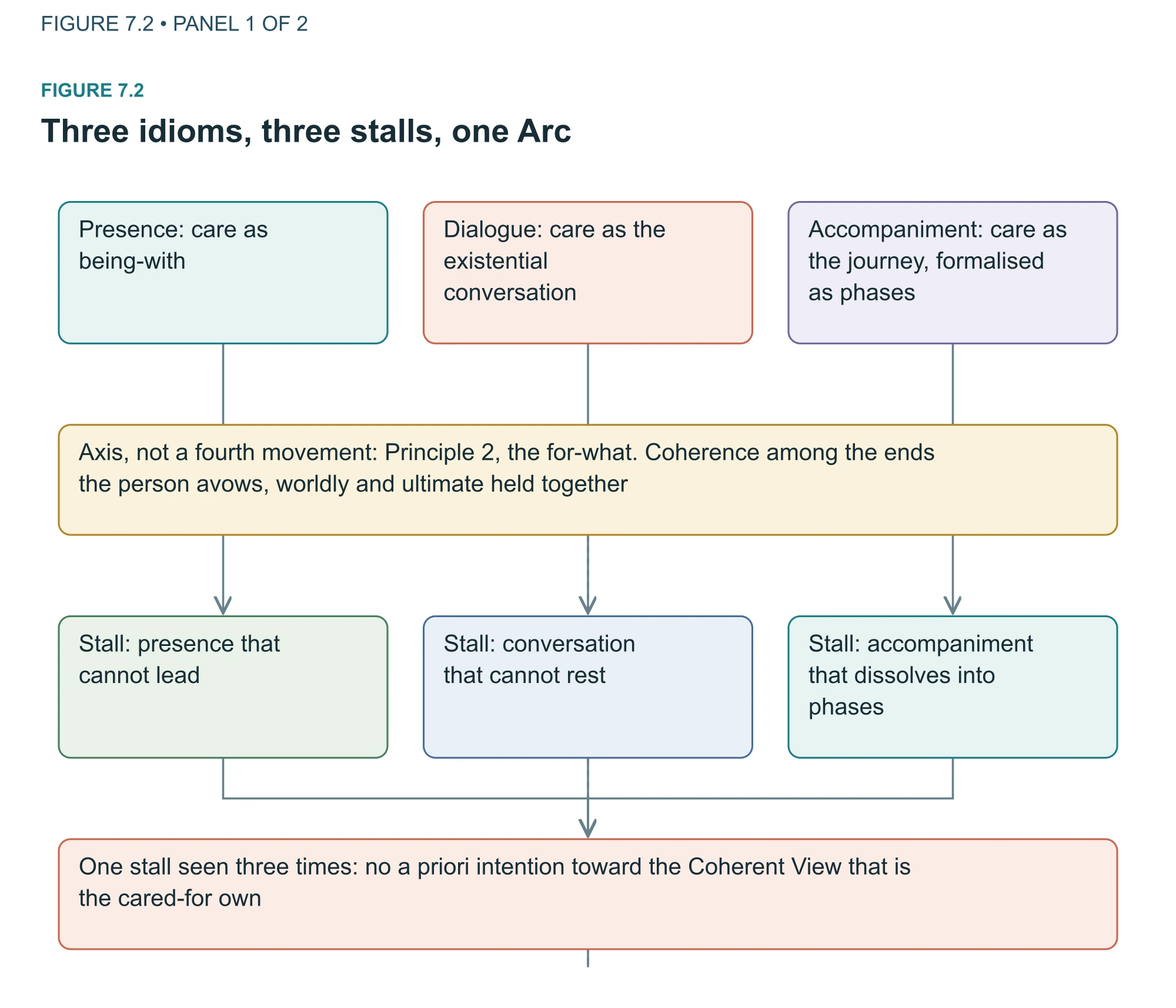
Figure 7.2. Three idioms, three stalls, one Arc. Panel 1 of 2.
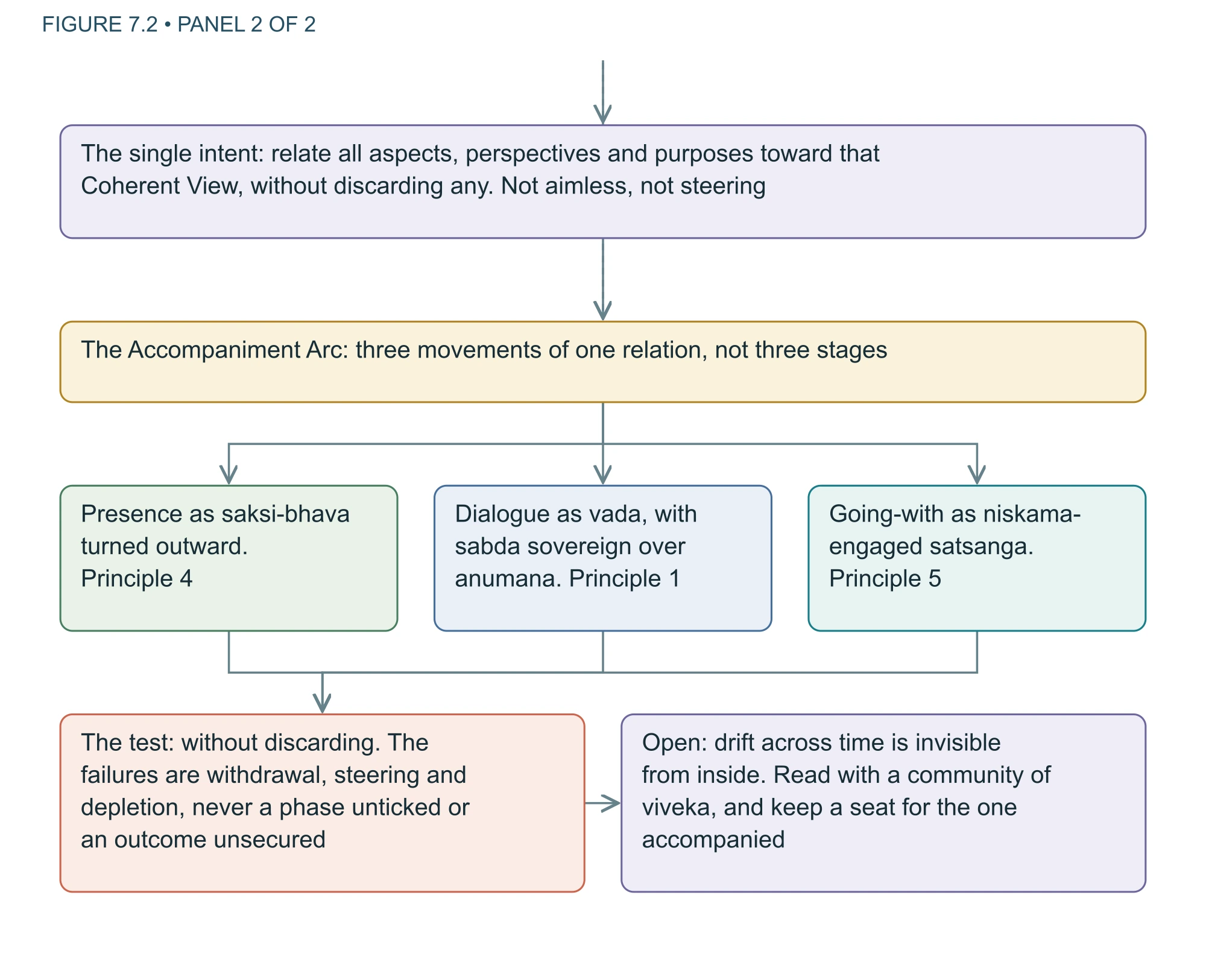
Figure 7.2. Three idioms, three stalls, one Arc. Panel 2 of 2.
4. Knowing in this domain (K1-K4) - the relation the field can describe and the one it must inhabit
The relational paradigm can teach, and certify, the lower levels of knowing, and it is at the higher levels that accompaniment lives. In the terms of the Knowledge Model, the field is secure at K1, the informational level - command of the models of presence, the phases of the process, the vocabulary of empathic communication - and at K2, the skilful level - the craft of active listening, the discipline of opening an existential conversation, the running of the phases. Accompaniment requires more. It requires K3, the contextual level at which the caregiver actually occupies the cared-for's standpoint, the deep listening that knows what it is like to be where the other is, and it is realised at K4, the immediate-relational level - the aparokṣa, the direct and unmediated - at which presence is no longer a posture performed but the caregiver's spontaneous way of being-with, the silence that needs no technique because it is the stance. Polanyi's (1966) account of indwelling, of attending from one's subsidiary awareness to a focal whole, names from the Western side the tacit knowing that K4 brings to a person rather than to a problem.
The §2 diagnosis restates exactly in this vocabulary. The field can guarantee K1 and K2 and can only gesture at K3 and K4 - it has the words 'presence', 'being-with', 'the relationship', and it has no method for forming what they name - because K3 and K4 are not further communicative skills to be added but a transformation in the one who relates. This is the same caregiver-transformation that Chapter 5 named formation and that Chapter 6 required for discernment: presence, discernment and formation are one ascent seen from three sides, and the controlling consequence is that one cannot be present at K4 with a caregiver formed only to K1 and K2. The relational competencies certify the having of skills; accompaniment asks for the changing of a knower, which is a change of kind and not of degree. Bhawuk's (2020) thesis, vāde vāde jāyate tattvabodhaḥ - 'through dialogue upon dialogue, knowledge of truth is born' - names this movement from the skilful to the realisational level inside the conversation itself: accompaniment is not only the setting in which knowing occurs but a means by which the person's own coherence is progressively realised, the K2-to-K4 ascent enacted in the relation rather than prepared before it. The lead voice is the Knowledge Model applied (Bindlish 2026), with its reading of deep listening as the contextual level and the formation-and-discernment ascent of Chapters 5 §4 and 6 §4 carried alongside.
5. Western interlocutors
The relational paradigm has been built by a small number of decisive voices, and the Integrative reading owes each of them a debt before it parts company with any. This section takes the field's leading interlocutors on the care relation one at a time, states each in its own strongest terms, and marks precisely the residue the §3 reframe is needed to carry - the differentia made concrete against the nearest things the reader already knows.
The purest statement of care as presence is Henri Nouwen's. The friend who matters, Nouwen (1974) writes, is the one 'who can be silent with us in a moment of despair or confusion, who can stay with us in an hour of grief and bereavement, who can tolerate not-knowing, not-curing, not-healing'. The formulation is decisive because it names exactly what the instrument-and-outcome models of Chapter 6 discard: that care, at its root, is a being-with that does not reach for a result. Nouwen's contribution is foundational to everything this chapter argues, and it is not to be softened. The residue is the one §2 and §3 isolate. Presence, as Nouwen frames it, is defined by the renunciation of aim - it is care precisely in so far as it does not try to fix, cure or move - and so it cannot say toward what the staying-with tends. The Integrative move keeps Nouwen's non-instrumentality entire and restores its lost directionality: Integrative presence intends the cared-for's own Coherent View, which is neither a cure imposed nor an outcome engineered but the person's own reality, related and held. It is directional without being directive.
Carl Rogers supplies the closest Western near-match to a dialogical stance. The therapeutic relation, on Rogers's (1957) account, turns on a small set of 'necessary and sufficient conditions' - the helper's congruence, unconditional positive regard, and empathic understanding - offered to the client as the active ingredients of change. These conditions are rightly foundational to the spiritual-care conversation, and the Integrative reading endorses them as the floor of any accompaniment worth the name. Two residues carry forward from the parallel treatment in Chapter 5. First, the core conditions are the qualities of one helper offered to a client within a dyad; they do not yet carry the 'among all observers' reach that the Integrative intent requires, the relating of all of a person's world - family, tradition, the staff around a bed - toward coherence. Second, they leave the helper's self in place as their bearer: it is the congruent, regarding, understanding I who supplies them. The Integrative reframe (§3) de-centres exactly that self, and §6 will name how.
Standing behind Rogers, and behind the whole relational paradigm, is the one Western thinker who had already made the care relation his first philosophy: Martin Buber. The distinction at the centre of Ich und Du (Buber 1923) is between two 'basic words' - I-Thou, spoken with one's whole being to another met as a whole, and I-It, the stance that experiences and uses the other as an object among objects. 'All real living is meeting', Buber writes (alles wirkliche Leben ist Begegnung); the self is not prior to the relation but realised within it, for 'in the beginning is the relation'. In the essays of Between Man and Man (Buber 1947) this becomes a typology of dialogue exact enough to grade the bedside: genuine dialogue, in which 'each of the participants really has in mind the other or others in their present and particular being and turns to them with the intention of establishing a living mutual relation', is set against technical dialogue, prompted only by the need of objective understanding, and against monologue disguised as dialogue, in which two people meet in space yet each speaks only with himself. To this Buber adds two notions the chapter's argument has needed without naming them. The first is confirmation - accepting and confirming the other in their very being, not merely tolerating them. The second is inclusion (Umfassung), the act of 'imagining the real': swinging across into the other's side of the relation and feeling the event from there without ceasing to be oneself. No Western source comes closer to what §§3-4 call accompaniment - presence as whole-being meeting, dialogue as confirming mutuality, and inclusion as the very K3 occupying-of-the-other's-standpoint that Rogers's empathy approaches and Buber states outright. Buber is, in short, the chapter's nearest Western near-match, and is owed the fullest debt before any differentia is drawn.
The differentia against Buber is correspondingly the most instructive in the section, and it falls precisely at the point of intention and duration. The I-Thou meeting, for Buber, cannot be willed, planned or held: the Thou 'meets me through grace - it is not found by seeking', and - decisively - 'every Thou in the world is by its nature fated to become a thing', so that the meeting is by Buber's own insistence momentary, ungovernable, and forever lapsing back into the I-It of role and task. This is exactly what an a priori intention 'towards a Coherent View... without discarding' (Chapter 4), sustained as the continuing shape of a relation (§3), is not permitted to be on Buber's terms - for to intend the meeting, or to hold it as a method, is already to have made it an It. Where Buber makes the relation an end in itself whose entire meaning is the meeting, the Integrative accompaniment is directional: it intends the cared-for's own coherence and sustains that intent across time, through and beneath the inevitable returns to the It-world of charts and rounds that Buber rightly says cannot be abolished. The Integrative does not dispute that the pure meeting cannot be commanded; it locates care not in the willing of the meeting but in the formed and abiding stance that makes one available to it and that carries the relation when the meeting recedes - and that is just the cultivation Buber's grace-given, fugitive Thou cannot supply but the sākṣī-bhāva of §6, an abidingly formable witness-stance, can. Buber's own most exacting witness on this point is the public dialogue he held with Carl Rogers in 1957, where he refused Rogers's claim that helper and helped meet in full mutuality: the helping relation, Buber held, is structurally one-sided - the carer can practise inclusion, the cared-for cannot reciprocate it - a limit the Integrative reads not as a failure of mutuality but as the proper shape of a relation aimed at the other's coherence and not at a shared product. Buber names the meeting and its grace; the Dharmic resource of §6 forms the one who can keep being-with when, in Buber's own terms, the Thou has lapsed into an It again. (Note 8.)
If Buber is the chapter's nearest near-match on the form of the relation, Emmanuel Levinas is its deepest near-match on the ethics of it, and he presses the asymmetry that the 1957 Buber-Rogers exchange only glimpsed into a first philosophy. For Levinas, ethics precedes ontology: before the self knows or comprehends anything, it is already claimed by the Other. That claim arrives in the face (le visage) - the other person met not as a datum to be grasped but as a presence that 'overflows the idea of the other in me', resisting every attempt to reduce it to a theme or a category (Levinas 1961). The face speaks, and its first word is an imperative - 'thou shalt not kill' - so that to be faced is to be summoned to responsibility before any choice to accept it. This responsibility is asymmetrical and non-reciprocal: I am, Levinas insists, responsible for the Other without waiting for reciprocity, and my obligation does not depend on what the Other owes me; in the later idiom of Otherwise than Being (Levinas 1974) it deepens into substitution, the self as 'the one-for-the-other', hostage to a neighbour it did not choose. No Western philosopher states more exactly what §§3-4 mean by a relation aimed at the other's coherence and not at a shared product: the caregiver is for the cared-for before, and independently of, any assessment of them, and the suffering face at the bedside commands attention before it is understood - which is the philosophical warrant, deeper than Buber's, for the śabda-sovereignty of Chapter 6 §6 and the non-imposition clause of Chapter 4 §4. Levinas even names Buber's limit for us: in 'Martin Buber and the Theory of Knowledge' (Levinas 1993) he honours the I-Thou while faulting its reciprocity and its formal, spiritual evenness for missing the height and the destitution of the Other - the concrete asymmetry between the one who is comfortable and the one who suffers - so that the very asymmetry the chapter drew from the Buber-Rogers dialogue is, in Levinas, raised to a principle.
The differentia against Levinas falls on two axes, and it is as instructive as the one against Buber. The first is totality and knowability. Levinas secures the Other's inviolability by placing them beyond all comprehension: the Other is infinitely transcendent, an alterity that no knowing may encompass, and his masterwork opposes, in its very title, infinity to totality - ethics set against the totalising ambition of ontology, against every philosophy that would gather self and other into one whole. Here the Integrative parts company at its foundation. Where Levinas guards the Other against unity, the Integrative grounds care in Integral Unity - ekaṃ sad viprā bahudhā vadanti (§6, Principle 1) - and holds the cared-for not as an absolute alterity sealed from knowing but as a node-in-relation whose own Coherent View can be intended and progressively approached without discarding any of their reality (Bindlish 2026). The two are not as far apart as the vocabulary suggests: the Integrative's Coherent View is never the caregiver's possession of the other, and its 'without discarding' honours precisely the irreducibility Levinas defends. But the Integrative reads transcendence as transcendence-in-relation, not transcendence-against-relation, and so can give accompaniment a shape that Levinas, on his own terms, cannot. That is the second axis, direction. Levinasian responsibility is infinite, an-archic and non-thematisable - it must not congeal from the living saying (le Dire) into the said (le Dit), from the event of being-for-the-other into a method or a role - and it is, by design, without measure or terminus. This is Buber's ungovernable Thou radicalised into an obligation that can never take the form of a formed, sustained, directional relation: an infinite claim without an arc. The Integrative keeps Levinas's priority-of-the-other and his asymmetry entire, and supplies what his an-archic responsibility refuses itself - the a priori intention toward the cared-for's Coherent View, carried as a formable and abiding stance. And it is again the sākṣī-bhāva of §6 that does the work Levinas leaves undone: a witness-stance, cultivable and durable, that lets responsibility-for-the-other be carried over time without collapsing into either the possession Levinas rightly fears or the momentary, measureless election that is all his ethics will license. Levinas names why the caregiver is for the Other; the Dharmic resource of §6 forms the one who can remain so, in a shape, across the whole relation. (Note 9.)
Taken together, Buber and Levinas mark the two horizons of the Western thinking of the care relation - the meeting and the summons - and the chapter stands between them: with Buber on the reality and the grace of the encounter, with Levinas on the priority and asymmetry of the Other, and with neither on the governing question of direction, which both, for their different reasons, decline to give. What the Integrative adds to both is the same thing it added to Nouwen's presence and Wolfelt's companioning: a relation that is neither engineered nor merely awaited but intended - toward the cared-for's own coherence - and formed to be sustained. The pairing carries forward to Chapter 10, where responsibility-for-the-other is tested at the limit that can accomplish nothing, and Levinas's 'infinite' obligation meets the niṣkāma arc that lets it endure.
Both, though, describe the relation from outside the one who enters it: what it is, and what it claims. Simone Weil presses closest of all to the one thing §6 will have to supply from within: the inner act that presence, meeting and summons each presuppose but none of them names. That act is attention (attention). For Weil, attention is not the muscular concentration of the will but its near-opposite - a suspending of one's own thought, 'leaving it detached, empty, and ready to be penetrated by the object', so that the soul empties itself of its own contents in order to receive the very being of what it looks upon (Weil 1950). Its purest expression is a question, and it is the question this whole chapter has been circling: 'The love of our neighbour in all its fullness simply means being able to say to him, "What are you going through?"' To attend so is, Weil insists, 'a very rare and difficult thing; it is almost a miracle; it is a miracle' - for it requires that the one who attends make room by un-selfing, and it is here that Weil states, in a Western and largely Christian idiom, the exact operation the Dharmic resource of §6 will name. Her term for the un-selfing is décréation (decreation): the undoing of the created 'I', the one possession that is wholly ours and therefore the one thing we are called to renounce - 'we possess nothing in the world … except the power to say "I". That is what we have to give' (Weil 1947). No Western source in this section comes nearer to the ahaṃkāra-quieting (the stilling of the I-making, the doer-sense) that §3 requires and §6 forms: where Nouwen asks the caregiver to tolerate not-curing and Buber to await a Thou that cannot be willed, Weil specifies the inner cost - the self must be emptied for the other to be received whole - and makes that emptying, not any technique of relating, the very substance of attention. She is, in short, the chapter's deepest Western near-match not on the form of the relation (Buber) or its ethics (Levinas) but on its inner act; and it is precisely because she comes so close on that dimension that her differentia, drawn next, is the one that sets up §6 most directly.
The differentia against Weil falls on two axes, both turning on what the emptied attention is for and on what becomes of the self that empties. The first is direction and terminus. Weil's attention is, in the last analysis, a waiting - the work that carries it is titled Attente de Dieu, waiting on God - and the neighbour is loved under what she names the implicit forms of the love of God: the afflicted other is attended to in full, but the attention passes through the sufferer toward the supernatural good, the human face a transparency to the divine. The Integrative reads the direction the other way about. Its attention is directional toward the cared-for's own Coherent View (Chapter 4) - the person is the terminus of the intent, not a window onto something beyond them - and it relates the whole of the person's reality without discarding any of it, where Weil's decreation must, by its own logic, be ready to discard the very self it empties. The second axis is the self emptied versus the witness awakened. Weil's décréation is a destruction of the 'I', an annihilation modelled on renunciation toward the void; the sākṣī-bhāva of §6 does something structurally different - it does not destroy the self but quiets the ahaṃkāra while heightening the sākṣī (the witness that stays awake), so that the one who attends is neither asserting a self nor abolishing one but re-centred from doer to observer (Principle 4). The distinction is not scholastic: it bears directly on depletion, the failure §7 names as the collapse of the third movement of the Arc. Weil's attention to affliction is by her own account all but unsustainable - 'almost a miracle' - and her own life has been read as its exhibit, attention pursued to the point of self-consumption; the witness-stance, by contrast, is a formable and abiding capacity (Chapter 5) carried by the niṣkāma without-doership of §6, which lets one attend fully and yet not be used up. Weil names, more exactly than anyone in the Western canon, the emptying that presence demands; what she cannot supply, and what §6 forms, is the emptying that does not annihilate the one who performs it, and that can therefore be held across the whole length of a relation. (Note 11.)
John Swinton names the field's gap from inside the field. Spiritual care, Swinton (2012) insists, is not a generic add-on to clinical work but an attending to the person's humanness and wholeness - the very thing a positivist, instrument-led construal of the spiritual cannot secure. His insistence supplies the warrant for treating presence as more than a soft skill, and the Integrative reading adopts it without reservation. What Swinton diagnoses but does not supply is the account of what holds the relation together once it is granted that care is about wholeness: the missing term is the intent toward the Coherent View, which §3 installs and §6 deepens. (Swinton is engaged here at second hand, through the critique of generic spirituality already in play from Erşahin 2021; direct reading is flagged for a subsequent pass.)
The field's own most developed attempt to give the relation a shape is the process model, and it must be met at first hand because it is the strongest version of the position §3 reframes. Damberg Nissen, Viftrup and Hvidt (2021) render spiritual care 'as a process involving a number of organically linked phases: (1) the identification of spiritual needs and resources, (2) understanding the patient's specific needs, (3) developing an individual spiritual care treatment plan … (4) the provision of spiritual care, and (5) evaluating the spiritual care provided'. The merit is real - the model recovers the unfolding of care that a single captured datum loses, and it is careful to add that 'every local context, patient, and provision of spiritual care is unique'. The residue is the §3 one exactly: a relation decomposed into linked phases is a relation made auditable, and what slips out between the phases is the continuity that is the care - the accompaniment that an encounter can complete phase by phase while never becoming a relation at all. The Integrative reading does not reject the phases; it relocates them inside a single sustained intent, so that identifying, understanding, planning, providing and evaluating are moments of an accompaniment rather than a sequence that substitutes for one.
Behind the conversation idiom stand the great theorists of undistorted dialogue. Bohm's (1996) suspension of assumptions and Habermas's (1984) ideal speech situation give the cleanest available norms for talk that is not covertly coercive, and the Integrative account of dialogue is built on their insight (Bindlish 2026). Their stall, argued at length there and taken up here, is that success is indexed to shared meaning or agreement: the persistent, reasonable, unresolved difference that is the daily texture of bedside conversation reads, on their terms, as a failure of dialogue rather than as a possible Integrative outcome - perspectives aligned toward a Coherent View without being collapsed into consensus (Bindlish 2026). They are engaged here at second hand as the consensus near-match; the primary reading belongs to that work.
The accompaniment idiom has a second articulation, more influential outside the chaplaincy than any other, and it belongs here because it names the going-with in the register the field is most tempted to forget - that of solidarity. In the addresses and essays gathered as To Repair the World (Farmer 2013), the physician-anthropologist Paul Farmer made accompaniment the name of a whole ethic of care: 'To accompany someone', he wrote, 'is to go somewhere with him or her, to break bread together, to be present on a journey with a beginning and an end... I'll go with you and support you on your journey wherever it leads. I'll share your fate for a while.' And - decisively for this chapter - 'by "a while," I don't mean a little while. Accompaniment is much more often about sticking with a task until it's deemed completed by the person or people being accompanied, rather than by the accompagnateur.' No formulation in the Western literature holds two of §3's insistences together so tightly. It is directional where Buber's meeting and Wolfelt's companioning refuse direction - the accompagnateur does not merely dwell in the other's pain but goes with them toward something - and, more strikingly still, the direction is set by the accompanied and not by the carer: the task is deemed complete by the person accompanied, which is as close as any Western source comes to the clause that the relation is aimed at the cared-for's own end and not the caregiver's (Chapter 4; Ch 6 §6 on śabda-sovereignty). Farmer supplies, too, what a spiritual care that stayed purely interior would lose - the reminder that to accompany the afflicted is often to share their material fate, to secure the medicine, the housing, the long structural remedy, and that a presence which will not do this is a thin thing. The Integrative reading takes all of this without subtraction.
The differentia falls on the terminus, and on what is meant by 'with'. Farmer's accompaniment ends: it is oriented to a task that can be 'deemed completed', a remedy delivered, a fate shared through to its resolution - and its paradigm case is the just outcome, the structural wrong set right, what Farmer elsewhere calls 'pragmatic solidarity' with the poor. The Integrative intent is aimed not at a task that completes but at a Coherent View that is, by its nature, a horizon and not a terminus - the relating of all of a person's aspects, perspectives and purposes toward a coherence 'without discarding' any of them (Chapter 4), which no accomplished task exhausts and no delivered remedy closes. Where Farmer aligns the going-with to the other's declared goal, the Integrative aligns it to the other's coherence, which the goal may serve but does not constitute; the person whose structural remedy is secured, whose task is 'deemed completed', may be no nearer the coherence that is the care's real intent - and it is exactly there, when the task is done and the accompagnateur may in good conscience depart, that the spiritual-care relation is often only beginning. The second axis is the cost. Farmer's carer 'shares your fate', binding himself to the other's condition; the resource of §6 forms a going-with that can be sustained because it does not fuse - the sākṣī-bhāva that attends the whole of the other's fate without being consumed by it, carried by the niṣkāma without-doership that §6 will name. Farmer states, more bracingly than anyone in the pastoral canon, the solidarity that presence must not lack; what he does not supply, and what §6 forms, is the interior stance that lets that solidarity be borne toward a horizon which does not close, without using up the one who bears it. (Note 12.)
Finally, and most sharply, the companioning model. Alan Wolfelt's (2006) grief-care principle - that 'companioning is about being present to another person's pain; it is not about taking away the pain' - is the journey idiom's most disciplined statement and the pivotal near-match for accompaniment, because it refuses both fixing and leading. The Integrative reframe stands closest to Wolfelt and parts from him on one point only, which is the whole point of §3: where companioning makes non-direction a principle, the Integrative supplies a direction - the cared-for's own coherence - that is neither fixing nor leading but the third thing the field's binary cannot name. (Wolfelt is engaged from the companioning literature and flagged for direct reading; the principle is quoted as it circulates in grief-care practice.)
6. Dharmic resources, brought alongside
The Western interlocutors converge on a single lack: each can describe the care relation richly, and none can say what de-centres the caregiver enough for presence to be more than passivity, what keeps the conversation honest without making it a contest, or what sustains the going-with at a limit it cannot move. The Dharmic tradition is brought alongside here not as an authority that settles these questions by assertion but as a resource that has thought each of them directly. Three resources are offered, one for each face of the relation named in §1, and each is transliterated and glossed so that it can be followed as philosophy.
Presence is deepened by the figure of the witness. The tradition names an inner posture that makes non-instrumental attending more than mere waiting: sākṣī-bhāva (the stance of the witness-consciousness), the attitude of the draṣṭṛ (the seer) who, in the Yogasūtra's formula draṣṭā dṛśimātraḥ (YS 2.20), is 'seeing only' - awareness that attends fully without appropriating what it sees. Integrative presence is sākṣī-bhāva turned outward in care: a being-with cleared of the caregiver's ahaṃkāra (the I-making, the doer-sense), and therefore able to rest on the person rather than on the caregiver's own anxiety about helping. This is what gives presence its directionality without instrumentality - it intends the person's reality, not the caregiver's relief - and it is the resource Nouwen's 'tolerate not-curing' requires but cannot itself form. The capacity is not innate but cultivated, and the tradition specifies its discipline: the four attitudes of maitrī, karuṇā, muditā and upekṣā - loving-kindness, compassion, sympathetic joy and equanimity (YS 1.33) - carried here from the caregiver's formation in Chapter 5 §6. Upekṣā (equanimity) is precisely the capacity to stay-with the distressing without flinching from it that the being-with literature describes and cannot teach. Presence so understood answers Principle 4 of the Integrative Paradigm: it is the attending of one in whom the observer is awake and the doer is quiet.
Dialogue is deepened by the Nyāya analysis of disciplined speech, brought here into its most intimate setting. The tradition distinguishes three modes of kathā (structured discourse): vāda (truth-directed exchange, in which both parties are open to where the matter leads), against jalpa (wrangling to win) and vitaṇḍā (mere destructive cavilling). The care-specific point is that the degenerate modes at the bedside are not the eristics of the debating hall but the subtler failures §2 diagnosed: the covert-steering conversation is a soft jalpa - winning the person to the caregiver's reading under the manner of warmth - and the contentless rapport is a vitaṇḍā-like exchange that unsettles nothing and advances nothing. The five-membered statement, the pañcāvayava (pratijñā - hetu - udāharaṇa - upanaya - nigamana: claim, ground, example, application, conclusion), is not deployed as a debate engine upon the person, which would itself be a jalpa; it is the caregiver's internal discipline of making their own reasons inspectable to themselves - am I inferring this distress, or has the person said it? Here the ordering carried from Chapter 6 §6 is load-bearing: the cared-for's śabda (their own testimony) is sovereign and is not to be overridden by the caregiver's anumāna (inference). And the warrant for a conversation that relates rather than corrects is the Ṛgveda's ekaṃ sad viprā bahudhā vadanti - 'truth is one, the wise speak of it in many ways' (ṚV 1.164.46), Principle 1: the person's strange, contradictory or distressing account is difference of perspective on one reality, to be related and not put right. That dialogue conducted as vāda is itself a means of realisation, not merely a transfer of conclusions, is the point of the maxim vāde vāde jāyate tattvabodhaḥ - 'through dialogue upon dialogue, knowledge of truth is born' (Bhawuk 2020).
Accompaniment is deepened by two resources held together. The first is satsaṅga (keeping-company with the true or the good), the tradition's name for the relation in which presence over time is itself formative and consoling - company kept, rather than a service rendered, so that the going-with is the care and not its delivery mechanism. The figure who keeps it is the kalyāṇa-mitra (the spiritual friend, the good companion) who goes with rather than ahead. The second is the resource that lets accompaniment continue where it can accomplish nothing: niṣkāma karma (action without desire for its fruit), the Gītā's karmaṇy evādhikāras te mā phaleṣu kadācana - 'your right is to action alone, never to its fruits' (BG 2.47). Against the phase-workflow of §2, this is what holds the arc together: the caregiver walks the whole way fully engaged and unattached to producing an outcome, which is exactly the disposition that lets one stay at a limit that cannot be moved (forward to Chapter 10). Its ground is Principle 5 - we are all connected - on which the other's road is not external to the caregiver but, in the relevant sense, shared; and its portrait is the sthitaprajña (the one of steady wisdom) of Bhagavadgītā 2.54-72, carried from Chapter 5, and drawn at length in Philosophy of the Integrative (Bindlish 2026) - the companion equanimous enough to walk a road whose end is not in their hands.
These three resources answer, in order, to three principles of the Integrative Paradigm: Principle 1 (Integral Unity - the person's account is one truth differently spoken, not noise to be filtered), Principle 4 (the de-centred ahaṃkāra of the one who is present and who speaks), and Principle 5 (we are all connected - the ground on which accompaniment is a shared road and not a service delivered across a gap). Brought alongside the Western interlocutors of §5, they do not replace Nouwen, Rogers, Swinton or Wolfelt; they supply the account of formation, honesty and endurance that each of those positions needs and none of them, on its own terms, can give.
The three resources so far brought alongside equip the manner of the relation - how to attend, how to speak, how to stay - and the summary above maps them, rightly, to three of the Paradigm's five principles. But a relation has not only a manner; it has an end, and the why - for what? of accompaniment, the question Principle 2 governs, is the one the three faces leave unspoken. Accompaniment has been said throughout to intend 'the cared-for's own emerging coherence'; it has not yet been said a coherence among what. The nearest Western statement that a human life is constituted by an ordering of ends is Charles Taylor's account of the self as a self-interpreting animal who exists only within a 'space' of qualitative distinctions of worth (Taylor 1989). To be a self, on this account, is to know where one stands in relation to the good: our identities are defined by the commitments that furnish 'the frame or horizon within which [we] can... determine... what is good, or valuable, or what ought to be done', and to lose that orientation - to no longer know which goods lay a claim on one - is not a deficit of information but a crisis of identity, a kind of vertigo, the unmaking of a self. Taylor calls the higher goods by which we weigh and rank the rest strong evaluations, and the goods that stand over and order the others hypergoods; a life, on his telling, is not a sum of desires met but a shape given by what one holds worth wanting.
Taylor names, then, exactly what the three relational resources presuppose and never state: the cared-for is not a bundle of needs to be met but a life oriented - however brokenly - within a space of goods, and the coherence accompaniment intends is a coherence of that orientation. Where the Integrative parts from him is on the content of the goods and the manner of their holding. Taylor's framework is deliberately formal - it establishes that we cannot but orient by strong evaluations and leaves the substance to be articulated within each agent's tradition - and his hypergood, ranking the rest, can cast the lower goods into shadow, so that order is bought by subordination. Principle 2 supplies both a definite space and a different holding. The space is the fourfold of the puruṣārthas - Dharma (the right), Artha (the means of prosperity), Kāma (worldly desire) and Mokṣa (liberation) - the acknowledged ends of a human life; and the holding is holistic attainment, the worldly (abhyudaya) and the ultimate (niḥśreyasa) pursued together and not one purchased at the other's cost, on the old formula that dharma is 'that from which the attainment of both worldly flourishing and the highest good follows' (yato 'bhyudaya-niḥśreyasa-siddhiḥ sa dharmaḥ; Vaiśeṣika Sūtra 1.1.2). Dharma here is not one more good set beside the others but the ordering among them, which lends the fourfold its direction while letting no member be discarded - the alignment-not-summation of the Coherent View (Chapter 4) read at the level of a life's ends.
For accompaniment the consequence is exact, and it is the śabda-sovereignty carried from Chapter 6 §6 into the register of ends. The caregiver neither supplies the person's goods nor ranks them - to do either would be the imposed coherence the whole chapter refuses (Ch 4 §4) - but goes with the person toward the person's own holistic ordering, relating every end the person avows, the worldly no less than the ultimate, without discarding any (Chapter 4). This is why the woman's grief in §8 is accompanied and not corrected: her coherence is hers to find among her own ends, and the going-with intends that finding rather than a settlement the caregiver would prefer. Principle 2 is therefore not a fourth movement to be bolted onto the Arc but the axis along which the Arc travels - the for-what that presence, vāda and niṣkāma-satsaṅga serve. One principle of the five is by now enacted across the whole chapter and still unnamed: Principle 3, our actions follow embodied knowing - the tacit, formed, sākṣī-borne knowing-in-action that §4 read through Polanyi and §8 through Schön - is everywhere at work in how accompaniment is done and nowhere yet drawn as such. It is left to the chapter on the limits of care (Chapter 10), where embodied knowing is what remains when there is nothing left to know, to name it.
7. Models, frameworks and practices (the chapter's contribution to the inventory)
The chapter contributes one named, reusable framework and one care-specific re-use of an existing one, both built to hold the field's three idioms together under a single intent rather than to sum them.
The framework is the Accompaniment Arc - presence, dialogue and going-with as one relational practice in three integrated movements. The first movement, presence, is sākṣī-bhāva turned outward (§6): the de-centred, fully-attending being-with formed in Chapter 5, which intends the cared-for's own reality rather than the caregiver's relief, and so is directional without being directive. The second, dialogue, is vāda (§6): truth-directed conversation in which the caregiver's words serve the person's coming-to-coherence, the cared-for's śabda (their own testimony) sovereign over the caregiver's anumāna (inference), and the soft jalpa of covert steering refused. The third, going-with, is niṣkāma-engaged satsaṅga: the relation sustained over time, fully engaged and yet unattached to producing an outcome, so that it can continue at a limit it cannot move. The three are not a sequence to be completed but three faces of one accompaniment, and the differentia from the field's models is carried in how the Arc is tested. Its test is not a phase ticked or an outcome secured but whether, across the whole relation, the caregiver has related all of the person's reality toward the person's own emerging coherence without discarding any of it (Chapter 4) - and has done so without withdrawal, the failure of presence, without steering, the failure of dialogue, and without depletion, the failure of doership. Read against §2, the Arc is the hāna of the chapter given a working shape: it names the desired state that the split construal of the relation - presence-without-direction set against conversation-as-technique and journey-as-workflow - could not.
The Arc is therefore diagnostic as much as it is a practice. Like the Caregiver Formation Triad of Chapter 5 §7 and the Discernment Ladder of Chapter 6 §7, it locates strain at the movement that has stalled: a relation that has slid into doing-for has lost its presence; one that has slid into steering has lost its vāda; one in which the caregiver is depleted has lost the without-doership that lets going-with endure. The third of those is not quite like the other two, and §8 says why. Withdrawal and steering are things that have happened to a relation; depletion is something that has happened to a person, and an instrument that can read it only as a stalled movement has already begun to count the caregiver as an input to somebody else's coherence. The diagnosis is kept here, and corrected there. The three diagnoses answer, in order, to Principles 1, 4 and 5 of the Integrative Paradigm (§6) - the person's account received as one truth differently spoken, the ahaṃkāra (the I-making) of the one who is present and who speaks held quiet, and the connectedness on which accompaniment is a shared road and not a service delivered across a gap. Table 7.1 sets the three movements out for use.
Table 7.1 The Accompaniment Arc: what each movement intends, and the sign that it has gone out.
Movement | What it intends | The sign it has gone out | Not to be confused with | One move back, at the next encounter |
|---|---|---|---|---|
Presence - sākṣī-bhāva turned outward | The person's own reality, attended to fully and without appropriating it | Withdrawal: the visit has become routine, and the caregiver is attending to the encounter rather than to the person inside it | Silence, which may be full or empty; and busyness, which can look like care from the corridor | Arrive without the chart, and stay through one silence you would ordinarily fill |
Dialogue - vāda | The person's coming-to-coherence in their own words, their testimony (śabda) sovereign over the caregiver's inference (anumāna) | Steering: the soft jalpa, in which warmth carries the person toward the caregiver's reading of them | Disagreement, which vāda permits and may end in; and plain honesty, which is not steering | Ask one open question whose answer you cannot predict, and let the answer stand without repair |
Going-with - satsaṅga held as niṣkāma karma | The relation sustained where it can accomplish nothing, fully engaged and unattached to its fruit | Depletion, or its mirror over-attachment: either way the caregiver is now carrying the outcome | Stepping back for good reason, which is not abandoning; and detachment, which mistranslated becomes coldness | Return once more with nothing to achieve, and say when you will next be there |
The three are faces of one relation rather than stages of a process, and the axis running beneath them is Principle 2's question of a coherence among what - an ordering among the ends the person themselves avows, which the caregiver neither supplies nor ranks (§6). The table locates a stalled movement; it does not score a relation, and the drift it is least able to catch is the one the caregiver inside the relation cannot see (§8).
The second contribution is a care-gentled re-use of the Pseudo-Reasoning guard, and because a guard is only usable by someone who knows what it guards against, the apparatus is stated here rather than pointed at. Nyāya sets beside its account of vāda a taxonomy of the ways a reason can be defective, organised under four heads. Hetvābhāsa is the reason of merely fallacious semblance - from hetu, reason, and ābhāsa, mere appearance - and it comes in five kinds: savyabhicāra, the straying reason, which would carry equally to conclusions that exclude each other; viruddha, the reason that contradicts the very thesis it was offered to support; prakaraṇasama, the reason that only restates the question at issue; sādhyasama, the reason as unproved as the conclusion it is meant to establish; and kālātīta, the mistimed reason, true of a moment that has passed. Chala is quibbling on words, whether by equivocation, by illicit generalisation, or by literalising a metaphor. Jāti is the futile rejoinder from a mere similarity or dissimilarity of example. And nigrahasthāna is the ground of defeat, the point at which a party is shown not to have grasped their own proposition. The taxonomy is set out at length, with its classical worked illustrations and its Nyāyasūtra loci, in Philosophy of the Integrative (Bindlish 2026), after the author's working paper Integrative Dialogue: The Process of Pseudo-Reasoning in Dialogues (n.d.), itself a reading of the Nyāya tradition.
The care-gentling is a restriction, and it is a severe one. Three of the four heads are struck from the care setting altogether. Chala, jāti and nigrahasthāna all describe how one party defeats another, and to catch a frightened person in an equivocation, to answer them from a mere resemblance of cases, or to establish the point at which they no longer follow their own account, is not a misuse of the guard but precisely the jalpa the guard exists to prevent. What survives is hetvābhāsa alone, and it survives turned inward: it names the ways the caregiver's own reason about the person can be defective, and it is run by the caregiver on the caregiver. Table 7.2 sets out the five kinds in that inward form, each with the shape it takes at the bedside and the move back that vāda asks for.
Table 7.2 The Pseudo-Reasoning guard, turned inward: five ways a caregiver's own reason about a person goes wrong.
Defective reason | What is wrong with it | How it appears at the bedside | The vāda move back |
|---|---|---|---|
Savyabhicāra - the straying reason | It carries equally to conclusions that exclude each other | She has stopped speaking, so she has given up - where the same silence would carry as well to exhaustion, to shame, or to a mouth too dry to form words | Name the other readings the sign would bear, and ask rather than settle |
Viruddha - the contrary reason | It contradicts the thesis it was offered to support | He is at peace with it: he will not discuss it | Notice the evidence being made to prove its own opposite, and let the person's word decide |
Prakaraṇasama - the question restated | It re-describes the thing to be explained and files the re-description as a ground | She is in spiritual distress because she is spiritually distressed - the assessment that renames a behaviour and enters the name as a finding | Ask what would have to be true for the reading to be wrong |
Sādhyasama - the unproved ground | It rests on a premise the caregiver has also only inferred | The family are not coping - grounded on their not having visited, which nobody has yet asked about | Trace the inference back to the last thing actually said, and begin again from there |
Kālātīta - the mistimed reason | It was true of a moment that has passed, and is carried forward as current | The reading formed at the first visit, still governing the sixth | Date the reading, and re-open it at the encounter rather than at the file |
Only hetvābhāsa, the reason of fallacious semblance, is carried into the care setting; the three heads that describe defeating another party are struck, because running them upon the person would be the jalpa the guard exists to refuse. The guard is run by the caregiver on the caregiver, and it locates a defective inference rather than scoring a conversation.
The guard is therefore emphatically not an audit run upon the person; it is the caregiver's quiet self-check that their own contributions to the conversation are vāda and not soft jalpa - the single question, am I relating this person toward their own coherence, or winning them to mine? The last row reaches furthest. Kālātīta is the drift of §8 caught at the scale of a single inference: a reading that was sound when it was formed and has quietly stopped being true is exactly what the caregiver inside the relation cannot see, and dating a reading is the smallest thing that can be done about that alone. The guard makes the de-centring that §3 requires checkable in the act, without collapsing accompaniment into the technique it displaces.
Both belong in the book's inventory of instruments. The Accompaniment Arc carries its entry in the appendix Using This Book with an LLM, with a worked reflective prompt that walks a caregiver through a recent encounter on the three movements and surfaces where being-with slid into doing-for or dialogue into steering; it cross-refers the Caregiver Formation Triad (Chapter 5), the Discernment Ladder and the viveka Listening Audit (Chapter 6), and the Integrative Dialogue Protocol of Philosophy of the Integrative (Bindlish 2026). The care-gentled guard takes an entry of its own, and it must carry the restriction and not the bare taxonomy: the three heads struck from the care setting and the reason they are struck, then the five inward kinds of Table 7.2, each with the vāda move back beside it. An entry that set out the four heads unrestricted would hand a caregiver, in the book's own most portable pages, the instrument this chapter exists to withhold.
8. Applicability and cases
Where the Accompaniment Arc bites is most visible against the relation that does everything the field's models ask and yet never becomes a relation at all. The process model's own case material (Damberg Nissen, Viftrup and Hvidt 2021) and the chaplaincy case corpus re-read in Chapter 6 (Miles 2017) supply the contrast at first hand. A phased encounter can identify the spiritual needs, understand them, plan, provide and evaluate - completing, in the model's own words, the 'organically linked phases' - while the person is met as a series of tasks discharged rather than a life accompanied. Miles's warning that patients are too easily treated 'not as persons, but as subjects, objects or complex biological machines', and that 'not everything of value can be measured and not everything that can be measured is of value', names exactly the residue the Arc is built to keep; his counter-image, the chaplain 'listening intently to the person of the patient' across 'the evolving relationship', is accompaniment named from inside the field. Set the phase-completing encounter beside the accompaniment that stays-with: the caregiver who, holding the same five moments inside one sustained intent, lets the person's own coherence emerge rather than assembling it from the phases.
A single, deliberately composite bedside illustration shows the three movements at work. A woman some weeks into a difficult admission has stopped speaking to the staff; the chart records 'declines spiritual support'. The phase-driven response completes its workflow and moves on. Accompaniment does otherwise. Presence comes first: the caregiver sits without an agenda, sākṣī-bhāva turned outward, attending to her rather than to the discomfort of her silence - being-with that does not reach for a result and so does not read the silence as refusal. When she speaks, dialogue keeps to vāda: her own word leads, the temptation to console her with a hopeful redirection (a soft jalpa, managing the caregiver's own unease) is set down, and the open, śabda-weighted question - what has been hardest to say, these days? - relates her toward her own account instead of substituting the caregiver's. What surfaces is not a problem to be solved but a grief she had judged unspeakable. Going-with then carries the relation: the caregiver returns over the following days, fully engaged and unattached to her 'improving', niṣkāma karma the disposition that lets the visits continue when there is nothing to fix - the sthitaprajña companion of §6, equanimous enough to walk a road whose end is not in their hands. Nothing in the encounter is a phase the workflow lacked; what differs is that the five moments are held inside one intent, and so become a relation rather than a sequence.
Accompaniment so understood is what the rest of the book operates. It carries forward to Chapter 8 (Working across Traditions and Worldviews), where the caregiver and the cared-for inhabit different worlds and the ekaṃ sat of §6 does its sharpest work, the dialogue apparatus of §6 discharged there too; to Chapter 10 (Suffering, Meaning and the Limits of Care), where presence and going-with are exactly what remain when nothing can be done, the niṣkāma arc tested at the limit; into the case chapters of Part III (Chapters 11 to 21), each of which stages an accompaniment no single intervention could have produced; and to Part IV (Chapters 22 and 23), where the one accompanied is the one who has been doing the accompanying - the family carer who never chose the role, and the professional who did - and where the three movements of §7 are asked, for the first time, whether they are available to the caregiver on her own behalf. It rests, backward, on the stance that presence makes visible (Chapter 5) and the discernment the conversation carries (Chapter 6), and it draws throughout on the dialogue apparatus, the without-doership praxeology and the sthitaprajña portrait set out at length in Philosophy of the Integrative (Bindlish 2026).
The chapter's open research question is the one that runs through Chapters 5 and 6, now raised to the level of the whole relation: can the quality of accompaniment - presence, truthful dialogue, sustained going-with - be recognised and supported, for supervision and training, without being reduced to phase-completion or outcome-metrics, the very reduction §2 diagnoses? The Accompaniment Arc and its self-directed vāda check (§7) are offered as a first, deliberately non-metricised answer: an instrument that locates the stalled movement without scoring the relation. It is the alignment-not-summation problem (Chapter 4) met one level further out than the formation of the carer (Chapter 5) or the discernment of the moment (Chapter 6) - at the relation that holds them both.
That first answer is deliberately incomplete, and its limit is the same one Chapters 5 and 6 met one level in. The self-directed vāda check works only where the caregiver can see their own contribution truly, and the densest failures of accompaniment are, by nature, the ones the caregiver inside the relation cannot see. A relation that has slid from satsaṅga into a service quietly discharged, a presence that has hardened into routine, a going-with that has curdled into over-attachment or is running on toward depletion - these are drifts across time, and time is exactly what hides them: each visit is a small deviation from the last, and the caregiver who lived through the whole sequence has no vantage from which to notice that the sākṣī-bhāva went out of it three weeks ago. The blind spot Chapter 6 §8 named for the discernment of a moment compounds, in the sustained relation, into the drift of a whole arc. So the self-audit is necessary and not sufficient, and the recognition of accompaniment - for supervision, for training, for accountability - needs, as formation and discernment did, a second pair of eyes; but here the eyes must attend not to a single reading but to the shape of a relation over time, which is the harder thing to see and the easier thing to reduce.
The field's own most developed answer to how a practice-competence that exceeds any statable rule is nonetheless recognised and grown is Donald Schön's account of reflective practice, and it is engaged here at first hand on a dimension Chapter 5 left untouched. Schön (1983) sets technical rationality - the model on which professional competence is the application of research-based rules and techniques to instrumental problems - against the professional artistry that practitioners actually exercise in 'the swampy lowlands' of real cases, where problems are not given but must be set. That artistry is a knowing-in-action that is tacit, 'ordinarily... not able to describe the knowing which [the] action reveals', and it is developed not by mastering further techniques but by reflection-in-action (thinking about what one is doing while doing it) and reflection-on-action (the retrospective reconstruction of a case), characteristically in a practicum under a coach who does not transmit rules but helps the practitioner see their own framing. This is, from the Western side, a near-exact statement of the §8 requirement: it recognises and cultivates a quality of practice - the framing of the situation, the conduct of the relation - without ever reducing it to the metrics that technical rationality would impose, and its critique of technical rationality is the §2 diagnosis in the vocabulary of the professions. Reflective practice is the discipline by which the artistry of a sustained relation can be supervised at all; Schön names the coach and the reflective reconstruction that the recognition of accompaniment requires, and dovetails with the tacit knowing-in-action that §4 read through Polanyi.
Two residues carry, and they are the ones the chapter's whole argument predicts. The first is that Schön's reflection is indexed to the practitioner's own frame and, in the practicum, to the coach's - a bounded community of the professional and the professionally formed, which is de Jongh's community of accountability but not the 'among all observers' the Integrative intent requires (Chapter 4); the one observer most easily absent from the supervision of a relationship is the person who was accompanied. The second is that reflective practice, on its own terms, cultivates competent problem-setting and skilful framing without naming what the framing is for: left ungoverned it can refine a practitioner's artistry toward the practitioner's own ends - a more elegant jalpa, a more sustainable but still self-referred presence - which is the alignment-not-summation risk (Chapter 4) reappearing at the level of supervision itself. Artistry recognised is not yet artistry directed.
The Integrative reframe imports the community of viveka that Chapter 5 §8 built for formation and Chapter 6 §8 specialised to the supervision of discernment, and specialises it once more to the supervision of accompaniment - the relation that holds formation and discernment both. Its instrument is the Accompaniment Arc of §7 read not by the caregiver alone but with a formed and accountable community across the life of a relation, each of the three movements examined for its sign of subtraction rather than a tally of its presence: has presence withdrawn into routine (the failure §7 calls withdrawal), has dialogue slid into steering (the soft jalpa), has going-with curdled into over-attachment or thinned toward depletion (the failure of without-doership)? The reflective reconstruction Schön describes supplies the material - the caregiver's own account of the arc, offered to eyes that can see the drift the caregiver cannot - but three things keep it viveka and not pramāṇa scored. The office of the community is to return the caregiver their blind spot, to name where the sākṣī-bhāva went out of the relation, not to grade its coverage; the caregiver's own testimony (śabda, Chapter 6 §6) remains sovereign over the community's inference about them; and, at the hardest and most decisive point, a seat is kept for the cared-for wherever it can be had - their own word on whether they were accompanied or processed being the one check no reflective community can supply for itself, the concrete form 'among all observers' takes at the bedside. The verdict is a naming of where, across the whole arc, the relation ran clear and where it clouded - viveka exercised communally and over time - not a relation scored and filed.
Kept partial by design, as its siblings were: the supervision rests on a formed community (the regress - who forms the supervisors - is Chapter 5's, not dissolved here), and it narrows without ever abolishing the drift, for a sustained relation remains, like the discernment inside it, fallible to the end. What it does resolve is the specific §2 worry: the shared practice of recognising accompaniment need not harden into phase-completion or an outcome-metric, because what it examines - the quality of a sustained attention - is named and returned, not measured and filed, and is kept from conformity only so long as its verdict aligns toward the cared-for's own coherence rather than the guild's settled standard. The residual question - whether the cared-for's voice can be brought systematically into the supervision of the relation without instrumentalising the person whose accompaniment is under review - is handed forward to Part V (the human-AI participation and feedback models of Chapters 24 and 27) and to the ethics of imposed coherence (Chapter 4 §4).
That handing-forward names every Part but the one written for it. Chapter 23, The Caregiver's Own Spiritual Care, did not exist when the sentence above was written, and it is where the residual question has since acquired a second destination. Its §7.1 is given to intervisie, intervision: a group of practitioners of equal standing who bring their own work to one another, structured but unled, nobody in the room carrying formal responsibility for anybody else's practice. The relation is built out of this chapter's own term. Intervision is accompaniment - company kept rather than a service rendered - made the shape of the supervising relation itself, so that the caregiver is not a recipient in it at all but in the same hour one who brings and one of the ones who hold.
The correction that Chapter 23 forces on this section is sharper than a cross-reference. Read the Arc's three signs of subtraction again and notice whose care they are signs about. Withdrawal into routine, the soft jalpa, and going-with thinned toward depletion are named here alike as failures of a practice, which is to say as damage to the accompaniment the cared-for receives. Depletion is not that. Depletion is a condition of a person, and a community of viveka that can see it only as a fault in an arc has counted the caregiver as an input to somebody else's coherence - the alignment-not-summation risk (Chapter 4) reappearing one level further in than the place this section has just found it, inside the instrument offered to correct it. Chapter 23 §3 supplies the test that catches it: an offer made to a caregiver must remain worth making if she resigns tomorrow, and supervision, on that test, is a professional requirement and fails. This section's community need not fail it, and what keeps it clear is the clause that already keeps the rest of the Arc clear, extended by one step. The office is to return the caregiver their blind spot, not to grade coverage; so when the community names depletion it names it as something owed to her, and not as a defect in the relation she was holding. What is owed, and by whom, is Chapter 23 §7.5. What is owed to a family carer under the same load, where no institution is even nominally responsible, is Chapter 22. The Arc is not weakened by that correction. It is asked to be read in both directions at once - toward the person accompanied, whose coherence it intends, and toward the one accompanying, whose own coherence the relation has been quietly spending all along - which is the whole of what this chapter has meant by going-with, now said of the one who goes.
Notes
1. On 'presence' and the 'ministry of presence'. The phrase has a pastoral-theological lineage (chaplaincy formation; Nouwen 1974 and the wider being-with literature) and a secular-clinical reception (presence as a nursing and palliative-care construct). This chapter uses it in the formation-grounded sense of Ch 5 §8 - presence as the stance made visible - and distinguishes it sharply from presence-as-passivity (§2).
2. On the Nyāya dialogue apparatus, and on stating it here rather than pointing at it. The vāda / jalpa / vitaṇḍā triad, the pañcāvayava and the pseudo-reasoning taxonomy are set out in this chapter, at §6 and §7, in the form the care conversation needs, so that a reader meets them here and not by reference. They are developed at length, with their classical worked illustrations, in Philosophy of the Integrative (Bindlish 2026), after the author's working paper Integrative Dialogue: The Process of Pseudo-Reasoning in Dialogues (n.d.), itself a reading of the Nyāya tradition; the primary Nyāyasūtra loci for the triad and the five-membered statement are attested in two opened sources that agree (that working paper and Bindlish 2026), but no printed Nyāyasūtra has been consulted for them, and that consultation is still owed. What is this chapter's own is the transposition and the restriction. The degenerate modes appear at the bedside not as eristics but as covert steering (soft jalpa) and contentless rapport (vitaṇḍā-like); the pañcāvayava is re-purposed from a debate engine into the caregiver's internal honesty-check; and three of the taxonomy's four heads - chala, jāti and nigrahasthāna, which all describe defeating another party - are struck from the care setting altogether, leaving hetvābhāsa alone and turned inward (Table 7.2).
3. On śabda as sovereign in the care conversation. The weighting of the cared-for's own testimony above the caregiver's inference is carried from Ch 6 §6 and Ch 6 n. 3; in dialogue it becomes the rule that the caregiver's words must serve the person's articulation, not substitute the caregiver's reading for it. The full defence belongs with the ethics of imposed coherence (Ch 4 §4) and the boundary against proselytising.
4. Finalised at §5 (Wolfelt as the journey idiom's most disciplined near-match, §§3 and 5) and §8 (the phase-workflow contrast, Damberg Nissen et al. 2021); the primary-statement verification of the companioning model remains.
5. On sākṣī-bhāva. The witness-stance is brought as the inner form of non-instrumental presence; the soteriological freight of sākṣī / draṣṭṛ in the Yoga and Vedānta traditions (YS 2.20; the kūṭastha witness) is bracketed, as the operation - attending without appropriating - is what the care setting borrows.
6. On the Accompaniment Arc as practice and diagnostic, and on the guard as the chapter's second instrument. The Arc is the chapter's own named framework, contributed to the book's inventory of instruments; its appendix entry, with a worked reflective prompt, is already in place (The Accompaniment Arc - Ch 7). Like the Caregiver Formation Triad (Ch 5 §7) and the Discernment Ladder (Ch 6 §7), it is offered as much as a locator of strain - which of presence, vāda or without-doership has stalled - as a curriculum; the three movements are mapped to Principles 1, 4 and 5 (§6). The Pseudo-Reasoning guard is the chapter's second instrument, and it is not re-derived here: the taxonomy is the Nyāya tradition's, set out at length in Philosophy of the Integrative (Bindlish 2026) and in the working paper behind it (n. 2). What §7 adds, and what earns the guard an entry of its own rather than a pointer, is the care-gentling - the taxonomy stated in full so that a reader of this book alone can use it, then cut down: three of the four heads are struck from the care setting because each describes defeating another party, and the one that survives, hetvābhāsa, is turned inward and run by the caregiver on the caregiver (Table 7.2). Its appendix entry, The Pseudo-Reasoning Guard, Turned Inward, stands in the appendix on using this book with an LLM and was read against this chapter; it carries the vāda move back beside each of the five kinds, as §7 requires. The earlier record of the guard as re-used, not re-derived described a chapter that pointed at the apparatus without stating it, which is no longer what §7 does.
7. On the §8 illustration and the open question. The bedside illustration is a constructed composite, not a single archived case; it is built to exhibit the three movements of the Arc in order and is disclosed as such. The first-hand contrast material is drawn from Damberg Nissen, Viftrup and Hvidt (2021) and Miles (2017), both engaged at first hand (the latter from Ch 6 §5; quotations verified there). The open research question - whether accompaniment can be recognised and supported without being reduced to phase-completion or outcome-metrics - is the same alignment-not-summation problem (Chapter 4) carried from Ch 5 §8 and Ch 6 §8, here raised to the level of the whole relation; it recurs in the case chapters of Part III (Chapters 11 to 21) and bears on the ethics of imposed coherence (Ch 4 §4).
8. On Buber, and on engaging him from the standard translations. Ich und Du (1923) is cited in Ronald Gregor Smith's translation I and Thou (Edinburgh: T&T Clark, 1937; 2nd edn 1958); the 'basic words' render Buber's Grundworte (Walter Kaufmann's 1970 translation prefers 'I-You' and renders Begegnung as 'encounter', and is noted where it sharpens the sense). The dialogue typology (genuine / technical / monologue-disguised-as-dialogue), confirmation, and inclusion (Umfassung, 'imagining the real') are from the essays 'Dialogue' (Zwiesprache, 1929) and 'Elements of the Interhuman', collected in Between Man and Man (Smith trans., London: Kegan Paul, 1947) and The Knowledge of Man (Friedman ed., 1965). The 1957 public dialogue between Buber and Carl Rogers (Ann Arbor, 18 April 1957) is appended to The Knowledge of Man (Buber 1965) and is the locus classicus for the asymmetry point used here. Buber is engaged from these standard statements per the chapter's established practice for canonical works not held in the archive (cf.
9. On Levinas, and on engaging him from the standard translations. Totalité et Infini (1961) is cited in Alphonso Lingis's translation Totality and Infinity: An Essay on Exteriority (Pittsburgh: Duquesne University Press, 1969); Autrement qu'être ou au-delà de l'essence (1974) in Lingis's Otherwise than Being, or Beyond Essence (The Hague: Nijhoff, 1981). The face (le visage), the 'overflowing' of the idea of the other, the summons 'thou shalt not kill', the asymmetry and non-reciprocity of responsibility, and substitution / 'the one-for-the-other' are from these two works; the Saying / Said (le Dire / le Dit) distinction is developed in the latter. Levinas's critique of Buber's reciprocity is in 'Martin Buber and the Theory of Knowledge' (1958), collected in translation in The Levinas Reader (Hand ed., 1989) and revisited in Outside the Subject (Smith trans., 1993). Levinas bears equally on the ontology of Philosophy of the Integrative (Bindlish 2026), where the opposition of infinity to totality is the sharpest external pressure on Integral Unity, and that placement is flagged there. Engaged from these standard statements per the chapter's established practice for canonical works not held in the archive (cf.
10. On Schön, and on engaging reflective practice for the supervision of accompaniment. The Reflective Practitioner (Schön 1983) is already in the book's apparatus, placed in Chapter 5 §5 as a portrait of the formed practitioner; here it is engaged at first hand on a different dimension - the supervision of a practice-competence that exceeds statable rule (technical rationality vs professional artistry; knowing-in-action; reflection-in-action and reflection-on-action; the practicum and the coach) - to answer the §8 open question at the level of the whole relation. The move mirrors the reciprocal supervision seam worked in Chapters 5 §8 (the community of viveka for formation) and 6 §8 (its specialisation to the supervision of discernment); specialises it once more to the supervision of accompaniment, the relation that holds formation and discernment both, with the cared-for's seat kept where it can be had as the concrete form of 'among all observers' (Chapter 4). Schön is engaged from the standard statement of the 1983 text per the chapter's established practice for canonical works not held in the archive (cf. Buber, n. 8; Levinas, n. 9); the knowing-in-action it names dovetails with the Polanyi reading of §4.
11. On Weil, and on engaging her from the standard translations. The account of attention is from 'Reflections on the Right Use of School Studies with a View to the Love of God' and 'Forms of the Implicit Love of God', collected in Waiting on God (Attente de Dieu, 1950; Emma Craufurd trans., London: Routledge & Kegan Paul, 1951); the formula 'What are you going through?' (Quel est ton tourment?) and the rendering of attention as a suspension of thought, 'empty … and ready to be penetrated by the object', are from those essays. Décréation and the renunciation of the sole possession, 'the power to say "I"', are from Gravity and Grace (La Pesanteur et la grâce, 1947; Arthur Wills trans., London: Routledge & Kegan Paul, 1952). Weil bears also on Chapter 5 §6 (formation), where the discipline of attention sits beside the brahmavihāra (maitrī, karuṇā, muditā, upekṣā); the fuller placement of décréation against sākṣī-bhāva, and of the ahaṃkāra / sākṣī distinction, belongs with the without-doership praxeology of Philosophy of the Integrative (Bindlish 2026) and is flagged there. Engaged from these standard statements per the chapter's established practice for canonical works not held in the archive (cf.
12. On Farmer and the accompaniment idiom's solidarity register. Paul Farmer's concept of accompaniment is drawn from the addresses and essays collected in To Repair the World: Paul Farmer Speaks to the Next Generation (ed. J. Weigel, Berkeley: University of California Press, 2013), and in particular the 2011 Harvard Kennedy School commencement address 'Accompaniment as Policy'; the quoted formulae ('to go somewhere with him or her... share your fate for a while'; 'sticking with a task until it's deemed completed by the person... being accompanied') are cited as they circulate from those sources. Farmer's accompaniment is a social-medicine and social-justice concept - 'pragmatic solidarity' with the poor, bound to the structural remedy of affliction - and this chapter takes its directional, other-governed form while marking that its terminus is an accomplishable task where the Integrative intent is a non-completable Coherent View (Chapter 4); its material solidarity - the structural remedy of affliction - is not developed in this book: Chapter 10 takes from this chapter only accompaniment's directional form (its §2 and §8), the ethics of the care relation at Ch 4 §4 receives only the non-imposition hinge, and the nearest the book comes to the register is the arrangement-level economics of Ch 26 §8. It is named here and left open. Farmer is engaged from the standard statement per the chapter's practice for works not held in its archive (cf.
13. On Taylor's Sources of the Self, and on drawing Principle 2 alongside §6's three resources. Charles Taylor is engaged here on a dimension distinct from the buffered self and immanent frame of A Secular Age (2007) used elsewhere in this book (Chs 1, 2 and 21) and in Philosophy of the Integrative (Bindlish 2026): the account of strong evaluation, hypergoods and the self as oriented within a space of goods is from Sources of the Self: The Making of the Modern Identity (Cambridge, MA: Harvard University Press, 1989), with the first statement of strong evaluation in 'What Is Human Agency?' (in Human Agency and Language: Philosophical Papers 1, Cambridge: Cambridge University Press, 1985). The quoted formulae ('the frame or horizon within which...'; orientation-loss as a 'kind of vertigo') are cited as they circulate from the 1989 text. Taylor is engaged from the standard statement per the chapter's practice for works not held in its archive (cf. Buber, n. 8; Levinas, n. 9; Weil, n. 11; Farmer, n. 12). The puruṣārtha fourfold and the Vaiśeṣika Sūtra 1.1.2 definition of dharma (yato 'bhyudaya-niḥśreyasa-siddhiḥ) are carried from Chapter 4 (Principle 2) and the parallel §6 movements of Chs 6 and 8; the sūtra is already in the book's bibliography. This movement draws Principle 2 - the purpose / ordering-of-ends axis - alongside the Principles 1, 4 and 5 already mapped to the three relational resources, leaving that mapping and the Accompaniment Arc (§7) untouched. The mapping of the puruṣārthas to accompaniment is an interpretive extension.
CHAPTER 8