
Figure 8.1. Measuring the crossing.
1. The domain and its dominant paradigm
Spiritual care now happens, as a rule rather than an exception, across religious, cultural and worldview difference. The field names this shift the intercultural and, more recently, the interreligious or interfaith turn - a response, in Daniel Schipani's summary, to 'growing research on intercultural and, more recently, interreligious care in the face of increased, global pluralization', with representatives of many traditions now contributing 'beyond the pioneering work of Christian clinicians and theoreticians' (Schipani 2024, 1). Rocha and Fry's (2023) bibliometric map of spirituality-and-culture research registers the scale of the change: a body of work whose conceptual structure resolves into four thematic clusters - leisure and pilgrimage, leadership, spirituality in business, and 'cultures' - with the cultural edge among its most active frontiers. The encounter the caregiver once met as an exception has become the standing condition of the work.
The dominant practitioner paradigm answers that condition with a competence: a repertoire of strategies for navigating difference. Schipani's (2024) essay is this chapter's principal Western interlocutor and the field's most explicit recent statement of the paradigm, and it deserves to be stated at full strength before it is reopened. He sets out five strategies caregivers can employ in interfaith situations: two of harm-prevention - timely consultation and opportune referral - and three of active engagement, gathered under the heading of 'bridge-building strategies': seeking common ground, collaborative accommodation, and the caregiver's code switching (Schipani 2024, 1-2). These are carried by dispositions the essay names with care - 'cultural humility, contemplative and reverent curiosity, and emotional-interpersonal intelligence', together with 'the ongoing practice of self-reflexivity' (Schipani 2024, 2). The paradigm reaches its most self-aware form in a move Schipani borrows from Kathleen Greider: the caregiver becoming a student of the care receiver's own tradition 'from their point of view... a "teach me" approach... a "perspective shift"' that deliberately shares power (Greider 2019, 37, in Schipani 2024, 2). It even carries its own guard against caricature. With Martin Walton, the paradigm insists that caregivers respect difference 'provided that they do not exaggerate or absolutize it by assuming that peoples of different cultures differ from each other essentially' (Walton 2021, in Schipani 2024, 2). This is humane, disciplined, hard-won practice, and nothing in what follows discards it.
The paradigm has an empirical baseline, and it is thinner and more particular than the essay's assurance suggests. Liefbroer and colleagues' systematic review of interfaith spiritual care - defined broadly as any encounter in which caregiver and patient hold different spiritual, religious or non-religious worldviews - found twenty-two empirical studies published between 2000 and 2016, eighteen of them from the United States or Canada, seventeen reporting professionals only and five with any patient or client perspective at all; and the code switching Schipani lists as a strategy it dates to Cadge and Sigalow's study of hospital chaplains, a decade before his essay (Liefbroer et al. 2017, 1777, 1784, 1789-1791; Cadge and Sigalow 2013, in Liefbroer et al. 2017). Its discussion then says what this chapter would otherwise have had to argue without a published warrant. The studies describe mainly prayer and verbal communication on spiritual issues, which the review calls a view of spiritual care that prevails in Protestant Christianity and is less central to Islam, Buddhism and other traditions, so that a broader concept of spiritual care should include the performance of rituals, meditations, education and advice-giving (Liefbroer et al. 2017, 1790-1791). The reframe that follows takes that broader concept as its floor, not its conclusion.
What the chapter does reopen is the assumption the strategies share. Each construes difference as an interpersonal and intersubjective distance to be crossed. The governing image is Schipani's own: the 'bridge-building metaphor intentionally links the experience of difference with interpersonal and intersubjective distance as analogy; and also with finding common ground or space as necessary therapeutic context' (Schipani 2024, 2). A bridge presupposes two banks and a gap between them; the caregiver's task, so framed, is to span the gap - by building a connection across it, by locating the common ground where the banks come closest, or by translating oneself into the other's idiom. Even the most generous form, Greider's perspective shift, is a movement across a distance the metaphor has already posited. Difference is a gap; care is its management. That is the assumption this chapter holds up to the light.
Table 8.1. Six questions to ask instead of assuming: surfacing a worldview that is not your own.
The question, and what it surfaces | Openings, and then stop talking | The assumption to refuse | Where your competence ends |
|---|---|---|---|
Ontology - what is? What this person takes to be real and present: God or gods, a soul, ancestors, fate, an order of things, matter and nothing beyond it. | Teach me: when you use that word, what does it mean where you come from? What is present for you here that the notes do not record? Is there anyone, or anything, you take yourself to be answerable to? | That a word you share carries the same referent. God, soul, spirit, blessing, prayer, fate and peace all survive translation into your idiom intact and mean what they mean to you. False equivalence begins here, in a shared word warmly received, not in an obvious disagreement. | You are not the authority on what this person's tradition holds, and neither is a search engine. Where a point of doctrine is load-bearing for a decision, ask the person first, and then, with their consent, someone their tradition recognises. |
Explanation - how did we get here? How this person accounts for their situation: cause, chance, an inheritance, an injustice, a test, a working-out, the will of God. | How do you understand what has happened to you? Does anyone close to you understand it differently? Is there anything you have been told about this that you do not accept? | That an account you find distressing, fatalistic or unscientific is an error to be corrected. Your office here is to hear it, not to adjudicate it. Refuse equally the opposite move: supplying an explanation out of your own tradition to fill a silence the person has not asked you to fill. | Where the account carries a consequence you are not qualified to weigh - a refusal or delay of treatment, an obligation with clinical implications. That belongs with the clinical team, and often with the person's own tradition's representative, not with a correction you make alone at the bedside. |
Prediction - where to? What this person expects: recovery, a passage, rebirth, judgement, reunion, an ending, nothing. | When you look ahead, what do you find yourself expecting? Is there something you are hoping for that nobody here has asked you about? What would you want to be true a year from now? | That hope means the hope you would have. Refuse also the two symmetrical errors: that a person with a firm expectation beyond this life needs no comfort, and that a person who refuses any ultimate has no horizon to speak from. A secular refusal of the ultimate is itself an ordering of ends, to be honoured rather than corrected. | Prognosis is the clinician's to give and not yours to imply, soften or pre-empt. Where the person's expectation and the medical picture have visibly parted company, take it to the team rather than resolving it yourself in the room. |
Axiology - what is good, what should I strive for? The person's ordering of goods: what their life is for, and in what order. Worldly flourishing and the higher good are both in play, and their ranking is theirs, not the ward's and not yours. | What matters most to you now, and has that changed? What would you not want us to arrange away? The chapter's own case-tested opening: what do you expect spirituality can do for you? | That recovery, comfort and function are the operative goods. A clinical frame quietly discards the ordering of a person for whom this illness is a passage rather than a problem; a devout frame no less quietly discards the ordinary desires and material concerns a dying person is right not to have relinquished. Both are discardings, and the chapter forbids both. | Where a good the person names commits an institution, a family or a budget to something - a rite, a fast, a room, an absence, a resource. You can surface it and carry it accurately. You cannot authorise it, and you should not promise it. |
Praxeology - how should I act? What this person does, or would ordinarily do: practice, diet, prayer times, washing, dress, touch, who may be in the room, what is done at a death and after it. | Is there anything you do, or would ordinarily do, that this place is making difficult? Who should be here, and who should not? Is there anything I should not do without asking you first? | That you can predict the practice from the label. Two people of one tradition, and of one household, will differ. A Vaiṣṇava household may avoid onion and garlic; the person in front of you may or may not, and only they can say. Refuse the opposite failure just as firmly: not asking, because you have decided in advance that the question would intrude. | At every point where the practice needs a practitioner. You do not lead a rite that is not yours to lead, and you do not improvise one. Ask who they would want, and offer to make the contact - a chaplain of their own tradition, a pandit, an imam, a rabbi, a priest, an elder, a teacher, a community. |
Epistemology - how do I know? What this person counts as a source of knowing: scripture, a teacher, a community, an elder, a dream, an experience, reason, their own body. | Where do you turn when you need to know what to do? Who do you trust to tell you the truth about this? The chapter's own case-tested openings: can you tell me what spirituality means to you? and what spiritual images or stories appeal to you? | That your own criteria are the neutral ones and theirs are the local colour. This is the worldview fallacy: your frame taken, unawares, as the baseline, so that their way of knowing registers as a deviation from it rather than as another way of knowing. Refuse also the flattery of agreeing with an authority you have not understood. | Where their authority is a named person or body. Ask who it is, and offer to reach them. A referral to the person's own tradition is not a failure of your care; on the chapter's account it is your care, and it is the strategy the field itself names as opportune referral. |
2. The fragmentation diagnosis (4H)
Run the fourfold diagnostic this book carries from the Yogasūtra - the caturvyūha (YS 2.16-26; Vyāsa on YS 2.15) - reflexively on cross-worldview care itself. The English labels for the four members follow Philosophy of the Integrative (Bindlish 2026).
What is to be discerned and set aside (heya) is the construal of difference as a gap to be bridged or a barrier to be managed. The fault lies not in any one strategy - consultation and referral are indispensable, and bridge-building is often exactly right - but in the horizon the bridge metaphor fixes. So construed, the most that active engagement can reach is a negotiated overlap (common ground) or a skilful translation (code switching): in each case a summation of two standpoints brought near, never their alignment toward a single coherence. The residue this leaves is precise. The care receiver's tradition is met as a foreign object to be respected from across the water, rather than as one perspective on the one reality the caregiver also inhabits; respect is purchased at the price of distance.
Its cause (heya-hetu) is the worldview fallacy set out at Ch 1 §4 and diagnosed at length in Philosophy of the Integrative (Bindlish 2026): the caregiver's own worldview is taken, unawares, as the neutral baseline, so that the other's difference registers as deviation from it (Bindlish, Nandram and Keizer n.d.). The bridge metaphor does not create this; it inherits it. Because the paradigm offers no account of the one reality of which the many traditions are perspectives, difference can only present itself as distance - the space between two banks - rather than as differently-angled views of a shared whole. Walton's caution against absolutizing difference is the field reaching, from inside its own vocabulary, for the very correction the diagnosis names; but a caution against over-stating the gap is not yet an account of the ground on which both banks stand.
The desired state (hāna) is care that relates all the traditions and worldviews present - the receiver's, the caregiver's, the institution's - toward the receiver's own Coherent View, 'without discarding any aspect, perspective and purpose' (Chapter 4). Difference is then not bridged but held: the many perspectives are kept intact and oriented together, neither summed into an overlap nor dissolved into a posited sameness.
The means (hānopāya), developed in §7, is threefold: surfacing each worldview in its own terms through the six worldview-questions, rather than assimilating it to the caregiver's categories; vāda-governed dialogue (§6), the conversation aimed at tattva-bodha (truth-realisation) rather than victory; and the de-centred ahaṃkāra of Paradigm Principle 4, the inner condition that lets the caregiver hold their own tradition firmly without imposing it.
The differentia, made concrete in this domain, follows directly. Difference is not a gap between two standpoints to be spanned; it is plurality within one reality to be aligned toward the cared-for's Coherent View - directional, not additive. This is the integrative-not-integral distinction (Chapter 4) relocated to the meeting of worldviews: the bridge sums, the Integrative aligns. Figure 8.2 sets the two construals on one page - the bridge drawn at full strength beside the alignment that replaces its horizon, with the fourfold diagnosis running beneath both and the ascent of knowing of §4 at the side - so that what is kept and what is re-directed can be seen together rather than argued in sequence.
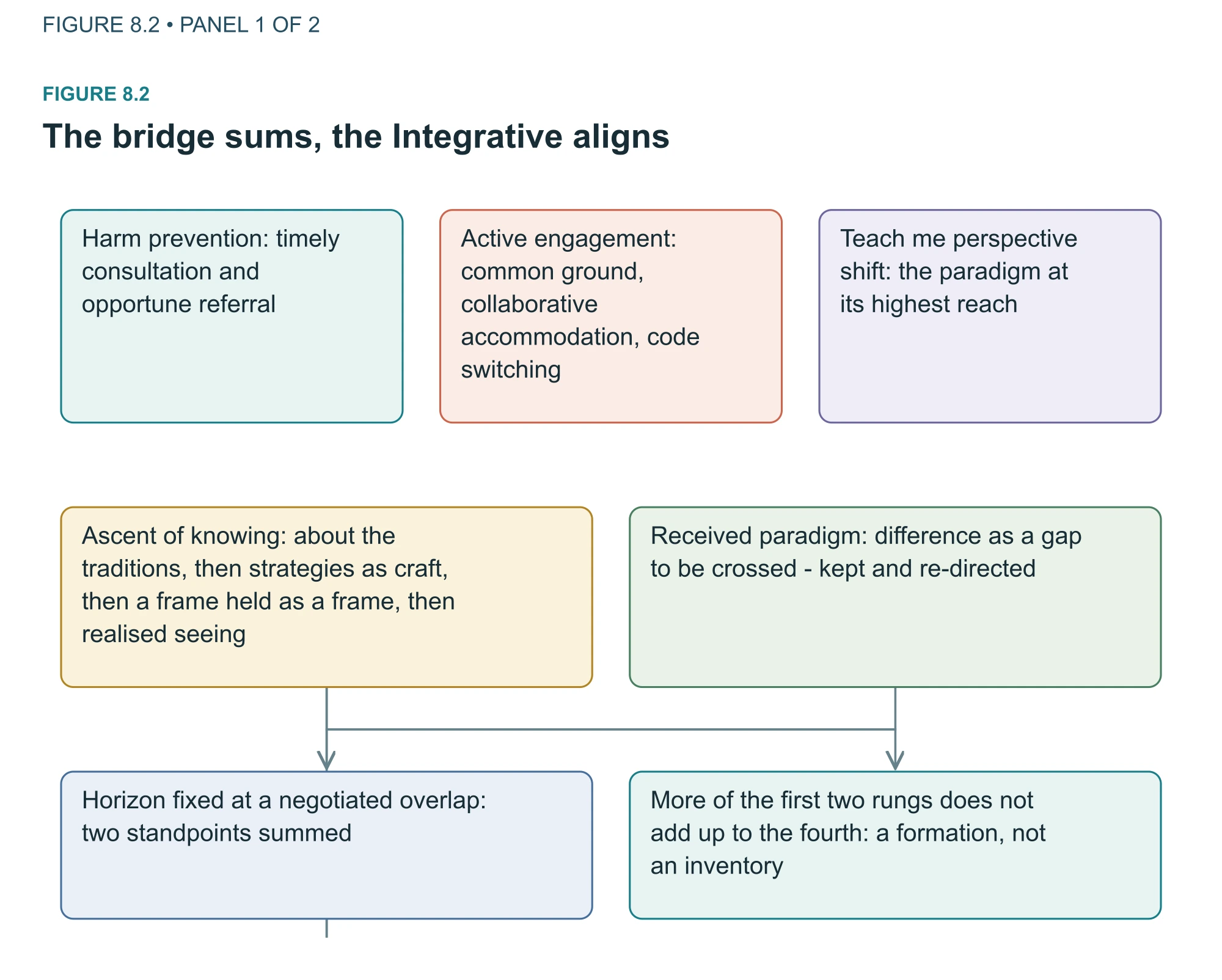
Figure 8.2. The bridge sums, the Integrative aligns. Panel 1 of 2.
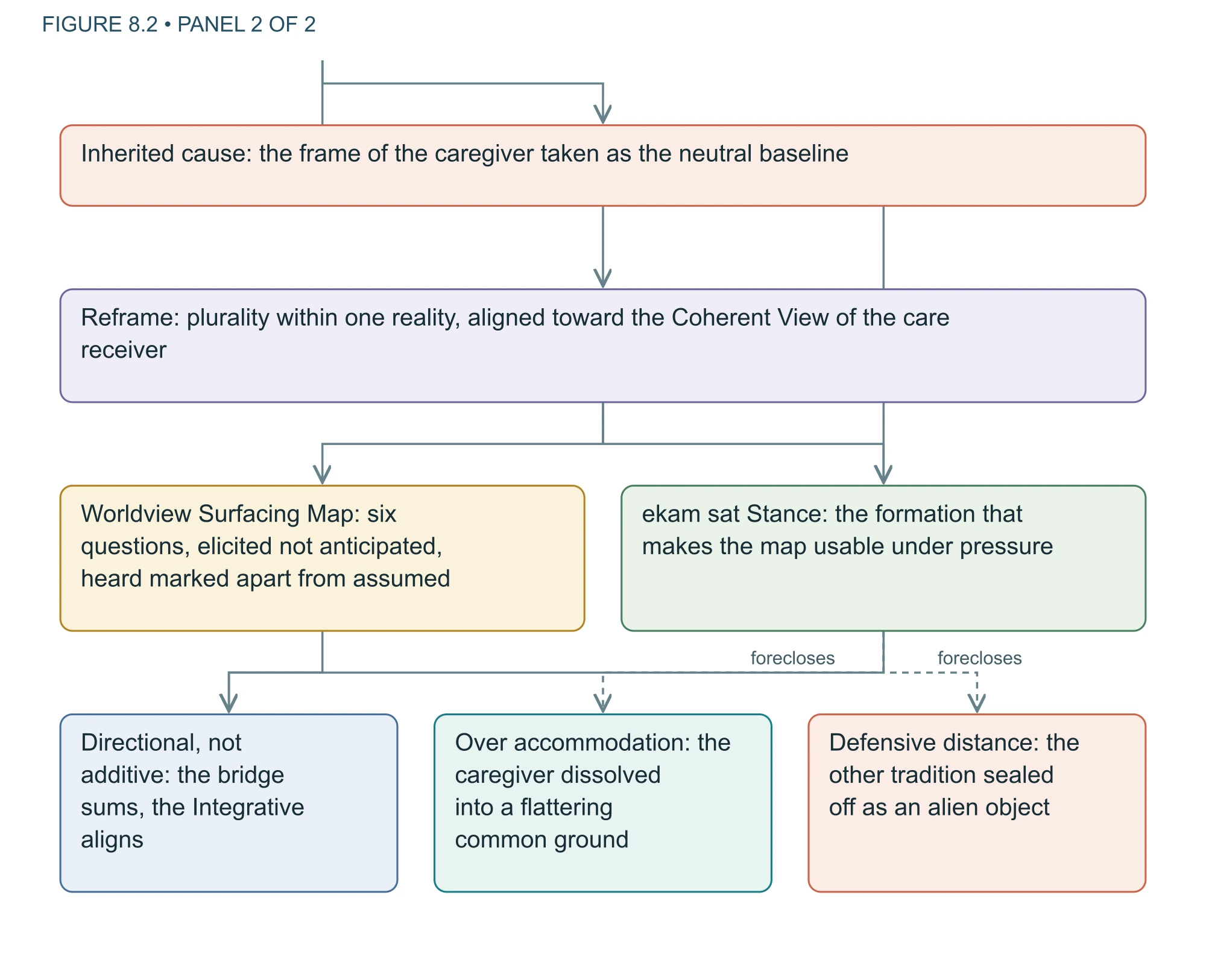
Figure 8.2. The bridge sums, the Integrative aligns. Panel 2 of 2.
3. The Integrative reframe
The reframe turns on a single relocation of intent. The bridge-building paradigm sets the caregiver the task of crossing a distance; the Integrative sets the task of relating the perspectives present - the receiver's, the caregiver's, the institution's - toward a Coherent View that is the care receiver's own. The genus is the canonical definition: 'the intent of relating all possible aspects, perspectives and purposes under holistic understanding of any context towards a Coherent View among all observers of the context in focus, without discarding any aspect, perspective and purpose' (Chapter 4). The species narrows that context to the inner life of a person in need whose tradition differs from the one caring for them (Ch 4). The change is small to state and decisive in practice: it moves the goal of active engagement from a negotiated overlap to an alignment, and so alters what counts as success at the bedside. Where the bridge is built and the caregiver has 'arrived' on the far bank, the Integrative encounter is not finished until the receiver's own perspectives - however plural, however unlike the caregiver's - stand in a coherence the receiver can inhabit.
The differentia sharpens against three near-matches, of which Schipani's bridge-building is the pivotal one. 'Seeking common ground' and 'collaborative accommodation' (Schipani 2024, 1-2) find or negotiate an overlap - a shared denominator under which two standpoints are brought near. That is the integral move, summation, not the Integrative move of alignment (Chapter 4). The Integrative does not look for what the two traditions share and build there; it relates each tradition, in its difference, toward the receiver's coherence. The distinction is not pedantic, and Schipani's own Baptist-chaplain-and-Jewish-family case (re-read in §8) shows why: when the common ground arrives as the family's 'our God is your God, and he hears our prayers', it is the family's alignment, offered from within their tradition, not a denominator the chaplain has supplied. Received alignment and imposed accommodation can look identical in the transcript and are opposite in their direction of authorship; only the Integrative intent keeps the difference in view.
The second near-match lies one level up, in the philosophy of religious pluralism. John Hick's (1989) pluralist hypothesis resolves the conflict of traditions by positing a single ineffable 'Real' of which all the traditions are culturally conditioned appearances. This is synthetic unity: the particulars are dissolved into one posited ground, and the cost of peace among the traditions is the reality of any of them in its own terms. The Integrative refuses that price. It rests instead on Integral Unity, not synthetic unity (Philosophy of the Integrative, Bindlish 2026) - ekaṃ sad viprā bahudhā vadanti, 'truth is one; the wise speak of it in many ways' (ṚV 1.164.46, §6) - in which the many ways are kept intact precisely because the unity is an alignment among observers, achieved 'without discarding', and not a metaphysical sameness asserted behind their backs. For the caregiver this is the difference between honouring a Hindu family's bhakti and a Muslim family's tawḥīd as two angles on one reality and quietly informing both that they are really worshipping the same unknowable X - which neither would recognise as respect. The wider philosophy-of-religion terrain to which this near-match belongs - Alan Race's (1983) exclusivist, inclusivist and pluralist typology, and the comparative-theology movement that refuses all three - is mapped in §5.
The third near-match is the pair of failure modes the paradigm itself fears. Code switching, pressed past its proper use, translates the caregiver wholesale into the receiver's idiom - accommodation running in one direction until the caregiver's own standpoint has effectively been surrendered. Relativist abstention runs the opposite way: 'respect all, engage none', a withdrawal that discards by refusing to bring one's own tradition into the room at all. The Integrative declines both. It asks the caregiver to hold their own tradition firmly - held, in the idiom of Paradigm Principle 4, without doership, the ahaṃkāra de-centred so that conviction need not become imposition - so that they have something to relate, and the receiver's perspectives something to be aligned with, rather than a vacancy or a mirror.
These three contrasts share one safeguard, carried intact from the definition of Integrative Spiritual Care in Ch 4: the Coherent View toward which the caregiver works is the care receiver's, never the caregiver's and never a Hindu one. The Dharmic resources gathered in §6 are brought as the caregiver's formation - what lets them meet radical difference without anxiety - and never as content pressed upon the cared-for. This non-imposition hinge is what keeps the reframe clear of the parochialism objection (§6 reply; Ch 4 §6): the apparatus that forms the caregiver is one thing; the coherence the caregiver serves is, throughout, the other person's own.
4. Knowing in this domain (K1-K4)
Cross-worldview competence climbs the same four-level ascent of knowing that the rest of this book carries, and the trouble the field has with difference is, at root, that its instruments can certify the lower rungs and only gesture at the higher one. The levels are those of Philosophy of the Integrative (Bindlish 2026), and what follows turns on the structure of the ascent.
At the first level is knowledge about the traditions - their deities, diets, festivals, scriptures and communities. The SpiCaQuest 'Sects' material is K1 in exemplary form: six Hindu sects - Sanātana Dharma, Ārya Samāj, Śaivism, Vaiṣṇavism, Śāktism and Smārtism - each tabulated by diet, chosen deity, characteristic practices, virtues, scripture and community (SpiCaQuest, 'Q1. Sects', drawing on Lipner 1994 and Sohoni 1996). Such knowledge is indispensable - a caregiver who does not know that a Vaiṣṇava household may avoid onion and garlic, or that ahiṃsā shapes a family's diet, is not yet ready to be in the room - and it is inert on its own. A complete table of every tradition's externals tells the caregiver nothing about how to be with the person whose tradition it is.
The second level is skilful: the interfaith competencies and strategies themselves - timely consultation, opportune referral, code switching exercised as a craft (Schipani 2024). This is the rung the certifications and the units of clinical pastoral education are built to form, and they form it well; it is genuine knowing-how, not mere information. But a strategy is a means, and a means presupposes an end it cannot itself supply. One can be fluent in bridge-building strategy and still be aiming at the negotiated overlap the previous section set aside.
The third level is contextual: the caregiver's capacity to hold their own framing as a framing and to enter another's. This is where 'cultural humility' lives, and it is the rung Greider's (2019) 'teach me' move reaches for - the deliberate 'perspective shift' in which the caregiver becomes a student of the care receiver's tradition from the receiver's own point of view, sharing power as they do so (Greider 2019, in Schipani 2024, 2). The field prizes this capacity and rightly treats it as the high-water mark of good practice. What it cannot do is reliably form it: a perspective shift can be recommended and modelled, but the equanimity that makes it sustainable under real difference is not transmitted by instruction.
The fourth level is realisational. It is the settled seeing that the many traditions are 'many ways' of speaking 'one truth' (ekaṃ sat, §6) - not held as a believed proposition, which would only be K1 returning in philosophical dress, but as an aparokṣa disposition, a directly realised orientation (Philosophy of the Integrative, Bindlish 2026). This is what lets a caregiver meet a worldview utterly unlike their own without the anxiety that drives both over-accommodation and defensive distance: the difference is no longer a threat to be managed because it is no longer experienced as a rival reality. It is precisely the rung the Dharmic resource of §6 addresses and the competency frame, for all its humility, cannot reach by accumulation.
The pay-off for practice is the diagnosis the whole chapter rests on. More cultural knowledge (K1) and better strategies (K2) do not, by being piled higher, deliver the equanimity-across-difference that the demanding encounters require; that equanimity is a formation, not an inventory. This is why the chapter ends in a practice rather than a checklist (§7), and why the open question it leaves (§8) is a question about formation - how the highest rung is grown - and not about which further competencies to add to the syllabus.
5. Western interlocutors
The field's literature on difference is neither thin nor naive, and the Integrative reframe earns its keep only by engaging that literature at its strongest. This section takes the principal voices in turn, in each case granting the contribution before naming the residue the reframe is needed to address. The recurring residue is single: each interlocutor equips the caregiver to cross difference well, and none makes relating the perspectives toward the care receiver's own Coherent View the constitutive aim.
Daniel Schipani's (2024) Navigating Religious Difference in Spiritual Care is the chapter's principal near-match and was read in full for this engagement. Its achievement, set out at §1, is to give the intercultural turn a usable shape: five strategies, two of harm-prevention and three of active engagement, carried by named dispositions of which cultural humility is the first (Schipani 2024, 1-2). What §1 did not say is what the essay rests on, and it is two convictions the Integrative shares: the 'universal or transcultural nature of the human spirit' and the 'enduring significance and value of religious and non-religious wisdom traditions' (Schipani 2024, 1). The first underwrites the very possibility of care across difference; the second forbids the flattening of any tradition into a problem to be managed. The residue is the one already isolated in §2 and §3: the strategies are organised by the bridge-building metaphor, whose own gloss of difference as 'interpersonal and intersubjective distance' (Schipani 2024, 2) is generative and humane, and fixes the horizon at a negotiated overlap. What it does not name is the one reality of which the meeting traditions are perspectives, and so it cannot ask the further question the Integrative asks: not how the banks are joined, but toward what coherence, the receiver's own, the perspectives are aligned.
Martin Walton's caution, which Schipani enlists, is best read as the field reaching from inside its own vocabulary for the correction the Integrative supplies. Caregivers should respect difference, Walton holds, but not 'exaggerate or absolutize it' (Walton 2021, in Schipani 2024, 2). This is the field's own warrant against treating worldviews as sealed and incommensurable objects; it presses against the bridge metaphor's two-banks picture without quite replacing it, because a warning against over-stating the gap is not yet an account of the ground both banks share. The Integrative takes Walton's instinct and grounds it: difference is not absolutised precisely because the traditions are angles on one reality (§6).
Kathleen Greider (2019) marks the paradigm's high-water mark and, in the terms of §4, its reach toward the third level of knowing. Her 'teach me' approach, met at §1 and again at §4, has the caregiver become a student of the care receiver's tradition from the receiver's own point of view, sharing power as they do so (Greider 2019, 37, in Schipani 2024, 2). This is the most generous form active engagement can take within the bridge picture, and the Integrative keeps it wholesale as the bedside discipline of surfacing a worldview in its own terms (§7). Its residue is not a fault but a limit the paradigm cannot itself overcome: a perspective shift can be recommended, modelled and practised, yet the equanimity that makes it sustainable under radical difference is a formation the competency frame can describe but not transmit. Thomas Plante's (2009) transfer of the consultation discipline from psychotherapy to spiritual care anchors the skilful, second-level rung - consultation as a craft with its own standards - and shares the same boundary: it perfects a means while leaving the end it serves unspecified.
One level up from practice sits the philosophy of religious pluralism, and here John Hick (1989) is the instructive foil. His pluralist hypothesis secures peace among the traditions by positing a single ineffable 'Real' of which each tradition is a culturally conditioned appearance. The contribution is a genuine refusal of exclusivism; the cost, examined in §3, is that the particulars are dissolved into one posited ground, so that the price of concord is the reality of any tradition in its own terms. This is synthetic unity, and the Integrative declines it - not because it values peace less but because it will not purchase peace by telling a Hindu family and a Muslim family, behind their backs, that they worship the same unknowable X. Peter Berger's (2014) account of pluralisation as the macro-condition of modern belief frames why the encounter has become standing rather than exceptional, and Rocha and Fry's (2023) bibliometric map of the spirituality-and-culture literature - four thematic clusters, with the cultural edge among the most active - registers the scale at which the field has had to respond. Both describe the weather the caregiver now works in; neither, by design, settles what the caregiver should be aiming at within it.
The philosophy of religion has a standard map of this terrain, and locating the chapter on it sharpens both what the Integrative shares with the field and where it parts company. Alan Race's (1983) now-canonical typology sorts the theological responses to religious plurality into three: exclusivism, which holds one tradition true and the others deficient or void; inclusivism, which keeps one tradition normative but reads the others as containing anticipations or partial participations of its truth (Karl Rahner's 'anonymous Christians' is the type case); and pluralism, Hick's option, which grants the traditions independent and roughly equal validity. Read through the one distinction this book turns on, each of the three is a form the Integrative must decline. Exclusivism discards - it is the heya of §2 raised to a principle. Inclusivism subordinates - it keeps the others only as tributaries of the one, which is respect purchased by ranking, not alignment among observers without discarding. And pluralism, as §3 showed, sums by dissolving the particulars into one posited Real. The map is useful precisely because it exhausts the options within the frame that treats difference as a problem of adjudicating or reconciling doctrines - and the Integrative move is not a fourth position on that map but a change of what the caregiver is doing: not adjudicating the truth-claims of the traditions at all, but relating the perspectives present toward the cared-for's own coherence.
That is why the chapter's most demanding interlocutor here is not the pluralist but the movement that arose, in the last generation, precisely as the alternative to Hick - comparative theology. Francis Clooney's (2010) programme of 'deep learning across religious borders' refuses the pluralist bargain at exactly the point the Integrative does: it will not dissolve the traditions into a common essence to secure peace among them. The comparative theologian remains rooted in a home tradition and yet crosses, by close and patient reading, into the texts and practices of another - a Jesuit Sanskritist reading Śrīvaiṣṇava devotional poetry - and returns home changed, having let the other tradition's particularity register in its own terms rather than as an instance of a general category. This is genuine kinship, and the chapter claims it: comparative theology and the Integrative both hold the many as many, both refuse synthetic unity, and both take the deepening of one's own ground to be compatible with - indeed a condition of - real openness to another's (the §8 open question in a theological key). The residue is not a fault but a difference of office. Comparative theology is a scholar's discipline whose telos is mutual theological illumination: the enrichment of the home theologian's own understanding through the encounter, a crossing-over-and-coming-back that is, in the chapter's own image, still a form of crossing - deeper than the bridge, but a movement between two banks all the same, and characteristically bilateral, one tradition set beside one other. The caregiver's office differs in aim and in beneficiary alike. The aim is not the caregiver's own theological growth but the cared-for's coherence, and the field of relation is not one tradition beside another but all the perspectives present - the receiver's, the caregiver's, the institution's - oriented toward one person's Coherent View 'without discarding any' (Chapter 4). Comparative theology thus gives the Integrative its closest Western warrant that particulars can be held intact across a real crossing; what it does not supply, because it is not its task, is the directional orientation of that holding toward the coherence of a third party who is not a theologian at all but a person in need.
Raimon Panikkar's (1999) intrareligious dialogue stands as a cousin to both and marks the boundary from the other side. Panikkar internalises the meeting of traditions - the dialogue is conducted within the person who holds more than one horizon at once - and calls for an 'imparative' rather than a comparative method, a learning from the other that renounces the fulcrum of a neutral standpoint from which to compare. This is close to the caregiver's own interior work (§6), and it names truly the absence of any tradition-neutral vantage that the pramāṇa epistemology this book works from also concedes - every valid means of knowing is exercised from somewhere, and none of them delivers a view from nowhere (Philosophy of the Integrative, Bindlish 2026). But Panikkar's dialogue remains, like Clooney's, ordered to the participants' own realisation; the Integrative borrows its refusal of a neutral fulcrum and re-points it outward, toward the alignment of the perspectives around the one whose care is the occasion of the meeting (Note 4).
Beside the philosophy of religion sits a second discipline one level up from practice, and nearer than any to the field's own toolkit: the cross-cultural psychology of understanding across difference, whose sharpest statement in an Indian key is Dharm Bhawuk's (2011) Spirituality and Indian Psychology. Its diagnosis is the heya of §2 named from inside empirical human science. Mainstream psychology, Bhawuk holds after his teacher, is 'the psychology of 1% of the population of the world' 'imposed on the rest of the world' 'as universal knowledge' (Triandis 1994, 3, in Bhawuk 2011), and even cross-cultural psychology, which set out to test that knowledge abroad, 'limits itself by searching for universals or etics' and so keeps the imported theory as the measure. His name for the resulting error is the pseudoetic: a Western emic dressed as a universal and laid, as a 'Procrustean bed', over a people whose own categories it cannot see (Bhawuk 2011). For a caregiver the warning bites directly, because the assessment instruments the field reaches for at a bedside are precisely this psychology; to bring an imported inventory of 'spiritual needs' to a person of another worldview is to make the pseudoetic move in the register of care - to fill the person's frame with one's own before it has been heard (§2). And the remedy Bhawuk proposes is genuine kin to the reframe: begin not from the imported theory but from a tradition's own classical texts and folk wisdom - he builds his models from the bhagavadgītā - letting its concepts stand in their own terms rather than as instances of a foreign category, which is the refusal to discard that governs this chapter (§3).
The residue is the one the section has tracked throughout, and Bhawuk states it with unusual clarity, which is why he repays engagement at his strongest. The telos of indigenous psychology, he writes, is 'to inspire a dialogue among various indigenous psychologies, including the western psychology' (Bhawuk 2011) - a discipline pluralised into many culturally grounded models, each built from its own sources and set beside the others for mutual enrichment. This is the integral achievement at the level of a science: a richer manifold of standpoints, no longer one imposed on all, and the reader will by now recognise in it the summation that stops short of a direction. Two things keep it from being the Integrative move the bedside needs. Its unit is the culture or the group - the psychology of a people - where the caregiver's unit is a person, and the perspectives to be related are not two cultures set side by side for comparison but all those present around one sufferer: the receiver's, the caregiver's, the family's, the institution's. And its aim is knowledge, the enrichment of a comparative human science, where the caregiver's aim is the cared-for's own coherence - a Coherent View 'among all the observers of that context' toward which the plural perspectives are aligned, not a catalogue of emic models held in productive parallel (Chapter 4). Bhawuk relocates the danger exactly and refuses, as the Integrative does, to purchase understanding by imposition; what his indigenous-psychology programme does not supply, because its object is a science and not a person, is the directional orientation of that holding toward one person's coherence. That his own reconstruction of the Indian self from the gītā - the ātman as the real self, embodied through the antaḥkaraṇa of manas, buddhi and ahaṃkāra (Bhawuk 2011) - independently furnishes the very faculty-psychology the next section leans on for the de-centring of ahaṃkāra (§6) is a measure of how much the caregiver may take from him: the content of the formation, offered in his own indigenous method, even where the directional office is not his to give (Note 5).
Nearest of all to the field's own hands, and nearer than any voice so far to the assessment instruments a caregiver actually carries to a bedside, sits the clinical discipline of cultural competence, whose fullest development is the transcultural nursing Madeleine Leininger founded and the training models built after it. Leininger's (1991) theory of Culture Care Diversity and Universality named what culture-blind care had missed: that care itself is culturally patterned, that the meanings, expressions and practices of caring differ across peoples, and that a caregiver who ignores this does the patient a documentable harm. Her Sunrise Model set out the cultural and social dimensions - religion and philosophy, kinship, economics, worldview - a caregiver must attend to, and made care across difference a formal competence with standards rather than a matter of goodwill. Josepha Campinha-Bacote's (2002) widely taught process model gave the competence a trainable shape, resolving it into five components - cultural awareness, cultural knowledge, cultural skill, cultural encounters and cultural desire - and insisting, against the checklist temptation, that competence is a process one is forever becoming, never a state at which one arrives; her fifth component, cultural desire, even reaches past technique toward the very disposition the section has repeatedly found the practice paradigm able to describe but not to transmit. The achievement is real and the chapter keeps it: to require that a caregiver reckon with the patient's world rather than assume their own is the clinical statement of the refusal to impose that §3 makes central.
Yet the residue here is the sharpest instance of the one §2 isolated, for the competence paradigm supplies the very mechanism by which the heya enters the clinic. Cultural competence construed as a masterable body of knowledge about groups - the dietary laws of 'the Muslim patient', the death rites of 'the Hindu family', the filial expectations of 'the Chinese elder' - fills the caregiver's frame with a group-template before this person has been heard, and so commits, in the register of care, exactly the pseudoetic error Bhawuk named: the aggregate laid as a Procrustean bed over the singular. It is worse than merely additive, for the sum dissolves the individual into the category, discarding the particularity Principle 1 forbids discarding (ekaṃ sad viprā bahudhā vadanti, ṚV 1.164.46: the one reality is spoken in many ways, and this patient's way is one of them, not a specimen of a type). The model's own best practitioners see the danger - Campinha-Bacote's 'always becoming' and Leininger's own insistence on the particular are internal guards against it - but the danger is structural to a paradigm that makes knowledge of the other the operative competence, because knowledge of a group is precisely what a person is not reducible to.
The field made this correction itself, and named it. Melanie Tervalon and Jann Murray-García's (1998) distinction between cultural competence and cultural humility - the disposition-word Schipani borrows at the head of this section without theorising - is the clinic's own turn away from competence-as-arrival: where competence tempts the caregiver toward a false sense of having mastered the other's world, humility is 'a lifelong commitment to self-evaluation and self-critique', to redressing the power imbalance between caregiver and cared-for, and to a non-paternalistic partnership in which the patient remains the authority on their own life (Tervalon and Murray-García 1998). This is the near-match the chapter keeps almost whole, for it is the caregiver-side of the Integrative stance said in the clinic's own voice: the de-centred ahaṃkāra of Principle 4, the refusal of mastery, the seat kept for the cared-for's own word (Ch 6 §6). The migrant and diaspora register in which humility does its sharpest work is developed as the ninth claim of Ch 21's What the cluster teaches, alongside Kleinman's explanatory models; what concerns this chapter is the systematic paradigm humility corrects and the one thing it, too, leaves open.
For humility, precisely because it is a discipline of the caregiver's stance, names no direction. It corrects how the caregiver holds themselves - self-critical, unmastering, deferent - but not toward what the perspectives it so scrupulously refuses to override are then to be related. A humility that only ever defers, that aligns nothing, curdles into the 'whatever-your-culture-holds' that affirms everything and orients nothing - the cross-cultural form of the vacuous tolerance §3 declines. The Integrative keeps the humility entire and supplies the intention it leaves unfilled: the patient's own cultural goods elicited and related toward a Coherent View the patient can own, 'without discarding any aspect, perspective and purpose' (Chapter 4) - an alignment of the perspectives present, 'not necessarily a summation' (Chapter 4). Competence is thereby relocated, not discarded: not an inventory of a group to be mastered, but the disciplined surfacing of this person's own world (§7) as the working material of care - the explanatory model elicited, never the template supplied in its place (Kleinman 1988; the operational form given at Ch 21, ninth claim). So the clinical paradigm nearest the caregiver's hands arrives, by its own best correction, at the threshold the whole section has traced: it teaches the caregiver to cross difference humbly and to master no one, and it stops one step short of naming the coherence, the patient's own, toward which the crossing is made (Note 8). What that coherence is, and what lets a caregiver aim at it, the next section answers from the Dharmic side.
6. Dharmic resources, alongside
The resources gathered here are brought as the caregiver's formation - what lets them meet radical difference without anxiety - and never as content to be pressed upon the cared-for. The non-imposition hinge of §3 governs the whole section: the Coherent View the caregiver serves is the care receiver's own, and a Hindu frame at the bedside of a Christian or a secular seeker would be a category error. What the Dharmic tradition supplies is not a better content to impose but a better account of what the caregiver is doing when they meet difference well.
The chapter's spine is ekaṃ sad viprā bahudhā vadanti - 'truth is one; the wise speak of it in many ways' (ṚV 1.164.46), the verse that states Paradigm Principle 1, Respect for Integral Unity (Chapter 4). Read for Integral and not synthetic unity, as it is throughout this book (§3), the verse does precisely what Hick's hypothesis cannot: it holds the many ways intact as many, because the oneness it names is an alignment among observers of one reality, not a metaphysical sameness asserted beneath them. This is the difference, at the level of first principle, between the bridge that sums two standpoints and the Integrative that aligns plural perspectives without discarding any. For the caregiver the verse is not a doctrine to teach but a seeing to acquire: the encountered tradition is one of the 'many ways', so that its very difference is evidence of the one truth rather than a rival to it.
That seeing has an indigenous worked model close to hand. Hinduism's own internal plurality - the six sects of the SpiCaQuest material, Sanātana Dharma, Ārya Samāj, Śaivism, Vaiṣṇavism, Śāktism and Smārtism, each with a distinct iṣṭadevatā (chosen deity), diet and discipline, and explicitly 'not ranked by superiority or inferiority' (SpiCaQuest, 'Q1. Sects'; citing Lipner 1994 and Sohoni 1996) - is itself a lived demonstration of ekaṃ sat: one dharma held in many ways within a single tradition. The Smārta pañcāyatana, the worship of five deities as forms of one, is the in-tradition emblem of the stance. The lesson for cross-worldview care is structural and freeing: meeting another religion is continuous with the equanimity a tradition already practises within itself, so the caregiver formed in holding internal plurality is already in training for the external kind.
The conversation that carries this seeing into speech is vāda rather than jalpa or vitaṇḍā - dialogue aimed at tattva-bodha (truth-realisation) rather than at victory or the mere demolition of the other's position; vāde vāde jāyate tattvabodhaḥ, 'through dialogue upon dialogue, realisation of truth is born' (Bhawuk 2020). This is the bedside form of what Schipani calls 'collaborative', recovered as alignment rather than accommodation: the caregiver neither wins the exchange nor surrenders into the receiver's idiom but relates the perspectives present toward the receiver's own coherence. Alongside vāda stands the resource for honouring what is genuinely shared across traditions without collapsing into a lowest common denominator: the distinction between sādhāraṇa-dharma, the universal virtues of truthfulness, non-injury and self-restraint, and svadharma, the particular obligations of a person's own station and tradition (Bishop 1970). The shared virtues are real and may be named; they are not, however, the overlap onto which difference is reduced, because svadharma keeps each tradition's particularity intact beside them.
The tradition also puts this seeing into portable, memorable form, and the caregiver's formation is well served by verse that can be carried into the encounter itself. The SpiCaQuest wisdom-card material gathers the subhāṣita (the 'well-spoken' maxim) literature for exactly this use, and two of its verses state the chapter's stance with a compression the argument cannot match (Mutalik and Sastry n.d.). The first names the very fault the chapter is built to correct: ayaṁ nijaḥ paro veti gaṇanā laghu-cetasām, udāra-caritānāṁ tu vasudhaiva kuṭumbakam - 'that this one is my own and that one a stranger is the reckoning of small minds; for the magnanimous, the whole earth is one family' (Mutalik and Sastry n.d.; the couplet is the vasudhaiva kuṭumbakam verse, by locus MahāU 6.72). The verse is more useful here in its first line than in its celebrated second. The heya of §2 - difference construed as a gap between 'my kind' and 'not my kind', two banks with water between them - is precisely the ayaṁ nijaḥ paro veti reckoning the verse assigns to the laghu-cetas, the contracted mind; and the remedy it offers is not the erasure of the distinction but the widening of the one who holds it, the udāra (magnanimous, literally 'wide') character for whom the circle of the own has grown large enough to take the stranger in without ceasing to see them as other. Read, as this book reads it throughout, for Integral and not synthetic unity (§3), vasudhaiva kuṭumbakam is not the borderless sameness the section's closing caution guards against - a family is not a fusion, and its members remain distinctly themselves - but the enlarged regard in which difference is held within one belonging rather than across a divide. The caregiver who has made this verse their own has no bridge to build to the person of another tradition, because they did not begin by placing them on the far bank.
The second verse supplies the seeing that the fourth level of knowing named but could only gesture at (§4): ātmavat sarvabhūtāni yaḥ paśyati sa paśyati - 'one who looks upon all beings as their own self, he truly sees' (Mutalik and Sastry n.d.). The pun is the argument: only the one who regards every being with the regard reserved for oneself paśyati, sees at all; every other way of looking is, the verse says flatly, a species of blindness. This is the aparokṣa disposition of §4 stated as an ethical perception rather than a metaphysical thesis - not the doctrine that all selves are numerically one, which would be K1 in Vedāntic dress and would dissolve the very particulars the chapter is at pains to keep, but the trained regard that meets the person of a wholly unfamiliar worldview as one whose inner life has the same weight and reality as one's own. It is the cognitive ground of the upekṣā the next paragraph names: difference ceases to register as threat once the other is seen ātmavat, on the model of the self, and the anxiety that drives both over-accommodation and defensive distance loses its root. Taken together the two verses trace, from the inside, the movement the chapter has described from the outside - from the laghu-cetas who counts banks and strangers, through the udāra who has widened the circle, to the one who sees ātmavat and so, the tradition says, sees at all.
That these resources arrive as verse is not incidental to their office. The competency literature transmits its content as strategy and checklist, things to be recalled and applied (§5); the subhāṣita transmits a seeing, in a form that can be carried, repeated and slowly inhabited until it shapes perception below the level of deliberation. This is formation in the precise sense the ekaṃ sat Stance requires (§7): not one more thing for the caregiver to know about a tradition (K1) or to do at a bedside (K2), but a disposition rehearsed until the person of another worldview simply appears differently - as one of the many ways, as kin within a widened circle, as a self on the model of one's own. The caregiver who reaches for ayaṁ nijaḥ paro veti on noticing themselves counting banks, or for ātmavat sarvabhūtāni when an unfamiliar worldview tightens into a threat, is using the verse as the tradition intends it: as a portable correction to the contracted regard, applied to oneself and never pressed upon the cared-for.
The collection's own self-understanding, finally, earns it a place in this chapter beyond the two verses it lends. Its compilers observe that whoever 'attempts to translate the Subhashitas into other languages realizes the obvious limitations in expressing the wordplay... the rhythm, and melody', and that many of the maxims rest on 'a contextual story' without which the point is thinned (Mutalik and Sastry n.d.). This is, from inside the tradition's own practice, the fact Paradigm Principle 5 asks the caregiver to honour: the 'epistemological appreciation of indigenous non-translatable knowledge' (Chapter 4). It bears directly on care across worldviews, because the standing temptation the chapter has tracked - to reduce another's tradition to what survives translation into the caregiver's categories - is exactly the loss the compilers describe. The lesson is not that the untranslatable cannot be met, but that it is met by surfacing it in its own terms (§7) and receiving what the person themselves carries across, never by pre-translating it into a manageable equivalent. The verse that resists the caregiver's paraphrase is, in that very resistance, teaching the posture the whole chapter commends.
Beneath all of these, the inner condition that makes them practicable is the de-centred ahaṃkāra of Paradigm Principle 4 together with the four attitudes maitrī, karuṇā, muditā and upekṣā - friendliness, compassion, gladness and equanimity (YS 1.33; Ch 5). It is ahaṃkāra, the I-making faculty, that turns conviction into imposition; de-centred, it lets the caregiver hold their own tradition firmly without needing the other to hold it too. Upekṣā - equanimity, not indifference - is what lets radical difference be met as difference rather than as threat, and it is the affective face of the aparokṣa disposition named at the fourth level of knowing (§4). The vasudhaiva kuṭumbakam caution is retained here as a guard in the other direction: 'the world is one family' funds an Integral Unity that respects the particular, and is not to be read as a borderless sameness that would erase the very differences the four attitudes are formed to honour.
One resource the chapter has leaned on in substance but not yet named belongs in this section by right, because the canonical definition the whole chapter serves relates 'all possible aspects, perspectives and purposes' (Chapter 4), and the sections above have developed the aspects and the perspectives far more fully than the purposes. A worldview is not only a picture of what is real; it is an ordering of what is worth pursuing, and traditions differ as sharply in the second as in the first. This is the province of Paradigm Principle 2 - the striving for 'holistic attainment of goals, material (worldly) and spiritual (ultimate/higher)' (Chapter 4), the four puruṣārtha of Dharma (righteousness), Artha (the means for prosperity), Kāma (worldly desire) and Mokṣa (liberation), which the Paradigm assigns to the purpose question, the 'why / for what?' that the Worldview Surfacing Map raises under axiology and praxeology (§7). Principle 1 secured that the caregiver meet another tradition as one of the many ways of speaking one reality; Principle 2 secures that they meet another tradition's ordering of goods the same way - as one of the many ways a life may hold the worldly and the ultimate together, not as a deviation from the ordering the caregiver, or the clinic, silently assumes.
The resource does specific work at the bedside that the perspective-focused apparatus leaves undone. The standing danger in cross-worldview care is not only that the caregiver reads another's reality through their own - the worldview fallacy of §2 - but that they read another's goods through their own: a clinical frame in which recovery, comfort and function are the operative goods quietly discards the Mokṣa-weighted ordering of a person for whom this illness is a passage rather than a problem, and a devout frame no less quietly discards the Artha and Kāma a dying person is right not to have relinquished. To relate 'without discarding any aspect, perspective and purpose' (Chapter 4) is to keep the cared-for's own ordering of goods intact and to align the perspectives present toward their holding of the worldly and the ultimate, not toward the caregiver's. What Principle 2 adds to the ekaṃ sat Stance is exactly this holism: Dharma is that which ensures abhyudaya (worldly flourishing) and niḥśreyasa (the higher good, meaningfulness) together (Chapter 4), so the coherence the caregiver honours is not a choice between the material and the spiritual goals of a life but their ordering as the person themselves ranks them. The svadharma already named beside sādhāraṇa-dharma (above) is the same point in the register of obligation; here it is stated in the register of ends - the particular goods a person's own station and tradition give them to pursue, kept whole beside the universal ones. This is the 'purposes' limb of the definition made operative for care across difference, and it completes the account of what the caregiver surfaces: not only how the other sees the world, but what, on their own reckoning, that world is for.
The chapter's own cases show the difference in miniature. When Hermine (Case 007) finds in 'the rebirth of the soul' a resource that 'reminds me that hard times pass', she is not only selecting an image that fits her perspective; she is re-ordering her goods under the pressure of a long illness, letting an ultimate horizon re-frame a worldly discouragement without surrendering either. The Integrative reading credited the received alignment of her perspective (§8); Principle 2 names what was aligned in her purposes - a holding-together of abhyudaya and niḥśreyasa that is hers, reached in her own religiously-unmarked register, and that a caregiver working from an ontology-checklist alone would not have thought to surface. The point generalises to the encounters the chapter has kept in view: the Vaiṣṇava household whose diet expresses not a preference but an ordering of Dharma above convenience (§4), the secular seeker whose refusal of any ultimate is itself a purposive ordering to be honoured rather than corrected, the dying person whose Kāma and Artha are not lapses of piety to be managed away. In each, the caregiver surfaces the ordering of ends alongside the picture of reality, and relates both toward the coherence the person can own. Principle 2 is thus not an addition to the ekaṃ sat Stance but its completion on the axis the definition names third and the perspective-language of the field most easily forgets (Note 9).
One principle of the five remains unnamed, and it belongs in this section by the same right Principle 2 did, because the canonical definition relates aspects, perspectives and purposes under a holistic understanding that the whole apparatus has quietly presupposed and never named. Principle 1 secured how the caregiver sees the encountered tradition, Principle 2 the ordering of goods they must surface within it; but the sections above, and above all the formation the chapter hands forward to §8, have been describing something else again - not what the caregiver knows or wants but how they come to be able to do this at all. That is the province of Paradigm Principle 3, our actions follow embodied knowing (Chapter 4), the principle the Paradigm assigns to the approach - the 'how?' question - and the one the chapter has enacted most fully while leaving unnamed. Its content is exact: the integral view on action requires 'performing one's duty, abandoning attachment, equipoised in success and failure - such equanimity is termed yoga', and it is realised only in the amalgamation of gyaan (knowledge), karma (action) and bhakti (dedication), the experiential knowing of when to replace the thinking process with Samarpan, devotional surrendering (Chapter 4). The ekaṃ sat Stance is not a proposition the caregiver holds but a capacity they have become, and Principle 3 names what kind of capacity it is.
The Western canon has a rigorous and recent account of exactly this - that a practitioner's competence is not stored propositional knowledge but an enacted, bodily know-how - and it is worth bringing alongside precisely because it reaches so far. Shaun Gallagher's enactivist philosophy of mind (Gallagher 2005; 2017) argues that cognition is not the manipulation of inner representations but is constituted in the lived body's skilled engagement with its situation: the body schema, a pre-reflective system of motor capacities operating below the level of deliberate attention, structures perception and action without ever becoming their object, so that the expert meets a situation not by consulting a rule but by a trained readiness already laid down in the body. This is the strongest Western statement available of the chapter's own claim that formation reshapes 'perception below the level of deliberation' (above), that the caregiver does not recall the ekaṃ sat Stance at the bedside but sees by it; it corroborates, from the side of cognitive science, the subhāṣita's wager that a verse inhabited long enough alters how the person of another worldview simply appears. Gallagher names, that is, the gyaan of Principle 3 as an embodied and not a notional knowing, and reaches toward its karma, the knowing that lives only in the doing - which is yogaḥ karmasu kauśalam, 'yoga is skill in action' (Bhagavadgītā 2.50), the near-locus at which the two vocabularies almost touch.
They do not touch, and the gap is the differentia. Gallagher's embodied knower is a skilled agent, coupled to the outcomes their expertise is expertise at; the account is descriptively complete and normatively silent about the practitioner's relation to the fruit of the act. Principle 3's embodied knowing is governed throughout by a samatva the enactive account has no place for - action 'equipoised in success and failure', samatvaṃ yoga ucyate (Bhagavadgītā 2.48) - and completed by a bhakti the skill model does not reach, the Samarpan in which the act is offered rather than owned. The difference is not academic, because it is exactly the missing clause that does the chapter's hardest work. Enacted skill, however deep, does not by itself steady the caregiver against the two failure modes §8 tracks: the over-accommodator is a skilled reader of the other, the retrencher a skilled defender of his own ground, and each is undone not by a deficit of embodied competence but by an attachment to how the encounter comes out - the need to succeed, the fear of being changed. What releases them is not more skill but the samatva that holds the act equipoised in success and failure, and the bhakti that offers it rather than possessing it; this is why the third limb of the Caregiver Formation Triad (§8) is transcendence of interest and not a higher competence, and why the formation it describes is a sādhana and not a syllabus. Principle 3 is thus the approach-side complement of the without-doership of Principle 4 (§6): where Principle 4 de-centres the doer, Principle 3 governs the doing, so that embodied know-how becomes niṣkāma karma - skilled action performed as offering, unattached to its fruit. Named here, it discharges what the chapter has enacted throughout and states plainly for §8 what the Triad's transcendence limb has been all along: not the perfecting of the caregiver's embodied skill, but its surrender (Note 17).
7. Models, frameworks and practices (the chapter's named contribution)
This chapter contributes two named items to the book's instrument inventory, and both are entered, with worked prompts, in the appendix Using this book with an LLM. The first is a tool for the encounter, the second a formation that makes the tool usable under pressure; together they convert the reframe of §3 and the K1-K4 ascent of §4 into something a caregiver can actually do at a bedside.
The first is the Worldview Surfacing Map. Its material is the apparatus of six worldview-questions carried in the SpiCaQuest 'Perspectives - Philosophical Disciplines' material - ontology ('what is?'), explanation ('how did we get here?'), prediction ('where to?'), axiology ('what is good, what should I strive for?'), praxeology ('how should I act?') and epistemology ('how do I know?'). The contribution is not the questions, which the field has in many forms, but their re-direction. The map is a device for eliciting a care receiver's worldview in the receiver's own terms rather than assimilating it to the caregiver's categories, and it differs from the inventories the field already owns at two points. Where a faith-fact checklist operates at the first level of knowing (§4), recording a tradition's general tenets so that the caregiver may anticipate the person, the map works only from what this person has said, and treats the six questions as openings for the 'teach me' posture (Greider 2019, 37, in Schipani 2024, 2) rather than slots to be filled from a manual. And where the field's elicitation tools stop at understanding, the map is directional in the chapter's specific sense: the surfaced worldview is not the terminus but the material that is then related toward the person's own Coherent View. Its standing risk, named so the tool can guard against it, is the worldview fallacy (§2; Ch 1 §4) - the caregiver reading the receiver's frame through their own and mistaking their categories for a neutral baseline; the map's discipline is to mark what has been assumed as distinct from what has been heard (Table 8.1).
The second is the ekaṃ sat Stance, and it is a formation, not a technique. It is the caregiver's cultivated seeing of an encountered tradition as one of the 'many ways' the 'one truth' is spoken (ekaṃ sad viprā bahudhā vadanti, ṚV 1.164.46; §6), held steady through upekṣā, equanimity, and a de-centred ahaṃkāra (Paradigm Principle 4). It is the inner condition the §4 fourth rung describes - the disposition that lets the caregiver hold their own tradition firmly without needing the other to hold it, and so meet radical difference without the anxiety that drives the two failure modes the chapter has tracked throughout. Over-accommodation, the dissolving of one's own standpoint into a flattering 'common ground', is the summing, integral move at the level of the caregiver's person; defensive distance, the stiffening against an unfamiliar worldview as a sealed alien object, is the absolutising of difference Walton (2021) warns against. The stance is the single formation that forecloses both, because a caregiver who can see the other tradition as a differently-angled view on one reality has no need either to merge with it or to wall it off. Both items carry an entry there with at least one worked prompt, the map as a preparation-and-debrief aid for care across difference, the stance as a check on the caregiver's own inner posture before the next encounter.
8. Applicability, cases and open question
The apparatus bites wherever a caregiver of one tradition meets a care receiver of another, and the test of it is always the same: does the encounter end at a negotiated overlap, or is it carried toward the receiver's own coherence without discarding what either party brings? Three cases, at increasing distance from the caregiver's own ground, show the difference concretely.
The first is Schipani's own, re-read here for a reading he does not draw. A Baptist chaplain cares for a Jewish family, and the common ground that makes the care possible is voiced by the family: 'our God is your God, and he hears our prayers' (Schipani 2024). The bridge-building reading credits the chaplain with finding the overlap; the Integrative reading notices that the alignment was received, named by the family out of their own frame, not a denominator the chaplain supplied. The distinction is the whole chapter in miniature - received alignment, which honours the family's Coherent View, against imposed accommodation, in which the caregiver constructs the shared ground and then invites the other onto it. The strategies remain indispensable (Note 3); what the Integrative relocates is the source of the alignment, from the caregiver's ingenuity to the receiver's own seeing.
The second case stands at the chapter's hardest point and was read in full at first hand. Hermine, a Creole woman of Surinamese descent who grew up Christian, has lost hope and confidence in her faith under a long illness, and is accompanied by a Hindu spiritual caregiver, Tarun (Case 007). The encounter is a live test of the non-imposition hinge of §3, because the caregiver's tradition and the receiver's are not the same, and a Hindu frame pressed on a Christian seeker would be a category error. Read against the Worldview Surfacing Map, the case is strongest exactly where Tarun elicits rather than supplies: 'what do you expect spirituality can do for you?', 'can you tell me what spirituality means to you?', 'what spiritual images or stories appeal to you?' - openings that surface Hermine's own axiology and epistemology in her terms, and let her select what fits ('I find the story of the rebirth of the soul inspiring. It reminds me that hard times pass'). The Integrative reading takes this as received alignment: the resource is offered and Hermine appropriates the fragment that speaks to her present need, rather than being recruited into another faith. The case also marks the risk the chapter exists to name. Where the accompaniment drifts toward the caregiver's idiom - Hindu story and Bhagavadgītā imagery introduced as the counsellor's stock - the ekaṃ sat Stance is what keeps offer from sliding into substitution: Tarun may hold his own tradition firmly as the ground he stands on while the aim stays Hermine's re-finding of her hope, in a register (the religiously unmarked 'satsang', meditation and yoga she chooses) she can own. The Integrative measure of the case is not that a Hindu caregiver helped a Christian client, which the field already commends, but that the help was aligned toward her coherence and not toward his.
The third case turns the same seeing inward on a single tradition's plurality. A Hindustani woman in her fifties consults the pandit monthly for a horoscope reading and, for an experienced graha affliction, performs mantra-jāpa and the Sūrya water-offering, alongside somatic complaints of headache, dizziness and nausea (Case 003). The case makes the six-sect material of §6 concrete: intra-Hindu devotional plurality at the bedside is itself a worked instance of ekaṃ sat - one dharma held in many ways - so that the equanimity the caregiver practises within the tradition is continuous with the cross-worldview kind. It carries a second lesson that guards the chapter's claim against over-reach: the caregiver's discernment here turns on referral, recognising that persistent or medical complaints belong with a physician and that the spiritual caregiver must not 'play the doctor' (cross-link: Ch 6, Assessment and Discernment; and, for the boundary between spiritual care and clinical medicine, Philosophy of the Integrative, Bindlish 2026). Non-imposition and non-overreach are the same humility seen from two sides.
These three are cross-cutting cases, and none is dropped where another chapter also uses it: Case 007 is the worked suffering case of Ch 10 and is engaged here under a different lens, the cross-tradition non-imposition test rather than the collapse of inherited meaning; Case 003 is routed for its medical-referral discernment to Ch 6, and is brought here only for the intra-tradition plurality it displays. The chapter's backward links are to Ch 5 (the caregiver's formation, which the ekaṃ sat Stance extends) and to the foundations of Part I (Chs 2-4); its forward links are to Ch 10, and to the Integrative theology of the many-and-the-one argued in Philosophy of the Integrative (Bindlish 2026).
The open research question is the one the formation raises and the competency frame cannot close: how is the fourth-level equanimity across traditions formed, without sliding into the syncretism that would dissolve the very differences it is meant to honour? Put as a practical paradox, how does a caregiver deepen in their own tradition in a way that increases rather than threatens their capacity to meet others? The bridge picture cannot answer it, because it has no account of the caregiver's interior; the Integrative answer - that depth in one tradition, held as one of the many ways, is precisely what steadies the meeting of another - is a claim about formation that the rest of this section works into a partial answer and that the case chapters of Part III test wherever a caregiver of one tradition meets a person of another. Its theological half is argued at length in Philosophy of the Integrative (Bindlish 2026), against Cornille's im-possibility thesis and on the ground of adhikāra-bheda, difference of eligibility - the traditional principle that different persons are fitted to different paths, so that depth in one is not a claim against the rest.
The question is left standing, but it is not left empty. The chapter's own apparatus already carries the shape of a partial answer, and it is worth working out, because the formation the competency frame cannot transmit (§5) is the one the caregiver most needs and the one on which the whole reframe silently rests. The place to begin is with what makes the question hard. Syncretism and defensive retrenchment look like opposite errors - the first dissolves the caregiver's own ground into a flattering common denominator, the second stiffens it against the unfamiliar as a sealed alien thing - but they are one refusal seen from two sides, the two failure modes the ekaṃ sat Stance was named to foreclose (§7). Each is a flight from the same discomfort: the discomfort of holding one's own tradition firmly while being genuinely reached, and possibly changed, by another's. The over-accommodator flees it by letting go of the ground; the retrencher flees it by refusing the crossing. Formation across traditions is therefore not the acquiring of a skill but the training out of that double flight - and the practical paradox (deepen your own to increase your capacity for another) is only a paradox so long as depth is imagined as the thing that must be defended.
The Western canon does have an account of a formation-through-crossing that deepens rather than dilutes, and it is the one §5 has already introduced for a different purpose. Comparative theology, engaged there on its office, repays re-engagement here on its formation. Clooney's (2010) 'deep learning across religious borders' is not first of all a method but a discipline of the person: the theologian crosses into another tradition's texts and practices by close and patient reading, dwells there long enough to let its particularity register in its own terms, and returns to the home tradition able to read it afresh through what the crossing disclosed. The reported fruit is exactly the paradox resolved - the Jesuit Sanskritist does not come back a weaker Christian for having read Śrīvaiṣṇava devotional poetry deeply, but a differently rooted one, his own ground newly legible because he has stood, for a time, on another's. Panikkar's (1999) intrareligious dialogue names the interior form of the same movement: the meeting of traditions conducted within the person who has learned to hold more than one horizon without collapsing them, a crossing that has become a capacity rather than an event. Between them they give the caregiver the Western warrant the bridge picture could not: depth and openness are not a trade-off but, under the right formation, each other's condition.
The residue is the one §5 already isolated, now read at the level of formation rather than office, and it falls on three axes. First, beneficiary: the comparative theologian is formed for the theologian - the telos is the enrichment of the practitioner's own understanding - whereas the caregiver must be formed for a third party, so that the capacity is ordered from the outset to the cared-for's coherence and not to the caregiver's own growth. Second, breadth: comparative theology is characteristically bilateral and chosen, one tradition patiently set beside one other over years of study, while the caregiver cannot choose whom the next bed holds and must carry a readiness to meet any worldview present, and to relate not two traditions but all the perspectives around one sufferer - 'among all the observers of that context' (Chapter 4). Third, and most practical, tempo: the scholar's crossing is measured in years of reading, the caregiver's in the minutes of an encounter with a person whose tradition they may never have opened. The formation that answers the question cannot therefore be the scholar's, though it can take the scholar's discovery - that rootedness and openness grow together - as its charter.
What the chapter can add is the how the theological account leaves implicit, and it adds it by importing the formation apparatus the practice chapters have been building. The ekaṃ sat Stance (§7) is the disposition to be formed; the question is how it is formed, and the answer is the Caregiver Formation Triad of Ch 5 (self-regulation, care, transcendence of interest; Nandram and Joshi 2016), read here for the specific work each limb does against the two failure modes. Self-regulation - indriya-jaya, the steadying of the senses by abandoning the ariṣaḍvarga of kāma, krodha, lobha, māna, mada and harṣa - trains out the anxiety that drives defensive retrenchment, since it is fear, not conviction, that walls a worldview off as an alien object. The de-centring of ahaṃkāra (Paradigm Principle 4) removes the doership-stake that drives over-accommodation, the caregiver's need to be the one who builds the bridge, to be liked, to be seen dissolving difference; where there is no ego invested in being the reconciler, there is no pull to purchase a false common ground. And the transcendence limb does the decisive anti-syncretism work: transcendence of interest means holding one's own tradition without a stake in its superiority, and it is precisely the ego's stake in ranking - my tradition as the truth rather than as one true telling - that made depth feel like the thing to defend. Deep ranked commitment threatens the meeting; deep commitment held as one of the many ways (ekaṃ sad viprā bahudhā vadanti, ṚV 1.164.46) steadies it, because a caregiver who has nothing to defend has nothing to lose in the crossing and so can be genuinely reached without dissolving. This is why the paradox dissolves: it was never depth as such that endangered openness, but the ranking the ego attaches to depth, and the Triad's discipline is aimed exactly there. The equanimity that results is upekṣā (YS 1.33), the fourth of the brahmavihāra attitudes, trained not as indifference but as the even regard that can hold difference without either merging or recoiling.
Two safeguards keep the formation honest and mark where it remains partial. Its direction is not fidelity to one's own tradition as such - that would rebuild exclusivism at the level of formation - nor even-handedness among traditions, which would rebuild Bhawuk's integral manifold of standpoints held in parallel (§5); it is the trained readiness to align whatever perspectives are present toward the cared-for's own Coherent View, alignment and not summation (Chapter 4). And because the caregiver is structurally unable to see the densest moment of their own drift - the point at which the crossing has curdled into syncretism, or hardened into retreat, is the point they are least placed to detect - the formation is completed only in the community of viveka the Part II chapters have been assembling (Chs 5, 6, 7, §8): a formed, accountable community whose office is to return the caregiver the blind spot the self-audit cannot reach, naming where the ground was dissolved or the other was walled off, with the cared-for's own word (śabda, Ch 6 §6) sovereign on the one question no supervisor can answer for them - whether they were met or quietly assimilated. So the answer is kept partial by design. It rests on a formed forming-community, and hands the regress of who forms the formers to Ch 5, not dissolving it; the line between real depth and syncretism is often legible only inside the encounter, so the formation secures the correction of drift, not its elimination; and the scholar's deep textual crossing, while not required of every caregiver, names an horizon the everyday bedside can only approximate. What it does resolve is the specific worry the question raised - that the equanimity across traditions is either innate or untransmissible - by locating it in a nameable discipline (the Triad turned on the cross-tradition case) with a nameable check (the community of viveka) and a nameable direction (the cared-for's coherence), so that it can be formed, and its failures named, without being reduced to an interreligious-competency checklist (the Ch 6 §8 worry in the cross-tradition key). The residual question - whether the depth the ekaṃ sat Stance requires can be cultivated in a caregiver who is not a scholar of any tradition, and whether it can be assessed without collapsing into the very inventory it transcends - is handed, for its assessment half, to Ch 6 §8's worked account of the supervision of discernment, which meets it by separating the audit of a capacity from the audit of a direction, and, for its cultivation half, which no chapter of this book works, to the theology of the many-and-the-one that underwrites the whole formation, developed and tested in Philosophy of the Integrative (Bindlish 2026), which answers the syncretism half by relocating the test from composition to direction and authorship (Note 6).
One presupposition runs under all of this and the chapter has nowhere said it aloud. The ekaṃ sat Stance, the de-centred ahaṃkāra, and both of the failure modes the Stance forecloses are stated in terms of a caregiver who has a tradition to hold firmly: over-accommodation dissolves that ground, defensive retrenchment stiffens it, and the formation is the training out of the double flight from holding it while being reached. Every one of those descriptions presupposes there is something there to dissolve or to stiffen. The open question as put above asks whether the required depth can be cultivated in a caregiver who is not a scholar of any tradition. That is the milder version of it. The harder version, which the apparatus raises and does not answer, is the caregiver who has no tradition of their own at all, and the caregiver who has one and works inside an institution whose tradition is not it. Neither can make the move as it is described here. The first has no ground to hold and so is not liable to over-accommodation in the sense given, since nothing of theirs is being surrendered; the failure available to them is the opposite one and is unnamed in this chapter, a fluency in every idiom in the room and no purchase for any of them to take hold of. The second holds a ground the room already reads as the deviation, and is asked to de-centre an ahaṃkāra the institution has de-centred for them.
The chapter has an answer ready for that, and the answer is aimed at a different question. Chapters 5, 6 and 7 hold the community of viveka, the supervision of discernment, and the caregiver's formation as an instrument of care, and each of them treats how a caregiver's capacity is formed for the work. What it costs a caregiver to hold a tradition of their own, what it is to hold none, and what a person without one practises when the practice is theirs and not the institution's, is not that question. It is Chapter 23's, worked there at length, with a secular caregiver's sādhana set out in the same detail as the rest.
The omission is worth naming here and not only there, because it is this chapter's own instrument that produces it. Part IV asks of every practice in this book whether it is available to the caregiver as well as to the person in front of her. Asked of the ekaṃ sat Stance, the answer is uncomfortable. The receiver is offered the alignment of every perspective present, with none discarded. The caregiver's tradition appears throughout only as the thing that must be held steady so that the alignment can be performed on somebody else. That is a perspective counted as an input to a process, and counted that way it is not a perspective at all. The Stance is the poorer for it (Note 18).
Notes
1. The 4H English labels (Heya / Heya-hetu / Hāna / Hānopāya) follow the gloss of Philosophy of the Integrative (Bindlish 2026) (Chapter 4), with Hāna read as a non-attainable horizon rather than a target state.
2. The K1-K4 level definitions and labels - informational, skilful, contextual and realisational knowing - are the author's (Philosophy of the Integrative, Bindlish 2026; Chapter 4); the §4 ascent is structural and turns on the definitions.
3. The differentia against Schipani's bridge-building is a difference of intent, not a dismissal: consultation and referral remain indispensable harm-prevention strategies (Schipani 2024, 1-2) and are retained wholesale; what the Integrative relocates is the goal of active engagement, from negotiated overlap to alignment toward the cared-for's Coherent View.
4. Ekaṃ sad viprā bahudhā vadanti (ṚV 1.164.46) is read for Integral Unity, not the Advaitic identity-of-all-paths; the reading is held consistent with Philosophy of the Integrative (Bindlish 2026) and with the vasudhaiva kuṭumbakam caution at §6.
5. The six-sect taxonomy is drawn from the SpiCaQuest game material (citing Lipner 1994; Sohoni 1996); spellings normalised to IAST (Śaivism, Vaiṣṇavism, Śāktism, Smārtism).
6. The metaphor's own gloss is quoted because it is the load-bearing image the §2 heya diagnosis turns on. Greider, Plante and Walton are cited at second hand via Schipani; Walton 2021 was added to the bibliography.
7. Rocha & Fry's (2023) bibliometric resolves the spirituality-and-culture literature into four thematic clusters - leisure and pilgrimage; leadership; spirituality in business; cultures - confirmed against the paper; cited in §1 for the scale and structure of the field's cultural turn, not for any substantive claim about care.
8. Schipani (2024) was re-read at the point of use for the bridge-building strategies and the Baptist-chaplain-and-Jewish-family case (the received-versus-imposed-alignment distinction, §3.1); Hick (1989) was deployed as the synthetic-unity foil (§3.2); Greider (2019, via Schipani 2024, 2) anchors the K3 perspective-shift rung (§4). The SpiCaQuest 'Q1. Sects' material was re-examined directly (docx) and verified to list the six sects (Sanātana Dharma, Ārya Samāj, Śaivism, Vaiṣṇavism, Śāktism, Smārtism), each tabulated by diet, deity, traditions, virtues, scripture and community, and to state that the sects are 'not ranked by superiority or inferiority' - the warrant for the K1 example (§4) and the ekaṃ sat reading (§6); it cites Lipner (1994) and Sohoni (1996), both already in the bibliography. The SpiCaQuest 'G2. Perspectives - Philosophical Disciplines' material was re-examined directly (docx) and verified to carry the six worldview-questions (ontology, explanation, prediction, axiology, praxeology, epistemology) that fund the Worldview Surfacing Map (§7). No source was set aside.
9. The §5 interlocutors were re-deployed from the first-hand engagement of the §§1-4 passes: Schipani (2024) for the five strategies, the two foundational convictions and the bridge-building metaphor (2024, 1-2), with Walton (2021, in Schipani 2024, 2) read for the Integrative correction, Greider (2019, 37, in Schipani 2024, 2) as the K3 high-water mark and Plante (2009) as the K2 skilful anchor; Hick (1989, read primarily in Philosophy of the Integrative, Bindlish 2026) as the synthetic-unity foil; Berger (2014, via Ch 2) and Rocha & Fry (2023) for the macro-condition and scale of the field's cultural turn. The §6 resources were grounded in the canonical loci (ekaṃ sad viprā bahudhā vadanti, ṚV 1.164.46, Principle 1; vāda and vāde vāde jāyate tattvabodhaḥ, Bhawuk 2020; sādhāraṇa-dharma/svadharma, Bishop 1970; the four attitudes maitrī–karuṇā–muditā–upekṣā, YS 1.33, Ch 5; de-centred ahaṃkāra, Principle 4) and in the SpiCaQuest 'Q1. Sects' material, re-verified directly (python-docx) for the six Hindu sects 'not ranked by superiority or inferiority' and the Smārta pañcāyatana (citing Lipner 1994 and Sohoni 1996). No source was set aside.
10. The Worldview Surfacing Map is grounded in the SpiCaQuest 'G2. Perspectives - Philosophical Disciplines' six worldview-questions (re-verified directly at the §§3-4 pass) and paired with Greider (2019, 37, in Schipani 2024, 2); the ekaṃ sat Stance is grounded in ekaṃ sad viprā bahudhā vadanti (ṚV 1.164.46), upekṣā (YS 1.33), de-centred ahaṃkāra (Principle 4) and Walton's (2021) caution against absolutising difference. §8 engages three cases: Schipani's (2024) Baptist-chaplain-and-Jewish-family case (re-read for the received-versus-imposed-alignment distinction); Case 007 (the Hermine case, carried in full by Ch 10), **read in full at first hand ** (python-docx, the English-language version, ~395 paragraphs), engaged here under the cross-tradition non-imposition lens (distinct from its use as the suffering case of Ch 10), with the elicitation questions and Hermine's 'rebirth of the soul' selection quoted at the point they do argumentative work; and Case 003, **read in full at first hand ** (python-docx, Dutch original), brought for the intra-Hindu plurality it displays and cross-linked to Ch 6 for its medical-referral discernment. No source was set aside.
11. Source engagement, §5. The philosophy-of-religion 'one level up' treatment was extended beyond Hick (1989) to the terrain's standard map and its strongest contemporary near-match. Alan Race's (1983) threefold typology (exclusivism / inclusivism / pluralism) is engaged as the field's canonical sorting of theological responses to plurality, each read through the book's one distinction as a form the Integrative declines (discard / subordinate / sum); Rahner's 'anonymous Christians' named as the inclusivist type case. Francis X. Clooney's (2010) comparative theology ('deep learning across religious borders') is engaged as the movement that arose as the alternative to Hick and shares the Integrative's refusal of synthetic unity - the closest Western warrant that particulars can be held intact across a real crossing - and differentiated by office: a scholar's bilateral discipline whose telos is the home theologian's own mutual illumination, not a caregiver's directional alignment of the perspectives toward a third party's (the cared-for's) Coherent View. Raimon Panikkar's (1999) intrareligious / 'imparative' dialogue is engaged as a cousin marking the boundary from the interior side (no neutral fulcrum; cf. the pramāṇa epistemology, §5; Philosophy of the Integrative, Bindlish 2026), likewise ordered to the participants' own realisation and re-pointed outward by the Integrative. All three are engaged from their standard statements, consistent with the chapter's established practice for canonical works not held in the archive (cf. Hick, Berger); primary pagination is flagged.
12. Source engagement, §5. Dharm P. S. Taken directly and quoted at the point of use: Triandis's '1% of the population of the world... imposed on the rest of the world... as universal knowledge' (Triandis 1994, 3, quoted in Bhawuk 2011, Introduction and ch. 1); the pseudoetic error - the imported theory as 'necessarily western emics', a 'Procrustean bed' (Bhawuk 2011, Introduction); the model-building method that begins from a culture's own classical texts and folk wisdom (the bhagavadgītā), its telos 'to inspire a dialogue among various indigenous psychologies, including the western psychology' (Bhawuk 2011, Introduction); and the concept of self - the ātman as the real self embodied through the antaḥkaraṇa (manas, buddhi, ahaṃkāra) (Bhawuk 2011, ch. 4), which independently corroborates the faculty-psychology §6 uses for the de-centred ahaṃkāra (Principle 4). Triandis 1994 is cited at second hand via Bhawuk. This engagement discharges the Chapter 2 set-aside/routing flag for the file.
13. Source engagement, §8. The section's standing open research question - how the fourth-level equanimity across traditions is formed without sliding into syncretism - was advanced from named to a worked partial answer, the open-question-to-worked-answer move its Part II siblings received (Chs 5, 6, 7, 10, §8). Clooney's (2010) comparative theology, engaged in §5 on its office (a scholar's bilateral discipline), is re-read here on its formation - 'deep learning across religious borders' as a discipline of the person that returns the theologian more rooted, not less, and so evidences the depth-and-openness-grow-together claim the §8 paradox turns on; Panikkar's (1999) intrareligious dialogue supplies its interior form (the crossing become a capacity held within the person). Both are residued at the level of formation on three axes - beneficiary (the practitioner's own illumination vs the cared-for's coherence), breadth (a chosen bilateral pairing vs readiness to meet any worldview present, 'among all observers', Chapter 4) and tempo (years of reading vs the minutes of an encounter). The Integrative answer imports the chapter's and Part II's own apparatus: the ekaṃ sat Stance (§7) as the disposition formed; the Caregiver Formation Triad (Ch 5 §7; Nandram & Joshi 2016) with each limb read against the two failure modes - self-regulation (indriya-jaya, abandoning the ariṣaḍvarga) against defensive retrenchment, the de-centred ahaṃkāra (Principle 4) against over-accommodation, and the transcendence-of-interest limb doing the decisive anti-syncretism work by removing the ego's stake in ranking one's tradition, so that depth held as one of the many ways (ṚV 1.164.46) steadies rather than threatens the meeting; upekṣā (YS 1.33) as the trained even regard; and the community of viveka (Chs 5-7 §8) as the check that catches drift, with the cared-for's śabda (Ch 6 §6) sovereign on whether they were met or assimilated. Kept partial by design (the formed-former regress handed to Ch 5; drift corrected, not eliminated; the scholar's crossing an horizon the bedside approximates). Residual question (cultivation and assessment of the required depth in a non-scholar caregiver) handed to Ch 6 §8, which receives the assessment half only, and to Philosophy of the Integrative (Bindlish 2026); the cultivation half is worked by no chapter of this book and stands open here.
14. Source engagement, §6. The section was strengthened with two subhāṣita verses read at first hand from the SpiCaQuest Wisdom-Cards source (For Wisdom Cards - Copy of SUBHAHSITA - THE WISDOM SAYINGS, comp. G. Mutalik and B. V. K. Sastry, n.d.; python-docx, ~1,160 paragraphs, a selection of some two hundred maxims with IAST and English gloss), a collection of maxims. Taken directly and quoted at the point of use: ayaṁ nijaḥ paro veti gaṇanā laghu-cetasām / udāra-caritānāṁ tu vasudhaiva kuṭumbakam (the vasudhaiva kuṭumbakam couplet, by locus MahāU 6.72), engaged for its first line, which names the §2 heya - the small-minded reckoning of 'mine' against 'stranger' - and read, consistent with §6 n. 4 and Philosophy of the Integrative (Bindlish 2026), for Integral and not synthetic (borderless) unity; and ātmavat sarvabhūtāni yaḥ paśyati sa paśyati (a nīti maxim; the ātmaupamya seeing, cf. BG 6.32), engaged as the native statement of the §4 fourth-level aparokṣa disposition and the cognitive ground of upekṣā (YS 1.33). The collection's compilers' own remark on the subhāṣita's non-translatability ('the obvious limitations in expressing the wordplay... rhythm, and melody'; maxims resting on 'a contextual story') is engaged as an in-tradition witness to Paradigm Principle 5's appreciation of indigenous non-translatable knowledge (Chapter 4). The verses are brought strictly as the caregiver's formation-in-verse (the non-imposition hinge of §3 governs), never as content for the cared-for.
15. Source engagement, §5. The section was extended to engage the clinical cross-cultural-care paradigm nearest the field's own instruments, absent from §5 and from the manuscript before. Madeleine Leininger's transcultural nursing (Culture Care Diversity and Universality, 1991; the Sunrise Model) and Josepha Campinha-Bacote's process model of cultural competence ('The Process of Cultural Competence in the Delivery of Healthcare Services: A Model of Care', 2002; the five components - cultural awareness, knowledge, skill, encounters and desire) are engaged as the training paradigm that shapes the very 'spiritual/cultural needs' instruments a caregiver carries to a bedside; credited for making care across difference a formal competence with standards (Leininger) and a trainable, never-completed process (Campinha-Bacote's 'always becoming'), then residued as the sharpest clinical instance of the §2 heya: competence-as-inventory of a group's traits fills the frame with a template before the person is heard - the pseudoetic error (Bhawuk 2011, Note 5) in clinical dress, the additive integral-not-Integrative move that dissolves the individual into the aggregate against Principle 1 (ekaṃ sad viprā bahudhā vadanti, ṚV 1.164.46). Melanie Tervalon and Jann Murray-García's 'Cultural Humility Versus Cultural Competence' (1998) is engaged as the field's own correction - lifelong self-critique, redress of the caregiver-cared-for power imbalance, the patient kept as authority on their own life - the caregiver-side de-centred ahaṃkāra (Principle 4) said in the clinic's voice, kept almost whole and differentiated only on direction: a stance-discipline that names no terminus, which the Integrative supplies as the patient's own cultural goods related toward a Coherent View they can own ('without discarding any aspect, perspective and purpose' / 'not necessarily a summation', Chapter 4), and competence relocated from an inventory mastered to the surfacing of this person's own world (§7), Kleinman's (1988) explanatory model its operational form. Tervalon & Murray-García 1998 and Kleinman 1988 are engaged in their own right for the migrant/diaspora register in Ch 21 (What the cluster teaches, ninth claim); they are cross-referenced here for the systematic competence-paradigm they correct, not re-claimed (the double-counting guard the chapter observes for Cases 003/007, Note 3). No source was set aside.
16. The undrawn-principle screen - which of the five principles is apt but unnamed at its weight-bearing locus - returned Principle 2, the holistic attainment of the four puruṣārtha (Dharma-Artha-Kāma-Mokṣa), which the Paradigm assigns to the purpose question 'why / for what?' (Chapter 4), as the resource governing the purposes limb of the canonical definition ('all possible aspects, perspectives and purposes', §1) - the limb §§1-7 developed least while working the aspects and perspectives limbs richly (Principle 1's Integral Unity, §§3, 6). All terms are quoted or glossed from Chapter 4 (the four goals; Dharma as ensuring abhyudaya and niḥśreyasa together); the cross-references are to the Worldview Surfacing Map's axiology/praxeology questions (§7), to svadharma/sādhāraṇa-dharma already in §6 (Bishop 1970) here re-read in the register of ends rather than obligation, and to the chapter's own Cases 007 and 003 (§8). No case is re-claimed: the reading of Case 007 here is the purposes-ordering lens, distinct from the perspective-alignment lens of §8 and the suffering lens of Ch 10. Principle 3 (our actions follow embodied knowing) is enacted in the §8 formation account - the Caregiver Formation Triad as sādhana - but not there named; it is flagged as the chapter's remaining unnamed principle and handed to a later pass. Principles 4 (de-centred ahaṃkāra) and 5 (indigenous non-translatable knowledge, §6) are already named at their loci.
CHAPTER 9