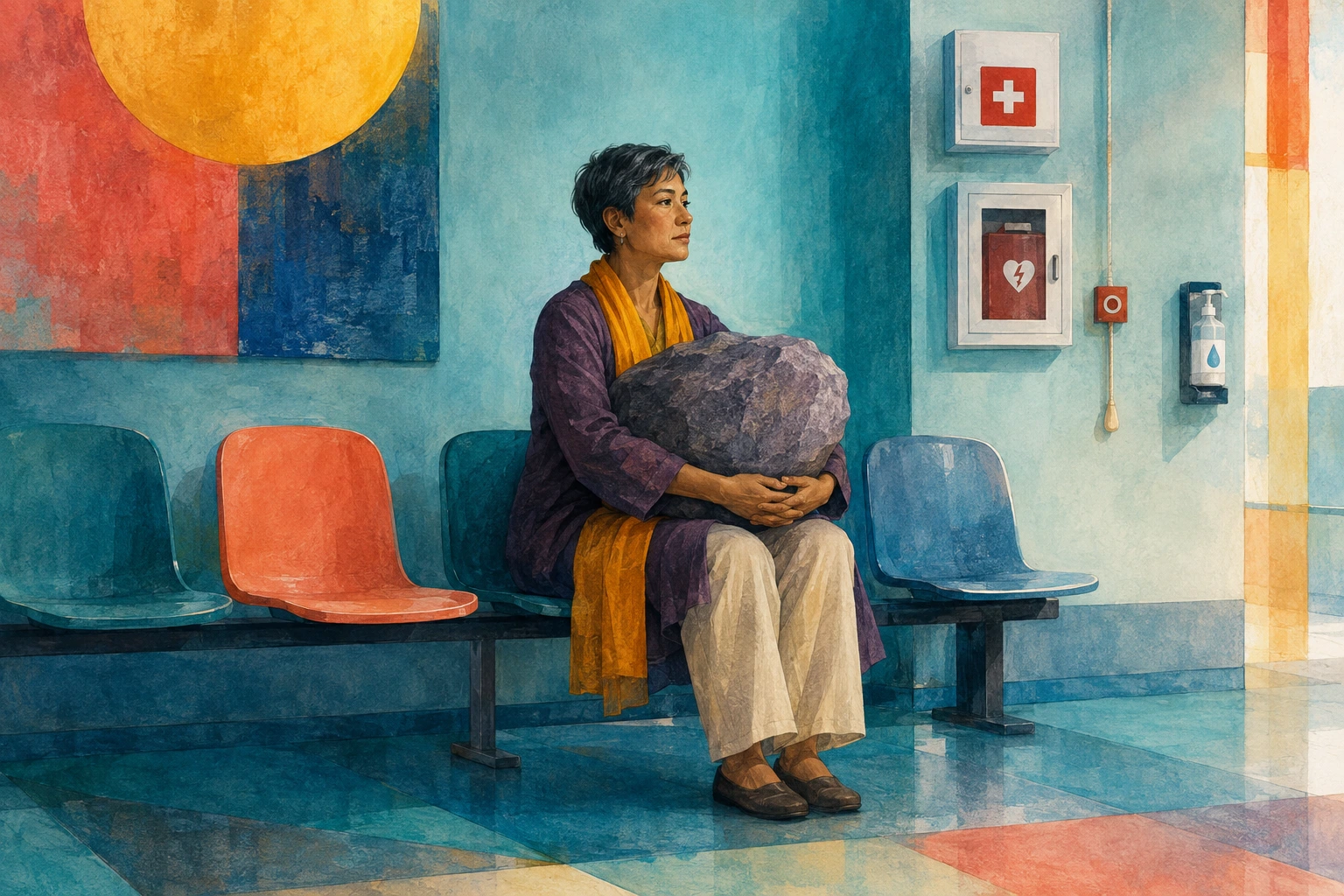
Figure 14.1. The stone in the waiting room.
Orientation
A clinic waiting area, drawn in plain line and almost empty (Figure 14.1): a row of four or five fixed chairs against a wall, a strip of flooring, a great deal of white above. On the wall behind the chairs hangs the building's full complement of provision, every item correct and well kept - a first-aid box, a defibrillator in its cabinet, an alarm pull-cord, a hand-sanitiser dispenser - each carrying its standard wordless pictogram and no lettering at all. In one of the chairs a person sits alone, waiting. Resting on their knees, held against the body in both arms, is a large plain stone: unshaped, ordinary, heavy enough that the arms are plainly round it and not merely laid on it. They sit upright and composed, not straining, not slumped, the way people wait. The chairs on either side are empty and nobody is looking. Nothing in the panel says whether the person is a patient or somebody who works in the building, and nothing on that wall was made for what is on their knees.
Spiritual care in mental health begins on someone else's ground. Psychiatry and clinical psychology already own this field, and they have organised it around two operations: the screen, which names the disorder and rates the risk, and the treatment, which lowers the symptom. Both are necessary, and the caregiver must never disparage them. But carried unexamined into spiritual care, the screen-and-treat reflex becomes the local form of the deficit reflex this book has tracked from the start. It reads despair as a symptom-cluster to be brought down, suicidality as a risk to be managed, a traumatic memory as material to be desensitised. The complaint it produces is predictable and is heard wherever the reflex has taken hold: a great many questions were asked, and the person did not feel heard. The checklist screens, but it cannot accompany (Ch 6). To sum the assessed domains - a risk-plan, plus a course of therapy, plus a relaxation mantra - is the additive, integral-not-Integrative error (Chapter 4). The Integrative move is to relate the threads of a fractured life toward a coherence the person can own.
Two kindred but distinct woundings present in this setting, and the chapter turns on keeping them apart. The first is mental-health distress in the ordinary clinical sense: depression, suicidality, addiction, the despair that closes in when a life comes apart. The second is moral injury - the wound to conscience that follows from perpetrating, failing to prevent, witnessing, or being betrayed in something one holds to be right (Litz et al. 2009; Shay 1994). The signal contribution of moral-injury scholarship is to mark this second wound off from post-traumatic fear: the problem is not a conditioned terror to be extinguished but a violated relation to what is right. The distinction is not academic. A moral wound treated as a fear-memory receives a therapy that misses it - the soldier desensitised to a memory whose trouble was never fear. And it matters here for a further reason: the Dharmic tradition carries a precise resource for moral repair, Prāyaścitta (atonement), that the secular frame lacks.
Neither wounding, at root, is a deficit to be subtracted. Each is a dis-integration of the person, to be realigned toward a Coherent View they can own (Chapter 4). And the view reached must be theirs. The non-imposition hinge (Ch 4 §4) is pressed to its limit here from two sides. With the suicidal person, the coherence she reaches may be a wish to die: alignment-toward-her-view and the preservation of life can pull apart, and spiritual care then works alongside clinical safeguarding rather than overriding her autonomy with a sermon or colluding with the wish. With the faithless moral-injured person, the Dharmic resources come as offered contemplation, never imposed devotion, and accompaniment carries the care meanwhile.
One last thing the practitioner is walking into: the 4H diagnosis is a homecoming here, not an import (carried from Ch 10). The caturvyūha is, in its Yogasūtra source, Yoga's own structure for the cessation of duḥkha - heyaṃ duḥkham anāgatam, 'the suffering not yet come is what is to be avoided' (YS 2.16). In this setting duḥkha presents as despair and as the burning of conscience, so the diagnosis is recovered from within the domain rather than laid upon it. What is heya here is not the disorder the clinic correctly names, but the avoidable suffering the person can be helped to discern and release: the preyas-chase that left nothing load-bearing, the unrepaired wrong that will not let conscience rest.
Learning objectives
After working through this chapter, readers should be able to:
• Recognise the principal spiritual-care needs presenting in mental-health distress and in moral injury, and say what distinguishes them from each other.
• Apply the Integrative Care Model to a life that has come apart across several dimensions at once, without treating the dimensions as a list to be totalled.
• Distinguish the spiritual, the psychological, the medical, the social, the economic and the ethical strands of such a case, and say which of them the caregiver does not own.
• Formulate interventions that are offered rather than prescribed, including where the person holds no active faith.
• Identify the point at which the caregiver's competence ends and referral, consultation or safeguarding begins, and act at it.
• Reflect on how the caregiver's own worldview, tradition and biography shape what is heard in the room, particularly where caregiver and care recipient share a background.
Key concepts
• Spiritual distress. Disturbance in a person's relation to what gives their life coherence, meaning and worth. It may accompany a psychiatric disorder, may follow from one, and is not reducible to one.
• Moral injury. The wound to conscience that follows from perpetrating, failing to prevent, witnessing, or being betrayed in something one holds to be right (Litz et al. 2009; Shay 1994). Distinguished from post-traumatic fear by what is damaged: a relation to what is right, not a conditioned response to danger.
• Prāyaścitta (प्रायश्चित्त, atonement). Expiatory action by which a wrong is acknowledged and discharged and the moral order restored. The Dharmic tradition's technology of moral repair, and the resource the secular trauma frame lacks.
• Samatva (समत्व, evenness). Equanimity held across fortune's turning (BG 2.48). A formed state rather than an administered one, which is why it is a direction of work and not an outcome measure.
• *Śreyasand*preyas** (श्रेयस्, प्रेयस्). The good and the merely pleasant, set against each other at Kaṭha Upaniṣad 1.2.1-2. The distinction names what a life built on the second has to stand on when it fails.
• Śraddhā (श्रद्धा, trust or faith). The faculty by which a person is able to lean on something. It can be injured, and an injured śraddhā is not repaired by demonstrating that the thing leaned on was sound.
• Accompaniment. Sustained presence that does not depend on a task being performed or a problem being solved, and which continues where neither is available. Not a fallback for when the interventions run out.
• The safeguarding floor. The clinical arrangements for risk that run underneath spiritual care in this setting and are never displaced by it. Spiritual care here works alongside, never instead of, clinical risk assessment.
Cases
Case 14.1 carries all twenty-one parts of the case-chapter template, in order: the case card at Table 14.1; then Part I, the care context, the background and the presenting situation; then Part II, three narrated encounters and a follow-up; then Part III, the analysis, the assessment at Table 14.2, the interventions at Table 14.3, the ethical tensions and eight alternative readings; then Part IV, the results, the learning points and the questions. Nothing in its narrative anticipates what its analysis concludes, and a reader who wants the case as a case should stop at the end of section 11. Case 14.2 now carries all twenty-one parts as well: the case card at Table 14.5; then Part I, the care context, the background and the presenting situation; then Part II, four narrated encounters and a follow-up that runs a year; then Part III, the analysis, the assessment at Table 14.6, the interventions at Table 14.7, the ethical tensions and six alternative readings; then Part IV. The same rule applies to it as to the first case, and a reader who wants the case as a case should stop at the end of section 11. The second reading that follows the two cases is deliberately not laid on the template and is not meant to be: a case carried in full in another chapter is recalled here in a few sentences and then read from the single angle this chapter owns. Names and identifying details are altered or composite; the underlying cases are drawn from the project's case archive (Case 009 and Case 010). Where a source record carried a person's own name, that name is not reproduced here; Roshni and Suresh are both new. A third case, Case 014, is carried in full at Chapter 15 and is read here a second time, from the side this chapter owns; the second reading follows the two cases and does not repeat Chapter 15's. A fourth, the forensic-clinic case carried in full at Chapter 20 as Case 20.1, is read a second time after it, at the assessment only, and does not repeat Chapter 20's. Consent and confidentiality per practice ethics. Safety note: this chapter discusses suicidality; the spiritual-care moves below operate alongside, never instead of, clinical risk-assessment and safeguarding.
Case 14.1: Roshni - the woman who asked to die
Case card
Table 14.1. Case card: The woman who asked to die.
Case title | The woman who asked to die |
Care context | Community-based Hindu spiritual care in a town in the west of the Netherlands. The consultations took place in a side room of a community hall and, later, in the back room of a house where the care recipient was lodging. No ward, no chaplaincy department and no institutional referral pathway: the caregiver was reached by telephone, by a general practitioner who had run out of other things to offer |
Primary care recipient | Roshni, thirty-nine, Dutch, of Surinamese Hindustani descent; formerly in full-time salaried work, at the time of the case without work, without a home of her own and heavily in debt |
Spiritual caregiver | Suresh (pseudonym), a hindoe geestelijk verzorger or Hindu spiritual caregiver, in his fifties, working across a region on referral rather than within one institution, with a small caseload and no colleague on site |
Other significant participants | Roshni's general practitioner, who declined her request and made the referral; her two children, aged nine and six, living with a foster family and seen under supervision; the acquaintances in whose house she was lodging; her parents and her brother, who were not in contact with her; a clinical psychologist she had seen previously and stopped seeing |
Tradition or worldview | Sanātana Dharma as it is carried in a Surinamese Hindustani family in the Netherlands: household observance, festivals, a grandmother's shrine, no current temple attendance and no paṇḍit she would name as hers |
Presenting concern | A settled and repeatedly stated wish to die, brought to the caregiver in the form of a request that he support an application for euthanasia; compounded by alcohol dependence, unpayable debt, the loss of her children to foster care and estrangement from her family |
Stage of care | Early and orienting. A first consultation, two further consultations within eight weeks, and a follow-up series that was still running when the record closes. Nothing here is a completed episode of care |
Central spiritual-care tension | The person's own settled view and the preservation of her life do not point the same way, and the caregiver has authority to do neither of the two things that would resolve the tension: he may not tell her she must want to live, and he may not agree that death would return her to her grandparents |
Relevant care dimensions | Bodily, psychological, social, economic, ethical, existential and spiritual, across person, family, foster placement and creditor |
Confidentiality note | Adapted, with invented particulars. The name here is new and replaces the name carried in the source record; the source record's own name is not reproduced anywhere in this book. Age, town, employer, the platform on which the recruitment happened, the ages of the children and every interior and weather detail are altered or invented. The financial figures are not reproduced. The mapping is held privately and appears nowhere in this book |
Part I - Entering the case
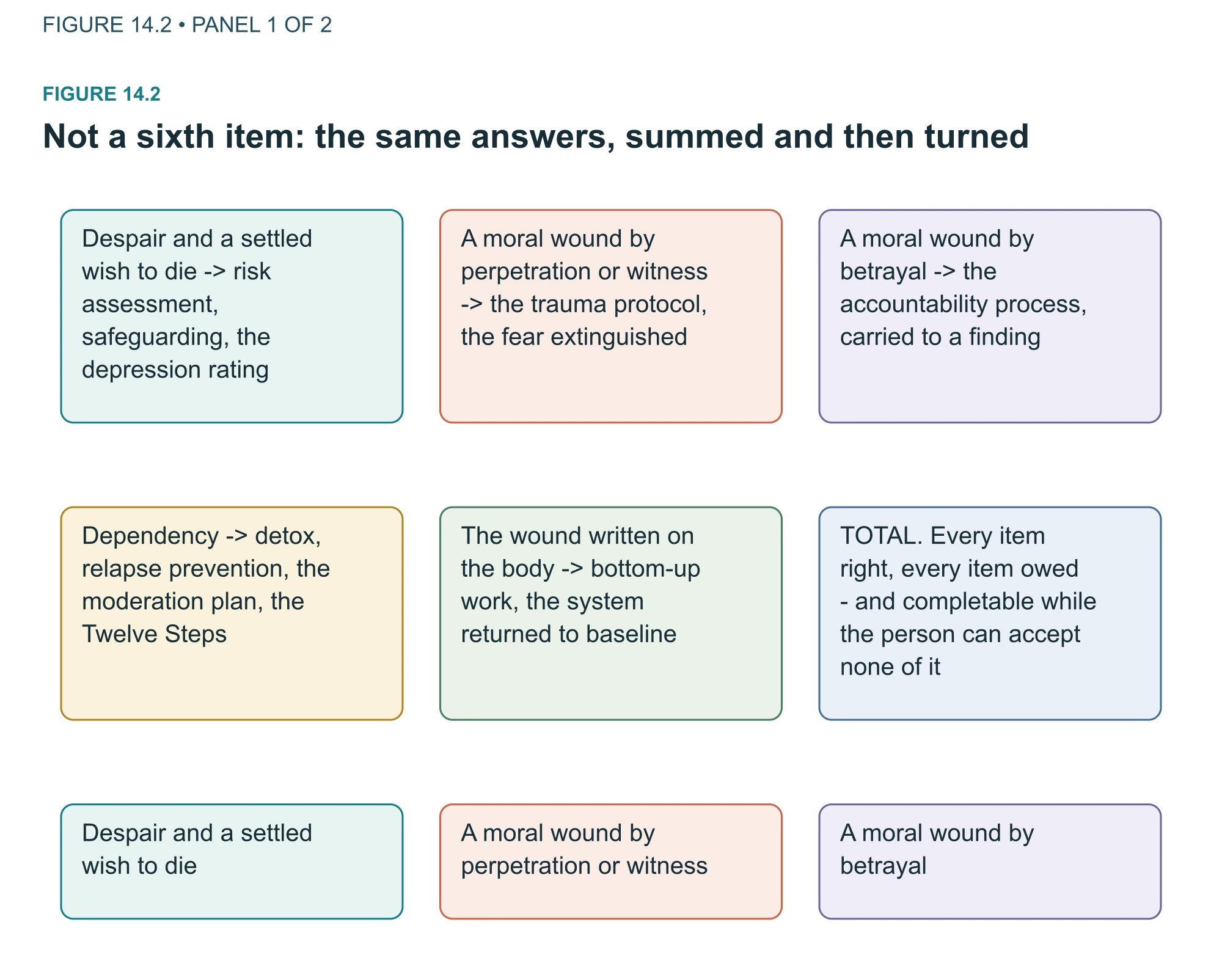
Figure 14.2. Not a sixth item: the same answers, summed and then turned.
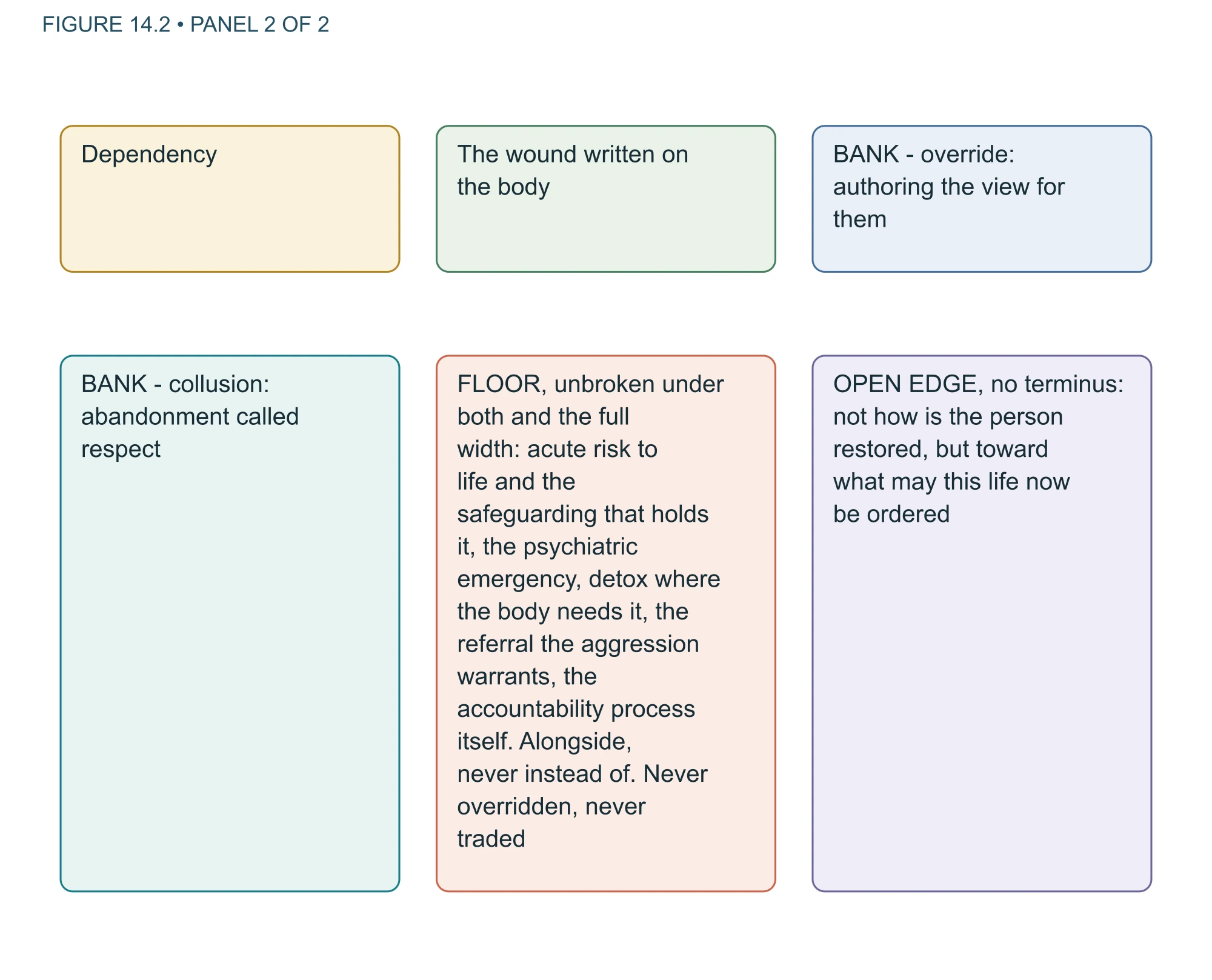
Figure 14.2. Not a sixth item: the same answers, summed and then turned.
5. Introduction to the care context
Community spiritual care has no doorway. A hospital chaplain is on a list, and the list is on a wall, and a nurse who has run out of things to say can point at it. The caregiver working on referral across a region has none of that. He is a telephone number held by a handful of general practitioners, two funeral directors, a community hall committee and, in this case, a doctor who had reached the end of what she was able to offer and who remembered that the number existed.
That difference is not administrative. It determines who arrives. The person who reaches a community caregiver has usually already been somewhere else and left. She has been assessed, has been offered something, and either the offer did not fit or she could not take it up, and the referral carries that history in it whether or not anyone says so. By the time the caregiver meets her, the encounter is already the second or the third of its kind, and he is being measured against people who came before him and did not help.
The Dutch setting adds a further and quite specific pressure. A request for assistance in dying is a request the law contemplates. It has a procedure, criteria, a second opinion and a paper trail, and everybody involved knows this, including the person making the request. Where such a request would elsewhere be heard as a symptom or a cry, here it is also, unavoidably, an application - something that can be granted or refused, and that has in fact been refused. A caregiver who receives it purely as a metaphor is not listening. A caregiver who receives it purely as an application has stopped being a caregiver and become a further stage of the process.
Hindu spiritual care in the Netherlands adds a third layer. There are few practitioners, the profession is young, and the caregiver is often the only person in the situation with any formal standing to speak about what happens after death. In a hospital he would be one voice among a team. On a referral of this kind he is frequently the only person who will say anything at all about the matter the person is most preoccupied with, and there is nobody to disagree with him. What he says will not be balanced by a second opinion, because there is no second opinion within reach.
The typical needs in this setting are therefore less exotic than the presenting problem suggests. They are: to be heard by someone who is not conducting an assessment; to have the religious material of one's own upbringing treated as material rather than as symptom or as doctrine; to be met by a person who will still be there next month. What makes this particular case difficult is not the euthanasia request but the fact that the person had already, correctly, identified what she needed and had been unable to obtain it, and had drawn from that failure the conclusion that it was not obtainable.
6. Background
The care recipient. Roshni was thirty-nine. She had been born in the Netherlands to parents who had come from Suriname as young adults, and she had grown up in a household where the calendar was kept, the festivals were observed and nobody talked much about what any of it meant. Her grandparents on her father's side had lived in the same street. She called them, as the family did, Adjie and Adja - grandmother and grandfather - and it was in their front room, and not in her parents' house, that she had spent the afternoons of her childhood. There was a shelf in that room with pictures on it, and a lamp that was lit in the evening, and her grandmother had a way of putting a plate in front of her without asking whether she was hungry. Both had died before Roshni was twenty-five.
She had worked full time in the administration of a transport firm for eleven years. She had a partner for some of that time and two children, a daughter of nine and a son of six.
Six years before the referral, a short video had come up on her telephone. A man in an unremarkable room explained, calmly and without pressure, that he trained ordinary people to trade. She watched it three times. Within a year she was working her full-time job by day and something else by night, and the something else turned out to have two parts: a small amount of trading, and a much larger amount of recruiting other people to be trained. She was good at the second part. She was flown to a training week at a resort abroad, and then to another. She was photographed on a stage holding a certificate. For about two years she earned more than she had ever earned, and she believed, in a way she later found difficult to describe without contempt for herself, that she had understood something the people around her had not.
Then the market she was exposed to fell, and the positions she had taken with borrowed money fell with it, and the recruitment income stopped because there was nobody left below her to recruit. The house was sold and did not cover what was owed. Her partner left. Her parents, who had told her at the beginning that it was a pyramid and had been ignored, did not offer to take her in, and her brother stopped answering. She moved into the back room of a house belonging to acquaintances from the training weeks, who had also lost money and who had also been told.
The drinking had begun somewhere in the second year of the good times and had not stopped when they ended. She had spent seven weeks in a residential clinic and had come home to a house that was not hers, and within a fortnight there had been shouting on the landing, and then shouting in the street, and the neighbours had complained twice. The children had been placed with a foster family. She saw them for two hours on alternate Saturdays with a family supervisor present.
She had also, a year before the referral, been referred to a clinical psychologist and had attended five sessions and stopped. Her account of why was precise and she repeated it more than once. The psychologist, she said, seemed to need help herself: she was restless, she got up and went out of the room twice in an hour, and each time she came back she started again at the top of a list of questions. Roshni did not say the treatment had been wrong. She said she had not felt that anyone was listening.
By the time of the referral she was eating very little and had lost a great deal of weight. She had stopped answering messages from the few friends who still sent them. She said, to her doctor, to the acquaintances she lived with and to anyone who asked how she was, that she would rather be dead and that she had thought about how. She had not acted on any of it.
The spiritual caregiver. Suresh was in his fifties. He had trained late, after twenty years in a job that had nothing to do with care, and he held the professional registration that allows a spiritual caregiver in the Netherlands to work with the protections and obligations of the role. He worked alone across a region. He had a supervisor he saw every six weeks and no colleague he could turn to on the day.
He had grown up in the same tradition as Roshni and in a similar street, and he was aware that this cut both ways. It meant he knew, without being told, what a shelf with pictures on it in a grandmother's front room was and what it was for. It also meant he was liable to assume he knew, and he had been caught out by that assumption before.
He had accompanied people who wanted to die. He had never accompanied anyone who had made a formal request and been refused, and he was conscious on the way to the first meeting that he did not know whether he was being asked to be a chaplain or a witness.
The wider circle of care. The general practitioner had declined the request and had said so plainly, and had then done something less usual, which was to keep the person in her practice and look for someone else who might be able to sit with her. The foster family were doing what they had undertaken to do and had no relationship with Roshni beyond the handovers. The family supervisor filed a short report after each contact visit. The acquaintances in whose house she lodged were not carers and did not think of themselves as such; they had their own losses from the same collapse, and their patience was real but finite. Her parents and brother were alive, in the same country, and not in contact.
7. The presenting situation
The referral came by telephone and lasted four minutes. The general practitioner said that she had a patient of thirty-nine who had asked her to begin a euthanasia procedure; that she had told the patient she would not; that the patient's suffering was, in her view, entirely real and entirely bound up with circumstances that might yet change; and that she had nothing further to offer her except antidepressants the patient would not take and a waiting list. She asked whether the caregiver would see her. She did not say what she expected him to do.
Roshni's own account of the problem was consistent and she gave it without prompting to everyone she met. The problem was that she was finished. She had had her life and had spent it, the spending had taken other people's money with it, and the only thing she could still do for her children and for the people around her was to stop being an item on their accounts. She did not present this as despair. She presented it as arithmetic that others were refusing to check.
The people around her described the problem differently and did not agree with each other. The general practitioner saw a depressive illness with a treatable component, sitting on top of a financial and social catastrophe that no treatment would touch. The acquaintances she lived with saw the drinking. The family supervisor's reports, which Roshni had read, described a parent whose contact visits were positive and whose situation was unstable. Her parents, when she had last spoken to them, had said she had brought it on herself.
The immediate risks were not in dispute. She was underweight and eating badly. She was drinking. She said openly that she wanted to die and had considered how, and had not acted. She had a general practitioner who knew all of this and who was seeing her monthly.
The central question facing the caregiver was narrower than any of that, and it presented itself before he had met her. She had asked her doctor for a procedure and had been refused, and she was now being sent to a man whose profession is to sit with people. She had every reason to read the referral as a consolation prize: the thing you get instead of the thing you asked for. If he arrived as an alternative to what she wanted, he would confirm her account of how the world had treated her - offered something, then handed on.
Decision point. What should the caregiver attend to first: the risk, the request, or the referral itself?
Part II - The care encounters
8. Session one: what the doctor sent instead
Before the encounter. They met in a side room of the community hall on a Tuesday afternoon in March, because it was neutral and because she had refused to be visited at the house. Suresh arrived early. The room held a stack of chairs, a folding table, a window facing a car park and a radiator that came on with a knock. He unstacked two chairs and set them at an angle rather than across the table. He expected, he later admitted, a person he would have to draw out.
The encounter. She was ten minutes late and came in with a plastic document wallet under her arm. She sat down, put the wallet on the table between them and pushed it an inch towards him.
'That's everything,' she said. 'The debts, the letters, the reports. So you don't have to ask.'
He did not open it.
'Doctor Verhoeven says you're a spiritual counsellor,' she said. 'Are you allowed to write something? For the procedure. That I know what I'm asking.'
'No,' he said. 'I'm not allowed to write anything for that, and I wouldn't be believed if I did.'
'Right,' she said. 'So this is the part where you tell me life is a gift.'
'I wasn't going to say that.'
'Everybody says it.'
'What do they say after it?'
She looked at him for the first time.
'Nothing,' she said. 'They look at their watch.'
He asked her how long she had been asking. She said fourteen months. He asked her who had listened. She said the doctor had listened, which was why she was angry with the doctor and not with the others. Then she talked for thirty-five minutes without much prompting: the wallet, the letters in it, the amount owing, the Saturdays, the supervisor who wrote things down, the seven weeks in the clinic, the psychologist who kept getting up and going out of the room. Twice she stopped and asked him whether he was going to tell her she was ill. Both times he said he was not qualified to tell her that and that her doctor already had. At the end she said the thing she said to everyone, which was that she wanted to die and had thought about how, and she said it in the same tone she had used for the letters.
Inner response. He noticed, while she was talking, that he had begun to listen for markers. Weight. Sleep. Plan. Means. Timeframe. He was, in other words, doing quietly and without a clipboard exactly what the psychologist had done with one, and he caught himself doing it and did not know what to do with the catch. He also noticed that he was relieved she was angry, because anger was easier to sit with than the flatness he had expected, and he distrusted his own relief.
What is happening here? She has begun with a request she already knows will be refused. She made it to a man she had been told is a spiritual counsellor, in the first minute, before anything else. Notice what she did with the wallet: she put her entire situation on the table pre-emptively, to spare herself being asked. Notice that the only person she is angry with is the one who listened. Notice what she has not mentioned at all: her children are in the wallet, in a supervisor's report, and not in anything she has said aloud. What would you ask next, and what would you deliberately not ask?
Decision point. He could have taken the wallet and read it, which would have honoured the offer and confirmed that her situation was the subject. He could have addressed the request directly and explained his position on assisted dying, which would have been honest and would have made the hour about the procedure. He could have asked about the psychologist.
What followed. He asked about the psychologist. Specifically, he asked what it had been like to be in the room with someone who kept leaving it. She said it was like being at a counter. He asked whether he was at a counter. She said, not yet.
He then said the only thing he said about the request that afternoon, which was that he had heard it and was not going to pretend she had not made it, and that he was not going to argue with her about it that day or, probably, at all. He asked whether she would meet him again. She said she supposed so, and asked what for. He said he did not have a plan for her. She said that would make a change, and picked up the wallet, and took it with her.
Practice insight. The most consequential thing in the hour was a refusal to conduct one. She had arrived expecting to be processed and had brought her file to speed it up, and the encounter went somewhere only when the caregiver declined the file. That is not a rule, and there are people for whom refusing the file would read as refusing them. What it is here is a first piece of evidence, offered rather than demanded: this is not another counter.
9. Session two: the shelf in the front room
Before the encounter. Three weeks later, in the back room of the house where she lodged, because she had telephoned and said the hall was cold and she could not keep taking the bus. Suresh went knowing that the change of place was itself information and unsure which way to read it: an opening, or a loss of the energy required to leave the house.
The encounter. The room was at the back on the ground floor and had been a dining room. There was a bed against one wall, a chest of drawers that did not match it, and a window onto a yard with a rotary washing line and a bicycle with no front wheel. Somebody was watching television in the next room, not loudly. On the chest of drawers there was a small framed photograph, propped, and beside it a saucer with the stub of a candle in it. Nothing else in the room was arranged.
He did not ask about the photograph. Twenty minutes in, she got up to move a pile of post off the second chair, and said, with her back to him, 'That's my Adjie and Adja.'
'Your father's parents.'
'You know the words.'
'I had them too.'
She sat down. She said that her grandmother had died first, in the spring, and her grandfather in the November after, and that she had been twenty-four and had thought at the time that she had taken it well. She said that in their front room there had been a shelf with pictures on it, and a lamp, and that her grandmother would light it in the evening without saying anything about it, and that she, Roshni, had never asked what any of the pictures were and now had nobody to ask.
Then she said the thing that changed the shape of the case.
'When it happens,' she said, 'they'll come and get me. That's how it works. They'll be waiting and they'll take me with them.'
She said it the way a person says something settled. He asked her when she had first thought that. She said she had always known it. He asked whether she had told the doctor. She laughed and said she was not stupid.
Inner response. He felt, quite distinctly, two pulls, and he was able afterwards to name both. The first was to correct her: the tradition he serves does not teach that the dead wait at a door to collect those who take their own lives, and he knew several things he could have said about it, and one of them would have been effective. The second was to use it: here at last was a thread with warmth in it, and it could be turned, with very little effort, into an argument for living - your grandmother would not want this. He recognised the second pull as the more dangerous of the two, because it wore the clothes of pastoral care.
What is happening here? A candle stub on a saucer is the only tended thing in a room where nothing else is arranged. Consider what has actually been described: a place where food arrived unasked, where a light was lit without explanation, and where a child was not required to be anything. Consider that the woman who described it lost it at twenty-four and says she took it well. Ask which of the things she has said today is a religious claim, which is a memory, and which is a plan - and whether she distinguishes them. Ask, too, what the caregiver's own recognition of the words Adjie and Adja bought him, and what it might cost.
Decision point. Correct the belief, on the grounds that a caregiver who lets it stand is letting a false thing stand in front of a dangerous act. Use the belief, on the grounds that any thread that pulls towards life is worth pulling. Or neither.
What followed. He asked her what her grandmother's lamp had been for.
She did not know. She said that was the point, that she had never asked, and that there was nobody left who could tell her. He said that he could tell her some of it, and that some of it would be his family's version rather than hers, and that she should hold it loosely for that reason. She said she would like to know anyway.
They spent the rest of the hour on the shelf: what is generally on one, why the lamp is lit at that hour and not another, what is said and what is not said. He answered as a grandson and not as an authority, and said so twice. He did not mention her plan, or the procedure, or the pictures' bearing on either.
Near the end she said, 'You didn't tell me I was wrong.'
'About what?'
'About them coming to get me.'
'No,' he said. 'And I'm not going to tell you you're right, either. I'd want to know more about it first. So would you, I think.'
Practice insight. The hour's material arrived because a question was not asked. Had he asked about the photograph in the first twenty minutes, she would have answered a question; because he did not, she made an announcement, and an announcement carries what the person wants carried. The provisional lesson is not that one should never ask about the photograph. It is that in a life where every professional contact has begun with questions, the caregiver's silence is one of the few instruments left that has not been discredited.
10. Session three: the room after
Before the encounter. Two weeks later, the same room. She had telephoned to move it once and then telephoned again to keep the original time. Suresh had spent part of the intervening fortnight with his supervisor, who had asked him what he was for in this case, and had not been satisfied with the first two answers.
He arrived intending to do something he had turned over for a fortnight and was not certain of: to ask her to describe, in ordinary detail, what she believed would actually happen. Not to challenge it. To let it be described at the length that beliefs are usually spared.
The encounter. He asked whether she would tell him how she imagined it. She said that was a strange question. He said it was, and that she could refuse it.
She described the door and the two of them behind it. He asked what happened next. She said they would take her with them. He asked where. She said she did not know, somewhere, together. He asked who would be there in the days after, in this house, in this room, and she stopped.
He kept going, evenly, and it was the most directive he was in the whole case. Who would telephone the school. What would be said to a girl of nine and a boy of six, and by whom, and in what words, and on what Saturday. Whether the supervisor's file would record it. What the acquaintances in the next room would think they should have noticed. What would be done with the wallet of letters, which does not stop existing.
She cried, which she had not done in either of the other meetings, and she was angry with him, which she said.
'You're doing what everybody does,' she said. 'You're making it about them.'
'No,' he said. 'You told me it was about them. You told me the first day that you were doing it so you'd stop being on their accounts. I'm asking whether it comes off the account.'
She said nothing for a long time. Then she said, 'It doesn't come off, does it.'
He said he did not know. He said that was what he wanted her to look at, and that she was the only person who could.
Inner response. He was frightened, and the fear had a specific shape: that he had crossed from accompaniment into leverage, and that if she went home and drank tonight it would be because of the hour he had just conducted. He also knew that he had wanted her to arrive where she arrived, and that wanting it made the whole hour suspect in a way he could not fully clear up afterwards.
What is happening here? Notice that the caregiver has not contradicted a single belief. Notice that he has nonetheless brought about a change, and ask by what means, and whether the means were hers or his. Ask whether the description he requested was an intervention, an assessment, or a piece of rhetoric - and whether anything turns on which it was, given that she consented to it and could have stopped. Ask what would have happened had she described the room after and felt nothing.
Decision point. Would you continue in this direction next time, adapt it, seek consultation, or refer her back?
What followed. He said, before he left, that he would not do that again unless she asked him to, and that he had found it hard, which surprised her. He telephoned his supervisor the same evening rather than waiting for the six-week cycle, and he did not continue in that direction.
Two things were offered in the weeks that followed and both were offered rather than prescribed. The first was a mantra to be recited at a fixed hour in the evening, at the time her grandmother had lit the lamp, and he was explicit that it was not a treatment and that its point was the hour and the repetition rather than any result. She took it and used it irregularly and said it helped her sleep, and later that it did not, and later again that she had gone back to it. The second was a place on a short structured course, run outside the mandir by people trained for it, on living alongside suicidal thoughts rather than trying to be rid of them. She said she would think about it, and did not go, and then went in the autumn.
Practice insight. The hour worked, if it worked, because it was requested and could have been refused, and because nothing in it corrected her. But the caregiver's own account of it is uneasy, and the unease is part of the record rather than a blemish on it: he wanted a particular outcome and he arranged the conditions for it, and consent does not entirely dissolve that. A practitioner reading this should not take away a technique. If anything is transferable it is the discipline of asking what the person has said the act is for, and then following that purpose all the way to the room afterwards - and being prepared to find that it holds.
11. Follow-up and outcome
The consultations continued fortnightly through the summer and then monthly. The record does not contain an ending, and this account will not supply one.
What changed is small and is worth stating exactly. She ate more, and put on some weight, and her doctor noted it. She went to the course in the autumn and finished it. She kept the Saturdays and did not miss one. In the fourth month she asked whether her daughter, who had begun asking questions about what happened to people who died, could be told something, and this was the first time she had raised her children in a session herself.
What did not change is larger. The debt did not move; it cannot be moved by anything in this account. Her parents did not make contact and she did not attempt it. She drank less and did not stop. She continued to say, when asked directly, that she would rather be dead, and she said it in the autumn as she had said it in March, and she also continued to attend. Her belief that her grandparents would come for her was never revisited after the second session, by either of them, and it stands in the record unexamined.
The euthanasia application was not renewed during the period covered here. Nobody involved treated that as a result.
The care relationship had not ended when the record closes. It had become the thing she did on a Thursday, which is less than anyone would want and more than she had in March.
Part III - Interpreting the case
The encounters are over. What follows is this chapter's reading of them, and it is one reading among the several section 16 sets out. The questions the practice insights left open are answered here, and a reader who would rather answer them first should do that before going on.
12. Integrative case analysis
Three meetings, and the reading of them starts here. It has one thing to be careful about at the outset, and it is the opposite of the difficulty a case chapter usually presents. In most of the cases in this book the decisive sentences were said by the caregiver, and the analytical risk is that a chapter admires him. Here almost everything that moved arrived because something was not said or not asked: the wallet was not opened, the photograph was not enquired after, the belief was not corrected, the diagnosis was not offered. An analysis of restraint has a characteristic failure, which is to turn an absence into a method and then recommend it. Nothing here is recommended on the strength of having been withheld. The withholding has to be shown doing work, and where it merely happened to coincide with the work it is said so.
Care recipient. Roshni's stated position was not despair and should not be read as its expression. It was a reckoning, and she offered it for audit. She had had a life, she had spent it, the spending had taken other people's money with it, and the only remaining thing she could do for the people around her was to stop appearing on their accounts. She presented it as arithmetic that others were refusing to check. That phrasing is doing more than describing a mood, because despair and arithmetic call for different answers. The answer to despair is comfort, and comfort offered to a person presenting a calculation is heard as a refusal to look at the figures. The answer to a calculation is to check it. The third encounter checked it, which is why it worked, and checking a suicidal person's arithmetic is a serious act, which is why it was dangerous.
Her needs were named by her with a precision that few people in this book manage, and the naming was not about relief. What she said she had not had was the sense that anyone was listening. It is worth separating two things that are usually run together here. Being understood is an outcome and cannot be promised at a first meeting; being attended to is an act, and can be performed within the first minute, and is what she was describing the absence of. The record's own summary is that she hungered for sincere attention. Every professional in her history had given her a service and none, on her account, had given her that. Her complaint about the psychologist is not a complaint about competence, and she says so herself; it is that the woman kept leaving the room and restarting the list.
Her hopes reduce to one, and it is the item that no file in the case records under that heading. Adjie and Adja would be waiting and would take her with them. It is the only forward-looking sentence she says in the whole record, and everything else she says points backwards or downwards. A caregiver scanning her for protective factors would find none; the protective factor and the risk were the same object.
Her fears were not of death and this needs saying plainly, because a caregiver who assumes otherwise will spend the hour on the wrong thing. What she feared, on the evidence, was continuing as an item on other people's accounts, and, unspoken throughout, that she could not be a mother from where she was standing. Her children appear in the wallet, in a supervisor's report, and in nothing she said aloud in the first two meetings. The one thing in the case she never once volunteered is the one thing that turned out to be load-bearing.
Her agency had been reduced to a single instrument and she used it constantly. She could put a case. She had been putting it for fourteen months, to a doctor, to the people she lodged with, to a supervisor, to anyone who asked how she was. It is worth noticing where her anger went, because it went somewhere very specific: she was angry with the doctor, and the doctor was the only person who had heard the case and returned a verdict. Anger is not distributed evenly across the people who fail us. It collects where we were taken seriously enough to be answered. A caregiver who reads the anger as a symptom will miss that it is a map of where she has been treated as a person, and the map had one point on it.
Her worldview is the part of this case most easily mishandled, and mishandling it in either direction is easy. She had grown up in a household where the calendar was kept and nobody talked much about what any of it meant, and she had spent her childhood afternoons in a front room with a shelf she never asked about. That is not indifference and it is not lapsed faith. It is a particular condition, common in a diaspora and not confined to one: the tradition arrives as practice, kept by people who do not explain it, and when the people who kept it die the practice becomes unreadable while the attachment to it remains entire. She had the whole of the feeling and none of the interpretation, and there was nobody left she could ask. Read in that light, the belief that her grandparents would come for her is not a doctrine she holds. It is a memory doing the work of a doctrine, in the absence of anyone who could tell her what the doctrine was. That distinction governs the rest of the case, and it is why correcting the belief would have been the wrong operation performed accurately: one does not correct a memory.
Her resilience is easy to overlook because it takes no impressive form. She kept coming. She had refused the house and then asked for the house; she moved an appointment and then moved it back; she used the mantra, stopped, and returned to it. Across all of it she kept the alternate Saturdays and did not miss one, through the worst months of a collapse, with a supervisor in the room taking notes. Whatever else was failing, the two hours a fortnight held.
Caregiver. Suresh's stance was to decline to conduct an assessment, and the case is precise about what that did and did not mean. He did conduct one. He caught himself, while she was talking, listening for weight, sleep, plan, means and timeframe, which is the psychologist's list without the clipboard. What is on display is not the absence of screening, which is not available to a trained person, but the noticing of it and the refusal to let it drive the hour. A chapter that presented an unassessing caregiver would be teaching an impossibility, and would leave a reader who catches himself running the list believing he has already failed.
His authority and his limitations sat in an unusual relation to each other. He had no power over anything she wanted. He could not write the statement, could not prescribe, could not restore her children, could not move a euro of the debt. What he did have was standing to speak about what happens after death, and in this setting there was nobody within reach to balance him. That was the one authority she had come for, and the one he most needed not to spend. It is not a coincidence that the hour that went furthest was the hour in which he answered as a grandson and not as an authority, and said so twice. He downgraded his own standing at precisely the point where it was highest.
His use of self ran through the shared background and cut both ways, as he knew. Recognising Adjie and Adja bought him entry in a sentence. The cost of that purchase is that recognition feels like knowledge, and he had been caught by the feeling before. His emotional responses are reported rather than interpreted, which is the right way round: relief that she was angry, and distrust of his own relief; and after the third encounter, fear with a specific shape, that he had crossed from accompaniment into leverage. He telephoned his supervisor that evening rather than waiting for the six-week cycle. In a case with no colleague on site and no team meeting, that call is the most professional act in the record, and it is the one a hurried practitioner does not make.
Context. Four features of the setting shape this case and none of them is in the person.
The first is legal. In the Netherlands a request for assistance in dying is a request the law contemplates, with criteria, a second opinion and a procedure. That means her request was also an application, that the doctor's answer was also a verdict, and that a referral to a spiritual caregiver was legible to her as the thing you are given instead of the thing you asked for. The law is not the cause of her suffering. It supplies its grammar, and the caregiver walked into a room where the grammar was already set.
The second is institutional, and it is an absence. Community spiritual care on referral has no doorway, no team, no colleague on the day, no shared record and no second opinion within reach. Whatever he said about death was the only account of death in the room. A hospital chaplain saying the same words would be one voice among several and could be contradicted by lunchtime.
The third is economic, and it is the finding in this case most likely to be passed over. Her stated problem was money, and there is no one in her circle of care with a mandate over money. A general practitioner, a family supervisor, a foster family, a residential clinic and a spiritual caregiver: the case is well populated and the debt is unattended. Debt counselling appears nowhere in the record. A person can be surrounded by professionals and still have no one whose job is the thing she says is wrong.
The fourth is familial and is a wall rather than a gap. Her parents had told her at the outset that it was a pyramid, had been ignored, and had said afterwards that she brought it on herself. Being right and unheeded is its own injury, and it hardens. The estrangement here is not indifference; it is a correct prediction that nobody can now be forgiven for having made.
The care relationship. Trust arrived early and it arrived cheaply, on two words of Sarnami Hindustani that he happened to know because of where he grew up. It should be said clearly that he had not earned it. Trust that comes as a gift of shared background is a loan taken out against work not yet done, and it can be called in at any moment, usually at the moment the caregiver most needs it not to be. The whole of the third encounter was conducted on borrowed credit.
Power in this relationship ran the opposite way from most of the cases in this book. He had almost no institutional power and a very great deal of interpretive power. He could not change one fact of her situation, and he could settle, with one sentence delivered in the right tone, what she believed was on the other side of a door. Dependency is the corresponding risk, and it is real: for a period he was the only person in her week who was neither a creditor, an assessor nor a witness.
Collaboration, finally, is where this case is thinnest, and the chapter would be flattering it to admire the intimacy of a dyad working without a net. The record shows a referral by telephone and nothing after it. There is no return call to the general practitioner, no shared plan, no note in anybody's file, no agreement about who holds what. The person best placed to know that a woman with a settled wish to die also held a settled belief that dying was a reunion was the caregiver, and the person seeing her monthly and carrying clinical responsibility was the doctor, and on the record these two people spoke once, for four minutes, before any of it was known.
The differentia, stated on this case. A standard reading of Roshni does not fail; it sums. It produces an antidepressant she will not take and a waiting list; relapse prevention for the alcohol; debt restructuring, if anyone thinks of it; the foster-care plan and its supervised contact; a suicide-risk plan held by the general practitioner; grief work for two deaths at twenty-four that she says she took well; and, if she asks for it, a chaplain. Every item on that list is correct and every item is owed, and this chapter disparages none of them. The property worth noticing is a different one. The sum can be delivered in full, by competent people, on schedule, and completed - and at the end of it she still has no reason of her own to remain. Each item answers the question what is wrong with this life. Not one of them answers the question she is actually asking, which is why remain in it. The list also has an order problem that nobody on it experiences: the items are delivered by six services on six calendars, and the only person holding all six is the one who says she cannot hold anything.
The Integrative move is not to add a seventh item. It is to relate the collapse, the shame, the debt, the drinking, the children she does not mention, the friends whose messages she had stopped answering and the one door she believes stands open, toward a coherence she can own and live inside - or, at the limit, be accompanied within. Two decisions carry it here and both are refusals of an obvious move. He received the euthanasia request first as a communication and only second as a risk, which is why she said the thing about the counter and came back. And he met the reunion belief as a real thread of connection and an inarticulate intuition of continuity, neither correcting it as an error nor turning it into an argument for living. The second refusal is the harder one and he names it himself: the pull to use the grandmother was the more dangerous of the two pulls, because it wore the clothes of pastoral care. Alignment is directional and not additive, and the direction here was set by what the person already held, not by what the caregiver had available.
Table 14.4. Four routes into a moral wound, and what each one takes.
The route, in the definition's own terms | How it commonly presents, and where you will meet it | What it has taken | The mistake most easily made on this route | What must be running alongside, whatever you conclude |
|---|---|---|---|---|
Perpetrating. The person did the thing themselves, or shared in the doing of it. | Carried guilt seeking discharge in a currency that does not settle it: self-punishment, recklessness, compulsive displays of the very power that was abused, a drink that turns them into somebody else. Rarely offered as guilt; usually as behaviour that gets them into trouble. | The capacity to put it down. Not innocence, which they do not ask for, but any completable act that would let conscience rest. | Reading the behaviour as the problem. The aggression, the drinking and the recklessness are legible only once read as a wound seeking, in the wrong currency, to restore an order it saw violated; treated as the disorder, each attracts a correct treatment that leaves the wound untouched. | Where self-harm or suicidal intent appears anywhere in the account, a clinical assessment happens now and is not deferred while moral work proceeds. Where alcohol is the discharge, withdrawal is a medical matter: detox belongs to the clinic and is never traded against anything on this page. |
Failing to prevent. The person was in a position to stop it and did not, whether or not anyone else knows. | Silence, and often continued competent work. The commonest form the wound takes in health care, where the injuring act is almost never cruelty and almost always an omission under load. Frequently the person is a colleague, and frequently inside a formal process. | Standing with themselves. They are usually still doing the job, which means the exposure is live rather than past. | Assuming the injured party is the patient. In this chapter's own record the harmed man has a rich file and the clinician who harmed him has a blank; there is no indication anywhere that anybody asked how she was. That is not a defect of one archive. It is an accurate picture of whose distress an institution collects. | Occupational health, the person's own supervisor, and somebody outside the process they can speak to. If a formal process is running, legal advice is theirs and not yours, and nothing offered here substitutes for it. Ask early whether anybody has asked how they are, and record the answer honestly when the answer is nobody. |
Bearing witness. The person saw it, was close to it, and did not do it. | Often the hardest to hear, because the person will say they have no right to be affected, having neither acted nor suffered. Sits under a post-traumatic presentation and is regularly mistaken for one. | A place to stand. They hold the knowledge of what was done and no acknowledged relation to it. | Treating it as a fear-memory. A moral wound handled as conditioned terror receives a therapy that misses it: the person is desensitised to a memory whose trouble was never fear. The two co-occur constantly, and recognising the moral wound does not rule the other one out. | Post-traumatic stress and moral injury are not alternatives. A trauma assessment is not made unnecessary by your having recognised a moral wound, and where the presentation includes flashback, dissociation or a startle response, say so to the treating team. |
Being betrayed. A legitimate authority violated what is right in a situation where the stakes were high, whether by cruelty or by the omission of the ordinary care the authority exists to give. | Not as guilt, which is why it is missed. Often as reasonableness: the person may be co-operative, articulate and even warm with you. What is broken may be broken toward an institution and intact toward the individual it sent, which is not a contradiction to be resolved but where the work can begin. | The faculty of entrusting themselves, lost exactly where they are now obliged to exercise it. Sraddha (श्रद्धा, sraddha, the trusting confidence that lets a person put weight on something) is the pre-condition of every intervention that follows and is not itself one of them. A treatment plan can be delivered to somebody who does not trust it; care cannot. | Mistaking the accountability process for the repair. A finding of fault is owed and is not a substitute. A complaint can be carried through to a verdict, and every item in the plan delivered, while the faculty is untouched and the person accepts none of it. The first question is not what they have suffered but what they can still lean on, and whom they can lean on it with. | The person's continuing treatment depends on a profession they cannot lean on, so the live risk is disengagement from care that is keeping them alive. Name that to the treating team, with the person's knowledge. Ask who they can lean on it with, and where the harm was avoidable, ask the what-if forward: pointed backwards it yields a counterfactual with a date on it, and the counterfactual feeds the injury. |
13. Spiritual-care assessment
An assessment in this case has to survive a particular objection, which the person herself would make. She had been assessed repeatedly, and her account of it was that she had been made visible without being met. Any assessment written here that reads as a better list of questions has misunderstood what the case is about. Two things keep it honest. The first is that it distinguishes throughout between what was said, what has been inferred and what nobody knows, because most of the harm done by assessment is done by inference recorded as fact. The second is that it names, in its last column, what is not the caregiver's to assess at all, which in a case with a live suicide risk is not a formality.
Table 14.2 sets the assessment out under the headings this book uses throughout. It is written to be lifted: the four columns can be run on any case, and their value is in the discipline of filling the second and third before anyone acts on the first.
Table 14.2. Spiritual-care assessment: what is known, what is inferred, what is uncertain, and what belongs to another profession.
Assessment heading | What is known, because she said or did it | What has been inferred | What remains uncertain | Whose assessment it is, if not the caregiver's |
|---|---|---|---|---|
Meaning and purpose | She describes herself as finished, and her remaining purpose as removing herself from other people's accounts | That purpose is not absent but inverted: she is still oriented to others, and the orientation now points at her own removal | Whether anything she would call a purpose of her own survived the collapse, or whether purpose was always relational for her | - |
Identity and belonging | She was flown to resorts, photographed on a stage, and believed she had understood something others had not; she now lodges in a back room | That the humiliation is doing at least as much work as the poverty, and that contempt for her former self is unprocessed | Whether she can hold the successful years as a chapter rather than as evidence against herself | - |
Relationships and community | Parents and brother not in contact; friends of the good years gone; acquaintances housing her with real but finite patience; two children seen fortnightly under supervision | That the closing of doors has been generalised into a rule about people, which the referral itself was at risk of confirming | Whether any of the estrangements is reversible, and whether she has tested any of them | Family supervisor, for the contact arrangements |
Values and moral concerns | She holds herself responsible for the losses of others and treats her continued existence as a cost they bear | That her moral frame is intact and is being applied against herself with unusual rigour; this is a conscience working, not a conscience absent | Whether she distinguishes between debt as an obligation and debt as a verdict on the person who owes it | Debt advice, absent from this case and needed |
Hope, fear, grief and suffering | One hope stated: that Adjie and Adja will be waiting. Two deaths at twenty-four which she says she took well | That the grief was never done and has been carried for fifteen years as a longing for a place rather than as mourning for two people | Whether she has ever grieved them in any form; nothing in the record suggests she has | - |
Beliefs and worldview | Household observance without explanation; no temple, no paṇḍit of her own; the shelf she never asked about | That she holds the affective content of a tradition and none of its interpretation, and has no one to ask | What she would say the belief in the reunion actually is, if asked to distinguish memory, wish and claim - she was never asked | - |
Rituals and spiritual practices | A candle stub on a saucer beside a photograph, the only tended thing in the room; later, a mantra used at a fixed evening hour, irregularly | That the tended object preceded the caregiver and is hers, and that the fixed hour worked because it was her grandmother's hour and not because it was a practice | Whether the practice survives without him | - |
Sources of strength | She attends. She kept every supervised Saturday | That the capacity to keep an appointment under humiliation is the most reliable strength in this case, and the least remarked | Whether she experiences the Saturdays as strength or as sentence | - |
Spiritual distress | A settled account of herself as a cost; a conviction that what she is owed by other people is nothing and what she owes is unpayable | That the distress is a disintegration rather than a deficit: the parts of her life no longer make one account, and the only account that closes is one in which she is subtracted | Whether the reunion belief relieves the distress or licenses the act, or both | - |
Immediate risks | Underweight, eating badly, drinking; a stated wish to die repeated over fourteen months; consideration of method; no act | That the reunion belief lowers rather than raises the threshold, because it removes from the act the one feature that ordinarily deters, namely that it ends in nothing | Everything that matters clinically about the level of risk on any given day | General practitioner and mental-health services. The caregiver twice tells her he is not qualified to say she is ill, and he is right both times |
Desired form of support | Stated in the negative and precisely: not a list of questions, and not somebody who leaves the room | That what she is asking for is continuity and attention, in that order, and that a service which is available but not present does not satisfy it | Whether she would name anything she wants positively, having spent fourteen months describing what she does not want | - |
The fourfold discernment. Underneath the assessment sits the discernment this book works by, and stating it on this case makes the difference from a screening plain. What is to be discerned and worked with, the heya, is not the depression as a diagnosis, which the clinic owns and which the caregiver twice declines to name. It is the dis-integration: a reversal from wealth to ruin that she has been unable to metabolise, fused to a longing for a lost childhood safe haven that now wears the face of a wish to die. Its cause, the heya-hetu, is a life built on preyas, the seductive-pleasant as against the good (Kaṭha Upaniṣad 1.2.1-2), whose collapse left nothing load-bearing; compounded by transactional bonds that made her worth external and contingent, which is what she is describing when she says everybody knew her in the good times; and compounded again by a professional response that processed her as a risk rather than meeting her as a person, which is her own complaint about the list of questions. The desired state, the hāna, is not the absence of suicidal ideation as a managed metric. It is a coherent view in which she can find a reason to remain that is genuinely hers, or, at the limit, be accompanied where alignment and the preservation of life do not point the same way. The means, the hānopāya, are the ones the case actually used: sincere attention, which is the very thing the checklist withheld; mirroring what the requested act would in fact set in motion; surfacing her bond to her children as a live thread of meaning and never as a guilt-lever; mantra recitation at a fixed hour for the sake of the hour; training in living alongside suicidal thought rather than being rid of it; and consultations that continue.
The levels of the discernment, in the terms this book uses (K1 informational, K2 skilful, K3 contextual, K4 realisational; Chapter 6), fall out clearly here. A suicide-risk screen and a depression rating are a correct and necessary first level, and they stop where they stop. The actual work of this case runs at the level of her own narrative, the rise and fall and the safe-haven longing, which no instrument reaches. And it reaches toward the formed equanimity of samatva, evenness across fortune's turning (Bhagavadgītā 2.48), which cannot be administered to anybody and can only be grown.
14. Approaches and interventions
Eight moves were made in this case and four were deliberately withheld, and the withholdings are as instructive as the moves. Table 14.3 carries them with the condition each was made under. Its last two columns are written so that a practitioner can read them alone, in the five minutes before a visit, and decide whether a move available here is available there.
Three general points govern the table. The first is that the mantra is the only item on it that names a practice, and it should be named precisely rather than left as a gesture at spirituality: a short recitation, seated, aloud or sub-vocally, for ten to fifteen minutes at a fixed hour in the evening, at the hour her grandmother had lit the lamp, with no target and no measurement. The detail of the practice, its variants and the conditions on it belong to Appendix D and are not restated here. What must not travel to the appendix is the contraindication, which is carried in the table with the practice: eye-closed practice and any breath retention were not offered to a woman who was drinking daily and severely underweight, and the recitation was offered as a keeping of an hour, not as a technique for a symptom.
The second is that the third encounter is not an intervention a reader should take away, and the table says so in its own last column rather than leaving the point to the commentary. It was requested, it could have been refused, and the caregiver wanted a particular outcome from it and arranged the conditions for it. Consent does not dissolve that, and the chapter's own account of the hour is uneasy for exactly this reason.
The third is the non-imposition clause, which this case tests from a direction the book has not yet met. The usual question is whether a practice rooted in one tradition may be offered to someone outside it, and Ch 9 sets out the general answer. Here the recipient was inside the tradition, and the hazard is sharper than imposition rather than milder. She had the tradition's attachments and none of its interpretation, and nobody to ask. Anything the caregiver said about the pictures, the lamp or the door filled a vacuum, and would be taken not as one account but as the account, because there was no competing account within reach. An outsider can decline a tradition's claim on the grounds that it is not hers. Roshni could not, because it was.
The clause has a second edge which this case does not test and a practitioner will meet. The mantra and the talk of what lies beyond a door were resources here only because some thread of both was already hers, inherited from a front room she could describe in detail. Offered to a person who holds no thread of either, in the same distress and with the same good intention, they are not neutral: they are one more door closed, and closed by the one person who had not yet closed one.
Table 14.3. Interventions in this case, with consent conditions and contraindications.
Intervention | Why it might be appropriate | Consent | Relation to worldview | Adaptation | Possible benefit | Possible harm | When it should not be used |
|---|---|---|---|---|---|---|---|
Declining the offered file | She had pre-empted assessment by putting her whole situation on the table; not opening it declines the transaction she expected | Implicit; the file was offered and simply not taken | Neutral; nothing traditional is involved | State plainly that it can be read later if she wants it read | Establishes at once that this is not another counter | Can read as a refusal of her, or as a lack of interest in facts that matter to her | Where the person needs the facts acknowledged before they can speak, or where the file contains something urgent |
Naming the request as heard, and not arguing it | The request had been refused once and she expected to defend it again; saying it will not be argued removes the defence from the hour | Explicit and spoken | Neutral | Say when it will be discussed, if it will | Frees the rest of the contact from a contest neither party can win | Can be heard as agreement, or as indifference to her dying | Where the person reads silence as consent to the act, or where safeguarding requires the subject be addressed now |
Not correcting the reunion belief | It is a memory doing the work of a doctrine; correcting a memory is the wrong operation | None asked, and none obtained; this is a decision taken about her rather than with her | Central to her worldview and to nobody else's account of it | Say aloud, as he did, that you are not endorsing it either | Leaves intact the one warm thread in the case, and avoids a doctrinal contest she would lose | Leaves a belief operative that may be lowering the threshold for the act | Where the belief is being acted on imminently, or where leaving it unexamined amounts to leaving a loaded comfort in place - see section 15 |
Explaining the shelf and the lamp | She had the practice and none of its meaning, and had nobody to ask | She asked to be told | Directly of her tradition, and hers by inheritance | Answer as a family member, not as an authority, and say which you are | Restores an interpreter to a woman who had lost hers; converts an unreadable object into something she can hold | The caregiver's family version becomes the tradition, unopposed, because there is no second opinion in reach | Where the caregiver cannot mark the boundary between what the tradition holds and what his household did |
The description of what would follow the act | She had said the act was for other people's benefit; the claim can be examined without being contradicted | Explicitly asked for and explicitly refusable | Neutral in content; the whole force is in the person's own stated purpose | Stop at the first sign the person is describing rather than considering | Tests her own arithmetic with her own figures; nothing is imposed | Steering under the appearance of enquiry; a person can be walked to a conclusion she did not reach | Where there is a plan with means and a date; where the person is intoxicated; where the caregiver wants a particular answer and has not said so out loud; and always where it cannot be stopped by the person mid-way |
Mantra at a fixed evening hour | The hour was already hers; repetition gives a shape to the part of the day she was least able to hold | Offered and taken, explicitly not as treatment | Of her tradition, and attached to her grandmother rather than to an institution | Any recitation she recognises; the hour matters more than the text | Sleep, and a piece of the day that is neither an appointment nor a demand | Becomes one more task failed, or is silently converted into a measure of progress | With eye-closed practice or breath retention in a person drinking daily, severely underweight, or with a trauma history destabilised by either; and wherever it is being scored |
Referral to a structured course on living alongside suicidal thoughts | The aim is tolerance of the thought rather than its removal, which matches what she can actually do | Offered; she declined, then went months later | Run outside the mandir by people trained for it; no tradition claim | Leave the offer standing without repeating it | A skill she keeps after the contact ends, and a room with others in it | Pressed, it becomes another professional handing her on | Where it is offered as a substitute for continuing to see her |
Naming her bond to her children as a source of meaning | Her children were the unstated centre of the case and the only thing she never volunteered | Approached only through her own stated purpose, never introduced as a duty | Neutral | Let her raise them; she did, in the fourth month | Restores a live thread she had put outside the conversation | Becomes a guilt-lever, which is the single likeliest harm in this case | Wherever the caregiver is supplying a reason to live from outside rather than following one the person has named |
Withheld: writing a statement for the procedure | - | - | - | - | - | - | Outside the role, and he said so in the first minute |
Withheld: correcting the belief on doctrinal grounds | - | - | - | - | - | - | Would have been accurate, effective and the wrong operation; see section 15 for the case against this decision |
Withheld: your grandmother would not want this | - | - | - | - | - | - | The one move that would have worked immediately, and it converts her only remaining warmth into a lever |
Withheld: a formal risk screen conducted by the caregiver | - | - | - | - | - | - | Not his to conduct, and the exact thing that had already failed with her |
The Dharmic resources this case has alongside it, and the condition on every one of them. They are set down here rather than in the table because none of them was an intervention delivered on a date; they were what the caregiver had available to think with, offered in fragments when they fitted and withheld when they did not. Vairāgya (dispassion) toward a wheel of rise and fall, which is the exact shape of what she could not metabolise, and which the tradition treats as a formed disposition rather than as resignation. Samatva (evenness across fortune's turning, Bhagavadgītā 2.48) as the answer to the boom and the bust, and it is worth noticing that this is the same teaching addressed to the good years and not only to the ruin. The endurance of the dvandvas, the paired opposites of gain and loss (Bhagavadgītā 2.14), which says that the pairs come and go and does not say that they are unimportant. Śreyas and preyas (Kaṭha Upaniṣad 1.2.1-2), which name what the video on her telephone was without calling her a fool for having watched it three times. The continuity of the ātman, met as the inarticulate intuition inside her belief rather than as a doctrine to be checked against it. And the loosening of moha, the deluded clinging that in her case attached not to a person but to a self: the woman on the stage with the certificate, whom she was grieving as though she had been her soul. Every one of these is a resource and not a message. The condition on all of them is the same and it is the condition the whole chapter turns on: they are offered where the person already holds a thread of them, they are marked as one account rather than the account, and the moment any of them is used to produce a decision the caregiver wants, it has stopped being a resource and become a lever.
15. Ethical tensions and limitations
The consent that was asked for and the outcome that was wanted. He asked before the third encounter and she could have refused, and both of those are true and neither settles it. He had turned the hour over for a fortnight, he intended a destination, and he says afterwards that wanting her to arrive there made the whole hour suspect to him in a way he could not clear up. This book's position is not that consent is void wherever a caregiver has a preference, which would void every act of care ever performed. It is narrower and harder: where the caregiver has a destination in mind and does not say so, the person is consenting to a description of the hour that is missing its most important feature. What he asked for was permission to explore. What he conducted was, in part, a demonstration. The repair is not to abandon the move but to name the preference aloud before asking, and to accept that naming it may cost the move its force.
Non-imposition against the preservation of life. These two commitments pull apart in this case and the chapter should not pretend they are reconcilable in principle. He may not tell her she must want to live, and he may not agree that death is a reunion, and there is no third position that is neutral. What he does instead is neither of those things and it is worth being honest about what it is: he works to widen the view until other threads can bear weight, in the hope that a reason of her own emerges. That is a wager, not a resolution, and it may not succeed. Where safety is at acute risk this work runs alongside clinical safeguarding and never instead of it, and the limits of what accompaniment can carry are the subject of Ch 10.
A belief left standing is a belief left operative. The reunion was never revisited after the second meeting, by either of them, and it stands in the record unexamined. That is a decision, and its consequences run in a direction the case does not follow up. She holds that dying returns her to the only place she was ever unconditionally received. Whatever else is true of that belief, it removes from the act the feature that most often deters, which is that it ends in nothing. To decline to correct it is defensible. To decline to return to it, over months of contact, while continuing to work on everything else, is harder to defend, and the honest description is that the most consequential thing either of them said was said once and never picked up.
The children, and the difference one preposition makes. The record's own intervention list contains the phrase pointing to her responsibility toward her family. That phrase covers two entirely different acts. One follows a thread the person has raised and helps her hold it. The other supplies her with a duty from outside, at the moment she is least able to argue, and it works. The record does not distinguish them, and a practitioner who takes the intervention list at face value will not know which one is being recommended. This chapter's position is that the first is care and the second is coercion with a kind face, and that the test is simply whether the person raised it. In this case she did, in the fourth month. The caregiver had reached her children before that, in the third session, but only through the purpose she had stated herself, and that is the whole of the difference the preposition marks.
The sole voice. He is frequently the only person in the situation with formal standing to say anything about what happens after death, and there is nobody within reach to disagree with him. That is a structural condition and not a personal failing, and it has a practical consequence he cannot avoid: every doctrinal sentence he says is unopposed. The mitigation available to him is the one he used, which is to mark his own account as partial and familial and to say so more than once. It is a weak mitigation and it is the only one the setting affords.
Confidentiality across a network that does not meet. A general practitioner is seeing her monthly and carrying the clinical risk. A family supervisor is filing reports that determine when she sees her children. A caregiver is holding the single most consequential piece of information in the case. These three people have no shared record and, on the evidence, one four-minute conversation between them. The lesson is not that spiritual care should report; it is that what will and will not be passed on, and to whom, is a thing to agree with the person at the first meeting, so that a caregiver who later judges he must speak is not also breaking an understanding he never made explicit.
The limits of competence, correctly observed. Twice she asked whether he was going to tell her she was ill, and twice he said he was not qualified to and that her doctor already had. That is the right answer and it should be noted as such, because the pressure to answer the question is considerable when one is the only person in the room and the person is asking.
What must remain in human hands, and what could responsibly be supported by technology? Some of this case could be supported and it is worth saying which parts, because a blanket refusal is not an argument. A prompt at a fixed evening hour; a route to the structured course; debt advice, which no human being in this case supplied; and availability at three in the morning, which one community caregiver working alone across a region cannot provide and never could. What cannot be handed over is the specific thing that carried this case. She had already learned what happens to a person who states a wish to die inside a system: she is escalated, and the escalation is not the same as being heard. A system that receives such a statement is bound to act on it, and being bound to act on it is precisely what disqualifies it from receiving it as a communication first. Beyond that there is continuity. What made the difference for Roshni was that a person would still be there next month, and an always-available service cannot promise that, because it is available rather than present, and the two are not degrees of one thing. Chapters 24 to 27 take up the general question; this case supplies the sharpest version of it, which is that the property of being tireless is not the same as the property of staying.
16. Alternative perspectives
Roshni's own, and it is thinner than any other case in this book. It has to be said before anything else that the record contains no direct speech from her at all. Two contents are certainly hers: that a psychologist went through a list of questions while she did not feel listened to, and that Adjie and Adja will come and get her. Everything else in the narrated encounters is composed from a situation, an anamnesis and a list of six interventions. Her view of the case, so far as it can be recovered, is that she made a reasonable request, that it was refused by the only person who had listened to her, and that she was then sent to a man who could not grant it either and who did not pretend he could. What she is recorded as wanting is sincere attention, and on her own evidence she got it, and it did not make her want to live.
The caregiver's. He would say, on the evidence of what he did, that the work was to keep a relationship open in which something might become possible, and that it was not his job to produce a reason for her to stay. He would defend the third encounter on the ground that he followed her own stated purpose to its consequences and imposed nothing. He would also, on the evidence of the telephone call to his supervisor that evening, not be fully convinced by his own defence. The chapter takes his uncertainty as part of the record rather than as a blemish on it.
The general practitioner's, which this telling has under-credited. She is the most professionally exposed person in the case and she does three difficult things well. She refuses a request she is entitled to refuse and says so plainly rather than deferring it. She keeps the patient rather than discharging her to a waiting list. And she looks for somebody else, which is not required of her. Her reading is that this is a depressive illness with a treatable component sitting on a financial and social catastrophe that no treatment will touch. Nothing in this chapter defeats that reading. It is compatible with everything the caregiver found, and a practitioner who takes from this case the idea that the doctor was the obstacle has read it badly.
The acquaintances', who are not carers and will be the ones who find her. They lost money in the same collapse, they were also told, and they took her in. Their patience is real and finite and nobody has offered them anything. They have no standing in any file, no professional to call and no part in any plan, and they are living on the other side of a wall from a woman who says she wants to die. The case has a duty of care it does not discharge, and it is owed to them.
Her parents', which the chapter has treated as a wall. They warned her, were ignored, and watched the consequence arrive. She brought it on herself is a cruel sentence and it is also a true sentence spoken by people with no other way to hold what happened. They are not villains; they are people whose correct judgement bought them nothing and who have no route back that does not begin with pretending they were not right.
A secular clinical reading, which accounts for all of it. A psychologist can describe this case without a word of Sanskrit and the description is not weak. There is engagement with a treatment-refusing patient by declining the transaction she expected; validation of an unacceptable emotion; motivational work through the exploration of ambivalence; a values-clarification exercise in the third session conducted on her own stated purpose; behavioural activation through a fixed evening routine; and a referral to a structured group intervention. On this reading the tradition is the packaging chosen because it is the packaging she would accept, and what did the work was a skilled alliance built by a practitioner who had time. The Integrative reply is not that the description is wrong. It is that the description does not explain why this woman came back, and that the item it cannot re-describe is the one the caregiver refused to convert: a door with two people behind it, which no clinical vocabulary can hold as anything other than a distorted cognition.
A paṇḍit's objection, and it comes from inside the tradition rather than outside it. The tradition has a great deal to say about self-willed death and about the pitṛs, and none of what it says is that the grandparents of a person who takes her own life wait at a door to collect her. An objector would say that what has been described as respect is abandonment: a caregiver with the standing to say so has left a false comfort loaded and pointed at a woman with a plan, and has done it because saying otherwise would have been unpleasant and would have cost him the room. The reply available to the chapter is real but partial. He did not affirm it either; he said he would want to know more about it first, and that she would too. That is a promise to return to the matter, and neither of them returned to it.
The children's, which nobody in the case holds. A girl of nine and a boy of six are the only participants with an unqualified interest in her staying alive, and there is no one in the file whose task is to carry that interest into the room. The foster family have no relationship with her. The supervisor observes and records. The caregiver may not use them and is right not to. It is worth naming plainly that the perspective with the strongest claim on the outcome is the one with no representation in the process, and that this is a feature of how such cases are arranged rather than an oversight by anyone in this one.
Part IV - Learning from the case
17. Results and conclusions
What changed. Section 11 has the record of it. What is worth adding is its shape. Every item in it is small, none of it is what she came about, and all of it took months: the weight over a summer, the course in the autumn, and her children raised in the fourth month by her and as a practical question about what a nine-year-old should be told. The recitation was used, abandoned and returned to, which is what use of a practice looks like when it is not being performed for a professional. And she went on attending, which is the whole of the outcome and is not nothing: a woman whose account of the world was that people close doors kept turning up to a door that stayed open.
What did not change. Everything she named as the problem. The debt, the estrangement and the stated wish to die stand at the close of the record as they stood at the referral, and the reunion belief was never returned to. The drinking is the one qualification and it is a small one: it lessened and did not stop. That asymmetry is the finding of this section, and it points somewhere case literature does not often go: all the movement is in registers she had not nominated and none of it is in the register she had. A caregiver who needs the presenting complaint to shift before he can believe the work is working will find nothing here to hold on to, and will close such a case at six weeks. The euthanasia application was not renewed during the period covered here, and nobody involved treated that as a result, which is the correct judgement: an unrenewed application is an absence of an event, and a case that counts it as an achievement has begun measuring the wrong thing.
What contributed. Three things, in an order the case makes visible. The first was the refusal of the transaction she arrived expecting, which bought a second meeting and nothing more; a first hour cannot do more than that and should not be asked to. The second was the recognition of two words, which bought the shelf, the lamp and the belief - and which he had not earned and should not be taught as a technique, since a caregiver from another background could not have done it and would have had to find something else. The third was time, and it is the item most easily left out of an account of what worked. Nothing here happened in an hour. The children arrived in month four; the course in the autumn; the weight over a summer. A service that had discharged her at six weeks with a completed intervention record would have recorded every one of those as absent.
What remains unknown, including about the record itself. This chapter owes its reader one statement it has not yet made in its own pages. The archive record behind this case is a situation, an anamnesis, a list of six interventions and five reflection bullets, and it contains no session structure, no direct speech, no caregiver reflection and no outcome. Its final line is follow-up consultations. The three encounters here are therefore a construction built from that intervention list, in an order the record does not state, and the movement described in this section is composed from what such a case can plausibly hold rather than reported from what this one did. Every particular of place, weather, interior and dialogue is invented. What is not invented is the situation, the anamnesis, the six interventions and the grandparents, and those carry the analysis. A reader is entitled to know which is which, and to weigh the analysis accordingly: it rests on the situation, the anamnesis, the six interventions and the grandparents, and not on the rooms, the weather or the words.
Beyond the record, three things are unknown that matter. Whether she is alive. Whether the reunion belief was ever examined by anyone. And what any of this cost the caregiver over the following year, which the archive does not ask about him or about anyone else in it, and which Ch 23 takes up as a defect of the whole collection rather than of this file.
What the case teaches about integrative spiritual care. That a wish to die can be a communication and an application at the same time, and that a caregiver has to receive both without letting either cancel the other. That where a person has been assessed repeatedly and found unmet, the assessment is not improved by being better; it is displaced by attention. That a tradition can be present in a person as attachment without interpretation, and that supplying the interpretation is a real intervention with a real hazard attached. And that the sum of everything correctly owed to a person can be delivered in full without touching the question she is asking.
What must not be generalised. The third encounter, above all. It was made possible by two prior meetings, by a shared background, by an explicit request and an explicit right of refusal, and by a caregiver who was frightened by it afterwards and telephoned somebody. Lifted out of that sequence it is a technique for walking a suicidal person to a conclusion, and it will occasionally kill somebody. Nor should the refusal of the file be generalised: it worked because she had weaponised the file, and with a person whose facts have never been acknowledged the same refusal is a wound. Nor the decision not to correct the belief, which this chapter has defended and which section 15 has also argued against, and which remains genuinely open.
18. Key learning points
1. A request to die is first a communication and remains an application. Receiving it only as a symptom stops the person speaking; receiving it only as a procedure makes the caregiver another stage of the process. Say aloud that it has been heard and will not be argued today, and then do not argue it.
2. Where a person's complaint is that nobody listened, a better assessment is the wrong repair. The instrument is not the problem and improving it will not help. What was withheld was attention, which is an act available in the first minute and cannot be delivered by an instrument at all.
3. Anger is a map of where a person has been taken seriously. Roshni was angry with the only professional who had heard her case and answered it. Read the distribution of a person's anger before reading its intensity.
4. A tradition can be held as attachment without interpretation, and this is common wherever the people who kept a practice did not explain it. Such a person is not lapsed and is not devout. Supplying the missing interpretation restores something real, and it does so unopposed, so the caregiver must mark his own account as one account and say which parts are his household's rather than the tradition's.
5. A belief a caregiver decides not to correct is a belief he has decided to leave operative. Non-correction is defensible; never returning to the matter is a separate decision and a weaker one. If a belief is load-bearing for a dangerous act, the commitment to come back to it should be made aloud and kept.
6. Never supply a reason to live from outside. The person's children, faith or duty may become live threads only when she raises them. The same words that follow her thread will, offered first by the caregiver, work immediately and by coercion, and the coercion will not be visible to either party.
7. Continuity is an intervention and is usually left out of the account of what worked. In this case the weight, the course and the children arrived over months, and every one of them would have been recorded as absent by a service that closed the episode at six weeks.
8. Spiritual care in a suicidal presentation runs alongside clinical safeguarding and never instead of it, and saying so is not a disclaimer. Twice asked to name her condition, the caregiver said he was not qualified and that her doctor had. That answer keeps the person's care intact and is harder to give than it looks when one is the only person in the room.
19. Reflection questions
1. What drew your attention first in this case - the request, the debt, the children, or the candle on the saucer - and what does the order tell you about how you would have opened the first hour?
2. Which participant did you find yourself standing with? If it was the caregiver, read the general practitioner's position again and ask what she should have done differently.
3. You are told, quietly, that a person believes her dead grandparents will collect her. What did you feel the impulse to do, and how quickly did the impulse arrive?
4. Where does your own worldview stand on a settled wish to die that follows a real and irreversible catastrophe? Say the position to yourself in one sentence, and then ask whether you could say it to her.
5. The caregiver was relieved that she was angry. What would you have been relieved by, and what would that relief have led you to encourage?
6. The third encounter frightened the person who conducted it. Where in your own practice have you wanted an outcome and arranged the conditions for it without saying so, and who did you tell?
7. Who, in the situations you work in, is the equivalent of the acquaintances in the next room - present, unpaid, uncounted, and the person who will find out first?
20. Practice questions and activities
1. Complete an Integrative Care Model map for this case as it stands at the end of the first encounter, using only what the caregiver knew that afternoon, and then complete a second at the end of the third. Compare what moved.
2. Write the preliminary spiritual-care assessment you would have recorded after the first hour, using the four columns of Table 14.2, and mark honestly which of your entries belong in the second column rather than the first.
3. Identify three interventions available in this case that are not in Table 14.3, and write the last two columns for each of them before writing the first six.
4. Draft the caregiver's next three questions for the fourth meeting, on the assumption that he intends to return to the reunion belief. Then draft the sentence with which he opens the subject, and time how long it takes you to write it.
5. Role-play the third encounter twice: once with the caregiver's preference unstated, as it happened, and once with it stated aloud before consent is asked. Compare what the second version costs and what it protects.
6. Write the interdisciplinary note the caregiver did not write to the general practitioner after the second meeting. Decide what belongs in it, what does not, and what you would have had to agree with Roshni beforehand for it to be sendable at all.
7. Rework the case for a recipient who holds no tradition at all and has no equivalent of the shelf. What is the caregiver's second meeting made of?
8. List what information is still missing that a caregiver could have obtained, and separate it from what is missing and could not have been.
21. Read more
Spirituality and spiritual care. Hummel, Galek, Murphy, Tannenbaum and Flannelly (2009) is the field's own attempt to define spiritual care by enumerating its interventions, and is worth reading for what its method demonstrates rather than for its list: it is the additive habit of the discipline set out in full and in good faith, and it is engaged at first hand in Note 6 and in What the cluster teaches.
Hindu spiritual care. The Kaṭha Upaniṣad 1.2.1-2 on śreyas and preyas, the good against the pleasant, which names what the years of the scheme were; and Bhagavadgītā 2.48 on samatva, evenness across fortune's turning, which names what could not be administered to her. Both are read here as primary loci and both are treated at greater length in the foundations chapters.
Clinical and contextual literature. Shneidman's The Suicidal Mind (1996) locates suicide in unbearable psychological pain and in the ambivalence that almost always accompanies it, which is the clinical statement nearest to what this case shows; Leshner (1997) is the canonical short statement of the neuro-adaptation account of addiction, which this case neither adopts nor refutes and which a caregiver working alongside a treatment service will meet; van der Kolk (2014) is the standard statement on the somatic carriage of trauma, and bears on a woman who had stopped eating. All three are engaged in this chapter from their standard statements rather than from a direct page-referenced reading, and that debt is recorded in the Notes rather than concealed here.
Ethical and professional guidance. The Dutch statutory framework for assistance in dying, and the professional standard for registered spiritual caregivers under which this caregiver worked, are the two documents a practitioner in this setting must have read and this chapter has not: they are named as owed rather than annotated, because annotating a document one has not opened is the failure this book's own rule exists to prevent.
Scriptural and narrative sources. The domestic shrine and the evening lamp, as practice rather than doctrine, are treated in Appendix D alongside the recitation offered here; a caregiver who intends to explain a shelf to somebody who has lost the person who kept it should read it before doing so, and should notice how much of what he would have said is his family's rather than the tradition's.
Case 14.2: Giovanni - the soldier who could not lay down his power
Case card
Table 14.5. Case card: The soldier who could not lay down his power.
Case title | The soldier who could not lay down his power |
Care context | Formal Hindu spiritual care attached to a regional care organisation in the west of the Netherlands. The consultations took place in a small consulting room the organisation kept for them and, at the third contact, out of doors and then in a cafe on the coast |
Primary care recipient | Giovanni, in his sixties, Dutch of Surinamese descent, working nights as a security guard; a former soldier of the Surinamese national army who served as a very young man through the upheaval of 1980 |
Spiritual caregiver | Radjen, a Hindu spiritual caregiver in his forties, born in the Netherlands to parents who had come from Suriname, employed part time and carrying a mixed caseload of home visits and room consultations |
Other significant participants | Lalita, his daughter, a hospital nurse in her late twenties, who made the referral and the appointment; Premwatie, his wife, who had rejoined him in the Netherlands after years apart; the adoptive mother who had died ten years earlier; two half-sisters he saw only at funerals; the owner of a cafe on the coast, who appears once and does not appear again |
Tradition or worldview | Raised in an Ārya Samāj household inside a wider family of Sanātanī observance; baptised into a Pentecostal congregation in middle life; returned to Hindu practice in the months before his mother died; at the time of the case describing himself as not religious and as having lost hope in his faith |
Presenting concern | A military past he described as grooved into his memory, presenting as episodic aggression when he drank, a whole-body psoriasis that years of treatment had not cleared, and a recurring need to show his strength in front of onlookers |
Stage of care | Exploratory and continuing. Three consultations in the room and, between the second and the third of them, a contact out of doors that changed the direction of the work, and a series that was still running when the record closes. Nothing here is a completed episode of care |
Central spiritual-care tension | He had not asked for the care and did not believe in the tradition the caregiver was there in the name of; and the thing most in need of repair was something he had taken part in, which no comfort would touch and which he had not yet called a wrong |
Relevant care dimensions | Bodily, psychological, social, ethical, historical and spiritual, across the person, the marriage, the family of origin, the workplace and a national past |
Confidentiality note | Adapted, with invented particulars. No name used here belongs to anybody in the source record: the caregiver, the daughter and the wife carry names that occur nowhere in it, and the care recipient's name is not his own. His rank, his unit and his places of service are not given. The town, the employer, the stretch of coast, the daughter's age and ward, and every interior, weather and calendar detail are altered or invented. The political events of 1980 are matters of public record and are not altered here, but nothing in this account specifies what any individual did in them. The mapping is held privately and appears nowhere in this book |
Part I - Entering the case
5. Introduction to the care context
A formal placement gives a spiritual caregiver three things that referral-only practice cannot: a room, a diary and an organisation that has already decided the work is worth an hour. The care recipient does not have to be persuaded that the meeting is legitimate, because a letter has arrived with a logo on it. Nobody has to be found. The appointment simply exists, at four o'clock, in a building that also does district nursing and equipment loans, and the person walks into it past a noticeboard about influenza vaccination.
The room is also the setting's first difficulty, and it is a particular difficulty with men who have served. A chair set opposite another chair, a person with a professional title, an hour set aside for an account of what happened: this is a shape the army already has a word for. A man who has been debriefed knows exactly how to be debriefed. He can give a full, orderly, entirely truthful account of events, answer every question that is put and volunteer two that are not, and leave the room with nothing whatever changed in him. The competence is real and it was trained into him for good reasons. It is also, in this setting, the most efficient way there is of not being reached.
The second feature of the setting is who did the asking. The person in the chair had not made this appointment. His daughter had made it, from a hospital corridor, after a conversation with a colleague, and had then told her father that it was on the calendar. Care that arrives because somebody else is worried begins in debt: the caregiver is, at the first meeting, an instrument of a family's concern before he is anything of the person's own, and the person knows this and is usually too polite to say so. Whatever else the first hour has to do, it has to convert an appointment somebody else made into a meeting this man is having.
The third feature is the name over the door. A hospital chaplaincy service is offered under a general description and can be accepted by an atheist without anybody feeling that a claim has been conceded. A Hindu spiritual caregiver arrives with a tradition attached to him, and the offer carries that tradition whether or not he mentions it. To a man raised in an Ārya Samāj house, taken into a Pentecostal congregation in his forties, returned to Hindu practice at his mother's deathbed and describing himself now as not religious, the arrival of a Hindu caregiver is not a neutral event. It is the fourth attempt in one lifetime by that tradition to be of use to him, and the first three are all in the room already.
The needs in a setting of this kind are therefore not exotic. They are to be met by somebody who is not building a file; to have the part of the past that has no medical name treated as real rather than as background to a skin condition; and for the meeting to survive the person being at his worst in front of it. What made this case difficult was not that the man was closed. He was talkative, courteous and unusually generous with his history. What made it difficult was that the history arrived ready-made.
6. Background
The care recipient. Giovanni was in his sixties. He had been born in Suriname and taken into a family that was not his by blood while he was still small, into a house with two daughters already in it. The half-sisters were lighter-skinned than he was and he had understood very early, in the way children understand such things without being told them, that this was a fact about his standing and not only about his appearance. They were given more. They were expected to do better, and did, and went on to schooling he was not offered. He said all of this without heat, sixty years later, as a series of arrangements rather than as a grievance, which was itself worth noticing.
The exception was the woman who had taken him in. She favoured him and did not trouble to conceal it, which made his position in the house worse and his position with her unassailable, and he had spent his life repaying it. When she came to the Netherlands he came with her. He did her shopping. He carried her washing down two flights. He was the one who slept in the chair in the front room when she was ill. She had died ten years before the referral and he referred to her, always, as his mother, and to the arrangement that had put him in her house as something that had happened a long way back and did not need going into.
He had gone into the national army as a very young man, before he had any other trade, and he had been in uniform through the upheaval of 1980 and the years that followed it. He talked about that period readily. He talked about the movement of it, the noise, the sense of being at the centre of something that the whole country was watching, and he used the word action, in English, more than once. He also talked, in the same breath and with the same fluency, about what the army had done to the police in those years: the stopping of officers in the street, the making of them stand, the removing of their caps in front of people who knew them. He described these episodes as humiliations, which is the word the record uses, and he described them from the side that did the humiliating. He said the events of those years were grooved into his memory, and he used a Dutch word for grooved that belongs to gramophone records.
He had come to the Netherlands afterwards to live with his mother and had left his wife and his daughter behind in Suriname, intending it to be temporary. It was not temporary. His father had died there before any of this. Years later his wife and daughter followed him and the household was put back together, older, in a country none of them had chosen at the same time. The daughter had trained and qualified and worked in a hospital, and he could not say a sentence about her without his face changing.
He worked nights as a security guard on an industrial site and called himself, in company, a bon vivant, and meant it. He liked to smoke, to be among people, to be the one who bought the round and told the story. He had had psoriasis for years. It covered most of him. He had been through the ointments and the light treatment and a specialist appointment every spring, and nothing had cleared it, and he had stopped expecting anything to. And he drank. Not always and not every week, but when he drank past a certain point he became, in his own phrase, no longer himself: argumentative first, then loud, then looking for somebody to be loud at. He was ashamed of this afterwards and did not understand it, and said so, and did not connect it to anything.
The spiritual caregiver. Radjen was in his forties. He had been born in the Netherlands to parents who had come from Suriname in the nineteen-seventies, had trained for the work in his thirties and held the registration that carries its protections and its obligations. He worked three days a week for the care organisation and two elsewhere. He had a supervisor he saw monthly.
He knew the community his client came from and he knew its silences, and he had learned to be careful about what that knowledge entitled him to assume. He had grown up hearing about the coup years as a family subject, and had heard them discussed with a mixture of shame and something else that nobody in his family had ever named. He had never before sat opposite somebody who had been on the other side of that story, and he had noticed, reading the referral, that part of him wanted to.
The wider circle of care. Lalita, the daughter, had made the referral and had done it well: she had asked her father first, had accepted his no, and had asked again a month later. She was a nurse and knew the vocabulary of unresolved trauma and used it, and her use of it was affectionate rather than clinical. She was also, by her own account, the person he would not talk to about any of it, and the reason she gave was that he did not want her to think less of him.
Premwatie, his wife, had lived through the separation, the reunion and thirty years of the drinking. She did not think he needed help. She thought he needed to stop after the third glass, and she said this with the flatness of somebody who had said it for a long time.
His general practitioner held a file with the psoriasis on it, a note about alcohol use from four years earlier, and no mention of the army. The dermatology clinic saw him annually. The two half-sisters were alive and he saw them at funerals. The men he drank with were not carers, did not know him well, and were, in the ordinary way of such company, entirely dependable up to the point where he became difficult and not afterwards.
7. The presenting situation
The referral reached the organisation as a form filled in by a family member, which is unusual, and the reason for referral was written in the daughter's handwriting: my father's military past still haunts him, and he has nobody to talk to about it. The office telephoned him to confirm. He was polite, said that his daughter worried too much, and kept the appointment.
His own account of the problem, given in the first ten minutes and repeated in substance later, was that there was no problem exactly, but that the past came back. He said the memories were vivid, that he could not get out of those days, and that he did not know why they should still be so close after forty years when other things had gone. He offered two explanations of his own and did not seem attached to either: that it had been an intense period and intense periods stay, and that he had a good memory. He did not mention the drinking in the first hour. He did not mention his skin.
The people around him described it differently and did not agree. His daughter said trauma. His wife said drink. His general practitioner, if asked, would have said a chronic dermatological condition with a stress component and a patient who did not attend follow-up. The men he drank with would have said he was good company who occasionally went too far. Nobody in the circle had put the army and the drinking in the same sentence, and neither had he.
The immediate risks were not in dispute once they were looked at. He drank to a point at which he lost control of his own conduct, in public, in the company of strangers, and had done so recently enough to be able to describe it. He was in his sixties, worked nights, and had an inflammatory skin disease that had not responded to years of treatment. He was not suicidal, was not in any acute crisis, and had a job, a marriage and a daughter, which is to say that on every form that his contact with services had so far generated, he was fine.
The central question facing the caregiver was there before the first hour ended, and it was not a question about trauma. It was that the man had brought his war to the meeting the way a person brings a photograph album, and had done it before he was asked. He was not withholding. He was performing, generously and at length, and the performance was so complete that there appeared to be nothing behind it. Somewhere inside a story he told with evident pleasure there were episodes he had named humiliations and described from the side that inflicted them, and he had passed straight over them, and the caregiver did not know whether that was because they cost him nothing or because they cost him everything.
Decision point. Whose request is the caregiver answering, the man's or his daughter's; and what is he to do with a past that is offered to him as an anecdote?
Part II - The care encounters
8. Session one: the story he had told before
Before the encounter. The room was on the first floor at the end of a corridor, with a window onto a service yard, two upholstered chairs, a low table and a wall clock that was four minutes fast. Radjen turned the chairs slightly away from square, which he did as a matter of habit, and put the referral form face down. He expected a reluctant man brought by his daughter. He had planned to spend most of the hour making it acceptable to be there at all.
The encounter. Giovanni arrived four minutes early in a pressed shirt, shook hands with a grip that was making a point, sat down, looked round the room once, and began.
He began with the country, then the year, then the morning. He was a good teller. He set the scene, he gave the caregiver the sounds, he did the voices of two officers, and he arrived at his own part in it with the timing of a man who had arrived at it before. Twenty minutes in, he had covered 1980 and was into the years after.
'You have to understand,' he said, 'we were young. It was action. Tension, sensation. You were nineteen and the whole country was looking at you.'
'And afterwards?'
'Afterwards.' He waved a hand. 'Afterwards we were the army.'
He went on. The police, he said, had to be taught. He described a checkpoint. He described an inspector of police, a man in his fifties whom everyone in the district knew, made to stand at the side of a road with his cap off while boys of nineteen went through his car. He said the word vernedering, humiliation, and then he said it again, and then he laughed, briefly, and moved on to a story about a truck.
Radjen let the truck story finish.
'You said humiliation twice.'
'It was.' He was cheerful. 'For them. That was the point.'
'Yes,' Radjen said. 'I heard the point. I was asking about the word.'
There was a pause of perhaps three seconds, which in the hour so far was the first pause of any kind.
'It was how it went,' Giovanni said. 'You did what you were told. Everybody did.'
Then he asked whether the coffee downstairs was free, and Radjen said it was, and the hour went somewhere else and stayed there.
Inner response. Radjen noticed, with some discomfort, that he had been enjoying himself. The stories were good and he had wanted the next one. He also noticed that at some point he had stopped enjoying himself, and that he could not say which sentence had done it. What he was left with was not sympathy and not judgement but a kind of held breath, and he wrote it down afterwards in exactly those words, because he did not trust himself to remember it accurately once he had a theory.
What is happening here? A man who had been given an hour had filled it, competently, with a version of his life that he had told before. Nothing in it was false. Everything in it had been arranged. The one moment when the arrangement had shown was a laugh in the wrong place, and it had lasted less than a second, and he had covered it himself without being asked to.
Decision point. Ask directly about the checkpoint, on the grounds that it was plainly the live wire and that the hour was ending. Ask nothing about the army at all, on the grounds that the story had been offered precisely so that it could be discussed. Or ask about the appointment.
What followed. With eight minutes left, Radjen asked who had made the appointment.
'My daughter.' He smiled. 'She's a nurse. They think everybody has something.'
'And you came.'
'She asked me twice.'
'What did you think you were coming for?'
Giovanni looked at the window. 'To tell you I'm fine,' he said, 'so she can hear it from somebody with a badge.' Then, without any change of tone: 'And because I don't sleep. But that's the skin.'
It was the first thing he had said all hour that he had not said before. They made a second appointment.
Practice insight. The hour's only unrehearsed sentence came after the caregiver stopped following the material the man had brought and asked instead about the frame around it. This is not a rule and it is not a technique; with a person who arrives silent it would be an interrogation. What it is here is an observation about fluency. Where an account is completely fluent, the fluency is the finding, and the way in is often not through the story but through the question of why the story is being told to this person, in this room, today.
9. Session two: the plate she put down
Before the encounter. Three weeks later, late afternoon, the light already going. Same room, same chairs. He came in without the pressed shirt, in a fleece, and sat before he was invited to, and Radjen registered that as progress and then distrusted the registering.
The encounter. Radjen asked, deliberately, nothing about the army. He asked who had been in the house when Giovanni was a boy.
It took a while. The half-sisters came first, and the schooling they got, and the schooling he did not, and the way they were spoken to in front of visitors. He described the arrangement of a table at a family meal in enough detail that it was clear he could still see it. He was not bitter. He was precise, which was worse.
'I was darker,' he said. 'That's all it was. That was the whole thing.'
Then his mother. He said she used to put a plate down in front of him without asking whether he was hungry, and that she did it when the others were not in the room. He said this the way people say a thing they have never said aloud, quickly and then stopping.
'She died ten years ago.'
'Who looked after her at the end?'
'I did.'
'Where were your sisters?'
'They came.'
He said it flatly and did not add anything to it, and Radjen did not either.
Later, and unprompted, he talked about his daughter, and something happened to his face that had not happened in either hour so far. He described her shift patterns. He described a certificate. He said she was the best thing he had done and then corrected himself, because he had not done her, her mother had raised her for nine years in another country while he was here.
Inner response. Radjen found that he liked him, and that the liking had arrived suddenly, and he was wary of it. He noted that he had felt nothing comparable in the first hour, when he had been entertained. He also noticed that he had said almost nothing for fifty minutes and that this had been the right amount.
What is happening here? Twice in one hour the man had been at the edge of something and had gone round it: at they came, and at the correction about his daughter. Both times he had gone round it by supplying a fact. The pattern was not avoidance of feeling. It was the substitution of accuracy for it, and it was the same move he had made with the word humiliation three weeks earlier.
Decision point. Name the pattern, on the grounds that it is the most useful thing available and that he is intelligent enough to use it. Ask about the sisters at the deathbed, on the grounds that it is where the heat is. Or stay with the daughter, who is the only living source of joy in the account, and let the hour end well.
What followed. Radjen stayed with the daughter, and then, at the very end, said one sentence about the other thing: that he had noticed that when something was hard, Giovanni gave him a fact about it, and that he was not asking him to stop, only saying that he had noticed.
Giovanni thought about this for a moment. 'That's the army,' he said. 'You report. You don't editorialise.'
'Who taught you that?'
'Everybody.'
Practice insight. The hour that opened the case did not touch the case. It went to a house sixty years ago and a plate put down without a question, and it went there because the caregiver asked about the household rather than the history he had been offered. What it produced was not new information but a shape: a man who converts what hurts into what is accurate, learned in a family that made him prove his place and confirmed by an institution that required it. The provisional lesson is that the presenting past is not always where a person's habits were formed, and that the habit is usually more workable than the memory.
10. Session three: the tray
Before the encounter. By the third contact Radjen had made a decision he later had to defend. Two hours in a room had produced one unrehearsed sentence and one shape, and the man was more at ease standing than sitting. Radjen proposed walking. Giovanni said he liked the coast, and that there was a place he went, and that they should go on a Saturday and have a drink after, and Radjen agreed to all of it, including the drink, and wrote in his notes that he had agreed to it deliberately and that he was not sure it was right.
The encounter. They took the tram out and walked for over an hour with the wind behind them. It was, as walking is, a different instrument entirely. Giovanni talked about the night shift, about a colleague he could not stand, about the fact that his skin was worse in winter, and about a morning in 1981 that he had not mentioned in either of the two hours in the room. He talked about it without setting the scene and without doing anybody's voice, and then he stopped talking about it and pointed out a ship.
At about six they went into a cafe above the beach. Giovanni knew the owner and there was a long, warm, funny conversation across the bar about a football match. He had two beers, then a third with a small glass beside it, then another. Radjen had a coffee and then a beer and then stopped.
The change, when it came, was not gradual. Somewhere in the fifth drink the man Radjen had walked with was replaced. The volume went up. He began to explain to a table of four young men behind him that they knew nothing about anything. He told the owner that the beer was watered. The owner, who had been friendly for two hours, said something short, and Giovanni picked up a tray with food on it and threw it at him.
There was shouting. Radjen and a man from the next table got him out of the door and into the street and eventually into a taxi. He was crying by the time they reached the main road and could not say why. At his front door he apologised to Radjen four times and then said, quite clearly, 'You saw it.'
Inner response. Radjen went home shaken and also, he admitted to his supervisor a week later, relieved, and the relief was the part that troubled him. He had suspected the drinking and had now seen it, and there was no longer anything to establish. He had also arranged the conditions in which he saw it. He had known when he agreed to the drink that this might happen, and he had wanted it to happen, and the invitation having come from Giovanni did not make the wanting Giovanni's. He wrote both sentences down.
What is happening here? The evening had gone wrong at a very specific moment: not when he was drunk, but when a table of strangers was behind him. What went out of him at the bar was not aggression looking for an outlet. It was a demonstration, aimed at an audience, of a strength that nobody present had questioned. The tray was thrown at the one man in the room who had treated him with warmth for two hours.
Decision point. Say nothing and let him raise it. Deal with it as a drinking incident and route him to the alcohol service, which is what the organisation's protocol required and which was not wrong. Or say what had been seen, including the caregiver's own part in arranging to see it.
What followed. They met in the room eleven days later. Radjen said, first, that he had agreed to the drink knowing what he half expected, and that this had been his own decision and Giovanni should know it. Then he said what he had seen, in order and without adjectives, up to and including the tray.
Giovanni did not deny any of it. He said he had done it before, less badly, more times than his wife knew. Then Radjen asked the only question he had prepared.
'Who were the four men behind you?'
'What?'
'The ones at the table. Who were they?'
'Nobody. Kids.'
'What did they need to know about you?'
There was a pause that went on much longer than three seconds.
'That I'm not nothing,' he said.
He was not able to go further that day, and Radjen did not push him. But he came back to the sentence himself at the next contact, and at the one after that, and it became the working material of the following six months in a way that nothing said in the first two hours had.
Practice insight. The most important hour in this case was not an hour of care. It was an evening that went badly, at a table the caregiver had helped to book, and its usefulness came entirely from what was done afterwards: the seeing was named, in order, without adjectives, and the caregiver named his own part in it first. A practitioner should not take a method from this. Taking a client drinking to find out whether he drinks is not a technique and would be indefensible in most of the settings this book describes. What is transferable is narrower and does not require the evening: when a person's conduct has been witnessed at its worst, the question that opens the work is not why he did it but who he was doing it for.
11. Follow-up and outcome
The contacts continued fortnightly through the winter and then monthly. What changed, and what did not, is worth setting out plainly, because the shape of it is not the shape a reader might expect.
The walking became the form of the work. They walked; they did not go to the cafe again, and neither of them proposed it. Giovanni talked on the move about things he did not talk about sitting down, and the material of those months was mostly not the coup at all. It was the checkpoint and the inspector's cap. It was a specific order he had carried out in 1982 that he had never told anybody about, and which he told Radjen on a footpath, facing forward, in about ninety seconds.
Radjen offered practices rather than prescribing them, and said each time that they were offered. Recordings of chanted verses for the hours before sleep, which Giovanni took up quickly and kept up, and which he reported helped, though he attributed the improvement to being outdoors more. Stories, given as stories: not as instruction, but because a man who thinks in narrative can be handed one. He was offered, and did not take up, anything resembling a devotional practice. He said more than once that he had no faith left and did not want any, and Radjen said each time that this was not a condition of anything, and meant it.
The drinking changed partially. He accepted a referral to an alcohol service after the fourth month, attended, and stopped attending in the eighth. There were two further incidents that his wife told his daughter about and one that nobody told anybody about until he mentioned it himself. He had, by the end of the record, gone from drinking most Saturdays to drinking some of them, which is a real change and is not the change anybody wanted.
The psoriasis did not clear. It was no better in the twelfth month than in the first.
What did change, and what the record is clear about, is elsewhere. He told his daughter, in the ninth month, three things about the years in uniform, and told Radjen afterwards that she had not looked at him differently, and that he had expected her to. He began seeing one of his half-sisters. He said, in the tenth month, that he had stopped believing the past was something that came back at him, and had started thinking of it as something he was carrying, and could not say where the distinction had come from. He also said, on the last recorded contact, that he had no more hope in God than he had had at the start, and that the walking helped, and that he would like to keep coming.
Part III - Interpreting the case
The encounters are over. What follows is this chapter's reading of them, and it is one reading among the several that section 16 sets out. The questions the practice insights left open are answered here, and a reader who would rather answer them first should do that before going on.
12. Integrative case analysis
Four contacts and a year of them afterwards, and one of the four was not care at all. The reading has one thing to be careful about at the outset, and it is the mirror image of the difficulty the first case presented. There almost everything that moved arrived because something was not said, and the analytical risk was that a chapter would turn an absence into a method. Here the decisive event is an evening the caregiver helped to arrange, in a bar, which ended with a thrown tray and a man crying in a taxi, and the risk runs the other way: that a chapter will find the transgression interesting and quietly convert a fruitful error into a technique. It was fruitful. It was also a spiritual caregiver taking a man with a drink problem out for a drink, and nothing that followed makes that a thing to do. What follows treats the evening as evidence about the case and never as an intervention, and where the case's gains rest on it, that is said and not smoothed.
Care recipient. Giovanni's presenting account was complete, ordered and true, and it is the most misleading object in the case. A caregiver trained to notice what a person withholds has nothing to work with in the first hour, because nothing is withheld. The finding is not in a gap. It is in the finish: an account this smooth has been given before, and an account that has been given before is not being given now. He was not defended in the sense the word usually carries. He was fluent, and fluency in a man who has been debriefed is a competence the army built into him for reasons that were good at the time, which means that the first hour of care and a military debriefing are, from the inside, the same room. The one place the finish failed was a laugh in the wrong place, lasting under a second, which he covered himself before anyone asked him to.
His needs, as the case discloses them rather than as he stated them, were not for relief and not for insight. What he had never had was a hearer who was neither in the story nor frightened by it. The people who knew about 1980 were the men he drank with, for whom it was material, and his family, for whom it was a subject nobody raised. The professionals who saw him held files about a skin and a liver. There was no one at all in his life to whom the checkpoint could be told as a thing that had happened and that mattered, and this is worth stating as a need rather than as a misfortune, because it is the need the hour could actually meet.
His hopes are almost absent from the record and the absence should not be filled in. He says nothing forward-looking for eleven months. The single forward-facing sentence in the whole case is the last one he speaks: that he has no more hope in God than he had at the start, that the walking helps, and that he would like to keep coming. It is a small sentence and it is the only one of its kind, and a caregiver auditing this case for outcomes should notice that its most hopeful moment is a request for more of the same.
His fears are not stated anywhere and are visible once, in three words, in a room eleven days after the bar. Asked what four strangers at a table needed to know about him, he says that he is not nothing. That is the whole of the case's affective material, offered under pressure, immediately after the worst thing he had done in front of the caregiver, and it is not about the army. It is about a house in which two lighter-skinned girls were given more, and about a man who has spent sixty years demonstrating a standing he was never granted, first to a family, then in a uniform that granted it to him for the first time, and since then to whoever is at the next table. The uniform did not create the need. It answered it, spectacularly and briefly, and then it was taken away and he has been trying to reproduce the answer ever since with the materials to hand, which are volume, money at a bar, and a grip that makes a point.
His agency runs through one instrument and he uses it constantly, and the instrument is display. This matters for the reading of the aggression, because a display is addressed to somebody. Aggression looking for an outlet does not care who is in the room. What went out of him at the bar was aimed backwards over his shoulder at four young men who had not spoken to him, and it landed on the one person present who had been warm to him for two hours, which is the signature of a demonstration and not of a discharge. Read as a symptom it is inexplicable and recurrent. Read as an address it has a recipient, a content and a question in it, and the question is answerable.
His worldview is the part of this case most easily got wrong, and getting it wrong is easy in a particular direction. Four traditions have had him in one lifetime: the reforming household he was raised in, the wider observance of the family around it, the Pentecostal congregation that baptised him in middle life, and the Hindu practice he returned to in the months before his mother died. He describes himself now as not religious and as having lost hope in his faith, and the temptation is to read this as the end point of a sequence of disappointments. The evidence supports something narrower and more useful. He did not lose a belief; he spent one. Each of the four arrivals coincides with somebody else's need - a household's, a congregation's, a dying woman's - and none with a question of his own. A man whose religious life has only ever been exercised on behalf of other people has not tested it and has nothing to fall back on when it is his turn, and what he reports as lost hope may be the discovery that there was never anything there addressed to him. That reading is an inference and is marked as one in Table 14.6. What follows from it is practical: the offer that could reach him is not a restoration of faith, which he does not want and did not have, and not an argument, which he would enjoy and defeat.
His resilience takes no impressive form and is easy to miss because it is all administrative. He kept every appointment, including the one eleven days after he had thrown food at a man in front of his caregiver. He took up the recordings and kept them up, which is more than most people offered a practice do. He accepted the alcohol referral and attended for four months. He apologised, four times, at his own front door, and then said the only completely unguarded thing in the record. The pattern in all of it is that he does not leave. It is the same property that kept him in a house where he was second, and in an army through the years it was worst, and at his mother's bedside for a decade of shopping and washing, and it is not a virtue exactly, but it is the thing the care had to work with and the thing that made a year of contacts possible.
Caregiver. Radjen's stance in the first hour was to follow, and it produced nothing, which is the honest report. He let the truck story finish. He asked one good question about the word humiliation, got a deflection, and let the hour go where it wanted. What broke the pattern was not a deeper question about the material but a question about the frame: who made this appointment, and what did you think you were coming for. The competence on display is not interpretive skill. It is the discipline of noticing that an hour has produced nothing and asking about the hour instead of asking harder about the story.
His use of self runs through a shared background, as it did in the first case, and it works differently here and the difference is worth naming rather than assimilating. There, shared language bought entry in a sentence and the danger was that recognition would feel like knowledge. Here the shared background carries an appetite. Radjen had grown up hearing the coup years discussed at home with shame and with something else nobody named, and he had noticed, reading the referral, that part of him wanted to sit opposite somebody who had been on the other side of it. That is not a bias to be neutralised and he did not neutralise it. What he did instead is the most professional act in the record and it is easy to walk past: after the first hour he wrote down what he was left with - not sympathy, not judgement, a kind of held breath - in exactly those words, because he did not trust himself to remember it accurately once he had a theory. He preserved the datum before the interpretation could edit it. In a case where the caregiver has a wish, that is the operation that protects the person from it, and it is teachable in a way that self-awareness in the abstract is not.
His limitations are two and the second is serious. The first is ordinary and is stated in section 15: he is not competent in post-traumatic stress, in alcohol dependence or in an inflammatory skin disease, and the case does not pretend otherwise. The second is that he arranged the conditions under which he saw what he had suspected, and he knew he was doing it. He agreed to the drink; he wrote at the time that he was not sure it was right; and afterwards he told his supervisor that he had been relieved, and that the relief was the part that troubled him. He is right that it is. Relief at having seen a thing one has arranged to see is the emotional signature of an investigation, and an investigation is a different activity from care, conducted for a different beneficiary. The case does not resolve this and neither does this reading. What can be said is that he named it, first to his supervisor and then to the client before naming anything he had seen, and that naming it is the minimum and not the remedy.
Context. Four features of the setting shape this case and none of them is in the man.
The first is the room, and it is not a neutral container. A chair opposite a chair, a professional with a title, an hour set aside for an account of what happened: the army has a word for this shape and he knew the word. Two hours in that room produced one unrehearsed sentence. A walk on a footpath produced a specific order carried out in 1982 that he had never told anybody, said facing forward, in about ninety seconds. The setting was not the background to the difficulty. For a certain kind of man it is the difficulty, and this is a claim about furniture that has consequences for practice.
The second is who did the asking. He had not made the appointment; his daughter had, from a hospital corridor, having asked him once and been refused and asked again a month later. Care that arrives because somebody else is worried begins in debt, and the debt has a direction: the caregiver is an instrument of a family's concern before he is anything of the person's own. He said so himself in the first hour, pleasantly, in one sentence about a badge. Everything before that sentence was a performance for an absent daughter. The hour turned when the performance was named as one, and it was named not by interpreting it but by asking who it was for.
The third is the tradition over the door. A general chaplaincy service can be accepted by a man with no faith without anything being conceded. A Hindu spiritual caregiver arrives with a tradition attached whether he mentions it or not, and to this man that arrival is the fourth attempt in one lifetime by that tradition to be of use to him, with the previous three in the room already. The institutional fact and the biographical fact are the same fact here, which is unusual and which sets the whole condition of the offer: anything named from the tradition will be heard as the fourth attempt, and will be received politely, and will not be taken up.
The fourth is jurisdictional and it is the case's structural centre. The thing most in need of repair is something he did, forty years ago, in another country, under orders, in events that are a matter of national history. There is no institution anywhere within reach of this man with a mandate over it. His general practitioner holds a skin and an old note about alcohol. The dermatology clinic sees him each spring. The alcohol service, when he reaches it, holds a drinking problem. Not one file in his life has a field for the inspector's cap. The first case in this chapter turned on a debt that no professional in a well-populated circle of care had a mandate over; this one turns on a wrong in the same position, and the repetition is not a coincidence of two cases but a property of how services are divided. Services are organised by what can be treated. A moral wound is not a treatable object, so nobody is commissioned to hold it, so it is held by whoever happens to be in the room, which in this case was a part-time spiritual caregiver on a footpath.
The care relationship. Trust here did not arrive early and did not arrive cheaply, and for two hours it did not arrive at all: what arrived was hospitality, which is a different thing and can be mistaken for it. He was generous, courteous, entertaining and entirely unavailable. What changed the relationship was not an increase in trust but a change in what the relationship contained, and it happened in a bar. After that evening there was one person in his life who had seen the thing at its worst, in company, in full, and had then got him into a taxi and turned up eleven days later. His three words at the front door - you saw it - are the case's turning point and they are not a disclosure. They are an inventory of what the other man now holds.
That gives the relationship an asset and a corresponding danger, and the danger is specific to this man. He is somebody who performs standing for an audience. He has now acquired an audience with professional standing who is contracted to come back. A caregiver who enjoys the stories, and Radjen did enjoy them and recorded that he did, is at risk of becoming the best audience the man has ever had, which would leave the display intact and merely relocate it. What prevented that, on the evidence, was the question about the four young men. It is a question that refuses the role of audience by asking what the audience is for.
Power ran differently here from the first case and the difference is instructive. There the caregiver had no institutional power and enormous interpretive authority, because he could settle what lay on the other side of a door she was contemplating. Here he has the same institutional weakness and almost none of the interpretive authority, because the man does not hold the tradition the authority would run on. What Radjen has instead is the standing of a witness, and it was acquired accidentally, and it is the only real power in the case. Collaboration is thin, as it was in the first case, but thin in a different way: there was a referral to an alcohol service and the man attended, so a second service existed, and there is nothing in the record to say the two ever spoke.
The differentia, stated on this case. A standard reading of Giovanni does not fail either. It sums, and the sum is good. It produces trauma-focused therapy for the intrusive memories; an alcohol service, and he was rightly sent to one; continued dermatological care; sleep advice; a screening for depression that he would pass; perhaps a veterans' peer group, if the country he served had one that would have him; perhaps couples work; and, if he asks for it, a chaplain. Every item is defensible and several are owed. The property worth noticing is not that any of them is wrong.
It is that the sum has no field for the checkpoint. Each item answers the question of what is wrong with this man, and produces an answer with a mechanism attached: intrusive memory, dependence, inflammation, low mood. The checkpoint is not a thing that is wrong with him. It is a thing he did, and the question it raises is whether a person who did it can be a person, which is not a question any of the eight items is shaped to receive. Worse, the largest item is pointed at the wrong quantity. A trauma-focused model works by reducing the charge on a memory, and the charge on this memory was never fear. He was not frightened at the checkpoint. He was nineteen and the whole country was watching, and he says so with pleasure, and the pleasure is the injury. Desensitisation applied to a memory whose trouble is not fear will succeed on its own terms and leave the wound exactly where it was, which is worse than failing, because it will look like treatment completed.
The Integrative move is not to add a ninth item and is not to replace the eight. It is to relate the checkpoint, the word said twice and laughed at, the displays at the next table, the drinking that carries them, the skin, the house with two daughters in it, the mother he repaid for fifty years and the faith he spent on other people, toward a coherence in which what he did can be named as his and carried rather than either exhibited or denied. That is a direction and not an addition, and the direction was set by what he already held rather than by what the caregiver had available. He thinks in narrative, so he was given stories. He is more truthful moving than sitting, so the work went outdoors. He will not take a devotional practice, so none was pressed on him, and what he did take was sound at two in the morning that asked nothing of him. The alignment is visible in the one sentence that reports it, at month ten: the past stopped being something that came back at him and became something he was carrying. Nothing in the content of the memory changed. Its place in the man did.
13. Spiritual-care assessment
The assessment is set out in Table 14.6 on the discipline the template requires, which is to keep what is known apart from what has been inferred, to say what is still uncertain, and to name the profession a question belongs to when it is not the caregiver's. The discipline earns its place in this case for a particular reason. Almost everything a caregiver would want to record about this man was said by him, fluently, in the first hour, and the fluency is exactly what makes the record untrustworthy: a rehearsed account is not evidence about the present, and a column headed known filled from it is a column of quotations.
Table 14.6. Spiritual-care assessment: what is known, what is inferred, what is uncertain, and whose question it is if not the caregiver's.
Domain | Known | Inferred | Uncertain, or another profession's |
|---|---|---|---|
Meaning and purpose | He describes the coup years as the period in which he mattered; he uses the English word action for them | That the period supplied a standing he had not had before and has not had since | Whether anything since has carried meaning for him at all, or whether the night work, the marriage and the drinking are simply what came after |
Identity and belonging | He was taken into a household not his by blood, was darker than the two daughters in it, was given less schooling, and states this without heat | That standing rather than affection is the axis of his self-account, and that the uniform is where it was briefly settled | Whether he has ever belonged anywhere by right rather than by service |
Relationships and community | Devoted to his mother until her death; nine years separated from wife and daughter; estranged from both half-sisters at the start and in contact with one by month ten; drinking company that is dependable up to a point | That the daughter is the only relationship not conducted as repayment | What the marriage holds. His wife appears once in the record, saying he should stop after the third glass. Nobody has asked her anything else |
Values and moral concerns | He named the treatment of the police humiliation, twice, and described it from the side that inflicted it, and laughed | That the word is his own moral verdict and that it has been sitting unclaimed for forty years; that the laugh is the seam | Whether he holds himself responsible or holds the order responsible, and whether he has ever put the question to himself in those terms |
Hope, fear, grief and suffering | He says he cannot get out of those days; that they are grooved into his memory; that he does not sleep. His one stated fear, under pressure, is being nothing | That the unworked grief is for his mother rather than for the war, and that it is ten years old and has never had an hour spent on it | The sleep. It may be the skin, as he says; it may be the memory; it may be night shifts. Nobody has assessed it |
Beliefs and worldview | Raised in a reforming Hindu household inside wider observance; baptised Pentecostal in middle life; returned to Hindu practice before his mother died; now describes himself as not religious and as having lost hope in his faith | That each arrival answered somebody else's need rather than a question of his own, so what is reported as lost was never tested; that this is why an argument for faith would not reach him | Whether he would say any of this himself. It is a reading of a sequence, not a report of one, and he was never asked |
Rituals and spiritual practices | Recordings of chanted verses in the hours before sleep, taken up and kept up for a year; no devotional practice, offered and declined more than once | That the recordings work as sound and company rather than as devotion, which is why they survived when nothing else offered did | Whether he would call it a practice. He attributes the improvement to being outdoors |
Sources of strength | He does not leave. He kept every appointment, including the one after the bar; he attended the alcohol service for four months; he came back to his own sentence unprompted at the next two contacts | That persistence is the same disposition that kept him in the house, in the army and at his mother's bedside, and that it is available to the work | Whether it is strength or habit, and whether the distinction matters here |
Spiritual distress | Lost hope in his faith, stated flatly and repeated at the last contact; a wrong he has named and not claimed; a body that has not cleared in years of treatment | That the aggression is the distress in its active form, addressed to an audience, and that the psoriasis and the drinking are not separate problems but the same dis-integration presenting in two registers | Whether the skin has any relation to the rest at all. The dermatological question is a dermatologist's and the stress component is contested in the literature |
Immediate risks | Loss of control of his own conduct in public when drinking, witnessed; assault of a third party, witnessed; two further incidents reported by his wife and one he reported himself; nights worked at sixty-plus | Nothing further needs inferring here. The risk is established and is not spiritual-care material | Alcohol dependence and its management belong to the alcohol service. Fitness for night work belongs to his general practitioner and to his employer. Neither was raised |
Desired form of support | To keep coming, and to walk. Stated at the last recorded contact, and it is the only forward-looking sentence in the case | That what he wants is the continuation of a relationship rather than the resolution of a problem | Whether he would accept anything with a name on it, and whether he would still come if the walking stopped |
Two things in that table are worth taking out of it, because they carry the discernment and would otherwise sit in a cell.
What is to be released is not the aggression. The discipline the book uses for this is the fourfold one that Chapter 6 sets out, and it is worth running it here because the obvious answer is wrong at every step. Read as the aggression, what is to be released is a behaviour, what binds him to it is drink, the horizon is a man who does not throw things, and the discernment brought alongside is a referral. That reading is available to anybody, is not incorrect about the facts, and has been the whole of the response to him for thirty years. Read the other way, what is to be released is an unclaimed wrong: participation in and witness to the humiliation of people who were in no position to refuse it, named by him as humiliation and never brought home to himself. What binds him to it is that a transgression of what he himself holds right has been left with no path of repair, in a family and a national history that both declined the subject, and compounded by a lifelong sense that his standing is conditional and must be shown. The horizon is not a man who has stopped doing something. It is a man who can hold what he did as his, and be somebody anyway - not innocence recovered, which is not on offer, but accountability owned and a conscience that can rest. And the discernment brought alongside is the accompaniment: walking, stories, the seeing named without adjectives, and the question about who the display is for.
In the book's K1-K4 terms the screens below are informational and skilful work, correct as far as they go, and the work of the case runs at K3, inside his own account of the checkpoint and the inspector's cap, where alone the moral injury is legible. The shape is this: a stress-disorder checklist and an alcohol screen are instruments that would both return positive results and would between them describe a man who is not this one, because neither has an item that could hold the sentence about the cap.
14. Approaches and interventions
Table 14.7 sets out what was offered, what was withheld and why, on the template's requirement that every intervention carry its consent, its adaptation, its possible harm and the circumstances in which it must not be used. Four of the rows are things that were not done, and one row is a thing that was done and should not have been.
Table 14.7. Interventions in this case, with consent conditions, harms and contraindications.
Intervention | Why it might fit here | Consent and preparation | Possible harm, and when it must not be used |
|---|---|---|---|
Accompaniment on foot, an hour or more, side by side and outdoors | He is a man for whom a chair opposite a chair is a debriefing. Two hours in the room yielded one unrehearsed sentence; a walk on a footpath yielded a 1982 order he had told nobody. Facing forward removes the demand of the face | Negotiated as an activity and not delivered as a treatment; he chose the coast and the day. The frame has to be restated aloud, because an hour that looks like a walk with a friend is one | It removes every protection the room supplies: no boundary of time, no supervision within reach, no witness, and a steady drift toward friendship, which is what happened here. Not to be used where the person is in acute distress or at risk, where the caregiver's own boundary is uncertain, or where the walk is being proposed because the sessions are uncomfortable |
Recordings of chanted verses for the hours before sleep | Offered as sound for a man who does not sleep, requiring no belief, no text, no posture and no attention. It is the only thing offered that he took up and kept for a year | Offered explicitly as an offer, and said to be one each time. No instruction attached and no interpretation asked for afterwards | A recording that asks nothing is a different object from a meditation instruction, and the difference is the safety of it: eyes-closed attention practice and breath retention can destabilise a person with intrusive night-time memory, and neither was offered. Not to be used as a covert devotional practice, and not to be corrected when the person attributes the benefit elsewhere. He credits being outdoors. That was left standing |
Stories, given as stories | A man who thinks and speaks in narrative can be handed a narrative. It meets him in the register he is already competent in, and it carries moral material without addressing it to him | Handed over without a moral attached and without a question afterwards | A story given to make a point is a sermon with a plot and he will hear the point and be polite about it. Not to be used where the caregiver has decided in advance what the person should take from it |
Naming the pattern - that when something is hard he supplies a fact about it | It is the case's most workable finding, it was arrived at from his own material, and he is intelligent enough to use it | Offered at the end of an hour, in one sentence, with the explicit statement that he was not being asked to stop | Naming a defence to a person who needs it can strip a competence that is holding a life together. Not to be used early, not to be used twice, and not to be used at all where nothing else is in place |
Reporting back what was witnessed, in order and without adjectives | After the bar there was no point at which the evening could be left unsaid. The reporting was what converted an incident into material | Prepared in advance; the caregiver's own part named first, before any of the client's conduct | It is close to accusation and becomes accusation the moment an adjective enters. Not to be used before the caregiver has decided what he is doing with his own part in it |
The caregiver naming his own arrangement of the evening | Without it the client is being held to account by a man who is not | Said first, unprompted, as a statement rather than an apology | It can convert the hour into the caregiver's confession and take the room. It has to be brief and it has to be followed immediately by the client's material |
Referral to the alcohol service | A witnessed loss of control in public, repeated, in a man in his sixties. This is a floor and not a component of the spiritual care | Discussed and accepted at month four | None, except the belief that making it discharges the rest. He attended four months and lapsed, and the case did not end. Never to be used as a substitute for the work, and never to be omitted because the work is going well |
Supporting a disclosure to his daughter | The one relationship not conducted as repayment, and the one he most feared would change | Entirely his initiative, at month nine, and neither prepared nor rehearsed by the caregiver | A disclosure arranged by a caregiver is the caregiver's disclosure. Not to be proposed, and not to be treated afterwards as an outcome the care produced |
Atonement understood as prāyaścitta (प्रायश्चित्त, expiatory action that restores right order) | The tradition holds a developed technology for a wrong that has been done and cannot be undone, which is precisely the object this case contains and the biomedical frame has no name for | Not offered, and this is the point. It governed the caregiver's reading of what kind of thing he was looking at | The man has no faith and wants none; named to him it would be the fourth attempt in a lifetime and would be received politely and declined. a resource may direct the caregiver's discernment without ever becoming an offer, and this case is the clearest instance of that distinction in the book |
Withheld: devotional practice, bhajan, prayer, a shrine | Available, familiar to him from three of his four traditions, and the obvious thing for a Hindu caregiver to reach for | - | He said more than once that he had no faith left and did not want any. Offered anyway it is one more door closed rather than one more door opened, and it would confirm what the arrival of a Hindu caregiver already implied |
Withheld: restitution, contact, apology to those he harmed | The moral-repair literature this chapter engages treats restitution as central, and the impulse is right | - | The inspector is unnamed, unlocatable, forty years and a continent away, and may be dead. An intervention that cannot be performed converts a repairable wound into a permanent debt. Never to be proposed where the injured party cannot be reached |
Withheld: karma offered as explanation | It is in the tradition and he would recognise it | - | Used on a man with a chronic skin disease and a wrong on his conscience it says that he is getting what he is owed. The book's ruling holds: what is borne is borne with equanimity, agency is kept where it can act, and the question is this a punishment is not asked and not answered |
Not an intervention: the drink after the walk | It produced the evidence and it produced the turning point | - | It was a spiritual caregiver taking a man with a drink problem drinking. A third party was assaulted. It appears in this table so that it is not mistaken for one of the rows above it, and it must not be repeated |
The condition on every Dharmic resource in this table is the one the book states once and applies everywhere: it is available where the person already holds a thread of it, and where they do not, naming it closes a door rather than opening one. This case makes the point from its hardest side, because the resource with the most exact fit to the injury is the one that could not be offered at all. That is not a failure of the tradition and it is not a case for smuggling it in without its name. It is what the non-imposition clause costs, and a book that only ever showed the clause protecting people from resources they did not want would not have shown its price.
15. Ethical tensions and limitations
The evening, and it comes first because everything else in this case is downstream of it. A spiritual caregiver agreed to go drinking with a man he suspected of drinking dangerously, in order, among other things, to find out. He wrote at the time that he had agreed to it deliberately and was not sure it was right. He was relieved afterwards, and was troubled by the relief, and told his supervisor so. Every one of those is a mark in his favour and none of them makes the decision defensible. Three things are wrong with it and they should be separated, because a reader who takes it as one large error will draw the wrong lesson. The first is that consent does not cover it: the client agreed to a drink with a caregiver, not to a procedure conducted on him, and the caregiver held a purpose the client did not know about, which is the definition of a covert assessment however warm the evening. The second is that it is a dual relationship, entered knowingly, in a setting with no colleague present, by a practitioner who had already noticed he was enjoying the man's company. The third is the one the case itself does not raise. It exposed a third party to harm.
The man who was hit is nobody's client and this case gives him nothing. A cafe owner who had been friendly for two hours took a tray of food in the face, in his own premises, because a spiritual caregiver had gone into a bar with a man he knew to be volatile, having agreed to the drink knowing what might come of it, and sat with him through five drinks. He appears in the record as the moment the case turned. He is not visited, not written to, not compensated and not thought about, and neither the incident nor his existence appears in any of the twelve months that follow. It should be said plainly that this is not the only time in this chapter that the person harmed by the person being cared for receives nothing, and the reader should notice the shape rather than the coincidence. The Chapter 15 second reading ends on a deputising doctor whose conscience nobody enquired after; this case begins its most productive phase with an assault nobody followed up. Care organised around a designated recipient produces a blind spot exactly where that recipient's conduct falls on somebody else, and the blind spot is structural rather than callous. Naming it is not a criticism of the caregiver, who had an intoxicated man to get into a taxi. It is a criticism of a case record that closes without the question being asked.
Confidentiality has a leak in it and the leak is the family. The referral came from the daughter, who is entitled to nothing and was told nothing, which is correct and is also the reason she went on hearing about her father from her mother for the next year. Two of the three later incidents reached the caregiver by that route. A caregiver in this position is receiving material about his client from a family member who has no standing in the work and no idea what she is contributing to, and the client does not know it is arriving. Nothing in the record shows this being addressed. The rule that protects him from his family's supervision is the same rule that leaves the family's reporting unregulated, and the honest position is to say aloud, early, what will and will not travel in each direction.
The counterfactual, and it is written into the case record's own apparatus. The framework the archive uses asks, at its third movement, what the person's life would look like if the problem did not exist. For most sufferings that question opens something. Where the harm was done by the person, it closes. Asked of Giovanni it yields one of two answers and neither is usable: that without the checkpoint he would have been a different and better man, which is an exculpation dressed as a horizon, or that the man who did not do it is not him, which is an erasure. Backward-pointed imagination applied to a wrongful act produces either self-exoneration or self-annihilation, and moral repair requires neither. The same hazard sits at the other end of this chapter and for the opposite reason. The Chapter 15 second reading names it for a man to whom a wrong was done, where the un-betrayed life is not a horizon but a grievance with a date on it. That it appears at both ends of the same wound, from opposite sides, is the useful part: the fourfold discernment is not defective, but its third movement is a general-purpose instrument being run on a class of case it was not built for, and in this class the what-if is asked forward or it is not asked.
The caregiver's appetite is a limitation and is not a fault. Community knowledge is an asset in this work and it arrives with attachments. Radjen had grown up hearing the coup years discussed with shame and with something unnamed, and part of him wanted to sit opposite a man from the other side of it. A caregiver who wants something from a case will find it, and the wanting does not announce itself as bias; it presents as interest, which is indistinguishable from good practice from the inside. The protection here was not that he examined it, though he did. It was that he wrote down what the first hour left him with, in the words it left him with, before he had a theory that could tidy them. That is a small, mechanical, repeatable act and it is the only reliable guard this case demonstrates.
The limits of competence are ordinary and should be stated without embarrassment. Post-traumatic stress is not his to assess or to treat. Alcohol dependence is not his, and he referred, and the referral lapsed and he did not have the standing to do anything about the lapse. The psoriasis is a dermatologist's, and the question of whether it has any relation to the rest is genuinely open in the evidence and this chapter does not settle it. Fitness for night shifts at his age is his general practitioner's and his employer's and was never raised by anybody. What is his is the hour, and the walk, and the question about the four young men.
What must remain in human hands, and what could responsibly be supported by technology. This case answers the question rather than gesturing at it, and it answers it differently from the first case in the chapter, which is worth marking because the two answers are easy to run together. There the point was about receiving: a service bound to escalate a stated wish to die is disqualified from receiving that wish as a communication first, whatever else it can do. Here the point is about witnessing. The one intervention in this case that a machine could deliver whole was delivered by one, in effect, and it worked: recorded chanted verses in the hours before sleep, available at two in the morning when no human being is, asking nothing and requiring no belief, taken up and kept for a year when everything else offered was declined. There is no argument against that and it should be said, because the seam into Chapters 24 to 27 is not well served by a book that concedes only what it must. But the thing that turned the case cannot be delivered by a system, and the reason is precise. He said you saw it to a man who had seen it, and what made the sentence bear weight was that the seeing had cost the seer something: an evening, a shock, a difficult conversation with a supervisor, and a decision to come back eleven days later when he could have closed the file. A camera sees more and witnesses nothing. Recording is not witness, because witness requires that the one who saw could have left and did not, and a system that cannot leave cannot stay either. That is the boundary in this case, and it is a boundary about moral standing rather than about capability.
16. Alternative perspectives
His own. There is no problem. The past is vivid because it was an intense period and intense periods stay, and because he has a good memory. He does not sleep, but that is the skin. He came because his daughter asked twice. This reading is not a defence and should not be treated as one; it is coherent, it accounts for the facts he has, and he has held it for forty years without anybody offering him a better one. Any reading that requires him to abandon it before the work can start has made a precondition of the outcome.
His daughter's. Unresolved trauma, and she has the vocabulary and uses it affectionately. Her reading is very likely right about the mechanism and it does something for her as well, which is worth saying without unkindness: if it is trauma then his conduct is a symptom, and a symptom is not a character. She is the person who would most have to revise her father if the other reading were true, and she is the person who made the referral, and both of those are facts about the same love.
His wife's. He should stop after the third glass. Thirty years of evidence stand behind this, it is the only reading in the case that predicted the tray, and it is the one a chapter of this kind is most likely to patronise. It should not be. She is not offering a theory of his interior; she is reporting a reliable relationship between a quantity and an outcome, and she is correct about it. What her reading cannot do is say why the fifth drink goes where it goes, and the answer to that question was found in a room eleven days later and would not have been found in a bar.
The clinical one. Post-traumatic stress disorder with intrusive recollection, alcohol use disorder, and chronic plaque psoriasis with a probable stress component. It would be right about all three, it would generate three appropriate treatment pathways, and the pathways would be delivered by three services on three calendars to a man who has no name for what is actually wrong. Its authority in this case is real and its limitation is not a lack of comprehensiveness. It is that comprehensiveness is not direction.
A Pentecostal one. He was baptised into a congregation in middle life and the tradition has an exact answer to his situation, more exact than anything the Hindu caregiver offered him: a wrong confessed, repentance, forgiveness that does not depend on reaching the injured party, and a new man. It is worth taking seriously rather than listing, for one reason. He had it, and it did not hold, and nothing in the record says why. A reading of this case that treats his religious history as a series of unfortunate departures has not noticed that one of the departures was from a frame that would have solved the problem.
A political one, and it is the most uncomfortable. The events of 1980 and the years after are a national history with a public record, and a great many people were harmed in them by men acting under orders. A reading that treats what happened at that checkpoint as one man's memory, to be worked with in an hour a fortnight, privatises a public wrong and does the state's work for it. On this reading the appropriate response is not spiritual care at all but truth-telling, accountability and reparation at national scale, and the fact that no such process reached this man is not a gap in his care but a gap in a country's. Nothing in this chapter answers that, and it should not pretend to. What can be said is that the two are not alternatives in the room: the absence of a public reckoning is exactly what left the wrong with no institutional home, and a caregiver on a footpath is what remains when there is none. Whether that is care or a substitute for justice is a question this case leaves open and should.
Where the resource this case could not use is used. Chapter 20 does not read this case again and does not need to. What it takes from it is the one thing this chapter had to leave on the table: atonement understood as prāyaścitta, framed there as expiation that issues in responsible action rather than as a rite that discharges a wrong cheaply, offered to a man who holds the tradition it belongs to and who is rebuilding a life in the weeks after his own act rather than in the fortieth year after it. Read the two together and the pairing is the argument: the same instrument, the same injury, and the difference between a man to whom it may be offered and a man to whom it may only be thought. That difference is not a detail of tact. It is the whole of the non-imposition clause, and it decides what a caregiver may say out loud.
Part IV - Learning from the case
17. Results and conclusions
Section 11 records what changed and what did not. What section 11 cannot do, because it is a record and not a reading, is say what kind of change the change was, and that is the only question worth putting to this case's outcome.
The nominated problems moved least, which is what section 17 of the first case found as well, and two out of two in one chapter is a shape rather than a coincidence: what a person names as the problem is not, on this evidence, where a year of accompaniment shows up. The referral said a military past that still haunts him. The drinking went from most Saturdays to some of them, which is a real change, is nobody's idea of success, and was achieved with a service he stopped attending in the eighth month. The skin did not move at all, and it is worth dwelling on the skin for a sentence, because it is this case's honest control. Twelve months of accompaniment, of stories, of chanted verses at two in the morning, of a disclosure to a daughter and a half-sister recovered, and the psoriasis was exactly what it had been. Any reader inclined to conclude from the rest of this chapter that spiritual care heals bodies has the answer in front of them, in the same case, measured over the same year.
What did move is one sentence, said in the tenth month: that he had stopped believing the past was something that came back at him and had started thinking of it as something he was carrying. It is worth being exact about what kind of change that is, because it is easy to inflate and easy to dismiss. The content of the memory is identical. Nothing about 1980 or the checkpoint or the inspector's cap is different, no fact has been reinterpreted, and he has not forgiven himself for anything, and there is no evidence in the record that he has begun to. What changed is the grammar of the relation. In the first description he is the object of the past and it acts on him; in the second he is the subject and it is his load. That is the whole of it, and in a moral wound it is not a small thing, because a wrong that comes at you cannot be discharged and a wrong you are carrying can at least be set down somewhere.
The honest part is what follows. He could not say where the distinction had come from. Neither can this chapter. It would be easy, and would be an invention, to attribute it to the walking, or to the recordings, or to the question about the four young men, and the record supports none of those attributions. What can be said is what it was not. It was not the delivery of an insight, because the caregiver never offered that formulation or anything like it. It was not remission, because nothing else remitted. It was not the completion of a treatment, because no treatment was completed. It arrived inside a relationship that had been running for ten months and had survived the worst evening in it, and beyond that the mechanism is unknown and this chapter does not have one.
What contributed, as far as the record permits the claim, is legible in a different place from the outcome: in what he did with the change rather than in the change itself. In the ninth month he told his daughter three things about the years in uniform, and told the caregiver afterwards that she had not looked at him differently, and that he had expected her to. That is the case's most substantial event and it is not an intervention and not a symptom. It is a man testing whether he can be known and remain, in the one relationship where the answer mattered, and getting an answer. He resumed contact with a half-sister in the same period. Both of those are things a person does when standing has stopped being something that must be demonstrated.
What should not be generalised. One man, one caregiver, twelve months, a modality that would be indefensible in most of the settings this book describes, and a turning point that arrived through an incident nobody should reproduce. There is no protocol here. What is transferable is stated in section 18 and is narrower than the case, and a reader who takes from this that the way to reach a closed man is to take him for a drink has taken the one thing the chapter has said more than once must not be taken.
18. Key learning points
1. Fluency is a finding. Where an account is complete, ordered and rehearsed, the completeness is the datum. The way in is usually not a better question about the story but a question about why the story is being told here, today, to this person.
2. A wound of conscience is not a wound of fear, and the treatments are pointed at different quantities. A memory whose charge is pride rather than terror will yield to desensitisation on the instrument's own terms and be left exactly where it was. Establish which wound is present before selecting the model, because the model will report success either way.
3. A display of strength is addressed to somebody. Read as a symptom it is recurrent and inexplicable; read as an address it has a recipient and a content, and the question that opens it is not why he did it but who he was doing it for.
4. Where the harm was done by the person, ask the what-if forward. Imagination pointed backwards at one's own wrongful act yields either exculpation or self-erasure. The same instrument is a hazard for the person to whom a wrong was done, for the opposite reason, and in both cases the third movement of a general discernment is being run on a case it was not built for.
5. A tradition's resource may govern the caregiver's reading without ever becoming an offer. The frame that fitted this injury most exactly was the one the man could not be given. Holding it silently is not smuggling it in; naming it would have been. The distinction between what directs the discernment and what is placed in front of the person is the working edge of the non-imposition clause.
6. Accompaniment is a mode of discernment and not only a mode of comfort, and it removes protections that must then be replaced deliberately. Facing forward, moving, out of doors, this man told a stranger something he had told nobody in forty years. The same conditions removed the boundary, the supervision and the witness, and nothing was put in their place.
7. What is done after a person has been seen at their worst is the transferable part. Being seen cannot be arranged and must not be. What can be prepared is the return: the caregiver's own part named first, then what was seen, in order, without adjectives, and one question that treats the conduct as an address rather than an offence.
19. Reflection questions
1. In the first hour you are being entertained by a good storyteller and the hour is going nowhere. At what point would you have stopped following the material, and what would have told you to?
2. He says the word humiliation twice, from the side that inflicted it, and laughs. What did you feel at that moment, and what would you have done with what you felt?
3. Would you have agreed to the walk? Would you have agreed to the drink afterwards? If your answers differ, say where the line falls and what it rests on.
4. The cafe owner is assaulted and disappears from the case. Whose responsibility was he, and what would attending to him have cost the work?
5. This man had a Pentecostal frame that would have answered his situation and it did not hold. How would you sit with somebody whose tradition has already offered them the solution you would otherwise reach for?
6. Which of the three lay readings in section 16 - his own, his daughter's, his wife's - did you find yourself agreeing with before you read the analysis, and what does that tell you about what you were looking for?
7. He asks, at the end, to keep coming. There is no further goal in the record. On what grounds would you continue, and on what grounds would you stop?
20. Practice questions and activities
• Write the spiritual-care assessment for this case from the end of section 8 only, before the second and third encounters exist, and keep it. Compare it with Table 14.6 and mark every cell you would have filled from the rehearsed account.
• Draft the caregiver's next three questions after the sentence that I am not nothing, and for each, say what it would do if the answer were silence.
• Take three rows of Table 14.7 and rewrite their contraindication column for a hospital setting, where the walk is not available and the hour is twenty minutes at a bedside.
• Write the referral note to the alcohol service, and then write the note you would want from them at the point where he stops attending. Compare what each document is for.
• Rework the case for a man of the same history who is a practising and devout Hindu. Say exactly which rows of Table 14.7 change and which do not, and be honest about how much of the case is untouched.
• Role-play the eleven-days-later conversation twice: once with the caregiver naming his own part first, and once without it. Stop each after four exchanges and compare where they have arrived.
• Identify what is still missing from this record. Name the three absences that would most change your reading if they were filled.
21. Read more
Grouped as the chapter's convention has it, and deliberately short: every work here is already engaged in this chapter and its Notes, and the list adds nothing to the bibliography. Case 14.1's own reading list is not repeated.
Moral injury and moral repair. Shay (1994) for the original formulation and for the reason it is not post-traumatic stress; Shay (2002) for what a return looks like when the community has no rite for it. Litz et al. (2009) for the fourfold typology this chapter runs on and, more usefully here, for its insistence that perpetration and witness are distinct routes with distinct presentations. Walker (2006) for repair as a relational rather than a doctrinal category, which is the philosophical warrant for treating the daughter's response in the ninth month as the case's substantial event. Brock and Lettini (2012) for the same claim reached from theology and from soldiers' own accounts.
Trauma, the body, and the limits of the fear model. Van der Kolk (2014) for the refusal of the mind and body split, and to be read here against the case rather than with it: this is the literature that would have treated the checkpoint as a memory to be reduced, and the chapter's disagreement with it is about which quantity is charged, not about whether the body is involved.
Alcohol. Leshner (1997) for the disease framing and what it makes possible, and Alcoholics Anonymous (2001) for a fellowship whose amends structure is the nearest thing in the secular field to the atonement this case could not offer. Both are engaged from their standard statements; neither is read here as a programme this man should have been placed in.
Atonement in the Dharmic material. The prāyaścitta provisions of Manusmṛti XI and Yājñavalkyasmṛti III, cited at their loci in this chapter's Notes, for the developed treatment of a wrong that has been done and cannot be undone. Read them for the structure and not for the penances: what is transferable is that a tradition thought the problem worth an apparatus, which is more than the clinical frameworks in this case have given it.
Spirituality in the clinical literature. Koenig (2012) for the field's own account of what it can and cannot claim, which is the appropriate corrective to a chapter that has just spent a year with one man and found the psoriasis exactly where it started.
A second reading: the medical error of Chapter 15, read as a betrayal of what is right
Chapter 15 carries this case in full and what follows is not a summary of it. Mr Patel, an engineer past sixty-five, came home from a holiday with a lump and a fever, and the locum who saw him in his own GP's absence took no temperature before sending him home with antibiotics. Within days he was in an emergency room with a flesh-eating bacterium; five operations saved his life and left him with reduced mobility, recurrent pain, no work and severe traumatic stress. A disciplinary college took up the error. He had been an atheist; he came out of it calling his survival a miracle, praying, reciting mantras, and asking for guidance in a faith he had not previously held. Chapter 15 reads all of that as acquired disability. What this chapter takes from the case is the one thing Chapter 15 hands forward rather than works: the wrong was avoidable, and somebody did it.
The chapter's own definition of moral injury has four routes, and until now the chapter exhibited two. Note 1 grounds Litz et al. (2009) on perpetrating, failing to prevent, or bearing witness to acts that transgress deeply held moral beliefs, and Shay (1994) on a legitimate authority's betrayal of what is right in a high-stakes situation. Giovanni carries two of the four, perpetrating and witnessing, as a carried guilt seeking discharge in the wrong currency; Roshni's distress is not a moral wound at all. Nobody in this chapter has so far simply been betrayed. Patel was. The authority was a consulting room, the high stakes were sepsis, and the transgression was not cruelty but the omission of the ordinary care the authority exists to give. A betrayal wound does not present as the other three do, and a caregiver who has only ever met moral injury as guilt will not recognise it. Table 14.4 sets the four routes out, with what each presents as, what each takes, and what must run alongside.
What the betrayal wound takes is not innocence but a faculty. The perpetrator cannot put down what he did. The betrayed person's difficulty is different in kind: he has lost the capacity to entrust himself, and he has lost it exactly where he is now obliged to exercise it. Everything now offered him - rehabilitation, surgical follow-up, pain management, counselling - requires him to place himself once more in the hands of the profession whose omission nearly killed him. Śraddhā (श्रद्धा, the trusting confidence that lets a person put weight on something) is the pre-condition of every intervention that follows and is not itself one of them. A treatment plan can be delivered to somebody who does not trust it. Care cannot.
The sharpest thing in the record is a fact nobody in it remarks on. The referral comes from a nurse on the hospital ward, so the spiritual caregiver arrives as an emissary of the same institution, and the record shows him receiving her without visible difficulty, talking on that first morning about the surgeon who came in wearing his pyjamas. A standard reading has no column for this, because it treats trust as a background condition, present or absent, and here it is neither, broken toward the institution and intact toward the person the institution sent. That is not a contradiction to be resolved but the place the work can begin, visible only to a caregiver looking for the faculty rather than the grievance.
A verdict allocates fault, and the summing reading mistakes that for repair. The disciplinary college is the mechanism the setting supplies, and a good one, but it answers the question of who was at fault, and the person's question is whether he may lean on this again; those are not one question in two forms. The standard reading of this case sums: emergency surgery, five operations, physiotherapy, trauma therapy, a complaint carried through to a finding and, if he asks for it, a chaplain. Every item is right and owed, and the sum contains nothing that addresses the faculty; it can be completed in full while the man remains unable to accept any of it. The Integrative move relates the near-death, the avoidable omission, the disciplinary process and the new faith toward a coherence in which the injured śraddhā can be exercised again - not restored to what it was, which would require the omission not to have happened, but re-grown on a footing that includes it. Kṣamā (क्षमा, forgiveness) names the far end of that work, and it is a horizon rather than a task: nothing in this record asks him to forgive anybody, and a caregiver who set it as an objective would have added one more thing for him to be failing at. The near end is smaller, and in this record it looks like a man agreeing to go outside in a wheelchair with somebody from the hospital.
One hazard is written into the record's own apparatus. The archive's analysis runs the case through the fourfold diagnosis, and its third movement asks what the person's life would look like if the problem did not exist. For most sufferings that question opens something. For a betrayal wound it can close it, because the un-betrayed life is not a horizon but a grievance with a date on it: had a temperature been taken in that room on that afternoon, none of this. The record moves on to new paths, but a caregiver following the diagnosis conscientiously can deepen the wound while doing everything correctly. Where the harm was avoidable, the what-if is asked forward or it is not asked.
And the case carries a person nobody cares for. Every word of the record is about the patient. The locum appears twice, as the omission and as the lesson healthcare providers are to draw from it. She has a conscience, she is inside a formal process, and nothing in the record indicates that anybody asked how she was. This chapter does not invent her interior; it records the absence, which is what an absence in a source is for. The exposure she carries is the second of the four routes, failing to prevent, the commonest form moral injury takes in health care. A rich record of the harmed patient and a blank where the clinician stands is not a defect of the archive but an accurate picture of whose distress an institution collects. What is owed to her is taken up in Ch 23, which declines to narrate her on the same ground and reads instead the class she stands in.
Transferable principle. Betrayal-based moral injury presents not as guilt but as a lost capacity to entrust, and it disables the very care that would address it, so the first question is not what the person has suffered but what, and whom, they can still lean on. Distinguish the accountability process from the repair: a finding of fault is owed and is not a substitute. Where the harm was avoidable, ask the what-if forward. And in any setting where harm is done by a professional under load, ask who is caring for the professional, and record the answer honestly when the answer is nobody.
A second reading: the forensic clinic of Chapter 20, read with a risk formulation open
Chapter 20 carries this case in full as Case 20.1 and what follows does not re-tell it. Ravindra, a Surinamese-Hindustani man of the Sanatan Dharma, was held in a secure forensic psychiatric centre after a serious offence against another person, and referred himself to the clinic's Hindu spiritual caregiver, Girish. He presented as a man with no complaints, medicated, compliant, praying every morning; across five sessions the presentation came apart, and under it were a father dead during the detention and given his rites without him, a mother drinking, a brother who did not come, a doctrine of action and consequence read as a verdict on himself, concealed substance use that the caregiver held rather than reported, and a passive wish to withdraw from life, asked about and credibly denied. Chapter 20 reads that as the crisis of a man whose devotion had become the place he was hiding. The section that changes here is the assessment, section 13, and what changes it is the document on the other side of the corridor.
There were two assessments of this man and both were accurate. The ward's, as Chapter 20 reconstructs the formulation that building would have produced, was a risk formulation: offence history, diagnosis, medication, substance history, programme engagement, institutional behaviour, family contact, and religion entered as a protective factor. Every entry was correct. The two withdrawals to his room were in it, recorded by social therapy because they were out of pattern; the broken sleep was in it, because it had produced a prescription; the offence was in it in full, because offence-focused work was the building's whole business. The caregiver's assessment, as Chapter 20 writes it at the close of the record, was also correct, and about different things: a stagnated grief with a foreclosed rite in it, a theology turned into a verdict, substance use disclosed and held, a wish to disappear heard and to be asked about again. Set the two side by side and they are not rival readings of the same facts. They are complements. Each has in full what the other has as a blank: the ward had the offence and no grief; the caregiver had the grief and, in three months, not one sentence about the offence. And the two orders of urgency invert: on the ward, sleep and medication first, family contact for social work, religion the reassuring line at the bottom; in the room, the grief first, the theology second, the substance use third, and the sleep a symptom of all three.
Read from this chapter's side the ward's error is not a missing column but a wrong sign. Chapter 20 says the formulation had a column for whether he prayed and none for what the praying was doing. That is true, and this chapter can say what kind of error it is. Religion entered as a protective factor is the field's standard practice and it is usually right (Koenig 2012). Here the same item, read for function, was the presenting spiritual struggle: a devotion carrying concealment, a doctrine holding a sentence. Pargament (2007), engaged at lesson five below, names struggle as risk and resource at once, and this case is the plainest instance in the book of one object belonging in both columns. Table 14.2 would have had to enter his practice under sources of strength and under spiritual distress, without contradiction, and the ward's formulation had a place for the first only. The consequence for practice is small and exact: a protective-factor entry made on form alone is an inference recorded as fact, which is the class of error this chapter's assessment table exists to prevent.
The one inference the two assessments read with opposite signs. Between the first session and the second the man deteriorated: the sleep went, and a wish to disappear was said out loud. Chapter 20 marks as the inference most likely to be wrong the assumption that this was a genuine deterioration rather than a presentation relaxing. From the ward's side the same three weeks are not ambiguous at all: a worsening presentation is what a mental-health instrument is built to detect, and the correct response to it was a rating, a review and probably a change of medication, every step defensible. From the room it was the first true thing that had happened. A screen and a discernment do not merely weigh the same fact differently; on this fact they read it in opposite directions, and only one of them was in a position to see it.
And the moral wound is present on this side as well, unvoiced. Chapter 20's assessment records the silence about the offence as a fact of the case and declines to explain it. Read by this chapter's four routes, the silence has a shape. Giovanni could not stop talking about what he had done and carried it as a guilt seeking discharge in the wrong currency. Ravindra never mentioned it and asked instead what he was, which is the perpetrator's route arriving as a metaphysical question rather than a confession: not what did I do, but what am I. An assessment in this chapter's terms enters that as moral injury present and unvoiced, not as an offence absent from the conversation, and notices the asymmetry that follows. The one debt in the case that was discharged, to the dead father, was discharged inwardly by a rite performed in a locked room. The debt to the person he harmed had no rite, no room, and no line in either document that a caregiver could act on.
Which brings the case to the question Chapter 20 hands forward. Table 14.2 closes with a column for whose assessment a thing is when it is not the caregiver's, and in Roshni's case the caregiver could say twice, out loud, that he was not qualified, because the general practitioner and the mental-health service were a telephone call away. Ravindra's column is fuller than hers - psychiatrist, addiction service, treatment team - and every name in it was in the same corridor and unreachable, because the only route to them ran through the disclosure that made the assessment possible. The safeguarding floor this chapter insists on was in place in that building and was not being supplied: not overridden, not disparaged, simply not fed. Two accurate assessments held by two people who cannot show each other their working is not a difference of view; it is a care system with its formal and its non-formal parts in one building and no channel between them, and the passive wish to disappear, asked about by the one person who heard it, went into a document nobody else would read.
Transferable principle. An assessment column that names another profession is not a referral, and in any setting where disclosure is evidence the column needs a second question beside every name: can this reach them, and at what cost to the person who said it. Enter a spiritual practice under strength and under distress if its function requires it, and treat a protective-factor line made on form alone as an inference. Read a deterioration that follows a first honest conversation as a candidate unmasking before reading it as onset. And where a man in detention will talk about everything except the act that put him there, record the silence as moral injury unvoiced, and know where in the building, if anywhere, that work is being done.
What the cluster teaches
The two cases bracket the setting and the two second readings open the bracket at both ends. Roshni's mental-health distress stands against Giovanni's moral injury; the woman who wants to die against the man who cannot lay down a wrong; despair against guilt-and-aggression. Patel stands outside that pair and is why it is not the whole setting: his wound is moral and it is neither despair nor guilt, and a chapter that had met moral injury only as a carried wrong would have had nowhere to put him. Ravindra stands outside it on the other side: a devotion the ward entered as a strength and the room read as a hiding place, and a moral wound never once voiced, held in a building where the two assessments of him could not be shown to each other. Across all four a single differentia holds: these woundings are not deficits to be screened-and-reduced but dis-integrations to be realigned toward the person's own Coherent View - not the summation of a risk-plan plus a therapy plus a mantra (the integral, bolt-on error, Chapter 4). Ten lessons follow, each tying back to the foundations and the practice chapters. Figure 14.2 sets the two readings on one page with nothing added between them: the same five answers, each of them owed, first as a completed sum and then turned onto a single bearing, with the safeguarding floor unbroken beneath both.
First, the contrast between screening and discernment is sharper here than anywhere, and the first case states it plainly. Roshni's prior psychologist 'went through a list of questions' and she 'did not feel heard'. The checklist makes a person visible without making them met; it screens but cannot accompany (Ch 6). The complaint is not idiosyncratic; it is what the field's own self-definition predicts. When Hummel and colleagues set out to define spiritual care empirically, they did so by combing the literature for interventions: a search of twenty-five years of titles returned a hundred and one articles, of which only twenty-eight named specific activities, yielding two hundred and fifty unique intervention-descriptions consolidated to sixty-six discrete items and then to ten major categories, only two of them explicitly religious (Hummel et al. 2009). The inventory is serviceable and honestly built, but it is an inventory - a catalogue of things a caregiver does to or for a patient. To define a practice by enumerating its interventions is already to have made the additive move: care becomes the sum of the items delivered, and the 'better' instrument is the one with the longer or better-sorted list. That is the integral-not-Integrative construal lodged in the discipline's own self-understanding (Chapter 4), and the screening checklist is its bedside form. The Integrative correction is not to discard the inventory - presence, listening, prayer, referral and the rest are real and often needed - but to deny that summing them is care. Two further things the same study quietly confirms. That spiritual care is, even by the field's own count, mostly not religious - eight of its ten categories are not - which is why the Dharmic resource here comes offered and never imposed, and why the secular sufferer is as fully in scope as the devout one. And that an intervention delivered outside the person's own alignment, however skilful, is precisely the list of questions that left Roshni unheard. The integral error is to sum the assessed domains; the Integrative move is to relate them toward the person's coherence. What reached Roshni was not a better instrument but being heard.
Second, moral injury is a wound of its own kind, and naming it correctly is the whole of the discernment. Litz and his colleagues define it as the lasting psychological, behavioural, social and spiritual harm that may follow from 'perpetrating, failing to prevent, or bearing witness to acts that transgress deeply held moral beliefs and expectations' (Litz et al. 2009, 700) - a harm they mark off carefully from fear-conditioned trauma, whose mechanism is threat and whose treatment is extinction. Shay (1994) locates the injury one step further out, in the betrayal of 'what's right' by a legitimate authority in a high-stakes situation - the violation of what the Greeks called themis, the moral order a soldier trusts his commanders to keep. Giovanni's wound is Shay's themis violated, but he stands on the inside of the violation rather than at the receiving end of it: not a terror to be desensitised but an army's abuse of power, witnessed and shared in, that broke an order he had believed in and that now returns as compulsive displays of power. The distinction is worth holding, because Shay's own case is the soldier betrayed by the command he trusted, and that is the fourth route, which this chapter meets not in Giovanni but in Patel, in the first of the two second readings above. A wound taken from inside the violated order presents as a carried guilt seeking discharge; the same order violated against a person presents as an inability to entrust. Both are moral injury and neither is fear. A trauma-focused protocol that reads this as a fear-memory treats the wrong wound - the soldier desensitised to a memory whose trouble was never fear.
What the Western literature opens, however, it does not itself close. Litz et al. (2009) title their model 'moral injury and moral repair' and propose an intervention strategy - disclosure to a benevolent moral authority, the making of amends - precisely because a moral wound is not extinguished but must be repaired. The Integrative claim is therefore not that the secular frame is blind to repair, but that it carries no formed technology of it: repair surfaces in the clinic as a therapeutic component to be improvised case by case, not as a disciplined path a tradition hands down. Here the Dharmic resource comes alongside and completes the diagnosis. Prāyaścitta (atonement) is just such a path - accountability owned, expiation enacted, and the moral order (ṛta) restored so that conscience can rest - and the case names it in the caregiver's own working vocabulary: 'Praijchit Karma... a concept from Hinduism that revolves around repentance and cleansing sins through spiritual practices' (Case 010). This is the chapter's signature alongside: the Western interlocutor names the wound and rightly insists it must be repaired; the Dharmic resource supplies the formed practice of repair - offered and never imposed, and never penance levied from outside, but a structure the person may take up to lay down a carried wrong.
Third, the non-imposition hinge cuts both ways, and to its limit (Ch 4 §4; Ch 10). With the suicidal Roshni, alignment-toward-her-coherence and the preservation of life can come apart; spiritual care accompanies and works alongside clinical safeguarding, neither overriding autonomy with a sermon nor colluding with the wish to die. With the faithless Giovanni, the resources are offered and never pressed, and the walk carries the care in the meantime. In both, the coherence sought is the person's own - the caregiver widens the view but does not author it.
Fourth, the 4H is a homecoming (Ch 10). Here duḥkha is despair and the burning of conscience, and heyaṃ duḥkham anāgatam (YS 2.16) reads the avoidable suffering - the preyas-chase, the unrepaired wrong - from within the person's own situation. The limit established in Ch 10 returns intact: the caregiver does not guarantee a will to live or a cleansed conscience, only the accompaniment toward them.
Fifth, the Western interlocutors are honoured and then corrected. Litz et al. (2009) and Shay (1994), who named moral injury and marked it off from fear, are vindicated and then completed by a tradition of repair. Pargament's (2007) account of religious and spiritual struggle as both risk and resource fits both cases, and fits the forensic second reading best of all, where a devotion entered on the ward's file as a protective factor was the struggle itself: Roshni's bitterness and Giovanni's lost faith are struggles, not mere deficits. Frankl (1959) and the meaning-restoration line carried from Ch 10 are corrected from supply to alignment - meaning is not handed over but realigned. The biomedical-psychiatric screen, with its spiritual-distress markers (Erşahin 2021) and its risk-assessment, is honoured for the visibility it gives and corrected as insufficient to form a coherence; Koenig's empirical work on religion, spirituality and mental-health outcomes (Koenig 2012) stands as the backdrop.
Sixth, the hardest question the moral-injury case leaves standing - what moral repair can be where the person's frame offers no path of atonement at all - turns out to have an answer, and three Western witnesses converge on it from three different disciplines. Margaret Urban Walker's Moral Repair (2006), the philosophical treatment, argues that repair after wrongdoing is not a religious speciality but a basic human competence: the work of restoring the elements that sustain people in recognisably moral relationship - responsibility acknowledged, trust rebuilt, hope kept alive - and it locates that work not in the wrongdoer's private psyche but in relationships and the communities that hold them. Rita Nakashima Brock and Gabriella Lettini's Soul Repair (2012), the theological witness, reaches the same structure from the other side: moral injury after war is not healed alone; recovery requires a community willing to listen without judgement and to own its own share of responsibility for what it sent its soldiers to do. And Jonathan Shay - already this chapter's authority for the wound - is also an authority for the repair: his sequel to Achilles argues that recovery from combat trauma happens only through the communalisation of the trauma, the survivor's narrative received by a circle prepared to be changed by the hearing of it (Shay 2002). Philosophy, theology and clinical psychiatry thus agree on the finding the chapter needs: moral repair is relational and communal before it is doctrinal. No sufferer is frameless, because every sufferer stands - or can be helped to stand - in relation.
For the faithless Giovanni, and for any person whose frame carries no atonement-path, this is directly usable. The community of care becomes the path: accountability owned before a benevolent hearer (Litz et al.'s disclosure move, now given its full communal setting); amends enacted where amends can still reach; trust re-grown in a circle that receives the narrative without flinching and without rushing to absolve. The caregiver stands in, at first, as a proxy for the moral community - which is exactly what the beach walk was. Under a secular description it was conviviality; under the chapter's description it was satsaṅga (सत्सङ्ग, the company of the good) doing the load-bearing work the consulting-room could not, the companionship within which a carried wrong could first become sayable. What the tradition names satsaṅga and sevā (सेवा, service), Shay names communalisation and Walker names the moral community: the convergence is the lesson.
Yet what the three witnesses supply is a where, not a toward-what, and the differentia returns at exactly this joint. Walker's repair aims at stabilised moral relations - responsibility, trust, hope - but carries no a priori intent that the repaired view be the person's own coherence, reached among all observers without discarding any thread (Chapter 4). A community can re-integrate its soldier on terms that quietly discard the very threads whose discarding was the wound - the abuse witnessed, the order violated, the institution's own part - re-integration as the summation of the community's comfort, the integral-not-Integrative settlement (Chapter 4); Brock and Lettini's insistence that the community own its share of responsibility is the theological guard against precisely that, and Shay's Odysseus is one long case-study in a homecoming community that would not hear. The Dharmic resource comes alongside with the two things the secular path still lacks: the formed practice - prāyaścitta where the person's frame carries it (Note 2), graded, enacted, completable, so that conscience is not asked to subsist on conversation alone; and the formed hearer - the de-centred ahaṃkāra of Principle 4 and the equanimity (samatva) of Principle 3 that can receive atrocity-narrative without redirecting it toward the community's preferred ending. So the carried question closes thus: no person is without a path of repair, because repair is relational before it is doctrinal; but the path must still be aligned toward the person's own Coherent View, and that alignment - directional, not additive - is what the Integrative adds.
The course text the Oxford Centre for Hindu Studies produced with VU Amsterdam for the formation of Hindu chaplains, engaged at Chapter 9 for practice and read here at its fourth session, on applied ethics, adds a caution the lesson needs and a measure it can use (Sutton et al. n.d., pp. 68-83). The caution concerns guilt itself. The text argues that the heavy religious consciousness of guilt is largely a Christian inheritance, that the Dharmic anthropology does not expect moral perfection in one life and for that reason 'tends to detract from any sense of guilt', and that 'guilt is not a particularly positive sentiment in the search for progress'; its worked example is a Jain mendicant who asked a group of students not to give up meat or drink but to give up one of them for one day (pp. 78-79). That is the anthropology inside which prāyaścitta sits, and it is why the practice is graded and completable rather than a life sentence: a wrong is discharged in proportion, and the person is then done with it. It matters for Giovanni in particular, baptised into a Pentecostal congregation in his forties and carrying, on the record's own showing, a wrong he has never called a wrong. The frame that once taught him sin he has left behind, the frame that could grade his repair he does not hold, and a caregiver who reaches for the tradition's technology of repair while carrying, unexamined, the other tradition's account of guilt will hand the man an expiation that never ends. The measure is the text's answer to moral ambiguity. Reading the Karṇa-parvan episode in which Kṛṣṇa stops Arjuna from keeping, to the letter, a vow that would have killed his elder brother, the text takes Kṛṣṇa's definition of dharma as 'that which leads to the welfare of people in the world' to be the predominant Hindu perspective still: rules do not work for every time and place, and each case is decided on what sustains the living (pp. 71-72). By that measure the humiliation of people in no position to refuse it was a wrong whatever the order said, which is what Giovanni already knows; and by the same measure the repair is not a rule satisfied but a welfare served, amends that reach somebody, enacted, proportionate and finite. That is the shape the formed practice lends to the communal path even where the practice itself cannot be offered, and it is the direction the previous paragraph named.
Seventh, the cluster's other pole has its own hard question, and it is time to work it rather than only carry it. Where lesson six followed Giovanni's moral wound to a worked account of repair, Roshni's mental-health distress leaves standing the sharpest form of the non-imposition hinge (lesson three): what accompaniment can be when the coherence a suffering person reaches is a settled wish to die. The two failures here are, once more, one refusal seen from two sides. To override - to answer the wish with 'you must want to live', a sermon on the sanctity of a life she is finding unliveable - is to author her view for her, the very imposition the definition forbids (Chapter 4). To collude - to receive 'death is reunion with Adja' as a settled truth and fall silent - is to abandon her to the wish under the flattering name of respect. Each is a flight from the one thing the setting actually asks: to stay, without fleeing to either bank, in the place where alignment-toward-her-coherence and the preservation of her life have genuinely come apart.
The Western clinical literature on suicide names the terrain the caregiver is standing on, and names it well. Edwin Shneidman, the founder of modern suicidology, locates the act not in a wish for death as such but in psychache - unbearable psychological pain - from which the person seeks escape, death being the means and not the end sought (Shneidman 1996); and he insists on the near-universal ambivalence of the suicidal state, the person wanting simultaneously to die and to be rescued, the act itself therefore a communication as much as an intention. Thomas Joiner's interpersonal theory sharpens the where of the wound: the desire for death is built from two learned beliefs - thwarted belongingness (I am alone) and perceived burdensomeness (my death is worth more to others than my life) - which turn lethal only when joined to an acquired capability for self-harm (Joiner 2005). Roshni is almost a textbook of the two beliefs: 'up to her ears in debt', made 'a problem' to her family, her children placed elsewhere, she says explicitly that she does not want to be a burden, and the door has closed on every fair-weather bond. Shneidman tells the caregiver why the euthanasia request must be received first as a communication (the chapter's move from the start); Joiner tells him what the request is communicating - a belonging severed and a self felt as a burden.
But the clinical account, honoured, must be corrected on the two axes the chapter has used throughout. On breadth, the interpersonal theory reaches genuinely toward the relational - the wound is in belonging, not merely in brain chemistry - yet its telos remains survival: the clinical mandate is to lower the risk and keep the patient alive, and that mandate, carried unexamined into spiritual care, becomes precisely the override, 'absence of suicidal ideation' installed as the goal the chapter's own reading of Roshni refused (section 13). On direction, Shneidman and Joiner supply an away-from - away from psychache, away from thwarted belonging - and a corresponding therapeutics of subtraction (reduce the pain, restore the connections), but no toward-what that is hers: relieving the drivers of the death-wish is not the same as helping her reach a Coherent View she can own among all who stand with her (Chapter 4). The clinic can make her safe; it cannot, from its own resources, make her life hers again.
The Integrative reframe imports the chapter's and the book's own apparatus. The ambivalence Shneidman names is, in the caregiver's hands, not a symptom to be resolved by force in either direction but the live thread to be widened: the longing to be collected by Adja is at once a wish to die and a wish for safe-haven, connection, non-extinction - met as the inarticulate intuition it is (section 12), neither corrected as false belief nor weaponised as a reason to live. Discernment runs through the Suffering-and-Coherence Map (Ch 10 §7): the viveka (विवेक, discernment) that separates the avoidable suffering - the preyas-collapse, the transactional bonds, the unheard-ness the checklist inflicted - from the load the clinic rightly carries, so that what is realigned is her dis-integration and not the danger the safeguarding frame must hold. The safeguard against both failures is Principle 4, action without doership: the caregiver sets down the ego's stake in saving her (the rescuer's compulsion that becomes the override) and equally the ego's stake in being her unshockable affirmer (the spectator's detachment that becomes the collusion), and the samatva (समत्व, evenness, BG 2.48) that Roshni's own case already named lets him remain in the unresolved divergence without discharging its tension onto her. And the check on his solitude is the plural frame the chapter has insisted on from the Orientation: spiritual care works alongside clinical safeguarding and alongside whatever kin and community can be gathered, so that the divergence between her coherence and her life is held by more than one, authored by none - the held floor of Ch 10's limit, not a single caregiver's verdict on whether she should live.
So the direction is fixed against both banks: not life-preservation-as-such, which rebuilds the override, and not autonomy-as-non-interference, which rebuilds the collusion and, at the end, the abandonment; but the trained readiness to widen the field until threads that can bear her weight - the children named as a living bond and not a guilt-lever, the experience of being heard, a reason of her own - become load-bearing, aligned toward the coherence she reaches, without discarding the wish itself as mere symptom (Chapter 4). Kept honest, the answer stays partial exactly where lesson six's did. The caregiver secures the work against override and against collusion and keeps the reached view hers; he does not thereby guarantee that she chooses to remain. Where alignment and life finally diverge and the wish is settled, he accompanies at a limit he cannot dissolve (Ch 10), neither preaching nor colluding, the door held open. The harder generalisations - the ethics of autonomy against safeguarding across frames, and the person whose refusal of every offered thread is itself the coherence reached - are the cross-tradition and no-tradition form of the question, and they go with the first pole's residue to Ch 21.
Eighth, addiction runs through both cases, and the chapter has so far let it pass, yet it is named in the very first breath of this setting - 'depression, suicidality, addiction' - and it belongs here because it presses the chapter's differentia harder than almost any other thread. Roshni's file records an alcoholverslaving (alcohol addiction) that renders her, in the case's own word, ontoerekeningsvatbaar (of unsound judgement) and a torment to those around her; it also records the standard remedy and its limit - she 'spent a while in a detox clinic (afkickkliniek) for her alcohol addiction' and then, released to the unchanged life that had fed the drinking, fell straight back into quarrels at home and with her neighbours (Case 009). Giovanni's file is the same wound at the other pole: 'when I drink I become someone else - aggressive, confrontational... It is painful for my family' (Case 010); his caregiver reads the drinking not as the disease itself but as 'a coping mechanism for his unresolved traumas' that 'dampens painful memories and emotions' while feeding a self-destructive cycle of aggression and conflict. Two people, one dependency, and in both the substance is a false safe haven - the veilige haven Roshni sought in her dead grandparents, sought now in a bottle that harbours no one. The forensic second reading adds a third instance and the cleanest: a substance used in secret to do, badly and at cost, what a four-count breath later did well.
The Western field offers this chapter two great construals of addiction, and the case files name them both. The first is the disease model, the discipline's hard-won correction of the old moral condemnation: addiction is 'a chronic, relapsing brain disease' driven by neuro-adaptation rather than a failure of will (Leshner 1997), and its clinical form is Roshni's detox and Giovanni's referral list - cognitive-behavioural therapy, assertiveness training, 'limiting alcohol consumption' (Case 010). The model is a genuine advance and the caregiver must never disparage it: it lifts blame, it funds treatment, it makes the craving legible as biology and not depravity. But carried unexamined into spiritual care it becomes the deficit reflex in its purest form - the wound named as a substance to be subtracted, sobriety installed as the goal, the person handed back, dried out, to the dis-integrated life the drinking was medicating. Roshni's afkickkliniek did exactly what the model asks and exactly what the model cannot do: it removed the alcohol and returned her to the debt, the severed bonds and the unheard-ness intact. To sum a detox, a therapy and a moderation-plan is the additive, integral-not-Integrative move (Chapter 4); the substance goes and the incoherence stays.
The second construal is the more interesting, because it is already spiritual and the archive itself points to it: among the resources listed in Giovanni's own case file is 'Alcoholics Anonymous: The Big Book' (Case 010). The fellowship is the near-match that saw, decades before the clinic, that the wound is not merely biochemical - its first step is an admission of powerlessness, its second and third a turning of the will over to 'a Power greater than ourselves', its fourth 'a searching and fearless moral inventory', its eighth and ninth the listing of persons harmed and the making of 'direct amends' (Alcoholics Anonymous 2001). That is a formed path, and its amends-structure is the near-cousin of the prāyaścitta this chapter has already made its own (lesson six): recovery, AA insists, runs through moral repair and restored belonging, not through abstinence alone. Honoured on exactly that point, the fellowship is then differentiated on the two axes the chapter uses throughout. On frame, the Twelve Steps ask for surrender to a Higher Power - 'as we understood Him', generously meant, but still a specified devotional posture and a programme uniform for every member, the same twelve steps in the same order: a formed repair, but one that sums its steps and invites the person into its frame rather than aligning toward the person's own. On direction, its telos is sobriety kept 'one day at a time' - an indispensable away-from the drink, but not, of itself, a toward-what that is the person's own Coherent View reached among all who stand with her (Chapter 4).
The Integrative reframe takes what both construals give and orders them. It keeps the disease model's clinical safeguards - detox where the body needs it, the referral Giovanni's aggression warrants - as a floor it never overrides, exactly as it keeps clinical safeguarding under the wish to die (lesson seven). It keeps AA's insight that the craving is answered by repair and belonging, not by subtraction alone. But it reads the dependency, at root, as rāga (राग, grasping attachment) mistaken for refuge - the preyas-chase named in the Orientation, the reaching after a sweetness that cannot bear weight - and it works not by amputating the craving but by making the life load-bearing enough that the craving loosens its hold. Giovanni's file records precisely this: his caregiver 'worked with Giovanni to identify the underlying causes of his excessive alcohol consumption, such as the need to prove himself and the stress of unresolved trauma', and 'healthier ways to cope with these feelings were sought' - the drinking eased not by a sobriety pledge but by walking, mantra and the slow realignment of a fractured life, the file itself reading his 'uninhibited use of alcohol' as 'an unbalanced pursuit of Kāma', desire unmoored from dharma. What grows here is not enforced abstinence but vairāgya (वैराग्य, dispassion) - not the suppression of wanting but the falling-away of a want that no longer has a hollow to fill. The direction is fixed, as ever, against both banks: not a moralised sobriety imposed from outside (the override), and not a resigned management that leaves the incoherence untouched (the collusion), but the trained widening of the field until threads that can genuinely hold the person - a child named as a living bond, a bhajan circle, the experience of being heard - carry the weight the bottle could not. Kept honest, the answer stays partial where the cluster's others did: the caregiver no more guarantees sobriety than a will to live or a cleansed conscience, and the drink, like the wish to die, may return; he accompanies at the limit (Ch 10), the clinical floor held, the door open. The cross-tradition and no-tradition form of all this - the person whose recovery frame is AA's God-as-they-understand-Him, or none at all - goes, with the cluster's other residues, to Ch 21.
Ninth, the wound is written on the body, and the setting keeps pressing a point the chapter has so far read past. Giovanni carries a whole-body psoriasis that, in the case's own words, has persisted 'for years... despite various treatments' (Case 010), unclearing while the moral wound goes unrepaired and the drink turns him into 'someone else'; Roshni 'eats poorly' and has 'become a good many kilos lighter' ('ze eet slecht, is heel wat kilo's lichter geworden', Case 009), neglecting - and thinning - a body she is, at the limit, asking to be rid of. In both files the flesh is not a separate complaint to be filed under dermatology or nutrition but a place where the dis-integration of a life registers: the conscience that cannot rest showing on the skin, the self that wants to vanish wasting toward its wish. To parcel these out to parallel specialists - the psoriasis to the clinic, the drinking to the addiction service, the despair to psychiatry, the lost faith to the chaplain - is the additive move in its bodily form, a summation of departments each subtracting its own deficit and none relating the threads (Chapter 4).
The Western literature that has seen this most clearly is the trauma-and-the-body tradition, and its standard statement is Bessel van der Kolk's The Body Keeps the Score (2014): the insistence that traumatic experience is not merely a distressing memory held in the narrating mind but a dysregulation lodged in the body and the nervous system - the braced muscle, the guarded gut, the startle set for a danger long past - so that recovery cannot be reached by talk and insight alone but must reach the body directly, through breath, movement, rhythm and touch. Against a psychiatry that had located suffering in cognition and chemistry and left the body to the physicians, this is a real correction and a genuine ally: it refuses the split that files Giovanni's skin away from Giovanni's war, and it vindicates the very modalities the caregivers reached for without a theory - the mantra offered 'for healing and sleep', the walking that let the trouble surface through the body before it could be said across a desk. Honoured on that point, the tradition is then corrected on the chapter's constant axis. Its frame remains, for all its reach into the body, a therapeutics of regulation: the dysregulated system is to be returned to baseline, the aroused body settled, the score the body keeps to be, in the end, wiped clean. That is the deficit reflex once more, displaced from mind to body - a sophisticated subtraction, but a subtraction still, aimed at homeostasis rather than at a coherence the person can own.
Here the Dharmic resource comes alongside with an anthropology the regulation model lacks: the pañcakośa (पञ्चकोश, the five sheaths) of the Taittirīya Upaniṣad (2.1-2.5), which reads the person as one being layered through five interpenetrating sheaths - annamaya-kośa (अन्नमयकोश, the sheath 'made of food', the body), prāṇamaya-kośa (प्राणमयकोश, the vital breath), manomaya-kośa (मनोमयकोश, the mind), vijñānamaya-kośa (विज्ञानमयकोश, the discerning intellect) and ānandamaya-kośa (आनन्दमयकोश, the sheath of bliss) - not stacked like storeys to be serviced floor by floor but nested and continuous, so that what befalls one is felt through all. On this reading Giovanni's psoriasis (annamaya), his aggression and drink (prāṇamaya), his 'grooved' combat memories and shame (manomaya), his lost discernment of what is right (vijñānamaya) and his lost hope and faith (ānandamaya) are not five problems but one dis-integration presenting across five sheaths; and Roshni's starving body, her whiplashed affect, her collapsing life-story and her longing for the safe-haven of Adja are one movement of a single person toward extinction. This is Principle 1 - Respect for Integral Unity - carried down into the constitution of the person: 'there is one truth, the knowledgeable speak it in many ways', and the five sheaths are so many perspectives on one life, an Integral Unity and not a synthetic one (Chapter 4). The multidisciplinary team, summing its specialists, reaches at best a synthetic unity - the person reassembled from the reports; the Integrative move is to relate the sheaths toward the coherence the person can own.
The reframe therefore keeps the body in, exactly as it kept the clinical floor in under the wish to die and the craving (lessons seven and eight): van der Kolk's bottom-up modalities are welcomed - the breath, the mantra, the walk are already body-work, and the caregiver does not retreat into a disembodied 'spiritual' register that would re-inscribe the very split the tradition rightly refused. But it reads the body not as a score to be wiped toward baseline but as a sheath to be realigned with the rest: the psoriasis honoured as the annamaya register of an unrepaired wound rather than a lesion to clear in isolation, the settling of the breath a means toward a coherence and never the coherence itself. Kept honest, this too stays partial where the cluster's others did. Aligning the sheaths no more guarantees clear skin than a will to live or a cleansed conscience, and the caregiver who promised the body's healing would have rebuilt the deficit reflex with a subtler subtraction; he accompanies the whole person, body included, at the limit he cannot dissolve (Ch 10). The cross-tradition and no-tradition form - the person for whom the sheath-anthropology is not a live frame, or whose somatics belong to another tradition - goes, with the cluster's other residues, to Ch 21.
Tenth, beneath the cluster's several woundings lies one disorder the chapter has named only in passing, and naming it whole is the axiological completion of the diagnosis. Giovanni's compulsive displays of power, his drink read in the file itself as 'an unbalanced pursuit of Kāma' (Case 010); Roshni's life contracted until every good she had held - her children, her body, her standing, her hope - registered only as debt, and death arrived as the one remaining project: these are not disconnected symptoms but a single derangement of the person's goods and the order among them. Paradigm Principle 2 supplies the frame the earlier lessons reached for without holding: the person is made for the holistic attainment of the four life-goals - Dharma (righteousness), Artha (the means of prosperity), Kāma (worldly desire) and Mokṣa (liberation) - held together and not ranked away, Dharma being that from which both worldly flourishing (abhyudaya) and the higher good (niḥśreyasa) follow (yato 'bhyudaya-niḥśreyasa-siddhiḥ sa dharmaḥ, Vaiśeṣika Sūtra 1.1.2; Chapter 4). Moral injury is on this reading a wound to Dharma first of all - the violated order of 'what's right' (lesson two), and Ravindra's question in the forensic second reading, what he was rather than what he had done, is that wound asked in Dharma's own vocabulary - that then unmoors the rest: Artha curdles into the anxious proving of worth, Kāma into the refuge that cannot bear weight, and Mokṣa, the horizon that would relativise the loss, drops out of view entirely.
What this adds to the cluster is a differentia the restoration reflex cannot supply. Each Western near-match the chapter has conceded reads repair as restoration - the disease model's return to baseline (lesson eight), the trauma model's wiped score (lesson nine), the meaning-restoration paradigm the practice chapters diagnose (Ch 10) - a return of the person to the good life the wounding interrupted. But for Giovanni there is no status quo ante to be restored, since the order was betrayed and cannot be un-betrayed; and for Roshni restoration would mean handing back the very life whose weight she is fleeing. Principle 2 answers not with restoration but with reordering: a good stripped in its Artha or Kāma dimensions is re-weighted toward niḥśreyasa and Mokṣa, not cancelled and not merely restored - the same reordering-not-restoration move Ch 10 draws under suffering and Ch 13 under dying. The direction holds, as ever, against both banks. It refuses the Artha-only summation that would call Giovanni repaired once he is functioning again and drinking less, the moral wound still unaddressed beneath the restored surface; and it refuses the Mokṣa-only summation, the premature transcendence that would counsel Roshni to renounce a life she has not yet been helped to inhabit - the spiritual bypass that is preyas wearing the mask of śreyas. Held whole, the four goals let the caregiver ask not 'how is she restored?' but 'toward what may this life now be ordered?' - which is the axiological form of the single question the whole cluster has been circling: not the subtraction of a deficit, but the realignment of a person toward a coherence they can own.
The cluster leans on the practice chapters throughout: formation, the caregiver who can carry suicidality and atrocity-memory without flinching or rushing to fix (Ch 5); discernment, the Discernment Ladder and the viveka Listening Audit set against the failed checklist (Ch 6); presence and accompaniment, the beach walk that did what the consulting-room could not (Ch 7); and the suffering and the limits of care that hold the whole (Ch 10). It draws, further, on three claims set out at length in Philosophy of the Integrative (Bindlish 2026) and put to work here in this chapter's own terms. The first is Integrative Intelligence, the capacity to hold several construals of one situation open together rather than settling the situation from whichever of them is dominant, and with it the worldview fallacy that is its failure: an inference about a person is settled from the dominant construal because the inferencer's own worldview goes unexamined, which is how a mind in distress comes to be read as a malfunctioning mechanism and nothing else (Bindlish, Nandram and Keizer n.d., which names the fallacy). The second is the praxeology of niṣkāma karma, action undertaken for its own rightness and without attachment to its fruit, together with the de-centring of ahaṃkāra, the I-maker; both have been at work above, in the sixth and seventh lessons, as Principles 3 and 4, and are named here for their source rather than introduced. The third is that to heal is to make whole and not to repair a part, which is not a promise about bodies - the psoriasis was no better in the twelfth month than in the first - but a claim about what each of the several services in these two lives was holding, and about what none of them held.
Two questions this chapter has carried are answered above, and each leaves a residue. The non-imposition principle's hardest form here - how it holds when a person's reached coherence is a wish to die - is given a worked partial answer in the seventh lesson above; its cross-tradition and no-tradition form, and the fuller ethics of autonomy against safeguarding, are taken up in Ch 21 (alongside Ch 10), where principlism's balancing of autonomy against beneficence is met and differentiated, and the plural holding named here is given its no-tradition warrant. The second question this chapter has carried - what moral repair can be where the person's frame offers no path of atonement - is answered in the sixth lesson above; its cross-tradition and no-tradition form is taken up in Ch 21, where Walker 2006, Litz et al. 2009, Shay 2002 and Brock and Lettini 2012 are differentiated on terminus, formedness and the hearer, and the question is worked separately for the seeker with no frame, the seeker of another living faith, and the seeker distanced from a natal frame whose atonement-path the caregiver shares.
For the LLM-using practitioner
This chapter contributes one named instrument to this book's inventory: the Moral-Repair and Coherence Map. It is a worked prompt that helps the practitioner first distinguish the wound - affective or mood distress to be eased; fear-memory or PTSD to be treated clinically; moral injury to be repaired; addiction to be realigned rather than merely subtracted (the substance a false refuge, rāga mistaken for safe haven) - and then, for the moral-injury thread, lay out accountability, atonement (prāyaścitta where the person's frame allows), re-integration, and the re-growing of trust, all aligned toward the person's own Coherent View. Beneath the several threads the prompt now carries the tenth lesson's axiological turn: it asks not how is the person restored? but toward what may this life now be ordered? - reading the derangement across the four life-goals (Principle 2) and re-weighting a good stripped in Artha or Kāma toward niḥśreyasa and Mokṣa, so that repair is reordering, not restoration (refusing both the Artha-only restitution and the Mokṣa-only premature transcendence). The prompt carries a built-in non-imposition guard and an explicit suicidality safety note: spiritual care works alongside, never instead of, clinical safeguarding. It is entered, with a worked example prompt, in the appendix Using this book with an LLM.
The practitioner is also pointed to the instruments this setting already draws on: the Suffering-and-Coherence Map (Ch 10 §7), the Discernment Ladder and the viveka Listening Audit (Ch 6), the Worldview Surfacing Map (Ch 8, especially for the cross-tradition or no-tradition seeker of Ch 21), and the Caregiver Formation Triad (Ch 5). Used together, they keep the model in the role this chapter assigns every instrument: making threads visible so the practitioner can relate them, never summing them into an answer the person did not reach.
Notes
1. Moral injury vs PTSD. The distinction is load-bearing for this chapter and is grounded here in a first-hand reading of both sources. Litz et al. (2009, 695-700) define moral injury as the lasting psychological, behavioural, social and spiritual harm of 'perpetrating, failing to prevent, or bearing witness to acts that transgress deeply held moral beliefs and expectations', and develop it as a model of 'moral injury and moral repair' carrying an explicit intervention strategy (the article's subtitle), marked off from fear-based PTSD whose mechanism is conditioned threat. Shay (1994) traces the injury to the betrayal of 'what's right' (themis) by a legitimate authority in a high-stakes situation - the combat paradigm Giovanni's case instantiates. The Litz definition and the Shay themis formulation have each been verified at their locus, so the chapter's use of both is first-hand. Koenig's (2012) systematic review in ISRN Psychiatry - religion and spirituality correlating with lower rates of depression, suicide and substance abuse as well as with the spiritual struggles Pargament (2007) describes - was likewise consulted directly as the empirical backdrop.
2. Its locus classicus is Manusmṛti XI, which devotes its eleventh chapter to the graded expiations by which a wrong is acknowledged, discharged and the moral order (ṛta) restored. Beyond Manusmṛti XI, the Yājñavalkyasmṛti devotes its third book - the prāyaścitta section, alongside ācāra and vyavahāra - to the graded expiations, and the medieval nibandha digests systematise them further. Brought into spiritual care the category functions not as ritual penance imposed from outside but as a structure of moral repair the person may take up: accountability owned, expiation enacted, conscience released.
3. The euthanasia request and the limits of care. The non-imposition/limits material is handled in substance here and carried to Ch 10 and Ch 21; the clinical-safeguarding interface is flagged, not resolved, at outline stage.
4. The 4H glosses and the K1-K4 level-definitions used in this chapter are those defined in Chapter 4 (Chapter 4): heya, heya-hetu, hāna as a non-attainable horizon, hānopāya; K1 informational, K2 skilful, K3 contextual, K4 realisational knowing.
5. The two cases draw on the Dutch and English accounts. The classical references for prāyaścitta are Manusmṛti XI and Yājñavalkyasmṛti III.
6. Defining spiritual care as an intervention-inventory. The screening and inventory argument in What the cluster teaches is grounded in a first-hand reading of the study. Hummel, Galek, Murphy, Tannenbaum and Flannelly (2009), 'Defining Spiritual Care: An Exploratory Study' (Journal of Health Care Chaplaincy 15(1): 40-51), report a content analysis of the spiritual-care literature 1980-2005: a hundred and one titled articles, twenty-eight giving specific examples, two hundred and fifty intervention-descriptions consolidated to sixty-six items and ten major categories, only two explicitly religious. The study is used here not as a target but as evidence that the field's own operational self-definition is additive (care = a catalogue of interventions) - precisely the integral-not-Integrative construal the reframe corrects - and that, even on the field's count, spiritual care is mostly non-religious, which supports the chapter's offered-not-imposed treatment of the Dharmic resource and the full inclusion of the secular sufferer.
7. Moral repair beyond the religious frame. Lesson six engages three volumes from their standard scholarly statements - Walker, M. U. N. and Lettini, G. (2012) Soul Repair: Recovering from Moral Injury after War; Shay, J. (2002) Odysseus in America: Combat Trauma and the Trials of Homecoming (whose term, in the original spelling, is the 'communalization' of the trauma). Note 5 on Pargament 2007). They were brought in to answer the question carried - what moral repair can be where the person's frame offers no path of atonement - and were chosen as the discipline-spanning triangulation: philosophy (Walker), theology (Brock and Lettini), clinical psychiatry (Shay). The restorative-justice cousins of the same argument (Zehr 2002; Braithwaite 1989) are engaged first in Ch 20's lesson nine and are cross-referenced rather than re-argued here. The remaining carried question - the cross-tradition and no-tradition form of all of this - goes to Ch 21.
8. Suicidality, ambivalence and the interpersonal wound. Lesson seven engages two standard statements from clinical suicidology. Edwin S. Shneidman, The Suicidal Mind (1996), locates suicide in psychache - unbearable psychological pain from which death is sought as escape, the means and not the end - and stresses the constitutive ambivalence of the suicidal state (the simultaneous wish to die and to be saved), so that the suicidal act is to be received as a communication. Thomas Joiner, Why People Die by Suicide (2005), gives the interpersonal theory: thwarted belongingness and perceived burdensomeness as the proximal desires, lethal only when joined to an acquired capability for self-harm - the two drivers Roshni's case states almost to the letter (the debt, the being-made-'a problem', the placed children, the explicit refusal to be a burden). Notes 5, 7). They are brought in to work, not merely carry, the wish-to-die form of the non-imposition question (lesson three); the cross-tradition and no-tradition generalisation, and the fuller autonomy-versus-safeguarding ethics, go to Ch 21.
9. Addiction: the disease model and the Twelve-Step fellowship. Lesson eight engages two standard statements. Alan I. Leshner, 'Addiction Is a Brain Disease, and It Matters' (Science 278(5335), 1997, 45-47), is the canonical statement of the neuro-adaptation ('brain disease') model and its treatment corollary. Alcoholics Anonymous ('The Big Book', 4th edn, 2001; first published 1939) is the foundational text of the AA movement and is named in Case 010's own resource list; the Twelve Steps quoted here (powerlessness; a Power greater than ourselves; a searching and fearless moral inventory; the listing of persons harmed and the making of direct amends) are its steps one to nine. Notes 5, 7, 8). The addiction thread itself is drawn from both primary case files at first hand - Roshni's alcoholverslaving and her return from the afkickkliniek to immediate conflict (Case 009), and Giovanni's alcohol-as-trauma-coping, his aggression, and the caregiver's reading of the drinking as an unbalanced pursuit of Kāma (Case 010) - so the lesson is case-grounded, not imported. The clinical relapse-prevention and harm-reduction literature and the trauma-model of addiction (Maté 2008) are cross-referenced rather than argued; their first-hand engagement, with the cross-tradition and no-tradition form of the thread, is owed with the residue handed to Ch 21.
10. The wound written on the body: trauma-somatics and the pañcakośa. Lesson nine engages one Western standard statement and one Dharmic locus. Bessel A. van der Kolk, The Body Keeps the Score: Brain, Mind, and Body in the Healing of Trauma (2014), is the canonical statement of the trauma-and-the-body view - traumatic experience lodged as bodily and neurophysiological dysregulation, recovery requiring bottom-up work (breath, movement, rhythm, touch) as well as top-down insight. Notes 5, 7, 8, 9). The pañcakośa five-sheath anthropology is given at its locus classicus, TaU 2.1-2.5 (the Brahmānandavallī), already in the bibliography (Radhakrishnan 1953) and carried into Ch 25 §6 for embodied care; its use here grounds Principle 1's Integral Unity in the constitution of the person, against the synthetic unity of the summed multidisciplinary report (Chapter 4). The somatic thread itself is drawn from both primary case files at first hand - Giovanni's whole-body psoriasis 'for years... despite various treatments' (Case 010) and Roshni's poor eating and marked weight loss ('ze eet slecht, is heel wat kilo's lichter geworden', Case 009) - so the lesson is case-grounded, not imported.
11. The axiological reading: Principle 2 and the puruṣārtha. The tenth lesson gathers the cluster under Paradigm Principle 2 (the holistic attainment of the four life-goals Dharma-Artha-Kāma-Mokṣa, securing abhyudaya and niḥśreyasa; Chapter 4), the one Paradigm principle apt to this domain that the chapter had left un-named: Principle 1 (Integral Unity, lesson nine) and Principle 4 (action without doership, lessons six and seven) were already deployed, and Principle 3's samatva and niṣkāma karma carry the caregiver's own bearing throughout, but the axiology of the goods - what the woundings derange, and toward what repair reorders - stood only in the passing Kāma-reading of Case 010. The reordering-not-restoration differentia is the same the meaning chapter draws (Ch 10 §6, filled there by Principle 2 for the same reason) and the dying chapter draws under flourishing (Ch 13). The classical locus for the abhyudaya / niḥśreyasa pairing is Kaṇāda's yato 'bhyudaya-niḥśreyasa-siddhiḥ sa dharmaḥ (Vaiśeṣika Sūtra 1.1.2), already in the bibliography (Ch 10 §6) and cited by locus, as the Bhagavadgītā and Kaṭha Upaniṣad entries are. Principle 5 is left to the cross-tradition and no-tradition treatment of Ch 21, where the cluster's other residues are gathered, so the P5-completion screen does not read the absence as a defect. No new Western source is engaged; the interlocutors named (Leshner 1997; van der Kolk 2014) are already engaged (Notes 9, 10). The 4H glosses and K1-K4 level-definitions are those defined in Chapter 4 (Note 4).
CHAPTER 15