The instruments, and the pages to work them on.
A.1 How to use this appendix
Chapter 4 states what the Integrative approach to spiritual care is and why it is not a summation. That argument is made there and is not repeated here. What is here is the apparatus itself: the model, the instruments that hang off it, and the templates.
The appendix is designed to be photocopied. Sections A.2 to A.8 are the instruments, each with a table that stands on its own. Section A.9 is eight templates with space to write in. A caregiver who has read nothing else in this book should be able to open at A.9, take a page, and use it correctly.
Four cautions before any of it is used, and the fourth is the one that matters most.
None of these is a form. A form is completed and filed. These are worked through and then set down, and most of them are worked through after leaving a person rather than in front of them. A template filled in during an encounter has become the encounter.
None of these is a checklist of coverage. The argument of this book is that a life is not made whole by being fully enumerated. If a template is being used to confirm that every box has an entry, it is being used to sum, and summing is the failure the model exists to name.
None of these licenses a caregiver to supply a frame. The non-imposition rule governs this appendix as it governs the book. An instrument that surfaces a person's own view is doing its work; an instrument that hands them one is doing the caregiver's.
And the model is not a lookup table for predicting a person. A caregiver who reads a person's tradition, stage or satellite off these pages and infers what they must want has performed exactly the summation the book refuses, and has skipped the only thing that matters, which is asking. This is said here at the front and again at A.10.
A.2 The Integrative Care Model
A.2.1 What the model says
The model is one hub and three satellites (Figure A.1).
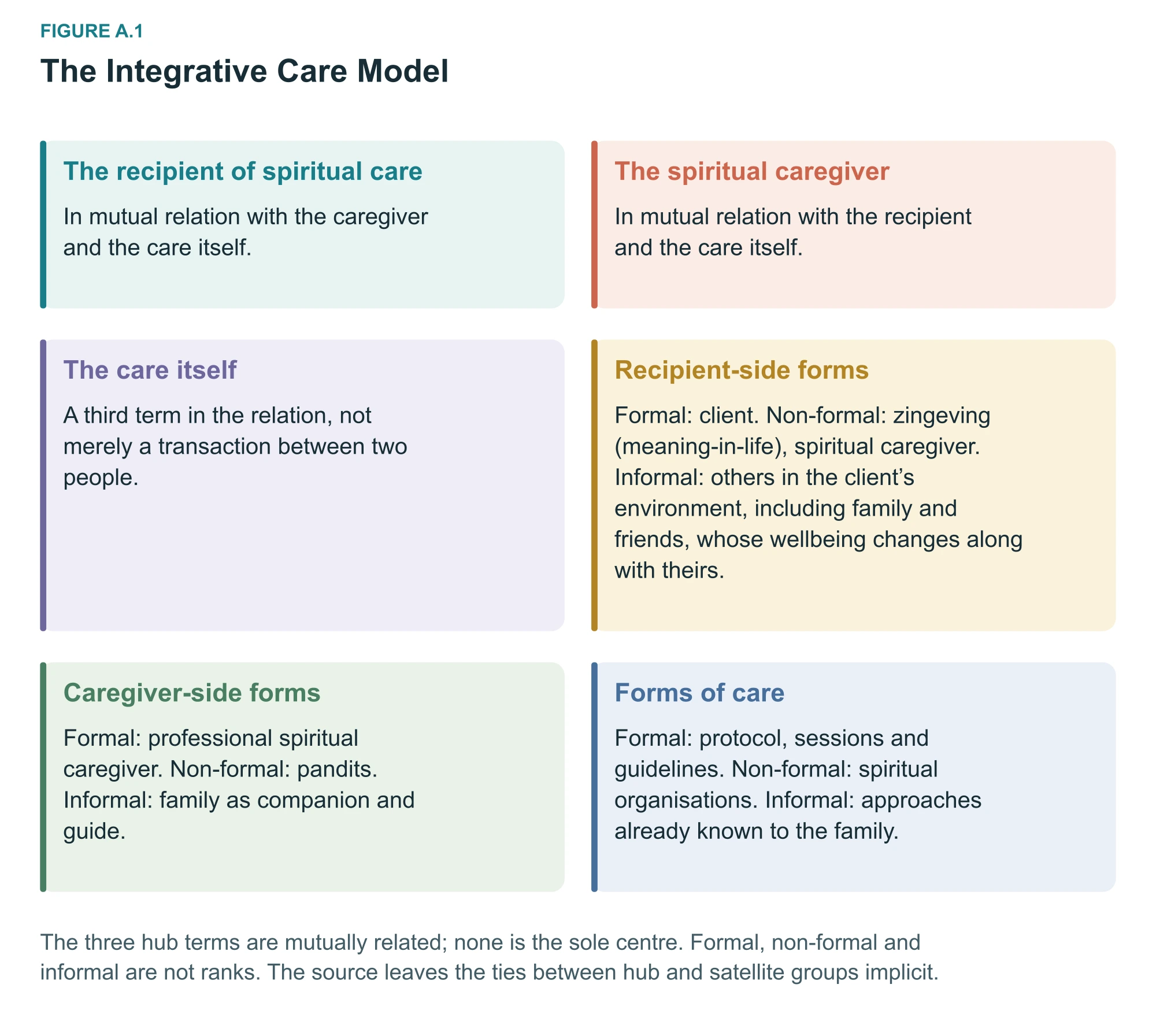
Figure A.1. The Integrative Care Model.
The hub is three terms - the recipient of spiritual care, the spiritual caregiver, and the care itself - joined into a closed triangle. Every connector between them runs both ways. There is not one single-headed arrow anywhere in the source, and that is a claim rather than a drawing habit.
Two things follow from the hub alone, and they are the model's first two claims.
Care is a third term, not a transaction between two. Geestelijke verzorging, the care itself, stands in the triangle alongside the two people rather than being the arrow that runs between them. A service that treats care as something one party delivers to another has already collapsed the model to two terms, and everything the model has to say about the setting, the household and the tradition drops out with the third.
The caregiver is changed by the encounter. That is what the refusal of one-way arrows asserts. It is not a sentiment about the rewards of the work. It is a structural claim that the relation is symmetrical in kind even where it is asymmetrical in power, and it is why the caregiver's own formation belongs inside the model rather than beside it.
Each of the three hub terms then opens into three forms: formal, non-formal and informal. Those nine terms are the model's working content and they are set out in Table A.1.
The three forms are not ranked. A paṇḍit (पण्डित, a learned man of the tradition, and often the person a Hindu household actually consults) is non-formal, and a daughter-in-law who knows what her mother-in-law says at dusk is informal, and neither is a lesser version of the professional. A model that ranked them would have no way of describing most of the care that actually happens to most people, which is the ground this book stands on.
The nine peripheral terms, transcribed from the source diagram. Read down a column to see one form of care across all three parties; read across a row to see one party in all three forms. The right-hand column is the one a summing service leaves out.
Table A.1. The Integrative Care Model, opened out
Hub term | Formal | Non-formal | Informal |
|---|---|---|---|
The recipient of spiritual care | The client | Zingeving - meaning-in-life - and the spiritual caregiver | Others in the client's environment, for example family and friends, whose wellbeing changes along with theirs |
The spiritual caregiver | The spiritual caregiver as a professional | Paṇḍits | Family, as companion and guide |
The care itself | Organised according to protocol, a number of sessions, and guidelines | Institutional: spiritual organisations | Deployment of approaches the family already knows |
How to use it. Take one person you are working with now and fill the nine cells for them. The cell that is hardest to fill is the finding. Most often it is the recipient's informal cell, because a service that refers, records and reviews one named client has no field for the people whose wellbeing moves with that client's, and nobody in the building is asked to notice them. That is where a large part of Chapter 18's case sits: a house with a six-year-old and a grandmother in it, a mother held as the patient by a practice at one remove, and nobody asked to notice the other two. Chapter 22 makes that same cell its whole subject.
One note on the middle column. Zingeving is set here beside the English meaning-in-life rather than translated by it, as the book sets a gloss beside a Sanskrit term rather than in place of it. The Dutch word carries the giving of meaning as something a person does, which the English noun does not, and the professional vocabulary the field actually uses in the Netherlands - zingeving, levensbeschouwing, geestelijke verzorging - is in this respect more precise than its English equivalents rather than less. Where a term is load-bearing, this book keeps it.
A.2.2 What is transcribed and what is reconstructed, stated plainly
The source diagram is a drawing with no caption, no legend, no source note, no date and no author, and no sentence anywhere in the project's material explains it.
Transcribed: the three hub terms; the fact that every connector is double-headed; the three satellites and their nine labels; and the free-standing label acceptance and harmonious deployment of spiritual care, which sits over the centre of the hub connected to nothing and reads as either the model's outcome or its title. The source does not say which.
Reconstructed, and it is an author gate: that each satellite expands one hub term. The fit is exact by position, by colour and by content - the caregiver satellite is entirely about who provides care, the care satellite entirely about how care is organised, the recipient satellite entirely about who is on the receiving side. But no connector in the source joins any satellite to its hub term. The four groups float. Table A.1 therefore prints an editorial reading, and Figure A.1 is specified to draw that tie in a visibly lighter line than the ties that are in the source, so a reader can see which is which..
What the model is not. It is not a sequence, a funnel or a pyramid. There is no order in the source, and adding one would answer a question the model leaves open - notably the question of where a caregiver should start, which the model does not settle because in practice a caregiver starts wherever they are let in.
A.3 What the model asks that an assessment does not
The sentence the whole apparatus rests on is the author's definition of the Integrative, quoted here in full because every instrument in this appendix is a way of putting one of its clauses to work:
Integrative can be defined as the intent of relating all possible aspects, perspectives and purposes under holistic understanding of any context towards a Coherent View among all observers of the context in focus, without discarding any aspect, perspective and purpose.
And the differentia, which is the reason the word is integrative and not integral:
We intentionally use integrative instead of integral, as the latter usually refers to an approach that sums up various views in a management context, usually not followed by adequately providing a clear direction. Whereas with Integrative we refer to an intention to align diverse perspectives and purposes, not necessarily a summation.
Table A.2 is that differentia made operational. It is the table to reach for when a case will not come together, because the commonest reason a case will not come together is that it is being summed.
A standard reading and an Integrative reading of the same encounter. Neither column is a caricature: the left-hand column describes competent, well-intentioned, fundable work. The difference is not thoroughness. It is direction.
Table A.2. Summation and alignment, at the bedside
A summing reading | An aligning reading | |
|---|---|---|
What it asks first | What are this person's needs, across which domains? | What is this person's life oriented toward, and what has come out of joint with it? |
What counts as more information | One further aspect recorded | One further aspect related to the rest |
What a full picture looks like | Every domain has an entry | The entries point somewhere, and the person recognises where |
Where the direction comes from | It is supplied afterwards, by the caregiver, the team or the care plan, or it is not supplied at all | It is the person's own Coherent View, surfaced rather than authored |
What is done with an aspect that does not fit | It is triaged as not relevant to this service | It is kept. Nothing is discarded, and the misfit is often the finding |
What a good outcome looks like | Needs met, services matched, referrals made | The same items in the same life, re-ranked, so that what was at the bottom is now at the top |
How it fails | Comprehensively. Four true accounts, aligned toward nothing | Prematurely. A direction supplied before the person has reached it, which is imposition |
The tell | The list gets longer | The list gets ordered |
How to use it. Read your last written case note against the left-hand column, honestly. Most competent notes score high there, and that is not a scandal - it is what the record is designed to hold. The question the table asks is the next one: if a colleague read only this note, what direction would they have? If the answer is none, the note has summed a person, and the work of alignment has not been recorded even if it was done.
The failure on the right is real and is not the lesser one. Alignment fails by arriving early. A caregiver who has read this book and now offers a person a direction has done something worse than the summing colleague, because the direction carries an authority behind it that the person did not choose. The safeguard is at A.9, Template A.6.
A.4 The Care Trinity
A.4.1 The instrument as the case chapters use it
The Care Trinity is the model turned into a reading. Where the model says what care is made of, the Trinity says what to look at, and in what order, when a particular case is in front of you. Every case chapter in Part III runs it under the same four headings, and Table A.3 is those four headings with the question each one actually asks.
Four headings, and what each is for. The right-hand column is the failure that heading exists to catch; it is given because a heading with no failure attached to it will be filled in with whatever is already known.
Table A.3. The Care Trinity, as a working reading
Heading | What it asks | What it is looking for | The failure it catches |
|---|---|---|---|
The care recipient | Needs, hopes, fears, agency and worldview; sources of suffering and of resilience; life stage and cultural considerations | The person's own account, in the person's own terms, including the account they have not put into words | Describing a person who is, in the record, mostly being described. Where the account has been reconstructed rather than reported, say so |
The caregiver | Stance, competencies, authority and limitations; use of self; the caregiver's own emotional and spiritual responses; bias | What the caregiver brought into the room, and what the room did to them | Writing the caregiver out. A reading in which the caregiver is a neutral instrument has already contradicted the model's bidirectional arrows |
The context | Family and community; the clinical or institutional environment; cultural and religious dynamics; social, legal and economic factors; technology, policy and organisational constraints | What the setting makes possible, what it forecloses, and who else in the building holds a duty here | Treating the setting as background. In detention, in a hospital and in a private house, the setting is usually the case |
The care relationship | Presence and trust; communication and interpretation; power and dependency; collaboration and shared decision-making | The bond itself, as a thing with its own state, distinct from either party | Adding the parties and calling the sum a relationship. Two good accounts of two people is not an account of what is between them |
How to use it. Work the four in order and then read them together. The order matters at the start and stops mattering once all four are on the page. Two disciplines make the difference between a reading and a description.
Say which term the first heading resolves to, before filling it in. It does not always resolve to one person. In Chapter 12 the referral is a couple, and treating the couple as the unit loses the private account each of them is carrying alone, while treating them as two people in parallel loses the marriage, which was the thing most at risk. In the same case a dead child is a care recipient in his own right, because the rites of the third encounter were performed for him. A caregiver who regards the dead child solely as the occasion of the parents' grief has made the move this book exists to refuse, before the first line of the assessment.
Mark what is reconstructed. In Chapter 11 the woman asked for nothing, named no need in words a service could act on, and would have refused a spiritual referral outright. Everything under her heading is therefore an interpretive act performed on a person who never authorised it. That does not make it wrong. It makes it a thing to be marked, and Template A.2 has a column for it.
A.4.2 The open question about its number, which this appendix does not settle
The instrument in use has four headings. The source diagram's hub has three. They do not line up, and the mismatch is set out here rather than smoothed over, and drawn that way at Figure A.2. Table A.4 sets the four beside the three so that the unmatched cells can be counted: two headings the hub has no term for, and one hub term the headings do not carry. It is a statement of a question and not of a finding, and a reader looking for the resolution will not find one here.
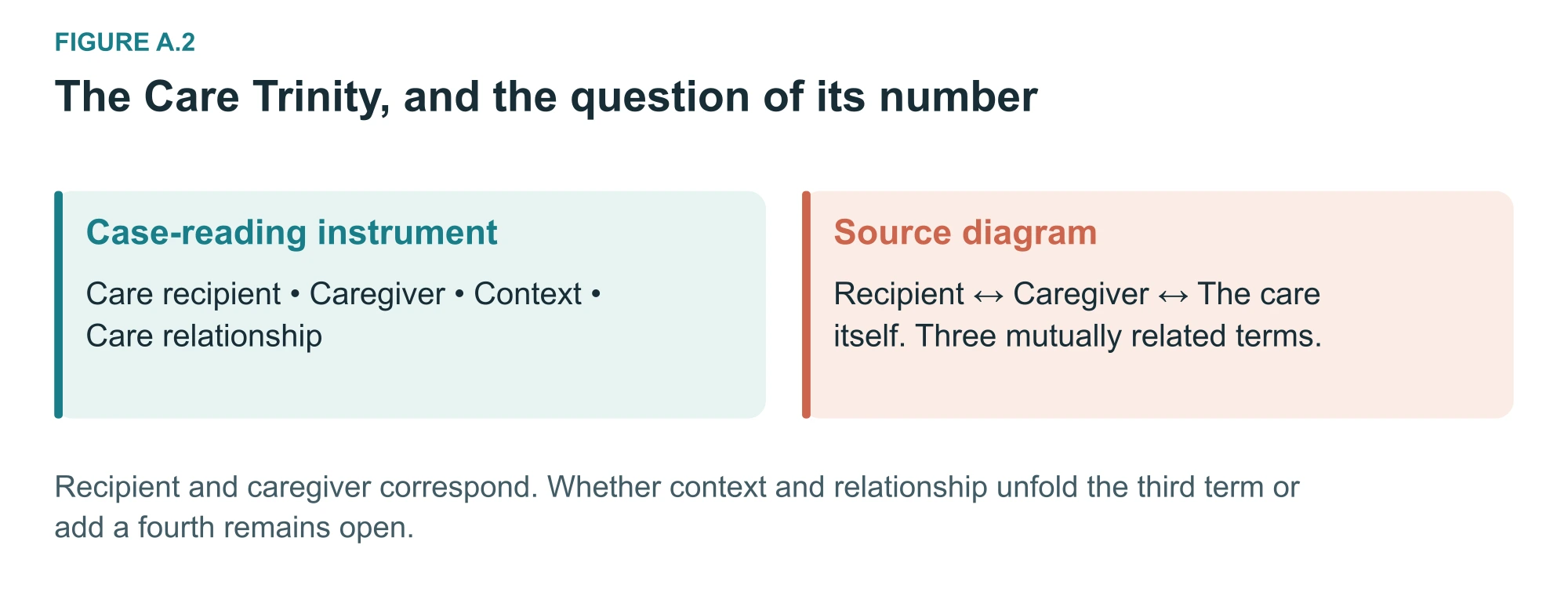
Figure A.2. The Care Trinity, and the question of its number.
The unresolved correspondence. This table is a statement of a question, not of a finding.
Table A.4. Four headings and three hub terms
The Care Trinity, as the case chapters run it | The source diagram's hub |
|---|---|
The care recipient | Ontvanger geestelijke verzorging - the recipient |
The caregiver | Geestelijke verzorger - the caregiver |
The context | - |
The care relationship | - |
- | Geestelijke verzorging - the care itself |
Two readings are available and this appendix chooses neither.
On the first reading, the context and the care relationship are the hub's third term, the care itself, opened into its setting and its bond. The hub is then right, the chapters have unfolded it, and the name trinity is accurate.
On the second, the working instrument has grown a fourth term the diagram does not contain. The diagram is then the older thing, and an instrument called a trinity has four headings because it outgrew its name.
The case-reading template uses four headings. Figure A.2 distinguishes this application from the three-term source diagram; the two should not be silently conflated.
One further honesty. A search of the project's source documents for trinity, triad, drie-eenheid and driehoek returns nothing. The name is the book's own and is not in the material the book was built from.
A.5 The 4H need-diagnosis
A.5.1 What it is, and the gate on it
The 4H is a four-part diagnostic structure - heya, heya-hetu, hāna, hānopāya - taken from the caturvyūha (चतुर्व्यूह, the fourfold arrangement) of the Yoga Sūtra (YS 2.16 to 2.26). It runs at the head of every practice chapter in this book, in Parts II, IV and V, as the statement of what is wrong and what would answer it, and Figure A.3 draws the four in their order and, more importantly, the way they hold each other up.
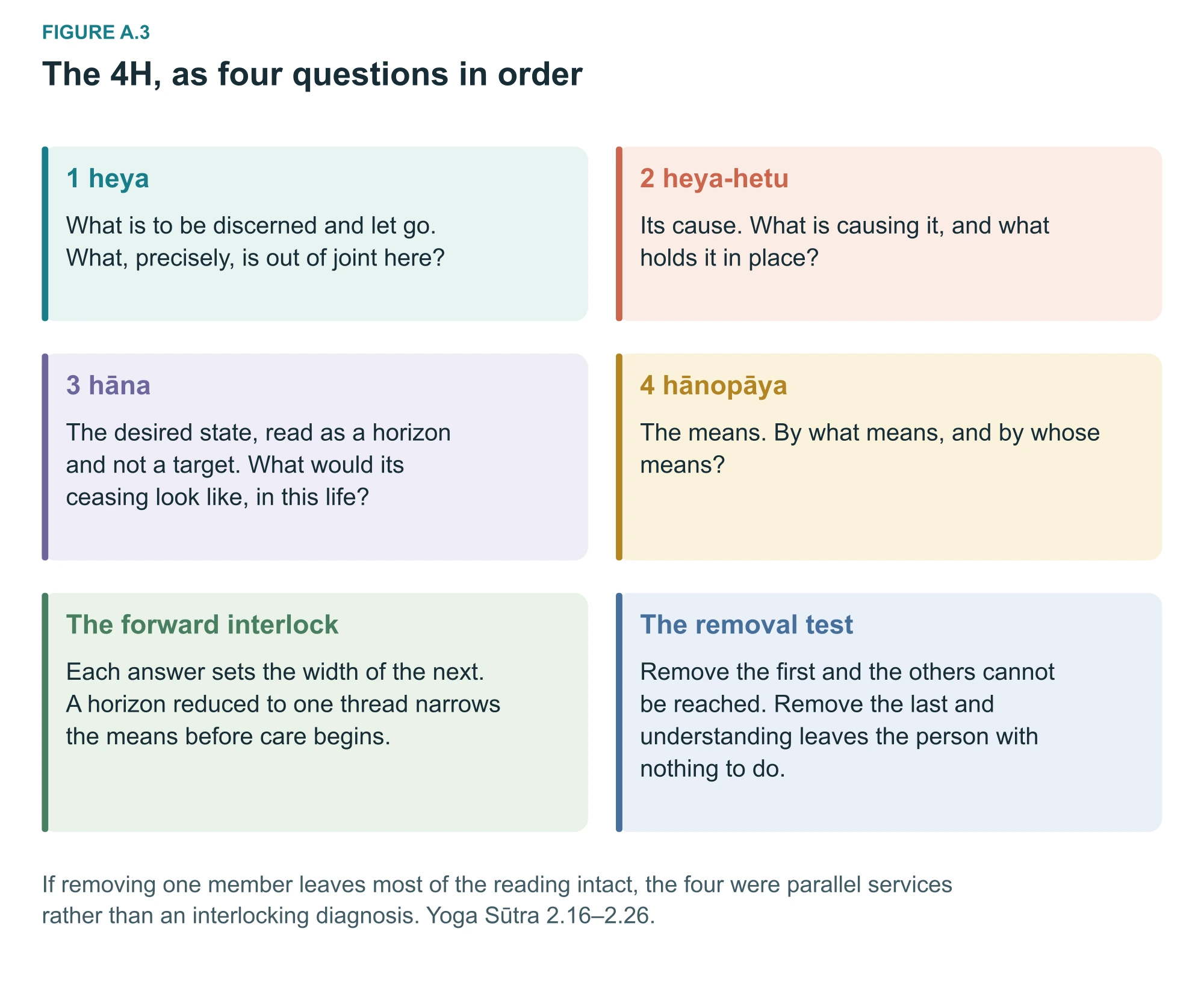
Figure A.3. The 4H, as four questions in order.
The English glosses of the four members are set out in Chapter 4 (Chapter 4) and Table A.5 carries them beside each member's Sanskrit name. The load-bearing one is hāna: a horizon that gives direction without being attainable, not a target state. The table also gives each member by the question it asks, which is what a practitioner needs at the bedside.
The questions are this appendix's reading of the four English glosses.
Table A.5. The 4H, as four questions in order
Member | English label | The question it asks | What goes wrong if it is skipped | |
|---|---|---|---|---|
1 | heya | what is to be discerned and let go - not a defect to be repaired | What, precisely, is the affliction here - not the diagnosis, not the referral reason, but what is out of joint? | The work is aimed at the presenting complaint. Chapter 13's man is short of nothing an instrument records, and an inventory of his strengths is reassuring and useless |
2 | heya-hetu | the cause of the heya - why it arises and persists | What is causing it? What holds it in place? | A cause is assumed from the affliction's shape. Grief presenting as panic is treated as anxiety, and the treatment is competent and beside the point |
3 | hāna | the horizon - the desired state, which gives direction without being attainable | What would its ceasing actually look like, in this life, described concretely? | The goal is left implicit, and so becomes the caregiver's. This is the step most often skipped and the one that most often causes imposition |
4 | hānopāya | the means - the path toward the horizon | By what means - and by whose means? | A plan is produced that only the caregiver can execute, in a setting that will not permit it |
Why the order is the whole instrument. The 4H refuses the field's standing self-description of its own trouble, which is that what ails spiritual care is a shortage of tools. It reads fragmentation as a heya with a heya-hetu, and a heya-hetu cannot be closed by adding tools; it can only be addressed by reorienting the one who inquires. That is why the same diagnosis keeps yielding the same result in settings as far apart as palliative medicine and machine ethics.
And it is not a foreign grid laid over the care of suffering. The caturvyūha is Yoga's own account of duḥkha (दुःख, suffering) - heyaṃ duḥkham anāgatam, the suffering yet to come is what is to be avoided (YS 2.16). The diagnosis of a person's dis-integration is native to the material, not borrowed for it.
A.5.2 The interlock, which is what does the work rather than the count
Four things in a row is not the instrument. The interlock is. The four members hold each other up, and the case chapters say so in terms: the interlock is what matters here rather than the count.
What the word names is a dependency, and it runs in both directions.
Forwards, each member constrains the next. A hāna stated as a coherence rather than as the resolution of any one thread makes a wide hānopāya available. A hāna set at the grief resolved makes the fourth term narrow before anybody has reached for it, and the narrowing is invisible because the third step is usually not written down.
Backwards, removing one member disables the others. In Chapter 16's case four things were done, and neither the first nor the last could be spared: remove the first and none of the others is reachable, remove the last and the other three produce a calmer woman in a cell with nothing to do. This is the test to run on a plan that looks complete. Take out each element in turn and ask what the remaining ones still achieve. If the answer is most of it, the elements were parallel services rather than an interlocking reading, and the case has been summed.
And it is why the diagnosis cannot be run as a form. A form collects four entries and is satisfied when all four have content. The interlock is not satisfied by content; it is satisfied when each member is the one the next one needs, which is a judgement and cannot be checked by looking at whether the boxes are full.
How to use the 4H. Run all four before offering anything, and write the third one down in a sentence a person could recognise. If the third step cannot be written in the person's own vocabulary, it is the caregiver's goal and not theirs, and the fourth step will build on it. Then run the removal test above on whatever the fourth step produced.
A.6 The K1 to K4 knowledge model
A.6.1 What it does here, and the gate on it
The K1 to K4 model is the graded account of knowing that the Integrative approach uses in place of a single scale of expertise. Its level labels and definitions are set out in Chapter 4 (Chapter 4) and Table A.6 carries them. The ordering is one of depth, not content: a knower at K3 has not acquired more facts than one at K1, and K4 differs from K3 in kind, not in degree.
What can be stated, because the book argues it rather than assuming it, is what the levels are used to do. Table A.6 sets that out and Figure A.4 draws it, and both would be useful even without the definitions, because a caregiver's practical question is never which level is this but is what I am about to do at the level this asks for.
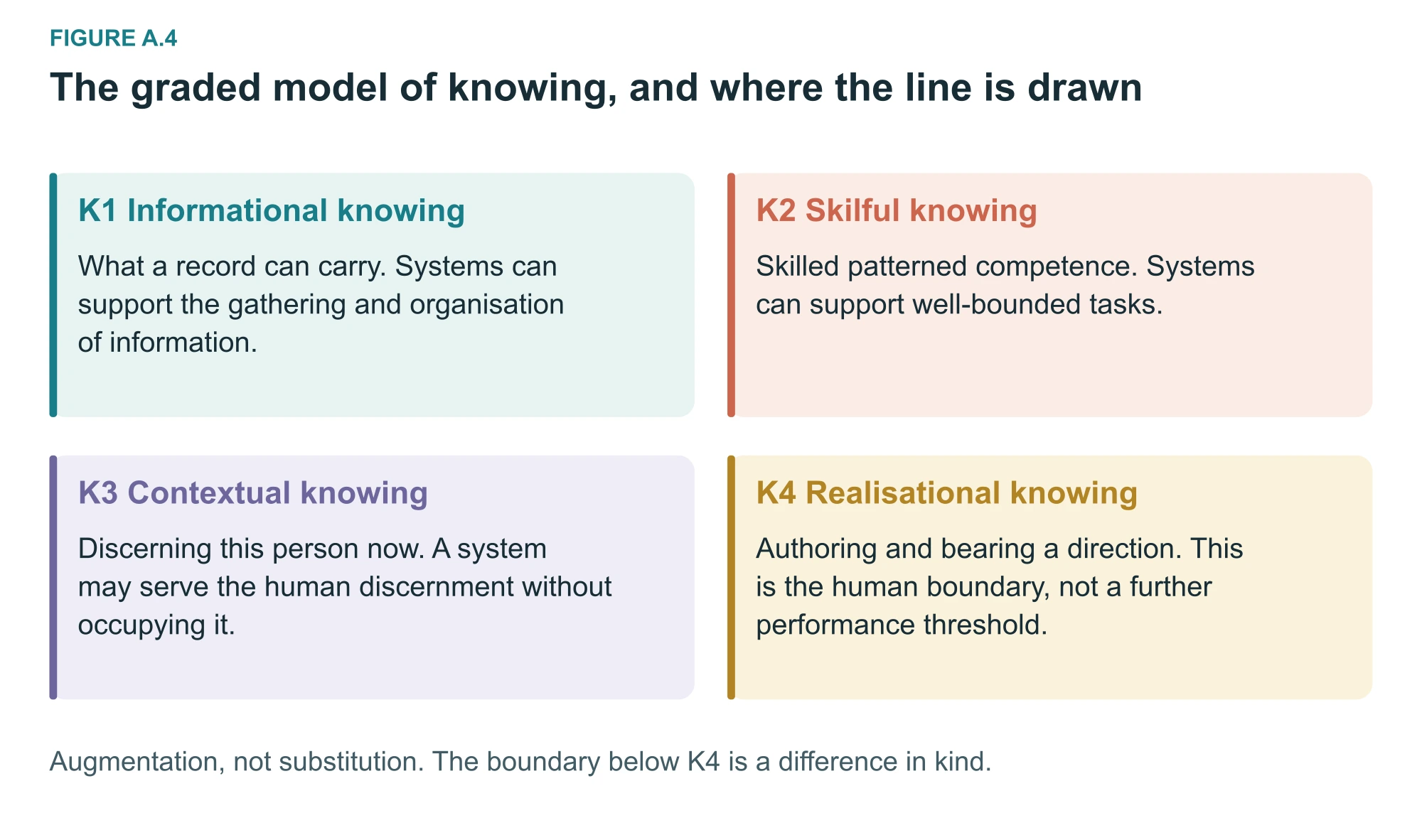
Figure A.4. The graded model of knowing, and where the line is drawn.
Each row states the work the book gives that level; the distinctions support the argument in Part V.
Table A.6. What the graded model is used to settle
Level | Definition | What the book uses it for | The practical consequence |
|---|---|---|---|
K1 | informational knowing - knowing-that | The recorded, transferable layer - what a file, a form or a handover can carry | A built system can hold this, and holds it better than a tired human. Hand it over without embarrassment |
K2 | skilful knowing - knowing-how | The skilled, patterned layer - what competence looks like when it is running well | A built system can be designed to reach this. Much of what a service calls judgement lives here |
K3 | contextual knowing - many aspects, perspectives and purposes held together within an adopted context | The discerning layer - reading this person in this moment, where the pattern may not apply | A built system can be designed to serve this and cannot occupy it. This is where the caregiver's formation starts to matter more than their training |
K4 | realisational knowing - the distance between knower and knowable closed (aparokṣa-anubhava) | The layer at which a direction is authored and borne | This is where the book's line is drawn. A built agent cannot instantiate it, and the reason is a difference in kind and not in degree. Somebody human bears it |
The rule the whole of Part V turns on is augmentation and not substitution, and this table is where it comes from. A machine that is excellent at K1 and K2 is genuinely useful and should be used; the error is inferring from that excellence that the ladder continues. It does not, and the pressure to pretend otherwise is economic rather than technical.
And the cost lands on a person. If K4 must be borne, someone bears it. An institution that has automated K1 and K2, kept its caseload, and left K3 and K4 to the same number of humans has not lightened the work; it has concentrated it into its heaviest part. That is a question for a service manager and it belongs in this appendix because it is invisible from inside a single encounter.
A.7 The five principles, as questions a caregiver can ask
The five principles of the Integrative Paradigm are the paradigm seen from five sides rather than five separate rules, and there is a state of full Integrativeness when all five are met, with individuals in practice holding a degree of it. They are quoted in full in Chapter 4and are figured at Figure 4.3. What Table A.7 adds is the bedside form of each: the question it puts to a caregiver about the encounter they have just had.
Each principle in the author's own terms, and the question it asks of a single encounter. The questions are for the caregiver, after the encounter, not for the person during it.
Table A.7. The five principles at the bedside
Principle | What it governs | The question to ask yourself afterwards | |
|---|---|---|---|
1 | Respect for Integral Unity. There is one truth, the knowledgeable speak it in many ways. No observation is invalid; difference is difference of perspective on one reality | The perspective - the what is? question; the external context | Did I treat anything this person said as simply mistaken? What did I not write down, and why not? |
2 | Strive for holistic attainment of goals, material and spiritual. Dharma, artha, kāma, mokṣa, held together | The purpose - the why, for what? question | Which of the four aims did I attend to, and which did I quietly hand to another profession? |
3 | Our actions follow embodied knowing. Duty performed, attachment abandoned, equipoise in success and failure; the amalgamation of gyaan, karma and bhakti | The approach - the how? question | Was I steady, or was I managing my own discomfort? Where did I reach for a technique because the silence was hard? |
4 | Our activities are without doership. Awareness of the observer in us, which prevents disappointment and leads to samarpan, then santulan, then sukh | The internal context | Whose achievement would it have been if this had gone well? If the answer is mine, what did that do to what I offered? |
5 | We are all connected. Higher comfort with chaos; an epistemological appreciation of indigenous non-translatable knowledge; shubh laabh, welfare for all | The purpose - the for whom? question | Who else is affected by this and was not in the room? What did this person say that I translated into my idiom, and what was lost when I did? |
Principle 5's second clause is the one most often dropped, and it is the one this book most needs. An appreciation of non-translatable knowledge is not a courtesy toward another vocabulary. It is the refusal to commensurate a person's meaning-horizon into the assessment idiom - which is precisely what a well-designed form asks a caregiver to do, quickly, at the point of entry.
A.8 The four puruṣārtha, as a map of what a life is for
Principle 2 names the four life-goals: dharma (righteousness), artha (means for prosperity), kāma (worldly or material desires), and mokṣa (emancipation or liberation). Dharma is that which ensures abhyudaya (worldly flourishing) and niḥśreyasa (the higher good). The figure is at Figure 4.4 and is not repeated here; what this appendix adds is the use. Table A.8 supplies it by reading each of the four aims twice over, once with the clinical eye and once with the pastoral, and the two amputations of its title are what those columns show when either eye is used alone: artha almost the whole of one, mokṣa almost the whole of the other, and kāma seen by neither.
The four are held together and contextually weighted, not ranked on a single scale. The right-hand column is what happens when one eye is used alone, and both are common.
Table A.8. The four aims, and the two professional amputations
Aim | What it names | What the clinical eye sees | What the pastoral eye sees |
|---|---|---|---|
Dharma | Righteousness; what is owed and to whom; what ensures abhyudaya and niḥśreyasa | Rarely. It appears as a compliance issue or a family dispute | Sometimes, and usually as belief rather than as obligation |
Artha | The means of prosperity; capacity, security, standing | This, almost exclusively. Restoration of function is the whole frame | Rarely, and often with a faint disapproval of it |
Kāma | Worldly desire; appetite, pleasure, wanting things | Occasionally, as appetite or libido, as a symptom | Almost never, and this is the field's largest blind spot |
Mokṣa | Liberation; the higher good | Almost never | This, almost exclusively. Ultimate concern is the whole frame |
The use. When a case will not move, ask which of the four has gone unnamed. The commonest answer is kāma, because neither professional eye has a comfortable way of asking a dying person what they still want for its own sake, and because a service that has decided a person's remaining time is about meaning will not hear an answer about pleasure as anything but avoidance.
The rule. The four are one field across which a person weighs an illness, a loss or a decision. Attending to the spiritual never means peeling one aim off from the rest, and a caregiver who arrives with mokṣa already selected has performed the pastoral amputation before the person has spoken.
A.9 The templates
Eight pages to work on. Each stands alone and each says at its head when to use it, so a page photocopied out of this book still carries its own instructions.
The eight are numbered Template A.1 to A.8, on the appendix's own letter and in a series of their own, so that a page lifted out of the book can be asked for, cross-referred and indexed by name. They are deliberately not folded into the Table A.n series: Tables A.1 to A.8 are the instruments, printed full, and Templates A.1 to A.8 are blank pages to work them on, and a reader who met Table A.3 and Template A.3 under one series would have no way to tell which of the two was wanted. One of the eight - Template A.7, the first twenty minutes - is a numbered spoken sequence rather than a grid, and it keeps its place in the series because what makes these eight a series is that each is a page a caregiver works on alone after an encounter, not that each is a table.
A general instruction that applies to all eight. Where a template asks for something you do not know, write not known rather than leaving the line blank. A blank line reads to the next person as not applicable, and the difference between I did not find out and there is nothing here is often the whole case.
Template A.1. The case card
One page, written after the encounter, for a colleague who has ninety seconds. Every case in this book's case chapters carries one.
Who (age, situation, how they came to be seen; no identifying detail) | |
Setting | |
Referred by, and in what words | |
What they asked for | |
What they did not ask for | |
Presenting situation | |
What is at stake for them | |
Tradition, worldview, or the absence of one - in their words, not a category | |
Who else is affected | |
What the setting forecloses | |
Encounters so far (number, spacing, where) | |
Open question at the point of writing |
The two lines that do the work are what they did not ask for and what the setting forecloses. A card without those two is a referral summary. The first catches the case where the request and the need are different things - which is most cases where the person has been asked what they want by somebody in a uniform. The second is what stops a plan being written that the building will not allow.
Template A.2. The Care Trinity worksheet
Worked after an encounter, usually the second or third. Not in the room. See A.4 for what each heading asks.
Heading | What is on the record | What I have inferred | What I do not know |
|---|---|---|---|
The care recipient | |||
The caregiver | |||
The context | |||
The care relationship |
Before filling the first row, answer this: who is the care recipient in this case? Write the answer down. If it is more than one person, write down what is lost by each of the available ways of grouping them.
After filling all four, answer this: if I struck out the second and fourth rows, would the account still make sense? If it would, the reading has described a person rather than a relation, and the model's bidirectional arrows have been quietly dropped.
The middle column is not a weakness. Most of what a caregiver knows about a person is inferred, and the discipline is not to infer less but to keep the inference visible so that a later reader, or a later self, can test it.
Template A.3. The spiritual-care assessment
Eleven headings, worked in whatever order the encounter gave them. Use the four marks in the right-hand column on every line.
Mark each entry: K what is known, from the person - I what has been inferred - U what remains uncertain - P what needs assessment by another profession.
Heading | What you found, in their words where you have them | Mark |
|---|---|---|
Meaning and purpose | ||
Identity and belonging | ||
Relationships and community | ||
Values and moral concerns | ||
Hope, fear, grief and suffering | ||
Beliefs and worldview | ||
Rituals and spiritual practices | ||
Sources of strength | ||
Spiritual distress | ||
Immediate risks | ||
The support they would want |
What the marks are for. An assessment that does not distinguish these four reads, six weeks later, as a set of facts. Two of the four are not facts. The commonest serious error in a spiritual-care record is an inference recorded in the register of an observation, and it is serious because the next caregiver will act on it without knowing it needs testing.
A P mark is not a handover of the person. It marks one aspect that needs another profession's eye - a possible medication effect, a safeguarding route, a legal question about a body. The rest of the assessment stays yours, and the person is not divided among the services that can each hold a piece of them.
The last heading is the one to write in their words. If it can only be written in service language - needs bereavement support - it has not been asked.
Template A.4. The six-dimension reading: one dis-integration, or several problems?
Use when a person is arriving at a service with three or four separate presenting problems. It takes ten minutes and it decides how the case is understood.
Write the same event or situation across all six lines. Then answer the question at the foot.
Dimension | What is presenting here |
|---|---|
Bodily | |
Psychological | |
Social | |
Ethical | |
Existential | |
Spiritual |
The question: is this one dis-integration presenting in six places, or six problems? If the six lines all trace back to a single event, it is one, and referring it out to four services will produce four true accounts aligned toward nothing.
And then the second question, which is the useful one: what would align them? It is almost never an intervention. Across this book's cases it has been a form of service the regime could not confiscate, a re-description of karma that moved a man out of a transaction and into a connection, and a question about breakfast. What these have in common is that the person reached for it and the caregiver recognised it.
A caution about this list. These six are the dimensions the case chapters use. Chapter 4 names an aesthetic dimension as one the Integrative definition expressly keeps rather than triaging away as soft, and it is not among the six. The discrepancy is real and is flagged rather than tidied; if you are working a case where beauty, music, dress or the look of a room is doing work, add a seventh line and do not let its absence from a printed list be a reason to drop it.
Template A.5. The intervention test
Run before offering anything: a practice, a ritual, a text, a referral, a conversation with a family. Seven questions, and the seventh is not optional.
Question | Answer | |
|---|---|---|
1 | Why might this be appropriate here? What in what they have said points to it? | |
2 | What consent is required, from whom, and have I got it? | |
3 | How does it relate to their worldview - not to mine, and not to the worldview their file records? | |
4 | How could it be adapted so that it is offered in their idiom rather than in the tradition's? | |
5 | Possible benefits | |
6 | Possible harms, including the harm of it landing as a verdict | |
7 | When should this not be used? Name the condition under which I would withdraw it |
Question 3 is where imposition enters, and it enters kindly. A practice rooted in a tradition, offered to somebody outside it, is this book's sharpest test. Breath and attention can be offered without a word of Sanskrit, as something a body can do; the tradition is disclosed honestly if the person asks and is never smuggled in.
Question 7 is where safety lives, and it is a separate matter from question 6. Carry the contraindication with the practice, never in a footnote. Acute psychosis and dissociation; trauma histories destabilised by breath retention or eye-closed practice; cardiac and respiratory limits on prāṇāyāma (प्राणायाम, regulation of the breath); movement-disorder and post-stroke limits on standing balance. Where the intervention is a yoga practice, name it precisely - which posture, which breath, how long, how often, seated in a chair or on the floor - and take the detail from Appendix D. The caregiver offered some breathing has told a reader nothing.
One question that is not on the list, because it is prior to it: is an intervention wanted at all? A great deal of the best work in this book's cases consisted of declining to add anything.
Template A.6. The alignment audit
Run on your own plan, before acting on it. It is the guard against the failure that this book's own readers are most likely to commit.
Test | Pass looks like | Fail looks like | |
|---|---|---|---|
1 | Whose direction is this? | I can point to where they said it, or reached for it | I inferred it from their tradition, or from what usually helps |
2 | Would they recognise it, in these words? | Yes, and I could say it back to them and be corrected | I would need to explain the framework first |
3 | What have I discarded to make it cohere? | Nothing; the awkward item is still in the account | The item that would not fit has quietly left the note |
4 | Does the plan lengthen the list or reorder it? | The same items, differently ranked | One more item, added by me |
5 | Who executes it? | They do, or their household does | Only I can, or only in a setting that will not permit it |
6 | Is there room for the answer no? | The offer can be declined without the relationship costing them anything | Declining would read as refusing help, or as refusing their own tradition |
Test 6 is the one that fails most quietly, and it fails hardest where the caregiver shares the person's tradition. An offer made in a person's own idiom, by somebody with standing in it, is very hard to refuse. Prefer the form of words that leaves the refusal free.
Template A.7. The first twenty minutes
For a first visit with no notes, no referral detail and no second appointment guaranteed. It is a sequence, not a form, and nothing is written down while you are there.
1. Say who you are and what you are not. Name the service in one sentence, and say what you are not there to assess. In a setting where every other visitor writes something down that affects the person's life, this sentence is the whole basis of what follows.
2. Ask what the day has been like. Not what is wrong. The day.
3. Listen for what they reach for - a name, an object, a time of day, a word in another language, a person they keep returning to. Do not chase it. Note that it happened.
4. Ask one question about ordinary life - food, sleep, who visits, what happens in the mornings. This is where a great deal of this book's material actually surfaced.
5. Ask what they would want, if it were possible. Then be quiet.
6. Say what you can and cannot do, in specifics, including what you cannot get past in this building.
7. Agree the next contact concretely, or say plainly that there may not be one.
Afterwards, and not before, write Template A.1.
The reason step 1 is first. In detention, in a hospital and in an assessment-heavy service, a person's working assumption is that you are gathering. Everything they then say is shaped by what they think it is for. A caregiver who does not correct that assumption early gets a carefully managed account and often does not know it.
Template A.8. The handover
Written when a case moves to another caregiver, another service, or into a period of absence. Six lines. It is short deliberately.
The direction, in their words | |
What is inferred rather than known (from Template A.3, the I marks) | |
What has been offered, and what was declined - and how the declining went | |
What must not be raised unless they raise it, and why | |
Who else holds a duty here that is still undischarged | |
The one thing I would want the next person to notice |
The fourth line is the one a standard handover has no field for, and it is the one that most often prevents harm. A passage of scripture, a rite, a name, a question about a body - things that are safe when the person reaches for them and are a blow when a stranger raises them. Write the reason as well as the item, because a reason travels and a prohibition does not.
The fifth line is not an accusation. It is the guard against a caregiver's inward remedy quietly settling for the cheaper half of a problem that somebody in the building was obliged to fix.
A.10 Limits, and what this appendix is not
It is not the book. Every instrument here is argued somewhere in the chapters, and the argument is what makes the instrument safe. A caregiver who works only from these pages will run them correctly and will not know what any of them is for, which is the condition under which a discernment turns back into an assessment.
It is not complete, and its one remaining gap is stated rather than implied. The correspondence between the model's satellites and its hub, printed in Table A.1 and drawn in Figure A.1, is an editorial reading of a source that does not assert it.
It is not a lookup table for predicting a person. Said at A.1 and repeated here because it is the way reference material of this kind actually goes wrong. Everything in this appendix exists to make a caregiver a better listener. None of it exists to spare them the conversation.
And a last one, about the templates. They are pages to think on, and a page that is thought on gets untidy. If your Template A.2 is neat, look again at the middle column.