E.0 The boundary, and it comes first
A spiritual caregiver is not an Ayurvedic physician, and this appendix does not make one.
That sentence has to sit at the top rather than in a caution at the bottom, because everything below is only safe to read once it is settled. Ayurveda is a medical system with its own long training, its own diagnostic discipline and its own pharmacopoeia. A caregiver who has read an appendix and starts reading pulses, naming constitutions as though they were findings, or suggesting preparations has not extended their role. They have taken up someone else's, without the training, without the accountability, and usually without noticing.
So the line is drawn narrowly and it is drawn here.
What is out, entirely and without exception.
• No diagnosis. Not of a doṣa imbalance, not of a disease, not of a constitution stated as a fact about a person. A caregiver may hear a person's own account of their constitution. A caregiver does not issue one.
• No prescribing. No herbal, mineral or compound preparations, no dosages, no rasa śāstra medicines, no advice to start or stop anything a person is taking.
• No procedures. No pañcakarma (the five cleansing therapies), no purgation, no emesis, no medicated enema, no nasya administered by the caregiver. These are clinical procedures with real contraindications and they belong to a clinic.
• Nothing that could displace or delay medical treatment. This is the hard edge and it does not bend for anyone's beliefs, the caregiver's included. If a conversation is drifting towards a person deferring treatment, the caregiver's job changes, and E.12 says how.
What is in is small, and the smallness is the point. Routine, rest and rhythm. Ordinary conversation about food, sleep and the shape of a day, keyed to what this person already knows about themselves. Self-applied oil massage where a person can do it or a family member can help. Sleep in the tradition's own terms. The language of agni (digestive fire, and by extension what a person can metabolise) and ojas (vitality, the fine residue of good digestion) as a way of naming depletion that many people find truer than the words available to them. And the sattva-raising practices that connect this appendix to Appendix D.
That is the whole remit. It is a conversational and companionable remit, not a clinical one, and it is genuinely useful precisely because it is not trying to be treatment.
Three rules govern the pages that follow, and they are the same three that govern Appendix D.
• Offered, never prescribed. A person in a bed is badly placed to decline anything said by someone in a role. Offer it as one thing among others, say plainly it may not suit, and mean it.
• The person's frame, not yours. Every practical thing in this appendix can be offered to a secular person without a word of Sanskrit, and E.14 shows how. If they ask where it comes from, say so honestly. Do not smuggle it in and do not hide it either.
• Whose need is this? A caregiver who cannot sit with a person's exhaustion and instead supplies a daily routine has done something for themselves. This is the contraindication no manual carries and it is in E.11 with the others.
How this appendix is laid out. E.1 sets out the conceptual ground briefly and without mystification, because a caregiver who cannot follow the vocabulary cannot follow the person using it. E.2 states narrowly what may actually be offered. E.3 to E.9 are the offerings themselves: the day, the year, food and conduct, oil, exertion, the language of depletion, and the tradition's own psychotherapeutics. E.10 is when to use what and how much. E.11 is contraindications and interactions, and it is not optional reading. E.12 is referral, which is where this appendix does its most Integrative work. E.13 states the evidence honestly in both directions. E.14 offers the whole thing without Sanskrit. E.15 states the limits of the appendix itself.
E.1 The conceptual ground, briefly and without mystification
A caregiver needs this vocabulary for one reason: people use it. A woman says her mother is vāta-deranged and has not slept since the funeral. A man says his agni is gone and he cannot take food or news. A family says the pathya (the regimen appropriate to a condition) is being ignored on the ward. None of these are requests for a clinical opinion. They are a person telling you what is wrong in the only language that has ever fitted it, and a caregiver who cannot follow the sentence will change the subject.
The material below is what is needed to follow the sentence. It is not enough to practise on and it is not offered as such.
E.1.1 The tridoṣa, and what kind of thing they are
Ayurveda reads the living body through three functional principles, the tridoṣa (the three doṣas): vāta, pitta and kapha. The usual English rendering as humours is misleading, because it suggests substances sitting in a body. They are closer to modes of functioning - what moves, what transforms, what holds together.
• Vāta - movement. Breath, circulation, nerve impulse, elimination, and the movement of thought. Its qualities are dry, light, cold, mobile, rough, subtle. When it is disturbed the picture is of things not settling: broken sleep, restlessness, fear without an object, constipation, dry skin, pain that shifts, speech that races.
• Pitta - transformation. Digestion, metabolism, body heat, sight, and the sharpness of understanding. Its qualities are hot, sharp, light, oily, spreading. When it is disturbed the picture is of things burning: acidity, inflammation, heat, irritability, anger that arrives faster than the person can meet it, judgement turned on the self.
• Kapha - cohesion. Structure, lubrication, immunity, fluid, and the steadiness of affection. Its qualities are heavy, cold, oily, slow, stable, soft. When it is disturbed the picture is of things not moving: congestion, heaviness, lethargy, weight, a grief that has settled and will not shift, attachment that has become holding on.
Two distinctions do most of the work at a bedside.
Prakṛti and vikṛti. Prakṛti is the constitution a person is born with, the proportion of the three that is simply how they are made. Vikṛti is the present state of deviation from it. The distinction matters to a caregiver for a reason that has nothing to do with treatment: it separates who a person is from what is happening to them. A man who has always been quick, light, cold-handed and easily unsettled has not become a different person because he cannot sleep in a hospice. He is his own constitution under strain. That is a genuinely consoling thing to be able to say to someone who has begun to think their character has collapsed, and it can be said without diagnosing anything.
Nobody is one doṣa. Popular writing sorts people into three types, and this is the point at which the tradition is most often flattened. The classical account has seven constitutional categories, single, dual and balanced, and treats the mixture as the ordinary case. A caregiver who hears a person described as "a vāta person" and files it as an attribute has done the thing this whole book exists to refuse. It is one more item added to a record, and it forecloses the question the caregiver is there to ask. Figure E.1 draws the three as overlapping qualities rather than as three kinds of person, and is specified in; Table E.1 exists to be read, not to be applied to a person.
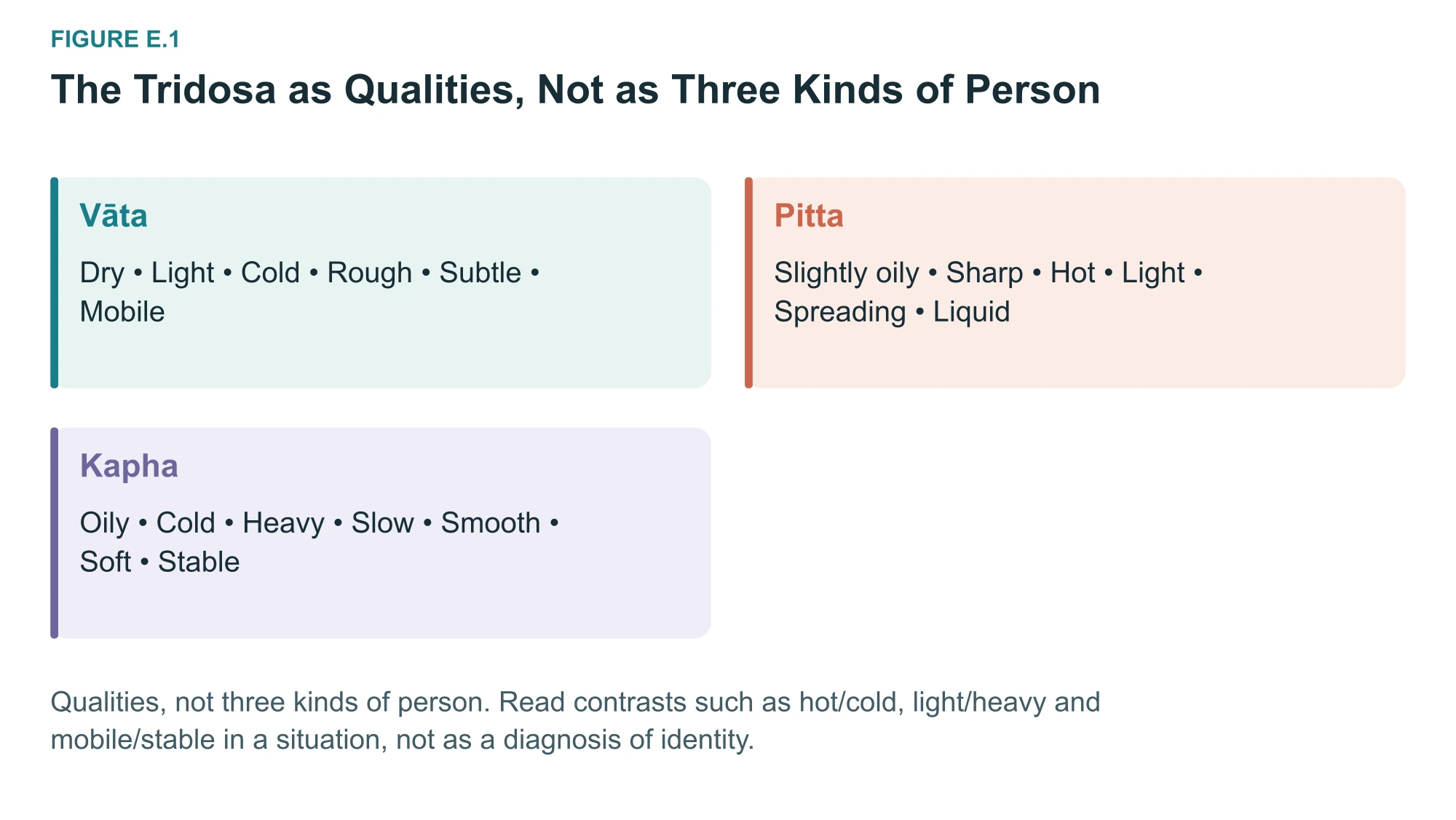
Figure E.1. The Tridosa as Qualities, Not as Three Kinds of Person.
Table E.1 - The tridoṣa as a reading aid, not a classification of people
Vāta | Pitta | Kapha | |
|---|---|---|---|
What it governs | Movement: breath, circulation, elimination, the movement of thought | Transformation: digestion, metabolism, heat, perception, judgement | Cohesion: structure, fluid, immunity, steadiness, attachment |
Qualities named in the tradition | Dry, light, cold, mobile, rough, subtle | Hot, sharp, light, oily, spreading, liquid | Heavy, cold, oily, slow, stable, soft |
Picture when disturbed | Nothing settles: broken sleep, shifting pain, fear without object, dryness, racing speech | Things burn: acidity, heat, inflammation, irritability, self-judgement | Nothing moves: heaviness, congestion, lethargy, grief that has set, holding on |
What steadies it, in the tradition's own logic of opposites | Warmth, oil, weight, regularity, quiet, company | Cooling, sweetness, shade, rest, an unhurried pace | Warmth, movement, lightness, stimulation, getting up |
Where a caregiver meets it | The bereaved who cannot sleep or eat; the frightened; the very old | The person raging at a diagnosis, at a family, at themselves | The person who cannot get out of the chair months after a loss |
How to use this table. As a way of following what a person or family means, and as a rough guide to whether an offering is likely to soothe or aggravate - warmth for what is cold and unsettled, coolness for what is hot, movement for what is stuck. That is all. It is not an assessment instrument, it has no score, and it must never be used to decide in advance what a person is. If you find yourself reading a person off this table rather than asking them, close the book.
One contraindication. Do not use this table, or any part of this appendix, to reinterpret a symptom that has not been medically assessed. Restlessness at night can be vāta; it can also be hypoxia, pain, delirium, alcohol withdrawal or an adverse drug effect. Naming it in this vocabulary before someone competent has looked at it is a way of making a clinical problem disappear into a cultural one.
E.1.2 Agni, āma and ojas: the tradition's central metaphor, and the reason this appendix belongs in a book about care
If a caregiver takes only one idea from Ayurveda, this is the one worth having.
Agni is digestive fire: the capacity to transform what is taken in into what can be used. Āma is what is left when agni is weak - the undigested residue, which the tradition treats as the root of a great deal of illness. Ojas is the fine end-product of good digestion, the tradition's word for vitality, resilience, immunity, and something close to the substance of steadiness.
The tradition itself does not confine this to food. It applies the same reading to experience: what a person takes in through the senses and through their life has also to be metabolised, and can also sit undigested. This is not a modern metaphorical stretch laid over a physiological doctrine. It is how the sequence is put in the tradition's own psychological and conduct material, which E.9 comes to.
Why it matters at a bedside. A great many of the people in this book's cases are not ill in a way that has a name they accept. They are depleted. The vocabulary available to them is thin and mostly borrowed from work: burnout, stress, not coping, low mood. Those words carry a verdict. Burnout says something failed, and the person hearing it usually decides it was them.
Agni and ojas say something different and, for many people, truer: that the capacity to take things in has been overwhelmed, and that what is depleted can be rebuilt slowly by ordinary means. It locates the problem in the rate and quantity of what has had to be absorbed rather than in the person's adequacy. For the family carer of Chapter 22, who has been metabolising other people's needs for four years, that is not a euphemism. It is a more exact description, and it points at rest, food, rhythm and company rather than at self-improvement.
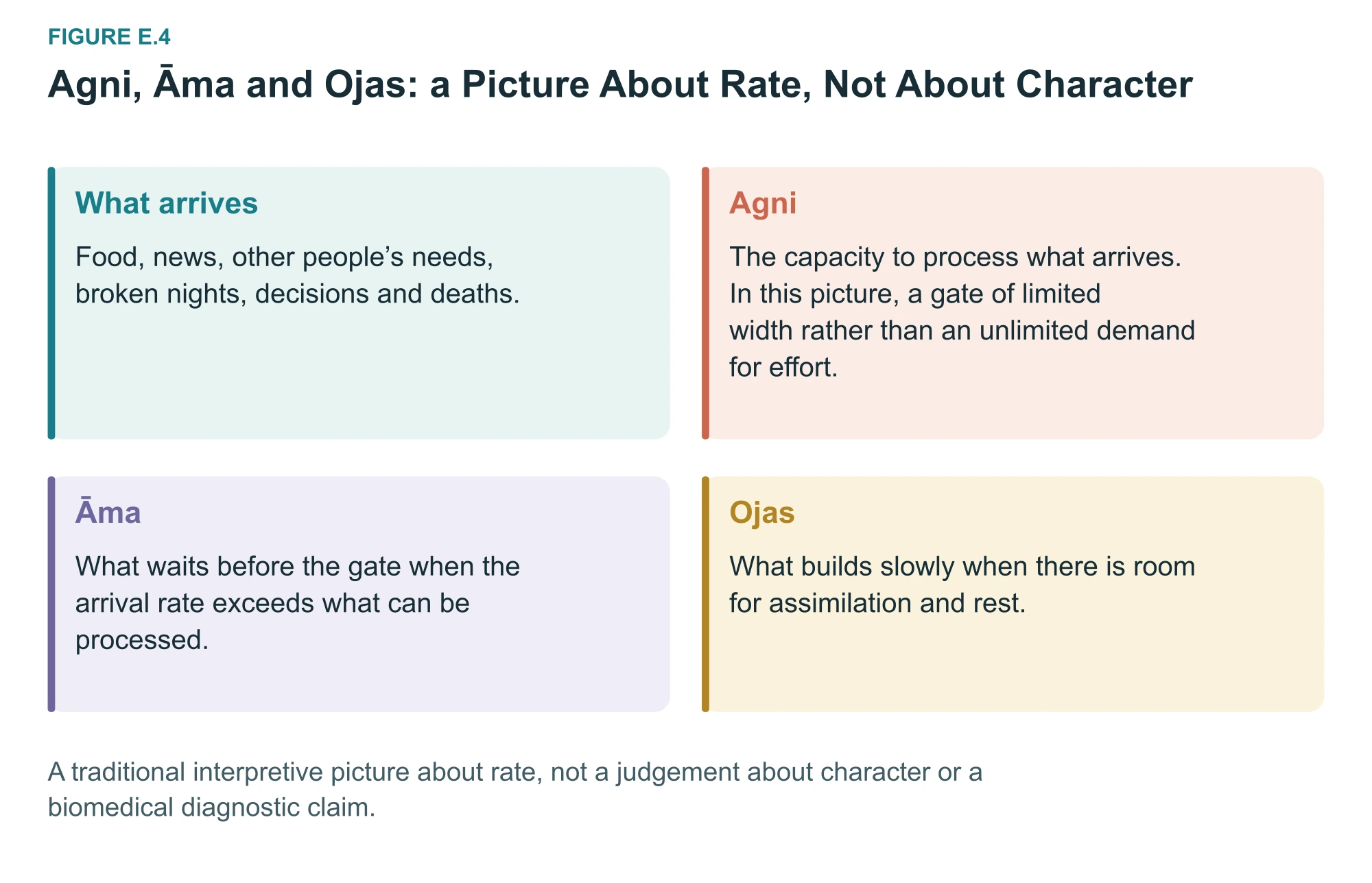
Figure E.4. Agni, Āma and Ojas: a Picture About Rate, Not About Character.
This is offerable to anyone, and it is offerable in English. See E.14.
E.1.3 The triguṇa: the bridge to the mind, and to the rest of this book
The three guṇas - sattva (clarity, lightness, harmony), rajas (activity, agitation, drive) and tamas (inertia, dullness, obscuration) - are the tradition's account of the qualities of mind, and they are the hinge between this appendix and everything else in the book. Chapter 9's practice repertoire and the Discernment Ladder of Chapter 6 do not use the three names, but the quality of mind each is reading is the one the guṇas name, and so is the account of mind that the Integrative apparatus carries throughout (Philosophy of the Integrative, Bindlish 2026).
For care purposes the useful reading is not a typology but a direction of travel. Sattva is the condition in which a person can see their situation, weigh it and choose. Rajas is the condition in which they are driven by it. Tamas is the condition in which they cannot see it at all. Almost everything a spiritual caregiver does - steadying a room, slowing a conversation, restoring sleep, sitting with someone until the noise drops - is sattva-raising, whether or not anyone uses the word.
That is also where this appendix hands over to Appendix D. The practices that raise sattva are largely the practices of Appendix D: quiet, breath, regular hours, simple food, honest company, and time in the early morning. Ayurveda supplies the conditions; yoga supplies the practice; and neither works well when the person has not slept.
E.1.4 Dinacarya, ṛtucarya, āhāra and vihāra: the four words for regimen
Four more terms, and then the vocabulary section is done.
• Dinacarya - the daily regimen, the shape of a day from waking to sleep. E.3.
• Ṛtucarya - the seasonal regimen, what changes across the year. E.4.
• Āhāra - what is taken in, primarily but not only food. E.5.
• Vihāra - conduct, activity, how a person moves through their day and among others. E.5 and E.9.
The tradition puts these before medicine rather than after it. That ordering is itself the point of contact with spiritual care: a system that treats the shape of a life as the primary therapeutic instrument, and drugs as what is needed when the shape has failed, is already asking the caregiver's question rather than the physician's.
E.2 What a spiritual caregiver may actually offer
Drawn narrowly and stated as a list, because the narrowness is what makes it safe.
1. Routine, rest and rhythm. The shape of a day, restored one anchor at a time. E.3.
2. A conversation about food, not a diet. What this person can currently take in, what they used to eat, what they cannot face, and who is cooking. E.5.
3. Sleep in the tradition's own terms, for a person to whom sleep hygiene as a leaflet has said nothing. E.3.
4. Abhyaṅga - self-applied oil massage, or applied by a family member who wants a way to help. E.6.
5. Gentle exertion at half strength, in the tradition's own rule about how much. E.7.
6. The language of agni and ojas for depletion. E.8.
7. Sattva-raising practice, handed to Appendix D. E.1.3.
8. Support in holding two systems of care together, and referral to a qualified practitioner where a person wants Ayurvedic treatment. E.12.
And one thing that is not on the list but does most of the work: taking seriously, without evaluating, that a person has a whole account of their own body. A woman who has managed her health this way for sixty years is not confused. She is operating a coherent system that predates the ward she is lying in, and a caregiver who neither corrects it nor pretends to share it, but simply follows it, has already done the main thing.
Table E.2 puts the remit into the only two columns that settle anything at a bedside, may and may not, and the line between them falls in the same place every time: a caregiver may follow a person's account of their own constitution and may not supply one, confirm one, or rule on one they propose. It is set as a stand-alone page because it is the part of this appendix a caregiver needs when there is no time to read the rest.
Table E.2 - The remit, and it is a stand-alone page
A spiritual caregiver may | A spiritual caregiver may not |
|---|---|
Ask what a person's own constitution or regimen is, in their terms, and follow the answer | State what a person's prakṛti or vikṛti is, or confirm one they propose |
Talk about the shape of a day, sleep, waking, meals, rest | Set a regimen as an instruction, or attach any expectation to it |
Talk about food as company, memory, appetite and what can be faced | Give dietary advice for a condition, or endorse a restriction that reduces intake |
Mention abhyaṅga as something a person or family may do, and hand over E.6 | Perform massage, or advise oils for a condition |
Mention that exertion has a stopping rule in the tradition, and hand over E.7 | Set exercise for a patient, or override a physiotherapist |
Use agni, ojas, āma as language for depletion, if the person finds them useful | Use them as an explanation of a symptom that has not been assessed |
Say that Ayurvedic medicines and biomedical drugs can interact, and ask what someone is taking | Advise starting, stopping, changing or combining anything |
Help a person find a qualified practitioner, and help them tell each clinician about the other | Recommend a named practitioner in whom the caregiver has an interest, or take any fee |
Say plainly, when it is true, that a delay has become a risk | Adjudicate whether Ayurveda works |
How to use this table. Photocopy it and keep it in the folder. When something in an encounter feels as though it might be over the line, it usually is, and the right-hand column is nearly always where it sits. If a person asks you a question from the right-hand column, the answer is not a shorter version of the answer. It is a referral.
Contraindication. This table does not license the left-hand column in a person who has not raised any of it. Nothing here is to be introduced into an encounter that was about something else.
E.3 Dinacarya: the day as a shape, and the anchor that comes first
Dinacarya is the tradition's account of a well-ordered day, and in the classical texts it is a full sequence: rising in the last part of the night, elimination, cleaning the teeth and tongue, añjana (collyrium), nasya (nasal instillation), abhyaṅga (oil massage), vyāyāma (exertion), bathing, food, work, and sleep at an hour that allows the next rising. Diwakar, Choudhary, Rokde and Jain (2019), reviewing the vyāyāma material across the Caraka, Suśruta and Vāgbhaṭa corpus, set the sequence out in that order.
A caregiver does not offer the sequence. Nobody in a hospital bed, a prison cell, a hospice or a household organised around another person's illness is going to run a classical morning. Offering it whole is the fastest way to hand somebody one more thing they have failed at.
What a caregiver offers is one anchor. The finding underneath this - which the chronobiology in E.13 supports on its own separate grounds - is that regularity does more work than content. One thing at the same time each day begins to give a day a shape, and a shape is what has usually been lost. For a bereaved person whose days have run together since the funeral, for a prisoner whose day is imposed entirely from outside, for a carer whose hours belong to someone else, the recovery of a single fixed point is not a small thing.
Choosing the anchor. Let the person choose it. The ones that work are almost always the ones that are already nearly happening: the first cup of tea, the walk to the end of the road, the ten minutes before anyone else is awake, the phone call at the same hour. The caregiver's contribution is the question, not the answer: what is the one thing in your day that is still yours, and what time does it happen?
E.3.1 Brahma muhūrta, and how to offer it without cruelty
The pre-dawn period, brahma muhūrta, is the hour the tradition assigns to practice. Gupta, Shukla, Shrivastava and Acharya (2017) give the reckoning: a muhūrta is forty-eight minutes, there are thirty in a day, and brahma muhūrta is the second-to-last of the night, beginning about one hour and thirty-six minutes before sunrise, so roughly the ninety minutes before dawn. They note the range of practice in the modern accounts they survey, from Śivānanda's 3.30 to 5.30 a.m. to narrower definitions, and they take from Aṣṭāṅga Hṛdaya the instruction that a healthy person should leave the bed at this hour. Uma, Pratibha and Chiplunkar review the same hour in relation to lifestyle disorder. Both papers are reviews rather than trials, and both are conceptual in method; E.13 says what that does and does not warrant.
Why a caregiver should know about it. Because people practise then, and because a person who has always risen at four and now cannot - because of a ward round, a cell regime, a drip, a body that will not do it - has lost something specific that nobody has asked about. That loss is the caregiver's business. The hour itself is not.
Two cautions, and they are firm.
• Never offer pre-dawn rising to a person who is not sleeping. For the insomniac, the newly bereaved, the depressed and the exhausted carer, an instruction to rise earlier is an instruction to sleep less, and it will be heard as one more demand. Sleep first. Always.
• Never offer it as a discipline to be kept. It is offered, if at all, to someone who is already drawn to it and has lost access to it, and then the work is adaptation: what part of it can be had in a bed, at whatever hour is actually available, without the family or the staff needing to change anything.
Table E.3 sets out who each caution protects, because a bar written as a general rule gets applied to the wrong person and waived for the right one.
Table E.3 - Pre-dawn rising (brahma muhūrta): who it is offered to, who it is not, and what stands in its place
Who is in front of you | Whether pre-dawn rising is offered | Why the bar stands | What is offered instead |
|---|---|---|---|
A person who is not sleeping - insomnia, broken nights, waking at four and unable to return | Never | An instruction to rise earlier is an instruction to sleep less, and it will be heard as one more demand | Sleep first. Nothing from this section until someone competent has looked at the sleep: Table E.4 |
A person newly bereaved | Never | The same, and the early hours are already the worst part of the day for most people in the first weeks | The anchor of E.3, at whatever hour the person chooses. One fixed point, not an earlier one |
A person who is depressed | Never | Early waking is a sign here rather than a discipline, and reframing it as practice puts a clinical sign out of reach | Ask whether anyone has looked at the sleep. Then the anchor, chosen by them |
A carer who is exhausted | Never | Her hours already belong to somebody else, and the hour before the household wakes is usually the only one that does not | The language of E.8 for what is depleted, not a regimen. What she needs is not an earlier start |
A person who has always risen at this hour and now cannot - a ward round, a cell regime, a drip, a body that will not do it | Not as a practice to resume | The loss is real, specific, and almost never asked about. Handing the practice back is not the same as attending to the loss | Name the loss and ask about it. Then adaptation: what part of it can be had in a bed, at whatever hour is actually available, with nothing the family or the staff must change |
A person who asks to take it up as a discipline | Never | It is offered, if at all, to somebody already drawn to it who has lost access to it. Introduced as a discipline it becomes one more thing to fail at | Say why. Offer the anchor instead: the one thing in the day that is still theirs, at the hour it already happens |
How to use this table. Find the person in the first column. Read the third column only if you are about to disagree with the second. The hour itself is never the caregiver's business. The loss of it may be.
What brahma muhūrta is, for a reader who meets the word at a bedside. Roughly the ninety minutes before sunrise: the second-to-last muhūrta of the night, a muhūrta being forty-eight minutes and there being thirty in a day, on the reckoning Gupta, Shukla, Shrivastava and Acharya (2017) take from Aṣṭāṅga Hṛdaya. Modern practice varies, from Śivānanda's 3.30 to 5.30 a.m. to narrower definitions. That is what the tradition says and how widely it is kept. It is not a finding about when anybody should get up. Neither that review nor Uma, Pratibha and Chiplunkar's is a trial; both are conceptual reviews, and E.13 states what that does and does not warrant.
The one rule, and it overrides every row above. Sleep first. Always. Where sleep and the hour are in conflict, sleep wins, and there is no person in this book for whom it does not.
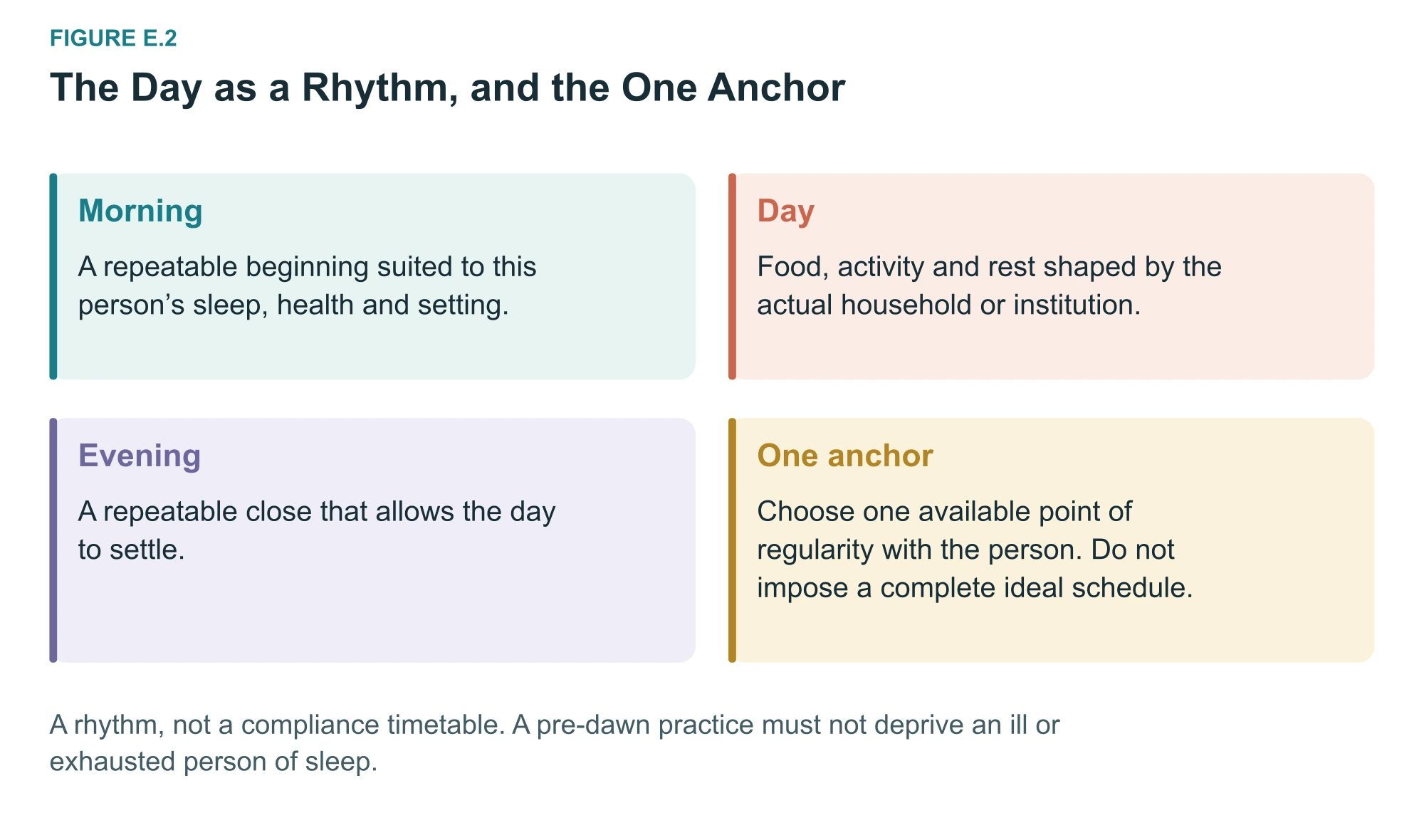
Figure E.2. The Day as a Rhythm, and the One Anchor.
E.3.2 Sleep, in the tradition's own terms
Sleep is one of the three pillars of the classical account of health, alongside food and regulated conduct, and it is treated as a positive good rather than as the absence of activity. That framing is worth borrowing, because a person who has been told to practise sleep hygiene has been given a compliance task, and a person told that sleep is one of the three things a life rests on has been given a permission.
What a caregiver can actually say. Regular hours before duration. Darkness and quiet where they can be had, which in a ward or a wing is a negotiation with staff and not a matter of will. Warmth and weight for the person who is cold and unsettled. Something oily and warm rather than dry and cold late in the day, if food is a live question. No screens or news in the last stretch, framed as what the mind has to digest rather than as a rule. And - the tradition's own point, and the one people find most releasing - that daytime sleep is not a failure, though it is treated as unsuitable for some people in some seasons, which is a distinction to hand to a practitioner rather than to settle at a bedside.
What a caregiver must not do. Not attribute insomnia. Broken sleep in a person under a hospital or a hospice is a clinical matter until someone competent has said otherwise: pain, breathlessness, delirium, steroids, withdrawal, anxiety states and depression all present this way. Say so, and ask whether anyone has looked.
Table E.4 carries that question first, and beneath it the six things there are to say once it has been asked. The order is the instrument.
Table E.4 - Broken sleep: the question that comes first, and what a caregiver may say once it has been asked
Table E.4, second panel. Once that question has been asked, what a caregiver may say.
What may be behind it | What it can look like at the bedside | What a caregiver does |
|---|---|---|
Pain | Settles, then wakes. Will not stay in one position. Short with everyone by morning and cannot say why | Report what you have seen, in the person's own words, to the nurse or the doctor. Do not call it anxiety |
Breathlessness | Cannot lie flat. Sits up to sleep. The family have quietly started propping her | Report it. A person who has acquired three pillows over a fortnight has a clinical change that nobody has written down |
Delirium | Awake and confused at night, clearer by day. Frightened. Sees or hears what is not there | Urgent, and the same day. This is the row most often mistaken for a spiritual crisis, and a caregiver is often the first person in the building to see it |
Medication, steroids among them | Wide awake from the day a dose changed. Wired rather than frightened | Ask when it began and what changed then. The answer is usually on the chart and nobody has connected the two |
Withdrawal - alcohol, nicotine, opioids, benzodiazepines | Sleepless, sweating and agitated within days of an admission or of coming into custody | Tell a clinician. On a wing or at a hospice admission this is common, time-critical, and easily read as a difficult character |
An anxiety state | Cannot get off to sleep. The same thoughts on a loop. Better when somebody is there | Sitting with it may well be yours. Naming it is not. Say what you heard, in the words you heard it in |
Depression | Wakes early and cannot return. The day is at its worst in the morning | Say so. Early waking is a sign, and it is the one most often re-described as devotion, as discipline, or as an early riser's temperament |
1. Regular hours before duration. The sameness of the hours does more than the number of them, and it is the one part of this that can be had in a ward or a wing.
2. Darkness and quiet where they can be had - which under an institution is a negotiation with staff and not a matter of will. Offer to be the one who has it.
3. Warmth and weight for the person who is cold and unsettled.
4. Something warm and oily rather than dry and cold late in the day, if food is a live question at all, and subject to the whole of Table E.6.
5. Nothing left to digest at the end of the day - screens, news - put as what the mind still has to metabolise rather than as a rule.
6. Daytime sleep is not a failure. This is the tradition's own point and the one people find most releasing. It is treated as unsuitable for some people in some seasons, and that distinction is to be handed to a practitioner rather than settled at a bedside.
How to use this table. The panels in order, and the second only after the first. A caregiver does not attribute insomnia. Broken sleep in a person under a hospital, a hospice or a prison is a clinical matter until somebody competent has said otherwise, and every row of the first panel is a thing that presents as a bad night and is not one. Say what you have seen, ask whether anyone has looked, and do not supply the reason.
Why the second panel is a permission and not a task. Sleep is one of the three pillars of the classical account of health, alongside food and regulated conduct, and it is treated as a positive good rather than as the absence of activity. A person who has been told to practise sleep hygiene has been given a compliance task. A person told that sleep is one of the three things a life rests on has been given something else, and that difference is the whole of the offering.
Contraindication.A change in sleep that is new is a reason to fetch somebody, never a reason to reach for the second panel. Nothing in it is offered where the sleep has not been asked about clinically, and nothing in it is offered at all in place of asking.
E.4 Ṛtucarya: the year, and why it reaches the caregiver at all
Ṛtucarya is the seasonal counterpart: the recognition that the same person needs different things at different times of the year, and that the changeover between seasons is when people most often become unwell. The classical scheme runs on the six seasons of the north Indian year and does not transpose cleanly to a Dutch or a British one, which is a real limit and is stated rather than papered over.
Two things in it are usable anywhere.
The first is the changeover. The tradition treats the junction between seasons as the vulnerable period and advises easing rather than switching. For a caregiver this is mostly a way of noticing: the person whose chronic condition reliably worsens in the second half of autumn, the family whose difficult month is the one containing the anniversary, the prisoner for whom winter in a cell is a different sentence from summer in one. None of that needs a doṣa to be worth attending to.
The second is that seasons are also social. The heaviest points in a year, for most of the people in this book's cases, are festivals, anniversaries and the dates the calendar attaches to a death. Chapter 12's material on ritual across a distance and Chapter 19's on the shape of grief both land here. A caregiver who knows in September that October is hard has a use for ṛtucarya that has nothing to do with the weather.
Table E.5 is the quick reference for the first of those two, and its fourth column is the one that makes it a caregiver's table rather than a physician's, since it names where each pattern is actually met: a first winter of bereavement, the very old, the long nights on a wing. Its limits are printed on the table itself rather than left in this prose, because a page that gets photocopied travels without its surroundings.
Table E.5 - Constitution and season: a quick reference, with its own limits printed on it
What tends to rise | What tends to steady it | Where a caregiver is likely to meet it | |
|---|---|---|---|
Cold, dry, windy weather; late autumn and winter | Vāta: unsettledness, broken sleep, dry skin, pain, fear | Warmth, oil, weight, regular hours, soup rather than salad, company | The bereaved through a first winter; the very old; long nights on a wing |
Heat; high summer | Pitta: irritability, inflammation, thirst, sharpness with others | Cool, shade, sweetness, an unhurried pace, less argument | Wards without ventilation; tempers in a household under strain |
Damp, cold, heavy weather; late winter and early spring | Kapha: heaviness, congestion, immobility, grief that has set | Warmth, movement, getting up, lightness, stimulation | The person who has not left the chair since the funeral |
The junction between any two seasons | Whatever the person is already prone to | Easing rather than switching; keeping the anchors of E.3 fixed | Chronic conditions that reliably worsen at the same point each year |
How to use this table. As a prompt for noticing and for conversation, in one direction only: from what a person reports to what might steady it. It runs on the classical north Indian scheme and does not transpose cleanly to a temperate northern European year, so treat the weather column as an approximation and the person's own account as authoritative. It has no diagnostic use whatsoever.
Contraindication. Do not use a season to explain a change in a person's condition. Seasonal patterning is a reason to ask a clinician to look again, never a reason not to.
E.5 Āhāra and vihāra: the conversation, and where it stops
The conversation about food is not a conversation about diet. This is the single most common place where a caregiver drifts over the line, because food advice is socially available in a way that medical advice is not, and it feels harmless.
It is not harmless. A person on a restricted intake, a person with a swallowing problem, a person on chemotherapy, a person with renal failure, a person with an eating disorder and a person whose family is already arguing about food can each be genuinely harmed by a well-meant suggestion. A caregiver does not advise on food.
What a caregiver does is ask about it, and the questions are not clinical.
• What can you actually face at the moment?
• What did you eat when you were well? Who made it?
• Is anyone cooking for you, and is it food you recognise?
• Is there anything you have stopped being able to eat since this started?
• Is the food here food you can eat at all?
The last one matters more than it looks. A great deal of institutional distress in this book's cases is a person who cannot eat what is on the tray for reasons that are religious, constitutional, cultural or simply about grief, and who has been recorded as having a poor appetite. That is a discard: a whole account of a person's relation to food, summed into a single number on a chart. Naming it and getting it to the right person is a caregiver's job and requires no dietetics at all.
Table E.6 gives the five as a script, with what each is for, what it opens, and where each one stops.
Table E.6 - The five food questions: the words to use, what each is for, and where each stops
Ask, in these words | What it is for | What the answer opens | Where it stops |
|---|---|---|---|
What can you actually face at the moment? | To find what is possible today, rather than what would be desirable | Nausea, a changed sense of taste, a sore mouth, fear of vomiting, a treatment cycle nobody has explained | Do not follow the answer with a suggestion. It goes to whoever is responsible for intake |
What did you eat when you were well? Who made it? | To reach the person rather than the patient, and to find who is missing from the room | A mother, a wife, a country, a kitchen, a version of themselves. Often the first thing they have wanted to talk about all week | It is a question about a life, not a baseline. Do not turn the answer into a plan |
Is anyone cooking for you, and is it food you recognise? | To find whether food is arriving as care or as catering | Isolation. A family who want a job and have not been given one. A household whose food cannot get past the ward door | The family may be given the job. They may not be given instructions about the person's diet |
Is there anything you have stopped being able to eat since this started? | To find a change, which is the one thing in this list a clinician needs from you | Difficulty swallowing, reflux, a sore mouth, an aversion that arrived with a drug | This is the safety question. A new inability goes to a clinician the same day, and it goes as a report and not as a theory |
Is the food here food you can eat at all? | To find the discard before it becomes a number on a chart | Fasting, purity practice, a vegetarianism nobody asked about, halal, an intolerance - a tray that is inedible to this person and unremarkable to everybody else | Naming it and getting it to the right person is the whole of the job. It requires no dietetics and must not become any |
How to use this table. All five, in order, in one conversation, and not one of them followed by advice. A caregiver does not advise on food. Food advice is socially available in a way that medical advice is not, and it feels harmless, which is exactly why this is the commonest place in this appendix for a caregiver to cross the line without noticing.
Who is harmed by a well-meant suggestion. A person on a restricted intake. A person with a swallowing problem. A person on chemotherapy. A person with renal failure. A person with an eating disorder. A person whose family is already arguing about food. Six populations, and from a bedside you will not know which of them you are talking to.
What the fifth question is really for. A great deal of the institutional distress in this book's cases is a person who cannot eat what is on the tray, for a reason that is religious, constitutional, cultural or simply about grief, and who has been recorded as having a poor appetite. That is a discard: a whole account of a person's relation to food summed into one number. The fifth question is what un-sums it, and it is the one most often left out because it sounds like a complaint about the catering.
Contraindication. Do not open this page because you need something to do. Food is the easiest subject in a sickroom to fill a silence with, and E.0's third rule - whose need is this? - applies here more sharply than anywhere else in the appendix.
Vihāra - conduct, activity, the way a person moves through a day and among others - matters here because the tradition treats it as continuous with food. What is taken in through company, work, argument, noise and news is also being digested. This is not a metaphor imported by this appendix; it is the ground on which sattvāvajaya and ācāra rasāyana stand, and E.9 takes it up.
E.6 Abhyaṅga: the one hands-on practice, and it is not the caregiver's hands
Abhyaṅga is oil massage, and in dinacarya it comes before bathing. It is included here because it is the one practical, physical, comforting thing in this appendix that a person or a family can do themselves, and because there is a large population of people in this book's cases who badly want something to do with their hands.
Whose hands. The person's own, or a family member's who wants a way to help. Not the caregiver's. A spiritual caregiver massaging a person has changed the relationship, has crossed a boundary that is difficult to uncross, and in most institutions has also breached policy. Where touch is clinically indicated it belongs to a therapist. Where a family member wants to do it, the caregiver's role is to say that it is allowed, to ask the nurse in charge, and to leave the room.
What it consists of, at the simplest. Warm oil, in a quantity that is not skimped. Long strokes on the long bones, circular strokes on the joints, and the same at the belly and chest. Feet and scalp are where most people begin and are often enough on their own. It is unhurried by design; done quickly it is neither pleasant nor the practice. Afterwards the oil is left a while and then washed off warm.
Why it belongs in a book about spiritual care. For a family carer, it is a way of being useful that is not surveillance and not nagging. For a dying person, it is affectionate touch that is not clinical handling, which by that stage of an illness they may have had almost none of. For a bereaved person massaging their own feet at night, it is a small self-directed kindness at the hour when there is nobody left to be kind to them. None of that requires anyone to believe anything.
The cautions are real and they are short.
• Not over broken, infected, inflamed or recently operated skin, not over a tumour site, not over a thrombosis or a suspected one, not over an area that has been irradiated without the radiotherapy team's say-so, and not on a limb with lymphoedema without the lymphoedema service's say-so.
• Not in fever, acute illness, indigestion or immediately after food - the tradition itself says the same.
• Falls. Oiled feet and a hospital floor, or an oiled bathroom at home, are a fracture waiting to happen in exactly the population most likely to be offered this. Say it out loud every time.
• Ask about the oil. Nut-derived oils and allergies; medicated oils are a different matter and belong to a practitioner, not to this appendix.
• Consent, every time, and touch that can be stopped without explanation. For people with trauma histories - Chapter 20's population and much of Chapter 14's - being touched, even kindly, even by family, can be the thing that undoes an hour's work.
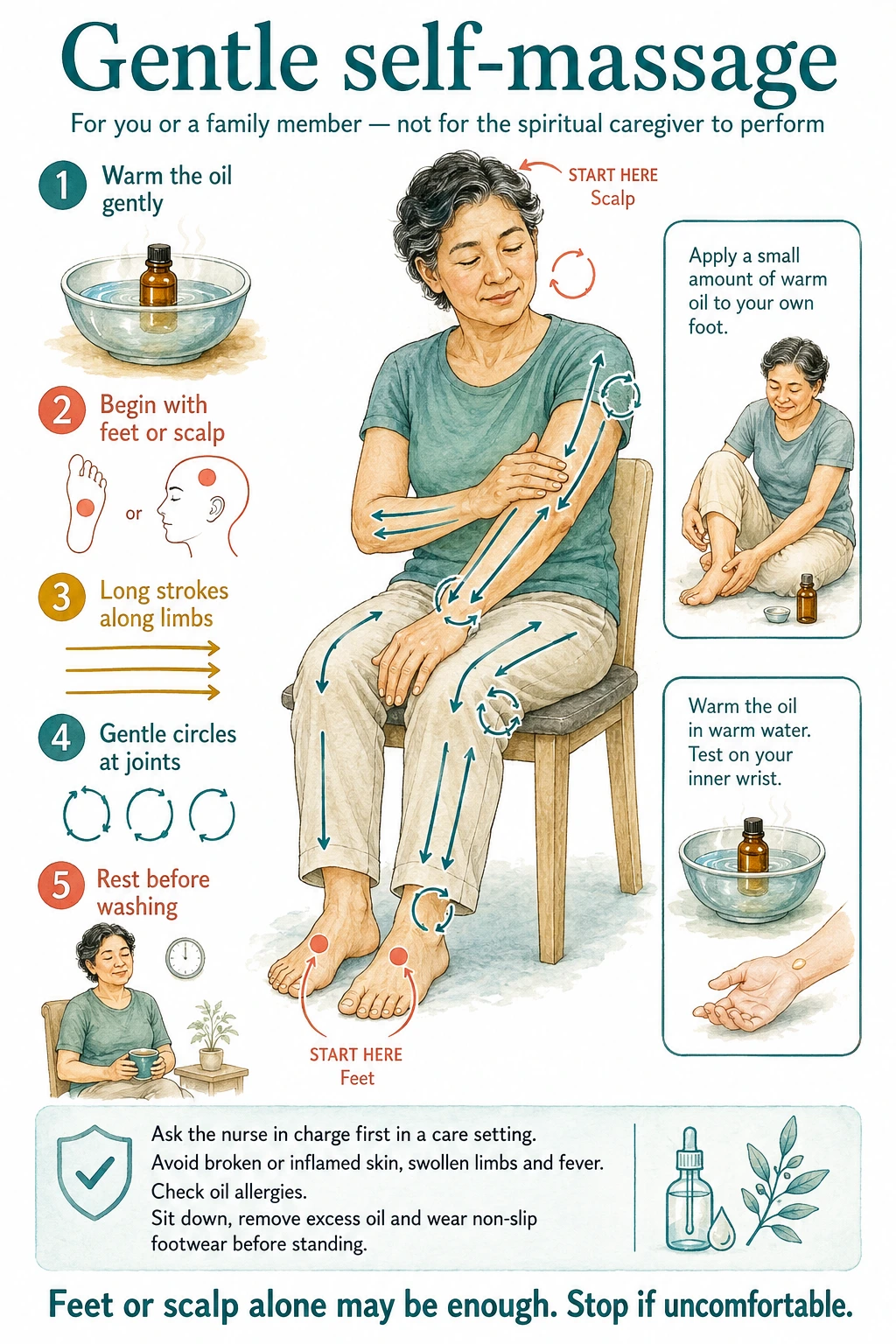
Figure E.3. Abhyaṅga: a Sheet to Hand Over.
E.7 Vyāyāma: exertion, and the tradition's own stopping rule
The vyāyāma material is here for one idea, and it is a good one.
Diwakar, Choudhary, Rokde and Jain (2019) set out the classical position from the Caraka, Suśruta and Vāgbhaṭa corpus. Vyāyāma is defined as activity that produces fatigue in the body, and it is distinguished from āsana explicitly: vyāyāma is repetitive movement with effort and sweating, āsana is steady and comfortable and does not tire. They report Caraka's signs that enough has been done - the breath rising, sweating, a sense of constriction at the chest - as the point at which it is stopped, and Suśruta's rule of balārdha, exertion to half one's own strength. Read at first hand (Cikitsāsthāna 24.25, in Bhishagratna 1911), Suśruta gives one sign that half has been reached, the breath coming out through the mouth; the dryness of the mouth and the sweat at the forehead, nose, armpits and joints that the review also gives are what his commentator Ḍalhaṇa adds, reporting several authorities, in a note the translator prints beneath the verse. The verse adds a warning the review does not carry, that to go beyond half may prove fatal. They record that no fixed duration is given anywhere in the corpus, because the measure is the person's own capacity rather than a clock. Contraindications they list include old age, childhood, pregnancy, hunger and thirst, immediately after food, and states of depletion or grief. The two primary loci, read, carry most of that list and not all of it. Caraka's list (Sūtrasthāna 7, in verses printed after 7.35 that the online edition marks as later additions) names the emaciated, those in anger, grief, fear or exhaustion, children, the old, the vāta-prone, loud talkers, and the hungry and the thirsty; Suśruta's (Cikitsāsthāna 24.26-27) forbids exertion after a meal, after intercourse, in vertigo, and in haemorrhage, wasting, cough, asthma and ulcer. Neither lists pregnancy; the review carried it, and this appendix no longer does. Their review is conceptual and literary in method, not clinical, and it is cited here for what the tradition says rather than for evidence of effect.
Why this is useful to a caregiver. Because balārdha is a stopping rule that comes from inside the person, and almost nothing else on offer to a depleted person does. Rehabilitation targets, step counts, "keep active", and the general moral pressure to be seen to be trying all set the measure outside. Half of what you have today, and stop at the breath - a rule that adjusts itself on a bad day without anybody having to concede anything - is usable by a person with Parkinson's, by a carer who has not slept, and by someone whose capacity is different every morning.
And the boundary, which is not negotiable. A spiritual caregiver does not set exercise. Where there is a physiotherapist, an occupational therapist or a rehabilitation plan, they own this and balārdha must not be used to undercut them. It is offered as a way of thinking about effort, to a person who is already trying to work out how much of themselves to spend.
Table E.7 sets the rule out with its signs, and with the exclusion list the tradition attaches to it.
Table E.7 - Balārdha: exertion to half your own strength. The rule, the sign in the body, and who it is not for
What the tradition says | The sign, in the body | What a caregiver does with it, and what a caregiver does not |
|---|---|---|
Stop at half of your own strength - balārdha (Suśruta, Cikitsāsthāna 24.25, in Bhishagratna 1911; Diwakar, Choudhary, Rokde and Jain 2019) | The breath coming out through the mouth, which is Suśruta's own sign. Dryness of the mouth and sweat at the forehead, the nose and the joints are added by his commentator Ḍalhaṇa | Offer it as a way of thinking about how much of yourself to spend today. Do not convert it into a target, and do not let anybody else convert it into one |
Stop when enough has been done (Caraka, Sūtrasthāna 7, in a verse printed after 7.33 that the online edition marks as a later addition) | Sweating; the breath quickening; a lightness of the body; then a sense of constriction at the heart | The signs belong to the person, not to the observer. Do not tell somebody they have reached them, and do not tell them they have not |
No duration is given anywhere in the corpus | There is nothing to check. The measure is this person's capacity today | This is the point of the whole page. A rule that adjusts itself on a bad day asks nobody to concede anything - which a step count, a rehabilitation target and keep active all do |
This is vyāyāma, and vyāyāma is not āsana | Vyāyāma is repetitive movement, with effort and sweating. Āsana is steady and comfortable and does not tire | If what is wanted is steadiness rather than exertion, this is the wrong page and Appendix D is the right one |
Who it is not offered to at all | The classical exclusions, read at the two primary loci: old age; childhood; hunger and thirst; immediately after food; anger, grief, fear and exhaustion; and the emaciated and the acutely ill (haemorrhage, wasting, cough, asthma, ulcer). Pregnancy is in neither text; the review added it, and it is not carried here | Read that list again. It excludes most of the people in this book. That is why balārdha reaches a caregiver as a way of thinking about effort and not as a practice to set |
The boundary, and it is not negotiable.A spiritual caregiver does not set exercise. Where there is a physiotherapist, an occupational therapist or a rehabilitation plan, they own this, and balārdha must never be used to undercut them. What a caregiver may do is hand a depleted person a way of measuring effort from the inside, because almost nothing else on offer to them does.
What this table is not evidence of. Diwakar, Choudhary, Rokde and Jain's review is conceptual and literary in method, not clinical, and it is cited here for what the corpus says rather than for evidence of effect. The first, second and fifth rows were checked against the two primary loci at first hand (Suśruta Cikitsāsthāna 24.25-27 in Bhishagratna 1911; Caraka Sūtrasthāna 7 in the Charak Samhita Research Centre's online edition), and two of the review's attributions were corrected there; the rest of the saṁhitā material in this appendix has not been read at first hand, and E.15 says so. Nothing here is a finding about whether exertion to half one's strength does anybody any good. E.13 states the evidence in both directions and this table adds nothing to it.
Why the fifth row is where the page ends. The tradition's own contraindication list and this book's own subject matter overlap almost entirely: the old, the depleted and the grieving are most of who is in these cases. That overlap is a reason to hand over the rule as a way of thinking, and a reason not to hand over a practice. This reading of the overlap is the appendix's, drawn from what E.7 already says; the classical sources state the exclusions without comment.
E.8 Agni and ojas as language for depletion, and this is the appendix's most used page
This is the offering that will be reached for most often, and it costs nothing and risks nothing.
The situation. Somebody is not ill and is not well. The carer of Chapter 22, four years in. The caregiver of Chapter 23, whose grief has accumulated unmourned across many deaths. The person in Chapter 15 whose condition is not going to improve and whose life has narrowed around it. The bereaved of Chapter 18, eight months on, whom no schedule should hurry. Each of them has run out of something, and the words available - burnout, compassion fatigue, not coping, depression, low resilience - either carry a diagnosis they have not been given or carry a verdict they cannot argue with.
What the tradition offers instead. That agni - the capacity to take things in and turn them into something usable - can be overwhelmed by quantity and by rate. That what is not metabolised does not vanish; it sits, as āma. That ojas, the fine residue of what has been well digested, is what a person draws on for steadiness and for resistance, and that it is depletable and rebuildable. And that the way it is rebuilt is not by effort but by rest, warmth, regular hours, food that can actually be taken, and company - the ordinary things, done consistently, over a period longer than anybody wants.
Four things this does that the other vocabulary does not.
1. It locates the problem in the load, not in the person. Nothing about it implies a failure of character or of professional competence.
2. It has a time course built in. Depletion took time and repletion takes time. This is often the single most useful sentence for a carer who has been told to take a weekend.
3. It makes rest a treatment rather than a reward. A person who believes rest must be earned cannot rest. A person who believes it is what rebuilds ojas can.
4. It points at the right interventions. Sleep, food, warmth, rhythm, company and a reduction in intake. Not resilience training.
How to offer it. Only if the person has the vocabulary or wants it. Many will: this is common currency in the communities much of this book is about, and a Hindu carer being handed a leaflet on burnout may well be relieved to hear the other account. Many will not, and E.14 gives the same thing in English.
And the boundary, because this page is the easiest one to misuse. Agni and ojas are language for a state a person is describing. They are not an explanation of a symptom nobody has examined. Fatigue is the presenting symptom of anaemia, hypothyroidism, cardiac failure, cancer, sleep apnoea, drug effects and major depression, and a caregiver who has given a person a beautiful account of their depletion has also given them a reason not to see a doctor. Ask whether anyone has looked. Every time.
E.9 Sattvāvajaya and ācāra rasāyana: where Ayurveda and spiritual care are already the same subject
Two terms, and they are the deepest point of contact in this appendix.
Sattvāvajaya is the tradition's own psychotherapeutics: the treatment of the mind by non-material means - by restraining the mind from what is harmful to it, by knowledge, by counsel, by the reordering of attention. What it names is a therapy that is not a substance. Ayurveda is usually met in the West as herbs; a tradition that lists a mode of treatment consisting of talk, counsel and the redirection of attention, and puts it inside a medical system rather than outside it, is describing something a spiritual caregiver already does.
Ācāra rasāyana is more striking still, and it is the sentence to take away from this appendix. Rasāyana is the class of rejuvenative therapy, the practices and preparations that restore vitality. Ācāra rasāyana is conduct as a rejuvenative - the classical account holds that truthfulness, freedom from anger, restraint, calm, kindness, generosity, regular habits, respect and the company of good people are themselves rasāyana, producing the effects that the material rejuvenatives are taken for.
Why this matters to this book. It means the tradition itself holds that ethical and relational conduct is a therapeutic act, not a moral supplement to one. For a book that argues care is an alignment of perspectives and purposes rather than a set of interventions, this is not a decoration. It is the classical tradition making the same move: putting how a person lives among others inside the account of what heals them, rather than alongside it.
And two honest cautions, because it is also the most misusable idea here.
• It must never become an instruction to be good. A depleted, grieving or dying person told that calm and freedom from anger are therapeutic has been handed one more failure. The classical list describes a condition that arises when a life is in order, not a set of demands to be met while it is not. Where a person is angry, the caregiver's work is with the anger and not against it - which is what Chapters 14 and 20 spend their length on.
• It must never become an explanation of illness. The step from conduct is rejuvenative to bad conduct caused this is short, is made constantly in popular presentations of karma, and is devastating to a person who is already asking what they did to deserve it. Chapters 11, 12 and 15 and Appendix F all hold the correction, in the tradition's own idiom: what is being borne is not the same as what is being decided.
E.10 When to use what, how much, and the signs it is not working
The same discipline as Appendix D, and it fits in one table plus three paragraphs. Table E.8 is that table, and it is read from the left: what the person brings, what is likely to fit, what to leave alone, and a dose written to be honest about the setting rather than about the tradition. The third column is the one to read first, because most of what goes wrong here is a caregiver offering more than the setting can carry.
Table E.8 - What to offer, to whom, in what setting
What the person brings | What is likely to fit | What to leave alone | Dose that is honest about the setting |
|---|---|---|---|
Days that have run together; no shape since a loss or a diagnosis | One fixed anchor, chosen by them (E.3) | Anything resembling a full daily regimen | One thing, one time, revisited next visit. Nothing else that week |
Cannot sleep | Regular hours, warmth, weight, quiet; and a request that someone assess it | Pre-dawn rising. Absolutely not (E.3.1) | One or two changes, and a clinical question asked the same day |
Depleted, running on empty, ashamed of it | The agni and ojas account (E.8), with its time course | Any suggestion of effort, discipline or resilience | A single conversation. It usually lands or does not in five minutes |
Family wanting something to do with their hands | Abhyaṅga, by them, with the cautions read out (E.6) | Anything the caregiver performs | Feet or scalp, ten to fifteen minutes, after asking the nurse in charge |
Capacity that varies day to day; over-reaching and crashing | Balārdha, half of today's strength, stop at the breath (E.7) | Any target, count or plan; and never over a therapist | One sentence, offered once, and left with them |
Cannot eat what is provided | The questions at E.5, and getting the answer to the right person | Any dietary suggestion at all | The conversation, then a referral to catering, dietetics or the family |
Wants Ayurvedic treatment | Referral, and help holding the two systems together (E.12) | Any opinion on whether it will work | As long as it takes to make the two clinicians aware of each other |
Uses this vocabulary about their own body and has not been followed | Following it. Nothing more (E.2) | Correcting it; agreeing with it; assessing it | The whole visit, and it is enough |
How to use this table. Left to right, starting from what the person actually brought. The middle column is the one that keeps a caregiver safe, and it is deliberately as long as the second. The right-hand column assumes a ward, a wing, a home visit or a fifteen-minute bedside, not a retreat.
Contraindication. Nothing in the second column is to be offered on a first meeting to a person who has not raised any of it, and nothing in it is a substitute for asking a clinician to look at a symptom.
The signs it is working are unglamorous and are mostly reported by other people. The person is sleeping in a recognisable pattern. There is one hour of the day they can describe. They have begun to eat something. They speak about their exhaustion without apologising for it. A family member has a job. None of these is a validated outcome and none of them should be recorded as one.
The signs it is not working, which matter more. The regimen has become another duty, and the person is now failing at rest as well as at everything else - stop, and say plainly that you were wrong to suggest it. It has become a reason not to be seen, and a symptom is being managed with routine instead of assessed. It has become a moral system, and the person has begun to explain their illness by their conduct. Or the family has taken it over, and a person too weak to argue is being oiled, fed and organised by people who need to be doing something. That last one is common, is well meant, and needs saying out loud.
And the sign that has nothing to do with the person. The caregiver who has begun to bring this material into encounters where nobody asked for it is using it to be useful. That is E.11's last line.
E.11 Contraindications, interactions, and the things that must not be omitted
Nothing in this section is for a caregiver to act on clinically. It is here for one purpose: so that a caregiver knows enough to ask the question and pass the answer on. The commonest harm in this whole area is not a caregiver giving bad advice. It is a person taking two things that interact, and nobody in the room knowing, because nobody asked.
That last point is not a supposition. Sanford, Sher and Ahn (2019), analysing a national United States survey of people with a cancer history, found that a third had used complementary or alternative medicine in the previous twelve months and that 29.3 per cent of users had not told their physician. The rate varied sharply by what was being used: 11.8 per cent non-disclosure for herbal supplements, but 58.2 per cent for mantra, meditation and spiritual practice. The two leading reasons given were that the physician did not ask and that the patient did not think they needed to know. Jou and Johnson (2016) report the same pattern in the general population from national survey data.
Read that finding twice, because it is about this book. The category with the highest non-disclosure was the spiritual one - the caregiver's own territory. A spiritual caregiver is frequently the only person in the building who knows what a patient is actually doing, and is therefore the person best placed to make sure the clinical team knows too. That is the single most useful safety contribution in this appendix, and it requires no pharmacology at all.
E.11.1 The safety table
Table E.9 carries eleven rows, each naming an issue, what is actually established about it, and what to do with it, in that order, so that no row asks for an action the evidence column does not support. It also stands alone, and for a harder reason than the others: it is the page most likely to be needed by somebody who is not reading this appendix at all.
Table E.9 - What a caregiver needs to know, and what to do with it. This page stands alone.
The issue | What is actually established | What a caregiver does |
|---|---|---|
Heavy metals in Ayurvedic products | Saper and colleagues (2004) found lead, mercury or arsenic in 14 of 70 Ayurvedic products bought in Boston shops, and 24 of the 30 shops sold at least one. Their 2008 study of 193 products bought over the internet found detectable lead, mercury or arsenic in 20.7 per cent, with no difference between US- and Indian-manufactured products, and 40.6 per cent among rasa śāstra preparations against 17.1 per cent among the rest. Claims of good manufacturing practice did not predict safety. Case reports of lead poisoning traced to these products have continued since. | Do not generalise this to all Ayurveda; the risk is concentrated in metal-containing rasa śāstra preparations and in unregulated purchase. Ask what someone is taking, ask where it was bought, and make sure a clinician knows. If a person has unexplained abdominal pain, anaemia or neuropathy and is taking such a preparation, say so to the medical team the same day. |
Ashwagandha (Withania somnifera) and the liver | Liver injury attributed to ashwagandha is documented rather than theoretical: individual case reports in the clinical literature (for example Tóth and colleagues 2023), a dedicated entry in the United States National Institutes of Health LiverTox database, and pharmacovigilance reports in several countries. Denmark's food authority acted on a 2020 risk assessment that could not establish a safe intake, effectively removing it from sale; that assessment is itself contested in the peer-reviewed literature, on the grounds that it conflated root and leaf data. | Do not tell anyone to stop taking it and do not tell them it is dangerous. Make sure it is on the drug chart. If a person taking it develops jaundice, itching, dark urine or right-sided abdominal pain, that is a same-day medical matter and the caregiver says so plainly. |
Turmeric and curcumin | Halegoua-DeMarzio and colleagues (2023) reported ten cases of turmeric-associated liver injury from the United States Drug-Induced Liver Injury Network, six of them since 2017, with implicated products typically high-dose extracts enhanced with piperine and seven of ten patients carrying the HLA-B*35:01 allele. This is a signal about concentrated supplements, not about turmeric in food. A New Zealand pharmacovigilance alert (2018) describes a stable warfarin patient whose INR rose sharply after starting turmeric; the anticoagulant interaction rests on case reports and mechanism rather than trials. | Distinguish the kitchen from the capsule, out loud, because most people will not. Anyone on warfarin or another anticoagulant who starts a turmeric supplement needs their prescriber to know. |
Liquorice (Glycyrrhiza glabra, yaṣṭimadhu) | Well established and mechanistically clear: glycyrrhizin inhibits 11-beta-hydroxysteroid dehydrogenase type 2, producing a pseudohyperaldosteronism - raised blood pressure, low potassium, oedema. Case reports continue to appear. | Matters most in people already hypertensive, on diuretics, or with cardiac or renal disease. Ask, and tell the team. |
Guggulu (Commiphora mukul) | Documented pharmacodynamic interaction with thyroid hormone replacement and reduced absorption of propranolol. Hepatotoxicity reports exist but are confounded by combination products, and causality to guggulu alone is not clean. | Anyone on levothyroxine or a beta-blocker: make sure the prescriber knows. State the confounding honestly rather than overstating the liver signal. |
Bacopa (brāhmī) | Enzyme-inhibition data are from laboratory studies; clinical case reports of harm are not established. Trial tolerability has generally been good, with gastrointestinal upset the main complaint. | Report it like anything else, and do not present a theoretical interaction as a documented one. The difference between this row and the ashwagandha row is exactly the honesty this appendix is for. |
Triphala | Reasonable randomised evidence in oral and periodontal use, including a trial finding a triphala mouthwash comparable to chlorhexidine. Its popular reputation as a bowel remedy runs ahead of guideline-level evidence. | Nothing to do, beyond the standing rule of asking. Worth knowing because the popular claim and the evidence do not match. |
Pañcakarma and procedures | Purgation, emesis, medicated enema and nasal instillation are clinical procedures with real contraindications, including in frail, dehydrated, cardiac, renal and end-of-life patients. | Entirely outside the caregiver's remit. If a person is planning it while acutely unwell or on treatment, that belongs to their doctors, and the caregiver's job is to make sure they are talking to each other. |
Delay or displacement of treatment | Not an evidence question. | The hard edge. Where a treatment, an investigation or a decision is being deferred, name it, find out what is driving it, and escalate when the delay has become a risk. E.12. |
Fasting, restriction and purification while unwell | Fasting and restricted regimens carry real risk in diabetes, renal disease, frailty, pregnancy, eating disorders and anyone on insulin, and interact with medication timing. | Never encourage, never discourage on your own authority. Get it to a clinician, and to the family, before the fast rather than after. |
The caregiver's own need | Not a clinical matter and it belongs on this table anyway. | A caregiver who introduces this material into an encounter nobody invited it into is meeting their own need to be useful. Stop. |
How to use this table. It is a page to keep, not to memorise. The right-hand column is written so that a caregiver who reads only that column still behaves correctly. The whole table reduces to one instruction: ask what someone is taking, and make sure the people prescribing know.
Four contraindications on the table itself. (1) It is not a list of things to warn people off; a caregiver who turns it into one has become the sceptical outsider this book refuses to be. (2) It is not exhaustive, and no absence from it means safe. (3) It must never be used to open a subject a person has not raised. (4) Nothing here is a reason to reduce anyone's care. Every row ends in telling a clinician, not in withholding.
E.12 Referral, and why this is the most Integrative page in the appendix
A person wants Ayurvedic treatment. They are also under a hospital. Both of these are true at once, and this is the situation the book has been describing in the abstract for twenty-odd chapters.
The summation reading treats this as a contest with a winner. Either the Ayurveda is indulged as a cultural preference and the medicine gets on with the real work, or the medicine is the intrusion and the tradition is what the person really trusts. Each version resolves the tension by discarding one account. Each also produces the actual harm on the ward: a person who does not mention one system to the other, which is exactly what Sanford, Sher and Ahn (2019) measured.
The Integrative reading does not resolve it, because it is not the caregiver's to resolve. Two systems of care are in play; the person is the one in whom they meet; the caregiver's work is to make the meeting visible and workable rather than to decide it. In practice that is four things.
1. Find out what is actually being taken or planned, without evaluating it. The tone is the whole technique here. A caregiver who has ever once reacted to an answer will not get a true one again.
2. Get it into the record, with the person's agreement, and tell them why in terms of their own interest: so that nobody prescribes something that fights with what they are already taking.
3. Support them in telling each clinician about the other, and where they cannot, do it for them with their consent. This is often a five-minute conversation with a ward pharmacist and it is the most concretely useful thing in this appendix.
4. Help them find a qualified practitioner where they want one, with no financial interest of the caregiver's anywhere near it, and with the boundary of Appendix F applying in full: the caregiver does not become the person's practitioner, and no role change happens inside an encounter the person came to for something else.
And the threshold, stated separately because it does not depend on anyone's view of Ayurveda. When a delay stops being a preference and becomes a risk - a treatable condition untreated, a deteriorating patient, a decision that closes if it is not made now - it is escalated, and it is escalated as a clinical matter, in clinical language, to the people responsible. That threshold is not a judgement about the tradition and must never be presented as one. It is the same threshold that would apply to a delay for a holiday, a family wedding or a fear of hospitals.
E.13 The evidence, stated in both directions
The practice first, then the research, and in that order. Ayurveda is a medical tradition with a continuous textual and clinical history of something close to two millennia, refined by close observation within its own framework, and currently used by very large numbers of people who are not naive about it. That is the thing being described. What follows is a report on how far a particular research method has so far been able to follow it, which is a different subject.
What the research shows, accurately.
The whole-system picture is thin, and honest reporting has to say so. The Cochrane review of Ayurvedic treatments for diabetes mellitus (Sridharan, Mohan, Ramaratnam and Panneerselvam 2011) searched the international databases and hand-searched Indian journals, and found no trial that evaluated Ayurveda as a whole system of care - only trials of individual herbs and formulations. Among those, some glucose-lowering signals appeared and no serious adverse events were reported, but the reviewers concluded that methodological weakness, small samples and poor design meant firm conclusions could not be drawn and that the interventions could not be recommended for routine practice on that evidence. That conclusion is representative rather than exceptional.
The most-cited whole-system trial is Furst and colleagues (2011), a double-blind randomised comparison of classical Ayurvedic treatment, methotrexate and their combination in rheumatoid arthritis. It found comparable response rates across all three arms. It is also a pilot study with twelve to seventeen patients per arm, explicitly not powered to detect differences between them, and the popular reading of it - that Ayurveda matched or beat methotrexate - is not a claim the study can carry. It is cited here as a demonstration that a rigorous whole-system trial is possible, which was largely its point, and not as a result.
For the specific things this appendix actually offers, the position is: a single small pilot for abhyaṅga (Basler 2011, twenty healthy subjects, one session, no comparison arm), which cannot distinguish an Ayurveda-specific effect from the general effect of unhurried touch; and for massage more broadly in serious illness, a Cochrane review (Shin and colleagues 2016, nineteen studies, 1,274 participants) finding some suggestion of short-term reduction in pain and anxiety on very low quality evidence. That is the honest total. It is not much, and it is stated as not much.
Why the research lags, and the reasons are methodological rather than damning. Ayurveda individualises by constitution, season, digestive capacity and stage, which is precisely what a standardised trial protocol strips out; what is left after standardisation is often not the intervention practitioners are defending. Blinding a regimen of food, oil, sleep and conduct is close to impossible. Outcome measures capture what is easy to measure over short follow-up rather than what the tradition claims over years. "Ayurveda" names very different things across studies, from a single herb to a residential programme. And funding has flowed elsewhere for a century, which is a fact about research economies and not about the object of study. A method that cannot yet see something has not shown that it is not there.
And the reverse, held just as firmly. Absence of trial evidence is not licence to claim effect. This appendix asserts no efficacy for anything. Its authority rests on two things and neither of them is trial data: the coherence of the tradition's own account, which is what makes it usable as a language with the people who live by it, and the narrowness of the caregiver's remit, which is what makes it safe. Nothing offered here - a regular hour, a warm bath, oiled feet, a conversation about food, permission to rest - needs a trial to justify it, because none of it is a treatment claim.
Where good evidence exists, it is cited, and it is not the tradition's. Two areas are worth having in mind because a caregiver may be challenged on them.
• Regularity of sleep and waking. Windred and colleagues (2024), using accelerometer data from 60,977 UK Biobank participants, found that a sleep regularity index predicted all-cause, cancer and cardiometabolic mortality more strongly than sleep duration did, with the most regular sleepers showing substantially lower risk than the least regular. Tähkämö, Partonen and Pesonen (2019) review the light literature establishing morning light exposure as the dominant circadian phase-advancing signal.
• The reason to state this carefully. These findings support the value of regular timing and morning light on their own independent grounds. They do not validate dinacarya, they were not designed to test it, and they are not evidence that the tradition anticipated them. Presenting them that way would be the borrowed scientific authority this book's tone principle forbids. What can honestly be said is narrower and still useful: a caregiver helping someone recover a regular hour is doing something that is well supported in its own right, whatever the person's frame for it.
What a caregiver should say when asked whether any of this works. The truthful answer has three parts and takes about fifteen seconds. The specific things being offered here - rest, rhythm, food, warmth, touch, company - are supported in their own right and are not being offered as treatment. Ayurvedic treatment is a separate question, the trial evidence for it is thin and mostly of poor quality, and that is a statement about the research rather than a verdict. And the person's own experience of what has helped them is not overridden by either of those facts.
E.14 Offering all of it without a word of Sanskrit
Everything practical in this appendix survives translation, and for a substantial part of this book's readership it has to. Chapter 21's population, the woman of Chapter 15 who set aside the tradition she was raised in, and the mixed households of Chapter 12 will not be helped by vocabulary they do not hold - and, equally, Chapter 16's community will be helped enormously by it. The rule is the same as Appendix D's: use the person's frame, tell them honestly where it comes from if they ask, and neither smuggle nor conceal.
Table E.10 - The same offering, in two vocabularies
In the tradition's terms | The same thing, offerable to anyone |
|---|---|
Restoring dinacarya | "Is there one thing in the day that is still yours, and what time does it happen?" |
Brahma muhūrta | Nothing, usually. If they already rise early and cannot now, the loss is what you attend to |
Vāta disturbance | "Nothing is settling. You are cold, you cannot sleep, and everything is moving too fast" - and warmth, weight, quiet, regular hours |
Depleted ojas; weak agni | "You have had more coming at you than anyone could take in, for longer than anyone should. That is not a failure of yours and it does not come back in a weekend" |
Abhyaṅga | Warm oil, feet or scalp, unhurried, done by you or by someone who loves you. Mind the floor |
Balārdha | "Half of what you have today, and stop when the breath changes" |
Sattvāvajaya | Sitting with someone until the noise drops. It is what you were already doing |
Ācāra rasāyana | "How you are living among people is not separate from how you are. It is part of what mends you" |
Ṛtucarya | "October is going to be hard. Shall we think now about what October needs?" |
How to use this table. Right column by default with anyone who has not offered you the left. Move left only when the person moves first. A caregiver who introduces the left-hand column to demonstrate cultural competence has made the encounter about themselves.
Contraindication. The right-hand column is a translation, not a concealment. If a person asks where an idea comes from, say. A practice offered without its provenance and then discovered has cost more than it gave.
Table E.10 is the counterpart of Table D.5 and is used in the same way.
Diaspora communities in the Netherlands and Britain often use Hindi, Sarnami or English forms rather than Sanskrit ones. A caregiver reading IAST here will therefore encounter other spellings and terms in practice.
E.15 What this appendix does not do
Stated plainly, because a practice appendix that does not state its limits will be used past them.
1. It does not train anyone in Ayurveda, and it is not a shortened version of a training. A caregiver who wants to learn this properly should study it properly, and should then hold the two roles separately, as Appendix F requires of the jyotiṣī.
2. It does not read the classical texts at first hand, with one exception. Every classical position above arrives through a named modern source and is attributed that way, except the two exertion loci in E.7 (Suśruta Cikitsāsthāna 24.25-27; Caraka Sūtrasthāna 7, the verses after 7.33 and 7.35), which were read in public translations and corrected on two points. A pass against the rest of the Caraka Saṁhitā, the Suśruta Saṁhitā and the Aṣṭāṅga Hṛdaya is owed, and until it is done no other verse locus in this appendix should be quoted as though it had been checked.
3. It does not cover the pharmacopoeia, deliberately. E.11 carries only what a caregiver needs to ask a good question and pass it on.
4. It does not adjudicate whether Ayurveda works. E.13 reports the state of a research literature. That is a different task and the appendix does not confuse the two.
5. It does not transpose the seasonal scheme to a northern European year, and says so at E.4 rather than inventing an equivalence.
6. It does not substitute for Appendix D, which carries the practices themselves, or for Chapter 9, which carries the principle that governs offering any of them.
7. And it does not make the tradition into an instrument of care. Ayurveda is not a resource this book has picked up because it is useful. It is a whole account of living well in a body, held by people the caregiver will meet, and the caregiver's job is to be able to follow it - not to deploy it.