H.0 What this appendix is for, and the one thing it is not
Appendix G tells you where a question lives. This appendix gives you some of the text itself, in editions you can check, with an account of what each passage does when it is said out loud to a person who is suffering.
That last clause is the whole of the difference between this appendix and an anthology. An anthology asks what a passage means. A caregiver has a narrower and harder question: what will this passage do in this room, to this person, now. The two questions have different answers often enough that a caregiver who has only the first one is not yet equipped. The most beautiful verse in the tradition about the deathlessness of the self is also, said to the wrong person at the wrong hour, a sentence that tells a mother her daughter did not really die. H.4 works that example in full, because it is the single most common way a well-read caregiver does harm.
The rule that governs every page below. A passage is offered, never prescribed, and never offered to a person who has not been asked. This is the same non-imposition rule that governs Appendices D, E and F, and it has a sharper edge here, because a text carries an authority a breathing exercise does not. When a caregiver quotes scripture to a person from that person's own tradition, the caregiver is not making a suggestion. They are, whether they intend it or not, telling that person what their tradition requires of them. If you have not first heard what this person makes of their tradition, you are not in a position to do that.
Who this appendix is for. It is written for a caregiver who may have no Sanskrit, no training in these texts, and no personal relationship to them, and who will nonetheless walk into a house where one of them is being read aloud. It is also written for a caregiver who does have that relationship, and who is therefore at a different and less obvious risk: of reaching for the passage that has consoled them, in a room where it consoles nobody.
How it is laid out. H.1 is the instrument: five questions to run before a passage leaves your mouth, and it is the page to photocopy. H.2 records the editions, because a passage you cannot trace is a passage you should not use. H.3 gathers what the sources examined here actually offer to a person who is dying. H.4 does the same for the bereaved, and works the verse most often said at a Hindu death. H.5 is for the caregiver's own stance, which the tradition addresses directly and which most anthologies leave out. H.6 is the Garuda Purana, treated on its own because it is the book most likely to be open in the house when you arrive. H.7 lists the passages that should not be offered, and what each is for instead. Section H.8 describes the limitations of this selection.
H.1 Before a passage leaves your mouth
Five questions. They take about twenty seconds once they are habitual, and the fifth is the one caregivers skip. Table H.1 sets them out with what each is guarding against and what to do when the answer is no; it is the page of this appendix to photocopy and carry, and it is written to be usable by a caregiver who knows none of the texts below.
Table H.1. Five questions to run before offering a passage, and what to do when the answer is no.
Ask yourself | Why it is on the list | If the answer is no |
|---|---|---|
Has this person told me what they make of their own tradition? | A text quoted into a silence is not an offer, it is an instruction. You cannot know whether this passage speaks for this person's tradition or against it until they have told you which tradition, in their sense, they have | Do not offer it. Ask instead. The question that opens this is usually not about belief but about practice and household: what is done in this family, and by whom |
Am I offering this because it fits their situation, or because it moves me? | The passages a caregiver loves are the ones they reach for under pressure, and pressure is exactly when the fit is not checked | Wait. A passage that consoles you is evidence about you. Return to what the person has actually said they are struggling with |
Does the passage make a metaphysical claim this person would have to accept for it to console them? | Many of the most quoted verses console only on a premise - that the self is not born and does not die, that the departed is travelling, that suffering is consequential. A person who does not hold the premise hears the verse as a correction | Look for a passage that consoles without requiring assent. H.3 and H.4 mark which ones do. The agricultural image at Katha 1.1.6 and the first boon at 1.1.10 to 11 are the two clearest examples in this appendix |
Would this passage still be right if the death were a suicide, a perinatal loss, or a death in custody? | The tradition's own texts treat these three differently and sometimes harshly, and a caregiver working in Dutch institutions meets all three. See H.6, where the Garuda Purana denies mourning and rite to suicides in one chapter and offers the rescue rite to them in another | Do not generalise from a passage that was written for an ordinary death. Where the text is harsh, H.6 and H.7 give you the counter-passage from inside the same book, which is far more use to a family than anything you could say from outside it |
Whose voice will this arrive in - mine, or theirs? | A caregiver reciting is a professional performing the family's religion. A caregiver handing over the words, or asking who in the family says them, keeps the act where it belongs | Hand it over. Ask who usually says it. If nobody can, ask whether they would like you to, and take the answer at face value, including a no |
A sixth question, for caregivers who share the tradition. Am I offering this as a caregiver or as a co-religionist, and does this person know which? Both are legitimate and they are not the same relationship. The case literature in this book includes a placement in which a shared tradition supplied the caregiver's greatest asset and, by the same movement, its principal hazard.
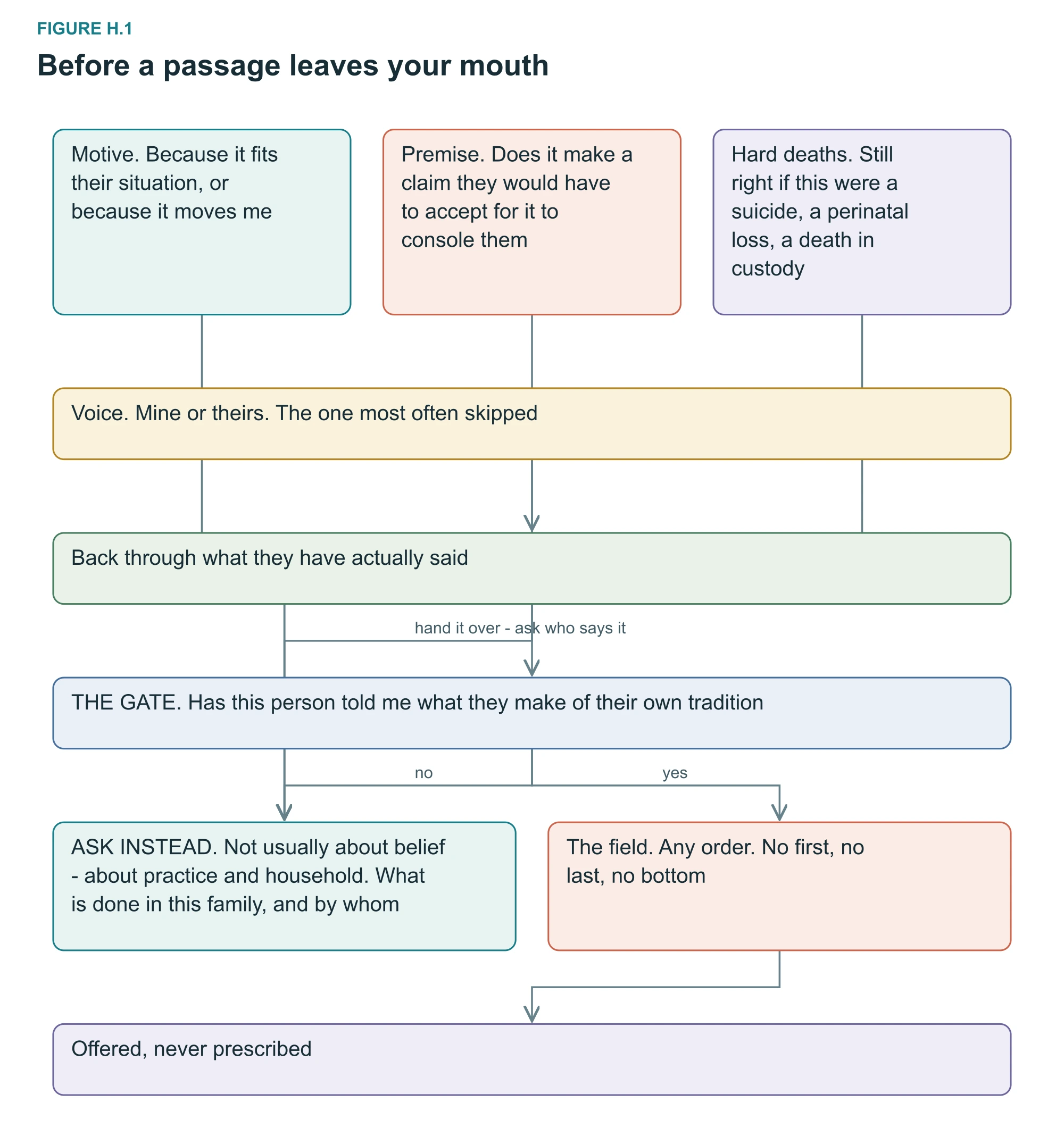
Figure H.1. Before a passage leaves your mouth.
H.2 The editions this appendix was read from
A passage a caregiver cannot trace is a passage a caregiver should not use, and a book that gives scripture without an edition invites the reader to treat it as authorless. Everything quoted below was read at first hand in one of the editions in Table H.2. Two of the four are old enough to be out of copyright and may be quoted at length; the other two are not, and are quoted only in short lines with attribution.
Table H.2. The editions read at first hand for this appendix, and what may be reproduced from each.
Text | Edition read | What it is | Reproduction |
|---|---|---|---|
Kathopanisad | Vasu (1905), with Sanskrit text, anvaya, vrtti, word meaning, translation, notes and index; Panini Office, Allahabad. Digitised from a Harvard College Library copy | A complete scholarly edition which prints Vasu's own translation and, marked separately, the readings of Sankara, Madhva and Ramanuja. Its commentary is Theosophically inflected - the volume is dedicated to Annie Besant - which shows in the glosses rather than in the translation | Public domain. Quotable at length. The Devanagari did not survive digitisation and is not reproduced here |
Garuda Puranam | Dutt (1908), Society for the Resuscitation of Indian Literature, Calcutta. Digitised from a Cornell University Library copy carrying the statement that no copyright restrictions are known | The Purva-khanda only, in 248 chapters, and see H.6: the editor expunged the death-and-afterlife portion as spurious, so this is not the part of the book that is read after a death. It has chapter numbers and no verse numbers | Public domain. Quotable at length. Citable only by chapter and printed page, never by verse |
Patanjala Yogasutra with Vyasa Commentary | Bengali Baba (1949), 2nd edn, Poona | Sutra, translation and Vyasa's bhasya, with the translator's own footnotes. Sutra numbering is standard | The volume carries the bare line all rights reserved, with no year and no holder beyond the publisher. A 1949 translation is separately protectable. Short sutra lines with attribution only; the commentary is summarised here and not reproduced |
Isa Upanisad | Aurobindo (2003), Isha Upanishad, The Complete Works of Sri Aurobindo, vol. 17; Sri Aurobindo Ashram Publication Department, Pondicherry. Digital edition with Devanagari, translation and commentary | Sri Aurobindo's final translation and analysis, the one work in the volume published in his lifetime, followed by ten earlier incomplete commentaries. The translation is an interpretive one: Fosterer, Ordainer and Will are his readings of Pusan, Yama and kratu, and his footnotes say so. Used in this appendix for one passage only, verses 15 to 18 (H.3) | The volume carries the notice Sri Aurobindo Ashram Trust 2003. Short lines with attribution only, presented as Aurobindo's reading and not as the text; the commentary is not reproduced |
Quotations and plain-language renderings. The editions used are identified below. Beside each quotation is a plain rendering in this book's own words, intended for spoken care and not as an authoritative translation.
Three cautions about editions in general, each of which cost something.
An edition can be a different book from the one its title promises. The edition of the Garuda Purana examined here is missing the portion that gives the text its reputation and its pastoral use, because its 1908 editor judged that portion an interpolation and removed it. Nothing on the cover says so. H.6 is written around that discovery rather than in spite of it.
A familiar English phrase is often not what any edition prints. Two passages below are known in English through wordings Vasu does not use, and in both cases the familiar version is a commentator's reading that he reports rather than his own translation. Where that is so it is said at the passage. A caregiver who quotes the familiar English and attributes it to the Upanisad is quoting a tradition of translation, which is a real thing but a different thing.
A scanned book may not be a text at all. Four of the nine scripture files in this project's archive yield no machine-readable text whatever, and one of the four is the Yoga Sutra. What appears below from it was recovered page by page by optical character recognition.
H.3 For the person who is dying
The Kathopanisad is the tradition's set piece on death, and it earns the place: it is a conversation between a boy and Death himself, and its subject is exactly the question a dying person asks. But it is a philosophical dialogue, not a pastoral text, and the difference matters at a bedside. Each passage below carries a note on what it asks of the hearer, because that is the variable a caregiver is actually choosing on.
Numbering. Vasu prints two adhyayas of three vallis each, the vallis numbered continuously I to VI, so his Valli VI is the standard 2.3. His Mantra headings are sometimes mis-numbered in the digitisation and were checked against content rather than taken from the heading.
The doubt itself: Katha 1.1.20
Naciketas' third boon, and the only one he will not trade. Vasu's translation:
There is this doubt, when a man dies, some say that the soul exists, others that it does not. May I know this being taught by thee. Among the boons this is the third.
Plainly: there is a doubt about a man who has died - some say he still is, others say he is not. Let me know this. Of the three boons, this is the third.
What it asks of the hearer: nothing. It states the question and does not answer it. This is the most under-used passage in the appendix, and the reason to know it is that it puts the tradition's own most authoritative text on the side of the person who does not know. A care recipient who says that they have no idea what happens and that it frightens them has not fallen short of their tradition. They have asked its central question in its own words. Saying so is often worth more than any answer.
The image that asks for no assent: Katha 1.1.6
From the passage on Naciketas' composure. Vasu:
The mortal (man) decays like corn, and is born again like corn.
What it asks of the hearer: an agricultural image and no metaphysics. There is no self here to be distinguished from a body, no doctrine that must be taken on, nothing a doubting or secular person would have to concede. It says only that this is what happens to living things, and that the speaker has looked at it steadily. For a dying person who wants their tradition in the room without being asked to believe anything in particular, this is very often the passage that works, and it is almost never the one a caregiver reaches for.
The first thing the dying boy asks for: Katha 1.1.10 to 11
The first boon, and it is not for himself. Vasu:
O Death! so that my father Gautama be calm, of thought, pleased in mind, free from anger towards me, and that he may greet me with old affection, when sent back by thee, this is the first of the boon I ask.
And Death's answer:
As he was pleased with thee before, so with old affection Auddalaki Aruni will be inclined towards thee. Through my favour, he will have pleasant sleep in future nights, free from anger towards thee, seeing thee freed from the mouth of death.
Why this passage is in an appendix for caregivers, and why it is placed before the famous one. The first thing the dying child asks Death for is that his father should be at peace and should sleep at night. That is the text's own word to a bereaved parent, and it is spoken by the dying person rather than about them. It is also, unlike almost everything else in this appendix, a passage that a dying person can use to say something to their own family. Where a patient is worried about what their death will do to a parent, a spouse or a child - which is, in this book's case material, the commonest content of a dying person's distress - this is the passage that is about that.
The self in the heart: Katha 1.2.20
Vasu:
More subtle than the subtle, greater than the great, the Atman of this Jiva is placed in the cavity: he who is free from desires and beyond grief, beholds by the tranquillity of his senses that majesty of the soul.
What it asks of the hearer: a good deal. It makes seeing conditional on a composure most dying people do not have and should not be asked for. Offered carelessly it is heard as a standard the hearer is failing. Offered as a description of where the tradition says to look, rather than as an instruction to look there now, it does better.
Not by argument, not by much reading: Katha 1.2.23
Vasu's own translation reads the second half actively:
This Atma is not to be obtained by many explanations, nor by the Intellect, nor by much learning. It can be obtained by the Soul by whom it is desired. His soul reveals its own truth.
A citation trap. The version most English readers know - whom It chooses, by him It is gained - appears in this edition only as Madhva's reading, printed alongside and marked as his. Do not cite Vasu, or the Upanisad flatly, for the election reading. If you want it, cite it as Madhva's.
What it asks of the hearer: nothing it does not already have. This is the tradition's own statement, from near the top of the corpus, that the thing is not reached by being clever or well read. For a person distressed that they never studied, that they do not understand their own religion, or that a more observant relative knows it better, it is a direct answer.
The chariot: Katha 1.3.3 to 4
Vasu:
Know thou the Atma as seated in the chariot, the body even as the car; Buddhi is the driver and Manas as the reins. They say the senses are the horses and the objects their roads; the wise say that the experiencer is the Atma joined with sense and mind.
What it asks of the hearer: a picture, and it is the tradition's most portable one. It is useful in a specific and limited way: it gives a person a vocabulary for saying that the body is being driven badly, or that the horses have bolted, without saying anything about themselves that they would have to defend. Caregivers working with people who cannot yet speak about their situation directly often find that this is a way in. It is not a consolation and should not be offered as one.
Arise, awake: Katha 1.3.14
The most quoted line in the text, and this edition does not say what the famous version says. Vasu:
Awake, arise, having approached the great teachers, learn. The sages say that that hard path is as difficult to travel on as is the sharp edge of a razor.
A second citation trap. Vasu translates varan as the great teachers, not as boons. The popular English, in which one has obtained one's boons and should now understand them, is again Madhva's alternative rather than this edition's text.
What it asks of the hearer, and a warning. This is an exhortation, and at a deathbed it is almost always the wrong register. Its home is formation rather than dying: it belongs in the caregiver's own practice, and in the material on the caregiver's sadhana, far more than in a sickroom. A dying person told to arise and awake may reasonably ask what is being asked of them, and there is no good answer.
The moment of departure: Katha 2.3.16
The one passage in this appendix with direct implications for what a caregiver does with their hands. Vasu:
There are a hundred and one arteries of the heart and one of them pierces through the head. By that one going upwards, he obtains deathlessness. The others become the means of carrying the soul to diverse lokas, at the time of going away.
Why a caregiver needs this one even if they never say a word of it. This verse is behind widespread deathbed practice: attention held at the crown, the head kept clear and untouched, the dying person not disturbed or moved unnecessarily in the last hours. A caregiver who does not know it may read a family's insistence on these things as anxiety to be managed. It is not; it is a practice with a text behind it, and the family is doing something rather than merely worrying. Know it in order to make room for it. Whether to say it aloud is a separate question and the answer is usually no.
The closing formula: Katha 2.3.17
Vasu:
The Purusha of the size of a thumb, the inner Atma of all beings, is always seated in the heart; one should extract that from his body, like the stem from its sheath, with patience. That should be known as the undying seed: that should be known as the undying seed.
The doubling is the Upanisad's way of marking the end of a teaching, not a printer's error. The word rendered with patience is dhairyena, and at a long dying it is the most useful word in the sentence: the text's own instruction is that this is not to be hurried.
The verses said at the deathbed: Isa 15 to 18
The one passage in this section that is not from the Katha, and the one whose place at a deathbed is recorded as a custom rather than argued from the text. The Isa Upanisad closes with four mantras that change register: after seventeen verses of teaching, a person prays. The fifteenth asks that the golden lid be lifted from the face of truth; the sixteenth asks the sun to gather in its rays so that what stands behind them can be seen; the seventeenth turns to the body; the eighteenth asks to be led by the good path. Sri Aurobindo's rendering of the seventeenth, which is his reading and is presented as such (Aurobindo 2003, p. 10):
The Breath of things is an immortal Life, but of this body ashes are the end. OM! O Will, remember, that which was done remember!
The Sanskrit as the edition prints it, vayur anilam amrtam athedam bhasmantam sariram; om krato smara krtam smara. Krato is a vocative, and Will is Aurobindo's word for it; other translators say mind or intellect. Plainly: the breath goes back to the wind that does not die; this body ends as ashes; mind, remember, remember what has been done.
What it asks of the hearer. Less than it appears to, and that is why it is said. The verse is in the first person and is a prayer, not a doctrine: nothing in it has to be conceded, and a person who hears it recited is not being told what death is but being accompanied through a form of words that ends by asking their own mind to remember their own life. That last movement is the one to notice. A caregiver who knows the verse will recognise, in a family reciting it, something closer to a life review than to a resignation.
What the custom rests on, stated exactly. That these verses are recited to the dying is recorded in this project's library once, by a college chaplain writing for other chaplains, who says the section is often recited to those about to pass away and offers it to end-of-life carers and, as a life-review tool, to campus and prison ministry (Sharma 2020, pp. 126-127). The report gives no source for the custom and cites no scholarship; it is a practitioner's testimony and is cited here as that, never as evidence of how widespread the practice is or of what any household will do. Where a family recites it, this is what they are reciting. Where they do not, this appendix gives no warrant to introduce it.
Do not be the one who brings ashes into the room. The seventeenth verse names the end of the body in a word, and in a hospital room where cremation may be days away and its arrangements contested, that word said by a caregiver rather than by the family lands as a pronouncement. Said by the family it is a prayer. The difference is not in the text.
H.4 For the bereaved, and the verse most often said
The verse, and the harm it does
There is one verse that a caregiver working with Hindu families will hear more than any other at a death, will be tempted to offer more than any other, and should offer less than almost any other. It is Katha 1.2.18. Vasu:
He is not born, nor doth he die; nor having been, ceaseth he any more to be; unborn, perpetual, eternal, and ancient, he is not slain when the body is slaughtered.
It is magnificent, it is central, it is quoted at Hindu funerals across the world, and a version of it stands in the Bhagavad Gita where far more people meet it. There is nothing wrong with the verse.
What is wrong is the room it gets said in. Read the passage around it in the edition and its work is visible: it sits inside a doctrinal argument, answering a student's metaphysical question, and it is immediately followed by the verse about the slayer and the slain. Nothing in it is addressed to a mourner. Nothing in it is consolation. It is an assertion about what the self is, made to someone who asked what the self is.
Offered to a mother three days after her daughter's death, that assertion becomes something else. It becomes a sentence that says the thing she is grieving did not occur. She will usually be too polite to say so. She will often be a person who believes the verse, which makes it worse rather than better, because now she has been told by her own tradition, in a caregiver's voice, that her grief is a failure of understanding.
Table H.3. One verse, three rooms: what Katha 1.2.18 does in each, and what to offer instead.
The room | What the verse does there | What is happening that the verse misses | Better from the same corpus |
|---|---|---|---|
A funeral, said by the family's own officiant, in Sanskrit, in the order of the rite | Works as intended. It is liturgy, it is in the right voice, it is placed where the tradition places it, and it consoles by locating this death inside something older than it | Nothing. Do not interfere, and do not translate it for anyone who has not asked | Nothing needed. Your job here is to be present and out of the way |
A ward, said by a caregiver to a bereaved parent in the first days | Tells a parent that the death she is standing in did not happen in the way she thinks it did. Its metaphysics is true within the tradition and its pastoral effect is a denial of her loss | She is not asking what the self is. She is asking whether she could have done something, and whether anyone will remember the child | Katha 1.1.10 to 11: the dying boy's first request is that his father be at peace and sleep at night. Same text, same authority, and it is about the survivor rather than about the ontology |
A conversation weeks later, raised by the bereaved person themselves | Can be exactly right, because they brought it. Now the question is what they make of it, and whether they are consoled by it or fighting it | Some people quote this verse against themselves - as the thing they are supposed to feel and do not | Katha 1.2.22, which claims far less: that one who knows this does not grieve. Ask which of the two they are being asked to be, and by whom |
The general rule the table is an instance of, and it applies well beyond this verse. A passage that asserts something about reality consoles only a person who holds it, and consoles them only when they raise it. A passage that describes a person - what the wise one does, what the frightened one asks, what the dying boy wanted - can be offered much more safely, because the hearer is free to recognise themselves in it or not.
The smaller claim, and why it is the better one
Katha 1.2.22, Vasu:
The wise, having known that Self as resting unembodied in these changing bodies, as great and all-pervading, becomes fully liberated.
The verse ends, in the Sanskrit, on the word for grieving, negated: the wise one does not grieve. The same line comes again at 2.1.4, of what witnesses both dreaming and dreamless sleep.
Set 1.2.18 and 1.2.22 side by side and the difference is the whole of this appendix's argument. 1.2.18 says that the death did not really happen. 1.2.22 says only that a person who has seen a certain thing is not destroyed by it. The first is a claim about the world and it contradicts what the mourner can see. The second is a claim about a state of mind, it contradicts nothing, and it leaves the mourner free to say that they have not reached it. Offer the passage that leaves room for the answer no.
The body as a dwelling: Katha 2.2.1
Vasu:
Having meditated on the unborn, true minded Lord of the eleven-gated city, a man does not grieve, but becoming Jivan-mukta he is thus liberated.
The eleven gates are the body's openings, and the image is of the body as a place one lives in. Its use is narrower than the death material and it is worth knowing: it is for the person whose own body has become an enemy or a stranger to them - after mutilating surgery, in a long degenerative illness, in the ordinary indignities of a hospital admission. It gives them a way of saying that this is where they live and it is not what they are, without requiring them to renounce the body or to pretend it does not matter.
The one about heaven, and the honest thing to say about it
Katha 1.1.12, Vasu:
In Heaven-world there is no fear. O Death, thou art not there and decay does not frighten. Crossing over both hunger and thirst, the sorrow-transcended rejoices in Heaven-world.
This is the passage a caregiver is most likely to be asked for directly, by a family that wants to be told the person is somewhere better. It says what they want said. The caution is not about the verse but about who says it. A caregiver who offers this on their own initiative is making a promise about the fate of the dead in a tradition they may not share and in a case they cannot know. A caregiver who reads it because the family asked for it is doing something else entirely. Ask them to name what they want read, and read that.
Navigation
Table H.4 is the page most caregivers will use most often. It runs from a situation to a passage, not the other way round.
Table H.4. Where a question lives: from what is happening in the room to what is in this appendix.
What is happening | Passage | What it does | Do not use it if |
|---|---|---|---|
A person is frightened and does not know what happens after death | Katha 1.1.20 (H.3) | Puts the tradition's own central text on the side of not knowing. Makes the question respectable rather than a lapse | You are about to follow it with the answer. The passage's whole value is that it stops there |
A dying person wants the tradition present but will not be asked to believe anything | Katha 1.1.6 (H.3) | An image from farming. No metaphysics, nothing to concede | They have asked a direct question. Then answer the question |
A dying person is distressed about what their death will do to a parent or a child | Katha 1.1.10 to 11 (H.3) | The dying boy's first request is for his father's peace and sleep. It is about them, and it is spoken by someone in their position | The relationship is estranged and the passage would read as an instruction to reconcile |
A dying person feels they never studied and do not understand their own religion | Katha 1.2.23 (H.3) | Says, from the top of the corpus, that this is not reached by learning | You are about to explain the verse at length, which undoes it |
A family is reciting at the bedside and you want to know what you are hearing | Isa 15 to 18 (H.3), and ask which text | A prayer in the first person whose last movement asks the dying person's own mind to remember its own life. Recited to the dying by a custom this book can only record as one chaplain's testimony | You would be introducing it. The verse names ashes, and that word belongs to the family, not to the caregiver |
A person's own body has become a stranger or an enemy to them | Katha 2.2.1 (H.4) | The body as a dwelling with eleven gates | They are being asked by others to detach from the body, and would hear it as agreement with them |
A bereaved person raises the deathlessness of the self themselves | Katha 1.2.22, then ask (H.4) | The smaller claim: not that death is unreal, but that one who has seen a certain thing is not destroyed | You are supplying it. See Table H.3 |
A family asks for something to be read | Ask them which text, then read what they name | Keeps the choice and the authority with them | Never substitute your own selection for the one they named |
A household is reading the Garuda Purana and someone is frightened by it | H.6, and the counter-passages inside the same book | Answers the text from inside the text, which is the only answer with standing in that room | You have not read what is actually being read. Ask which portion and in what language |
The caregiver is the one struggling to stay steady | Yoga Sutra 1.33 and 2.16 (H.5) | The classical statement of the four attitudes, and the definition of what is even avoidable | You are using it to avoid supervision. The text is not a substitute for a colleague |
A death was a suicide, and the family invokes what scripture says | H.6, both passages | The edition examined here denies mourning and rite to suicides in one chapter and offers the rescue rite for them in another. The contradiction is the useful part | You would be using it to win an argument with the family rather than to widen what is available to them |
H.5 For the caregiver's own stance
Most anthologies of scriptural passages for care are anthologies of what to say to the sick. The tradition also addresses the one doing the caring, and does it more precisely than the pastoral literature usually manages. Three sutras carry most of the weight.
The four attitudes: Yoga Sutra 1.33
The classical statement of the caregiver's stance, and the passage this whole book could be said to gloss. Bengali Baba's translation, exactly as printed:
The transparency of the mind comes from the development of friendship, compassion, joy and neutrality regarding the spheres of pleasure, pain, virtue and vice respectively.
Vyasa's commentary, summarised rather than reproduced, spells out the pairing: friendship toward those enjoying happiness, compassion toward those suffering, gladness toward the virtuous, and an even mind toward the vicious.
Four things to notice, and the third is the one that matters most in this book's case material.
The pairing is specific, and it is not a general instruction to be nice. Each attitude is matched to a class of person. The instruction is that a mind which meets happiness with friendship, suffering with compassion, virtue with gladness and wrongdoing with an even mind becomes clear. It is a description of a working instrument, not a list of virtues.
Gladness toward the virtuous is the one nobody teaches. A caregiver is trained to meet suffering with compassion and rarely trained in what to do with a person who is doing well, who is coping, whose family is functioning. The professional habit is to look for the problem. The sutra says the answer to another's flourishing is gladness, and a caregiver who cannot manage that is not neutral toward it - they are usually looking for what is wrong.
Neutrality toward the vicious is not forgiveness and not approval. This edition renders upeksa as neutrality; elsewhere in this book the term is glossed as equanimity and the glossary records, correctly, that it is explicitly not indifference. The distinction that matters at work is this: the sutra does not ask a caregiver to feel warmly toward a person who has done harm, nor to overlook the harm. It asks that the caregiver's own mind not be disturbed into taking a side, which is the condition of being able to remain in the room at all. Caregivers in detention settings, in forensic services and in cases involving violence within a family meet this constantly, and the honest report from that work is that the fourth attitude is the hardest of the four and the one most often faked.
What the sutra promises is not virtue but clarity. Citta prasadana, which this edition renders as transparency of the mind: the attitudes are prescribed because they make the instrument clear, not because they make the practitioner good. That is a working claim, and it can be tested against a bad week.
What is even avoidable: Yoga Sutra 2.16
Bengali Baba, exactly as printed:
The pain which is not yet come is the "Avoidable".
Vyasa's commentary, summarised: pain that is past has been spent in the experiencing of it and cannot be avoided; present pain is already being undergone and so cannot be avoided either; only what has not yet arrived falls into the category.
Why this belongs in a caregiver's appendix rather than in a philosophical one. It is the most useful sentence in the corpus for a person who cannot stop trying to fix things. It draws a line that a great deal of unnecessary professional distress sits on the wrong side of. The suffering already in the room is not a failure of the caregiver's, and it is not a problem awaiting a solution; it is being lived through. What can be worked on is what has not happened yet. A caregiver who has internalised this stops trying to undo a death and starts attending to the family's next six months, which is the only place their work can land.
The trap in it, and it is a real one. The same sentence can be used to excuse a caregiver from sitting with pain they find unbearable, on the ground that it cannot be avoided and is therefore not their business. That is a misreading with a long history. The sutra is about what can be avoided, not about what deserves attention; nothing in it licenses withdrawal from present suffering, and the four attitudes of 1.33 forbid it directly.
Cultivating the opposite: Yoga Sutra 2.33
Bengali Baba, exactly as printed:
For the prevention of evil ideas, the habituation of the mind to the development of contrary thoughts.
Vyasa's commentary works it out at length as a self-address, and its psychological realism is worth noting: it does not tell the practitioner to stop having the thought. It tells them to develop the countervailing thought deliberately, as a habit, and it assumes the first thought will keep arriving.
Its use in care is narrower than it looks. It is not a technique to offer a distressed care recipient, and it is not the tradition's version of cognitive restructuring, though it is often presented that way in the applied literature. It is written for a practitioner working under a vow, about the thoughts that come to that practitioner. In this book it belongs with the caregiver's own practice, and its honest use is on the caregiver's own contempt, avoidance and fatigue - the thoughts a professional has about a difficult care recipient and does not say aloud. Table H.5 puts that use on the page by reading each of the four attitudes against the professional failure it names, so the instrument works on the caregiver's own conduct and is never something to be offered to the person in front of them.
And the definition itself: Yoga Sutra 1.2
Bengali Baba, exactly as printed:
(The final end of) Yoga is the restraint of mental operations.
The parenthesis is the translator's interpolation and is worth keeping, because it changes the sutra from a definition of a state into a statement of what the practice is aimed at. Appendix D treats the practical material; the sutra is given here because a caregiver who offers a breathing exercise is standing, whether they know it or not, inside a system with an end in view, and the end is not relaxation.
Table H.5. The four attitudes as a working instrument, with the professional failure that corresponds to each.
The person in front of you | The attitude the sutra prescribes | What it looks like in practice | The professional failure it names |
|---|---|---|---|
Someone who is happy, coping, whose family is functioning | Friendship | Meeting them as a person rather than as a case with no presenting problem | Hunting for the pathology, or discharging them because there is nothing to do |
Someone who is suffering | Compassion | Staying, and not converting the suffering into a task | Fixing, which is the commonest way of leaving the room while still in it |
Someone doing well by their own lights, or acting rightly at cost to themselves | Gladness | Saying so, plainly, without turning it into an assessment | Faint praise, or treating a person's strength as a resource to be spent by the service |
Someone who has done harm | An even mind | Continuing to be able to work with them, without approving and without pretending the harm did not occur | Either siding against them, or the softer failure of siding with them to stay comfortable |
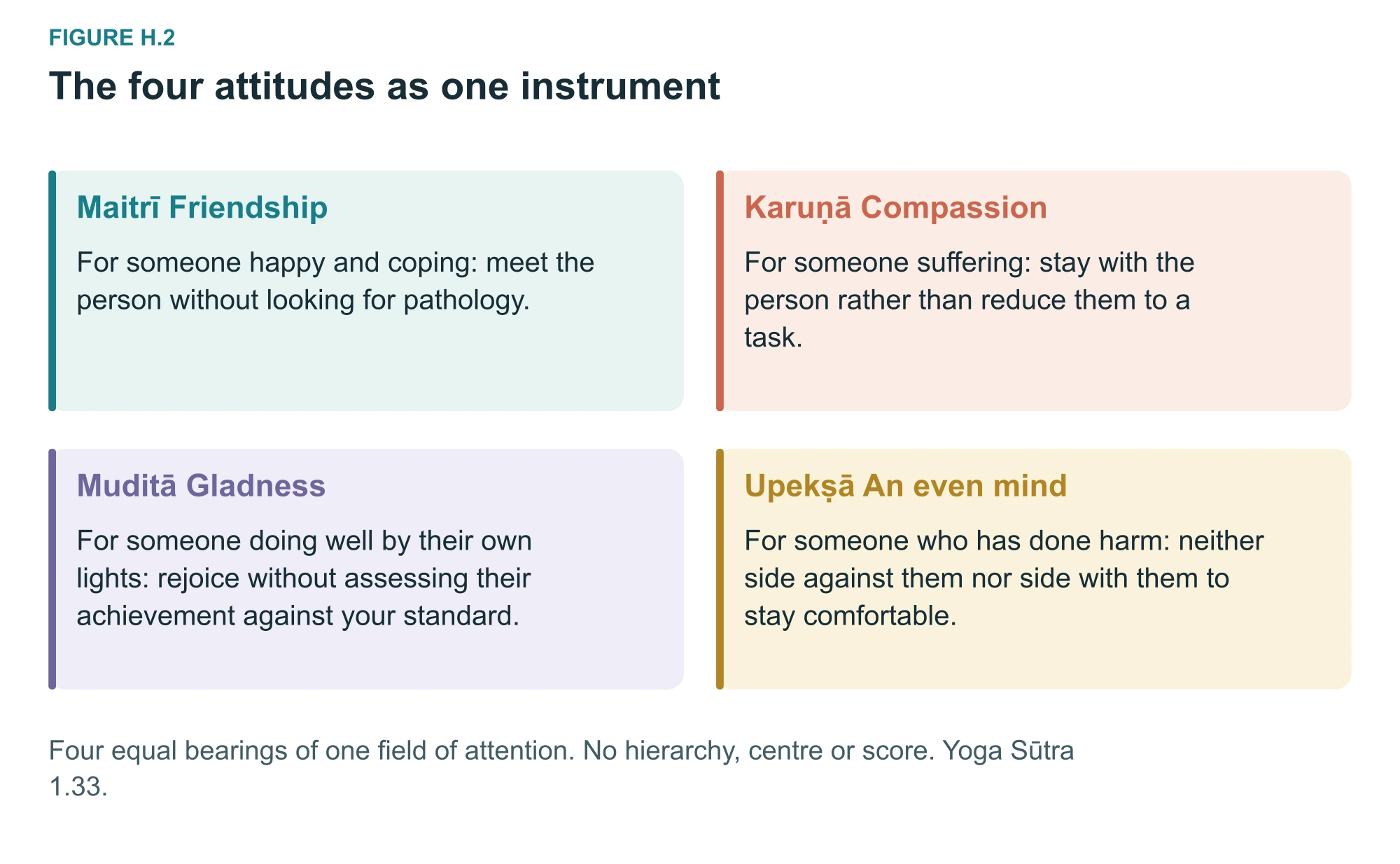
Figure H.2. The four attitudes as one instrument.
H.6 The book that is being read in the house
Of all the texts in this appendix, the Garuda Purana is the one a caregiver is most likely to walk into rather than reach for. In many Hindu households it is read aloud in the days after a death, and a caregiver who has never heard of it will not understand what is happening in the room, why the household is organised the way it is, or why somebody in it is frightened.
This section is therefore written differently from the others. It is less about passages to offer and more about a text to recognise.
The finding that governs the section, and it is a limitation of this book
The copy of the Garuda Purana in this project's archive is not the part that is read after a death. Dutt's 1908 edition contains the Purva-khanda only. The editor removed the Pretakalpa, the death-and-afterlife portion, and says so in his own preface: he judged it an interpolation and an unnecessary repetition, and states that all spurious portions have been expunged. He also silently cut a block of sraddha procedure and cross-referred the reader to his translation of a different Purana.
That has two consequences and both are stated here rather than hidden.
First, some of what a caregiver most needs is not in this appendix. The deathbed chapter, the day-by-day sequence in which offerings are understood to build a body for the departed, and the long circumstantial descriptions of suffering after death all belong to the portion this edition removed. Nothing below should be read as an account of them.
Second, and more seriously for anyone using this appendix in the field: this section understates how frightening the Garuda Purana can be in a room. The material that frightens families is largely in the missing portion. What survives in this edition is much milder than the book's reputation, and a caregiver who took this section as a complete picture would be underprepared. That is said here plainly.
What the text says is happening
The doctrinal core, and the reason the household is doing what it is doing. Dutt, Chapter CCXXXIV, printed p. 743:
A man, after quitting his gross material frame, assumes a subtler body in the higher ethereal regions, whence he is carried by the emissaries of death to the mansion of their lord, in the course of a period of twelve days. The offerings, and libations of water containing sesame, which his friends offer unto him, a deceased person takes in the mansion of death.
Read that as a caregiver rather than as a student of religion and the household becomes legible. The dead person is understood to be travelling, and to be fed on the journey by what the family offers. That is why the offerings are daily, why they cannot simply be postponed to a convenient weekend, and why a family prevented from making them - by hospital procedure, by distance, by a body held for a post-mortem, by an institution that does not understand what is being asked - may be far more distressed than the practical inconvenience explains. They are not performing a custom. On their own account they are feeding someone who is depending on it.
Note also that this edition says twelve days. Elsewhere it prescribes offerings for three. Ten and thirteen day schemes are widespread in practice and neither appears here. Do not tell a family how many days there are. Ask.
What the rites are said to be for
The volume gives at least five purposes, and they do not sit comfortably together: the expiation of the performer's own sins; reward to the performer; feeding the departed in transit; the salvation of the departed; and rescue.
The rescue register is the one worth a caregiver's attention, and it is the strongest thing in the book. In the Gaya invocation at Chapter LXXXV, printed pp. 230 to 233, the offering is made on behalf of a long list of the dead who are otherwise unprovided for: the stillborn, infants who died before teething, those who died by suicide or by violence, those whose bodies were cremated in unconsecrated fire or never cremated at all, those whose names the offerer has forgotten, and those now in hell or in an animal or plant birth.
That list is, almost exactly, the list of losses a caregiver in Dutch institutions meets as unresolved grief. A family who believes a death was of a kind the tradition cannot accommodate is, on this text's own showing, wrong: the tradition has a rite specifically for exactly that. This is not a caregiver's opinion offered against a family's religion. It is inside the book.
There is a companion register a caregiver should be ready for, because it can wound. The volume also promises the performer of the rites long life, good repute, health, and freedom from bereavement. A family that has just been bereaved can hear that as an accusation.
Mourning, and the sentence to know before the family says it
Chapter CVI, printed p. 306:
The death of a suicide or of a wine-drinker, should not be mourned for, nor the rites of Udaka-kriya, etc., should be done unto their spirits. The death of any friend or relation or that of any man should not be mourned, nor should one indulge in an obstinate grief therefor, since life on earth is but transitory at the best.
Two rulings, and they must be kept apart. A specific exclusion: those who die by suicide, and habitual drinkers, are denied both mourning and the water-libation rite. And a general instruction: no death is to be mourned, and nobody should give way to persistent grief, because life is transient.
This is the most important passage in the volume for a caregiver, and it is a hazard in both directions. A bereaved family that holds the text authoritative may be carrying an internal prohibition on their own grief, and may hear a caregiver's invitation to grieve as an invitation to impiety. And a family bereaved by suicide may believe the text denies them both the rite and the mourning - which is to say, denies them the two things they most need, at the moment they most need them.
A caregiver walking into a suicide bereavement in such a household needs to know this sentence exists before the family says it. Table H.6 sets out what is available in answer, and the first row is the important one: the answer comes from inside the same book.
Table H.6. When the text is against the family: what stands beside the harsh passages, in the same volume.
The passage the family may be carrying | Where it is | What stands beside it, in the same book | How to use it |
|---|---|---|---|
Those who die by suicide are denied mourning and the water rite | Ch. CVI, p. 306 | The Gaya invocation offers the pinda expressly for those who died by suicide or by violence (Ch. LXXXV, pp. 230 to 233), and Ch. LXXXII, p. 216 says those who died without rites, or by robbers, beasts or snakebite, are reached by a sraddha performed for them at Gaya | The edition contradicts itself, and the contradiction is the pastorally useful part. Do not adjudicate it. Say that the book holds both, and ask who in the family, or which pandit, they would want to settle it |
No death should be mourned, and grief should not be indulged | Ch. CVI, p. 306 | The same chapter then prescribes an elaborate discipline of observance for the bereaved. The instruction is against despair, not against practice | The distinction is available in the text. A family need not choose between their grief and their piety, and a caregiver can say why without arguing with the passage |
Rites bring the performer freedom from bereavement | Ch. XCIX, p. 289 | Nothing softens this. It is a reward formula in a genre full of them | Do not raise it. If the family raises it against themselves, say what it is: a formula, in a list of formulas, not a verdict on this death |
The descriptions of suffering after death | Ch. LVII, pp. 148 to 149; Ch. CV, pp. 296 to 297; Ch. CCXXXIV, pp. 744 to 746 - about five printed pages in all in this edition, mostly lists of names | Ch. CCXXXVI, p. 753: Yama tells his messengers to leave alone those who are devoted, saying he has power over all except them. And the volume states that the sinner's suffering runs until the final extinction of the effects of prior acts - it is finite and consequential, not a permanent sentence | The answer to a hell passage is another passage, not reassurance from outside. The finiteness is the part families most often have not noticed |
A person died without the rites the family wanted, because of hospital rules, distance or cost | - | Ch. CCXXXVI, p. 754, where Yama's reproach names how little was required: the deity is propitiated with libations of water in the absence of any other articles of offering | This is the passage for the family who could not do what they wanted to do, and it is the one to have ready in a hospital |
A person was not observant, and the family fears it counted against them | - | Ch. CCXXXVI, p. 753: by singing the name, a man even in a moribund condition is absolved. And the fowler who kept a vigil without knowing he was keeping it, and was defended for it | Both make the requirement small and neither requires the dead person to have been devout in life |
The one sentence in the book to have by heart
Chapter CCXXXVI, printed p. 753:
By singing his name, a man, even in a moribund condition, is absolved of all sin, and progresses on his journey to Mukti as a liberated spirit, like an elephant liberated from the clutches of a lion.
Why this one and not another. It is the only line in the volume that functions as deathbed practice, and it makes no demand the dying can fail to meet. Not a rite that must be correctly performed, not a state of mind that must be achieved, not a life that must have been well lived. A name, said. For a family anxious that a death is arriving too fast, or in the wrong place, or to someone who had drifted from all of it, this is the passage that answers them from inside their own book.
The absence a caregiver should not misread
There is, in this text, no passage addressed to the bereaved as bereaved - nothing that acknowledges their pain and speaks to it. The nearest thing is the instruction not to mourn because life is transient, which is an argument against grief rather than a comfort in it.
That absence is worth stating because of what a caregiver might otherwise conclude from it. The consolation this text offers is consolation about the dead, not consolation of the living. It is busy with where the departed has gone and what will help them get there. A caregiver trained in a literature where consolation means addressing the mourner may read the household's absorption in the rites as avoidance, or as coldness, or as displacement activity. It is none of those. It is what this text gives them to do, and doing it is how a great deal of grief in this tradition is actually carried.
H.7 Passages not to offer, and what each is for instead
A reference appendix that only tells a caregiver what to say is half an instrument. Table H.7 is the other half. Every row in it names a passage that is genuinely part of the tradition, genuinely consoling in its own setting, and reliably harmful when a professional introduces it into a room where it was not asked for.
None of these is a passage a family may not use. The restriction is on the caregiver, and the reason is the one stated at H.0: a caregiver quoting scripture is not making a suggestion.
Table H.7. Do not introduce these; what to do instead.
Passage or move | Why not, when a caregiver introduces it | What it is legitimately for | Instead |
|---|---|---|---|
Katha 1.2.18, that the self is not born and does not die | Said to a fresh mourner it denies the loss, and said by a professional it does so with the authority of their tradition behind it. See Table H.3 | Liturgy, said by the family's own officiant in the order of the rite; and philosophy, in answer to a philosophical question | Katha 1.1.10 to 11, or 1.2.22, both of which are about a person rather than about reality |
Katha 1.3.14, arise and awake | An exhortation. To a dying or exhausted person it names a demand they cannot meet | Formation. The caregiver's own practice, and teaching | Nothing. This is a passage to keep for yourself |
The transience of life as a consolation, in any of its forms | It is an argument that the loss should matter less. Whatever it does for the speaker, on the hearer it lands as a correction | It is the tradition's word to a person preparing themselves, in advance, in their own practice | Ask what this person has lost, and stay for the answer |
Karma as an explanation of why this happened | It converts a bereavement into a verdict on the dead person or the family. It is also, in the tradition's own terms, a misuse: the doctrine is generally held as a law rather than a ledger anybody may read | Understanding one's own life, prospectively, in one's own practice | If the family raises it, ask what they take it to mean here. Their reading is what matters and it is rarely the crude one |
Any passage about heaven or the fate of the dead, offered on the caregiver's initiative | It is a promise about the fate of a particular dead person, made by someone with no standing to make it, in a tradition the caregiver may not share | It is exactly right when the family names it and asks for it | Ask what they would like read, and read what they name |
The Garuda Purana's hell passages, raised to explain a family's fear | Explaining a frightening text does not unfrighten anyone, and repeating it in a professional voice gives it more authority, not less | They belong to the text's account of consequence, and the same text limits them | The counter-passages in Table H.6, and the question of who in the family the frightened person would trust to settle it |
Yoga Sutra 2.16, that only future pain is avoidable, offered to a person in pain | In that room it says that what they are living through is not the sort of thing anyone attends to | The caregiver's own steadiness, and the discipline of not trying to undo what has happened | Keep it. Use it in supervision, on yourself |
Any passage in Sanskrit, recited by a caregiver who does not have the language | It performs a competence the caregiver does not have, in front of people who do, and it makes the encounter about the caregiver | - | Read the English if asked, or ask who in the family says it. A caregiver saying that they do not have the words but would like to hear them is doing better work than one who tries |
H.8 What this appendix does not yet contain
The limitations are stated because a reader is entitled to know the shape of what is missing.
The Bhagavadgītā is referenced throughout the book’s chapters but is not excerpted in this appendix. This selection is therefore not a complete scriptural reader for spiritual care; references to the Gītā should be followed in the relevant chapters and a suitable scholarly edition.
The Pretakalpa of the Garuda Purana is absent, for the reason H.6 gives, and with it the deathbed and post-death material that families actually encounter.
The Yoga Sutra material rests on optical character recognition of a scanned 1949 translation, and although the four sutras quoted came through legibly, the Sanskrit did not come through in any script and has not been verified against this edition.
The Upanisads are represented by one text. The Kathopanisad is the right one to start with and it is not sufficient. The Isa is drawn on for one passage only, the closing verses 15 to 18 at H.3, from Sri Aurobindo's translation, which is in copyright and is an interpretive one, so it is quoted in short lines and presented as his reading rather than as the text; the rest of the Isa, including the first verse and the eleventh that Appendix C's exercises use, is not treated here. The Brhadaranyaka's material on what happens at death, the Chandogya's tat tvam asi, and the Taittiriya's sheaths - which Chapter 25 and its pancakosa figure both rely on - are all owed.
Nothing here is from the Ramayana or the Mahabharata outside the Gita, although the epics are where most people meet the tradition and where a caregiver will hear a family's own reference points. The narrative material is often more use at a bedside than the philosophical, and this appendix has none of it.
There is no material from the bhakti traditions, no Tulsidas, no songs. In the Surinamese-Hindustani households this book's readers will mostly meet, that is very likely a larger omission than the absence of any Upanisad.
And a limit that is not a gap. This appendix will never be a source a caregiver quotes from at a bedside without knowing what they are quoting. That is not the ambition. The ambition is that a caregiver who meets a text in a house should be able to find out what kind of thing it is, what it is doing there, and what it is likely to be doing to the person in front of them. Appendix G says that it exists to make you a better listener rather than to spare you the conversation. This one exists to make sure that when you finally do say something, it is not the wrong sentence in the right words.