G.0 Before you use this appendix
This is not a lookup table for predicting a person.
That sentence is the condition on which everything that follows is safe to read. A caregiver who opens these pages, finds the row that matches what a care recipient has told them about their background, and infers from it what that person must believe, has performed exactly the summation this book exists to refuse. They have added one more attribute to a file. They have also skipped the only thing that actually matters, which is asking.
The appendix exists to make you a better listener, not to spare you the conversation. Its use is the reverse of prediction. When a person says something you do not recognise - a rite, a text, a name, a reason for a refusal - these pages are where you find out what kind of thing it is, so that your next question is a better one. They tell you where a question lives. They do not tell you what this person holds.
Chapter 3 states the same rule at the level of foundations, and states it about this material specifically: the Dharmic resources it brings alongside the Western literature are never a creed the patient must hold, and the Coherent View toward which care relates is always the cared-for's own, in their own terms (Chapter 3 §6). This appendix is that rule applied to reference material, which is where it is hardest to keep, because reference material is organised for looking things up and a person is not.
Three practical cautions follow from it, and they are worth having in mind on every page below.
• A tradition is not a distribution. Knowing that most Hindus in the Netherlands have Surinamese-Hindustani family histories tells you nothing whatever about the person in front of you, who may be the exception, may be the third generation, may be observant in a way the summary does not describe, or may hold none of it.
• What a person quotes is not always what a person holds. People reach for the authority they think a professional will accept. A care recipient who cites a text to a caregiver may be arguing, consoling themselves, invoking a dead parent, or testing you. The text is evidence of a move being made, not a readout of a belief.
• The limitations of this account should not be taken as limitations of the tradition.
How the appendix is laid out. G.1 gives the frame that governs the rest, and should be read before any of the tables. G.2 shows the shape of the corpus and what kind of authority each part carries. G.3 is the navigation table, and is the page most caregivers will use most often. G.4 sets out key positions as positions, each with an internal disagreement named. G.5 is the six darśanas. G.6 is practices in brief, cross-referred to Appendices D, E and F rather than duplicating them. G.7 is the life course. G.8 is diversity and diaspora, including the forms this book's readers will actually meet. G.9 repeats the caution, because a caution stated only at the front of a reference work is a caution nobody reads.
G.1 The frame: a seeking system, not a believing one
A reader trained on a creed-and-scripture model arrives at this material looking for the Hindu equivalent of a catechism and a canon. Finding neither, they conclude that the tradition is vague, and then either treat it as a set of colourful practices with no intellectual content, or - worse for care - fill the vacancy with whatever generalisation is to hand.
It is not vague. It is differently organised. The difference is structural rather than decorative, and Table G.1 sets it out as six load-bearing features. A tradition that argues with itself in public, across centuries, in preserved texts, and that keeps the losing arguments, is doing something other than believing.
The point for a caregiver is not scholarly. It is that each of these six features changes what a good question sounds like at a bedside. If anubhava, direct experience, is the final court rather than the opening assertion, then asking a person what they have found is not a soft alternative to asking what they believe; it is the question the tradition itself would put. If adhikāra holds that different teachings suit different seekers at different stages, then a contradiction between what a person says today and what they said last week is not necessarily confusion to be resolved. If neti-neti is a discipline of removing what is mistaken rather than adding what must be affirmed, then a person who tells you what their situation is not may be doing precise work rather than evading you.
Table G.1. Six features of a seeking system, and what each changes at the bedside.
Table G.1. Six features of a seeking system, and what each changes at the bedside. The right-hand column is the working column; the two middle columns are there so that a caregiver can see which of their own expectations is being corrected.
The feature | What it means | What a creed-model reader expects instead | What it changes in your next question |
|---|---|---|---|
darśana (a way of seeing) | A school is a standpoint from which reality is viewed, not a doctrine to assent to. The word means, literally, a seeing. | A denomination defined by what its members affirm | Ask what a person sees from where they stand, not which box they tick |
pramāṇa (means of valid knowing) | How a claim is known is asked before whether it is true: perception, inference, testimony, and further means disputed between schools | That the question of truth comes first and the question of warrant is technical | Ask how they know it. In care, the person's own word is sovereign, and this is the tradition's own reason, not an imported one |
adhikāra (fitness, eligibility, stage) | Different teachings suit different seekers at different stages, so contradiction between texts is not always a defect to be resolved | That inconsistency is error and must be corrected | Ask what this teaching is doing for this person now, rather than which of two teachings is correct |
anubhava (direct experience) | Experience is the final court rather than the opening assertion; a teaching is tested in a life, not only in an argument | That belief precedes and licenses experience | Ask what they have found, and treat the answer as evidence rather than as anecdote |
tarka and śāstrārtha (reasoning, structured public disputation) | Disagreement is a method, formalised and preserved, not a scandal to be managed | That internal disagreement indicates decline or schism | You may disagree with a person's reading without threatening their tradition, and they may disagree with their own tradition without leaving it |
neti-neti (not this, not this) | A discipline of removing what is mistaken rather than adding what must be affirmed | That a spiritual account is built by accumulating affirmations | When a person tells you what it is not, do not press for a positive statement. They may be doing the work exactly |
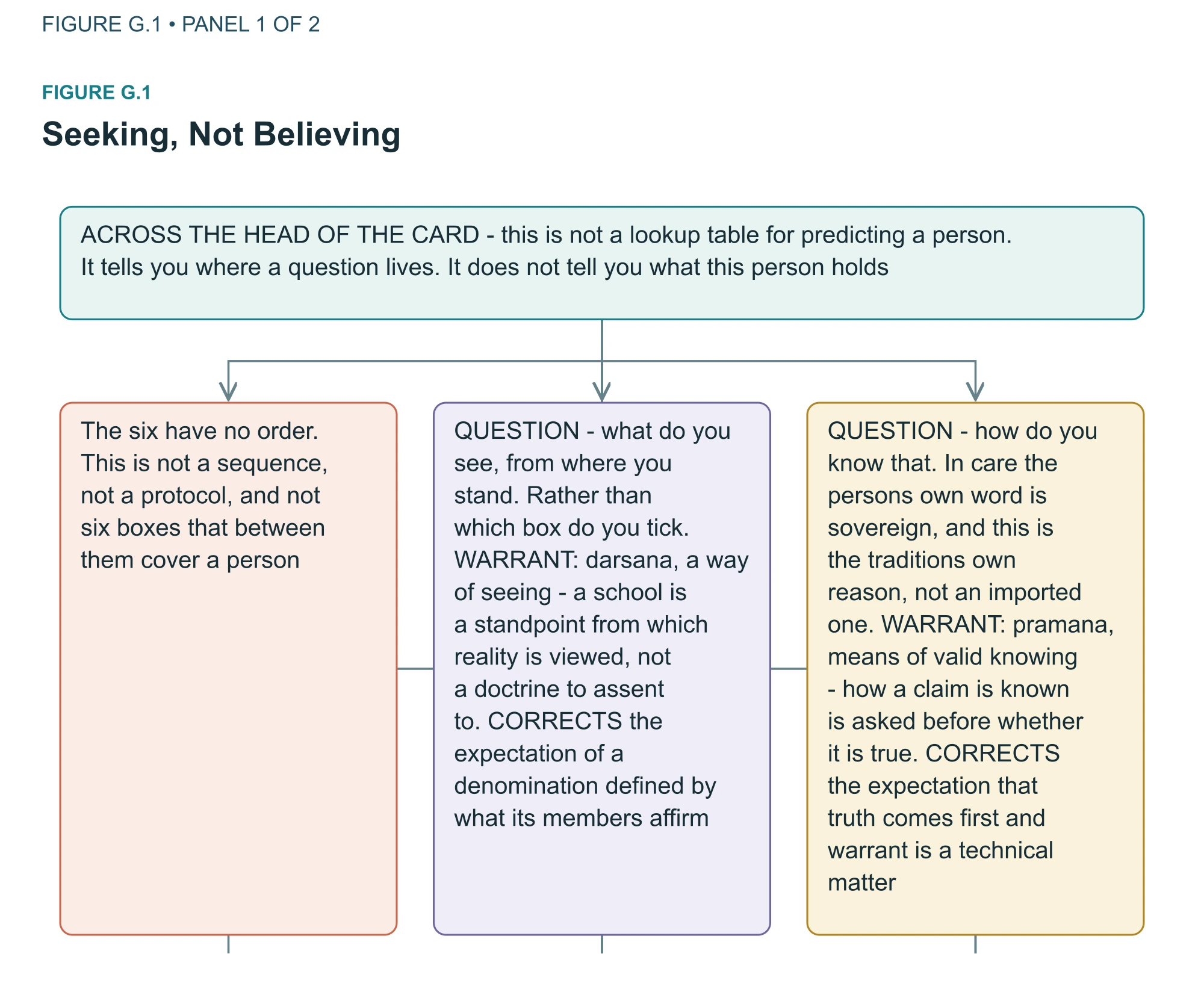
Figure G.1. Seeking, Not Believing. Panel 1 of 2.
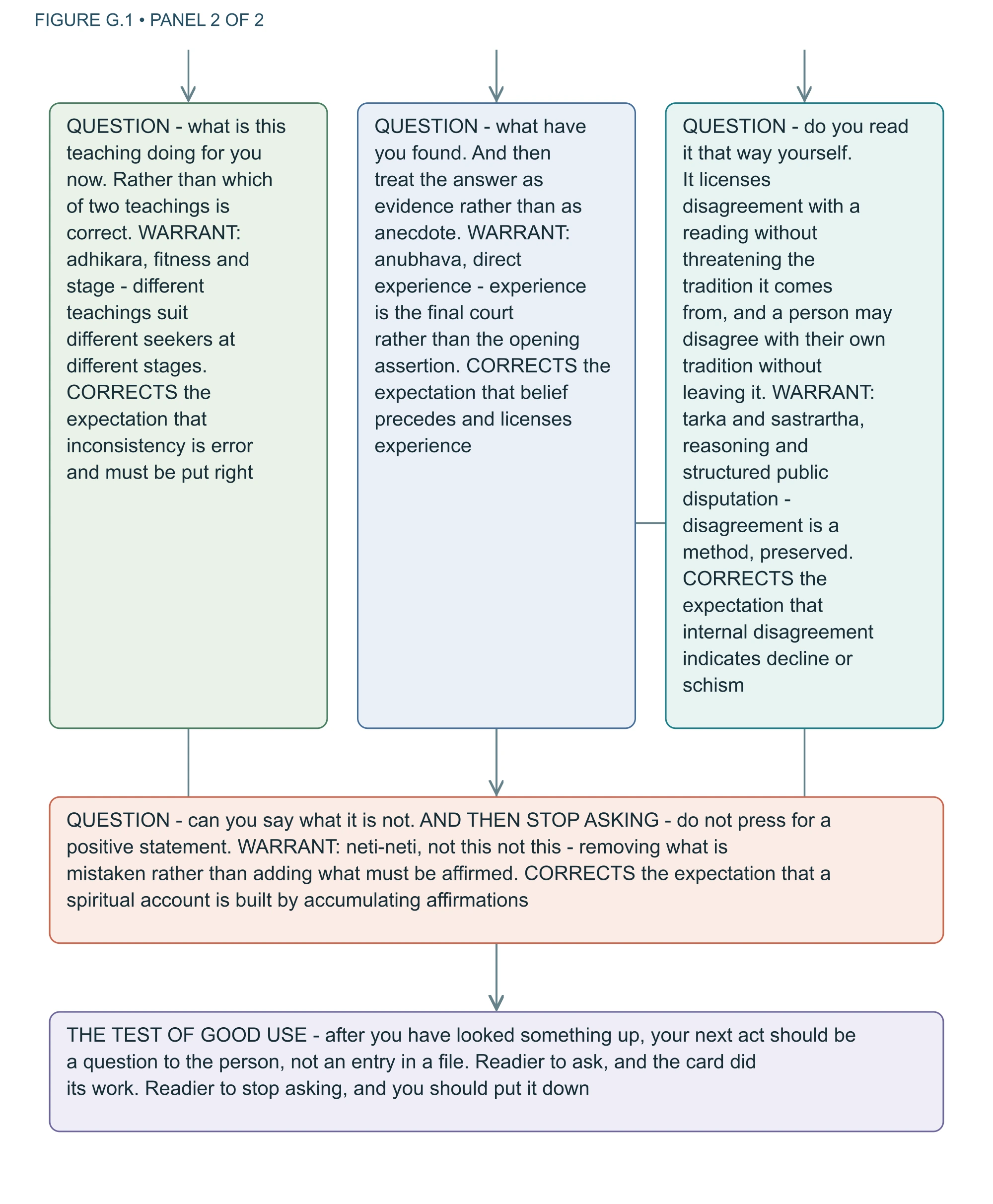
Figure G.1. Seeking, Not Believing. Panel 2 of 2.
One thing this section does not claim. It does not claim that Hindu traditions have no beliefs, or that nobody in them affirms anything. Plenty of people do, firmly, and a caregiver will meet them. The claim is narrower and it is about organisation: belief is not the axis on which the tradition is arranged, and a caregiver who uses belief as the organising question will get thin answers from people who have a great deal to say.
G.2 The shape of the corpus, and what kind of authority each part carries
A caregiver who thinks all of this is scripture in the same sense will misread everything a care recipient tells them. That is the whole reason this section exists. The corpus is stratified, the strata carry different kinds of authority, and the part most often quoted at Hindus by outsiders - the Dharmaśāstra - is the part most Hindus have never read.
That last point is not this book's polemic. It is stated in the OCHS and VU Amsterdam course text on Hindu chaplaincy, read at first hand for this appendix: the smṛti or dharmaśāstra texts are, in its words, sources very few Hindus have even heard of, rarely referred to in debates over ethics, and often considered irrelevant, so that a discussion built on them may be misleading (Sutton et al. n.d., printed pp. 71-72). The same text notes that the general Hindu attitude to a sacred text differs from what is encountered in Islam or Christianity: it is rare for a scripture to be studied word for word, and such texts are regarded as sources of guidance rather than as absolute authority (Sutton et al. n.d., printed p. 71).
Table G.2 sets out the two divisions with what belongs to each, and then adds three rows that are not divisions at all. The first of the three is the Prasthānatrayī (प्रस्थानत्रयी, the threefold starting point), which is a selection cutting across both divisions rather than a third one, and which is in the table because it is where the schools argued. The other two are the two places where the authority a caregiver assumes and the authority a family recognises come apart.
Table G.2. The corpus in two divisions, and the authority each part carries.
Table G.2. The corpus in two divisions, and the authority each part carries. The final two rows are not further divisions but two places where the authority a caregiver assumes and the authority a family recognises come apart most sharply.
Division | What belongs to it | What kind of authority it carries | What follows for a caregiver |
|---|---|---|---|
Śruti (that which is heard) | The four Vedas - Ṛgveda, Yajurveda, Sāmaveda, Atharvaveda - each with four strata: Saṃhitā, Brāhmaṇa, Āraṇyaka, Upaniṣad | Revelatory and unauthored in the traditional account; the highest textual authority, and the reference point a commentator must square with | Rarely quoted at a bedside in its own right. When it is, something formal is usually being invoked, and the person is often reporting a teacher rather than a text |
Smṛti (that which is remembered) | Itihāsa (Rāmāyaṇa, Mahābhārata, and within it the Bhagavad-gītā); Purāṇa; Dharmaśāstra; Āgama and Tantra; the sūtra literatures; the darśana texts; kāvya; and the later commentarial and nibandha traditions | Human in authorship and immense in practical reach. Authoritative by usage, lineage and persuasiveness rather than by revelation | This is where nearly everything you will actually meet comes from. The Gītā, the epics and the Purāṇas are the living furniture of ordinary religious life |
The Prasthānatrayī (the threefold starting point) | The Upaniṣads, the Brahmasūtra, and the Bhagavad-gītā | Not a fourth division but a cross-cutting selection: the three texts every major commentator had to address to be taken seriously | If you want to know what a school holds, this is where it argued for it. Table G.4 and Figure G.4 follow the disagreements |
The Dharmaśāstra in particular | Manusmṛti, Yājñavalkyasmṛti, Viṣṇusmṛti and others | Contested, and in decline as a practical authority. Contains injunctions on caste and gender that are unacceptable or irrelevant to most Hindus today (Sutton et al. n.d., printed p. 72) | Do not treat a Dharmaśāstra rule as what a Hindu is obliged to do. If someone else on the team cites one at your care recipient, that is a thing to notice and probably to correct |
Regional and vernacular works | The Rāmcaritmānas and comparable devotional retellings; regional epics; hymn traditions in the vernaculars | Enormous affective authority, often greater in a household than a Sanskrit text | For many families this, and not a Sanskrit original, is the text that is actually recited, known by heart, and grieved with |
Three figures carry what a table cannot. Figure G.2 is the corpus map, showing śruti and smṛti with their contents and the different weights of the lines between them. Figure G.3 shows the four strata of the Veda as a movement from rite toward enquiry - Saṃhitā hymn and invocation, Brāhmaṇa the ritual and its rationale, Āraṇyaka the interiorising turn, Upaniṣad the enquiry into what underlies both - which is the single most useful thing a caregiver can know about the Vedas, because it shows that the tradition's own movement is from performing to asking. Figure G.4 sets the Prasthānatrayī against its major commentators. All three are specified in figures/.
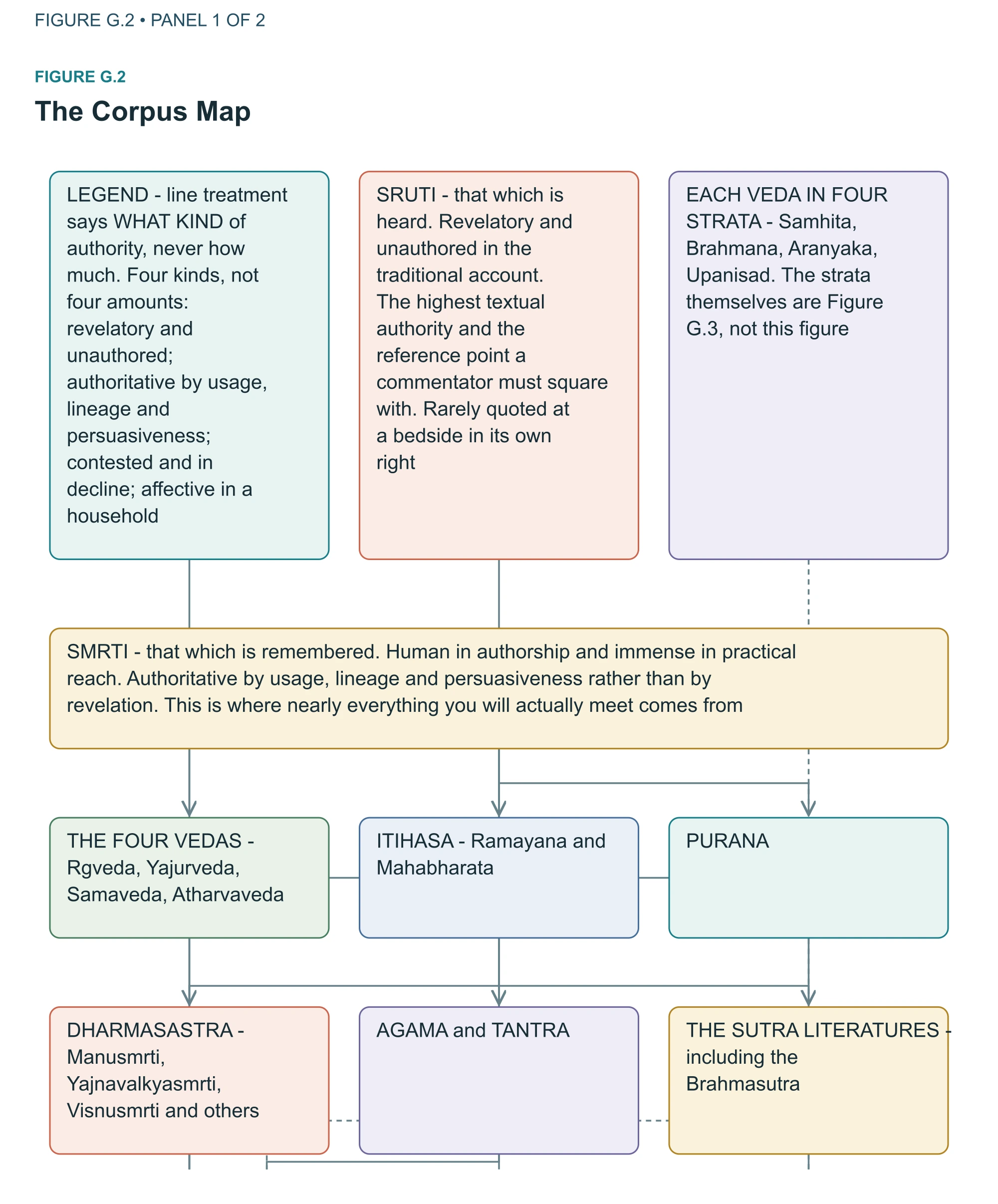
Figure G.2. The Corpus Map. Panel 1 of 2.
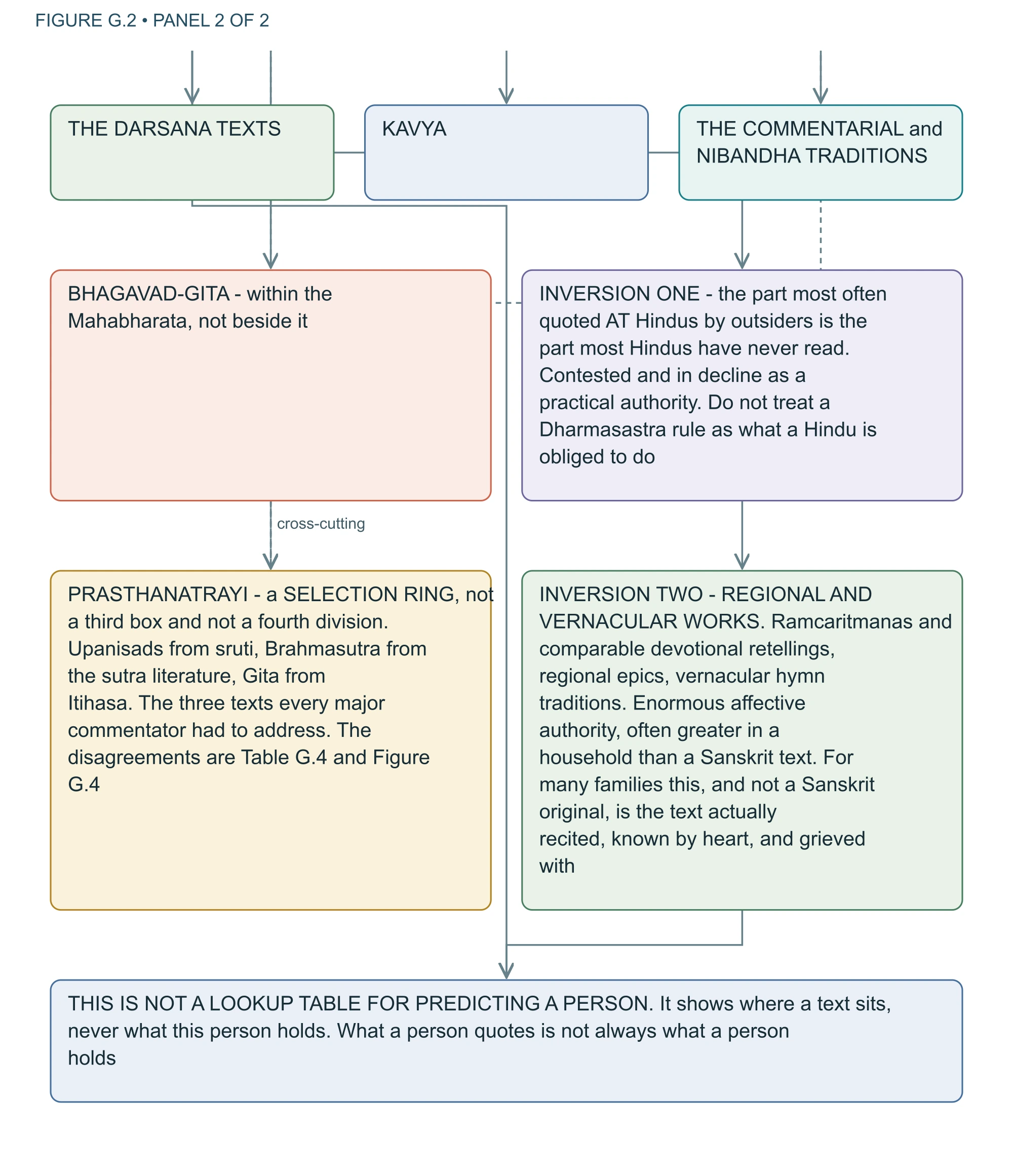
Figure G.2. The Corpus Map. Panel 2 of 2.
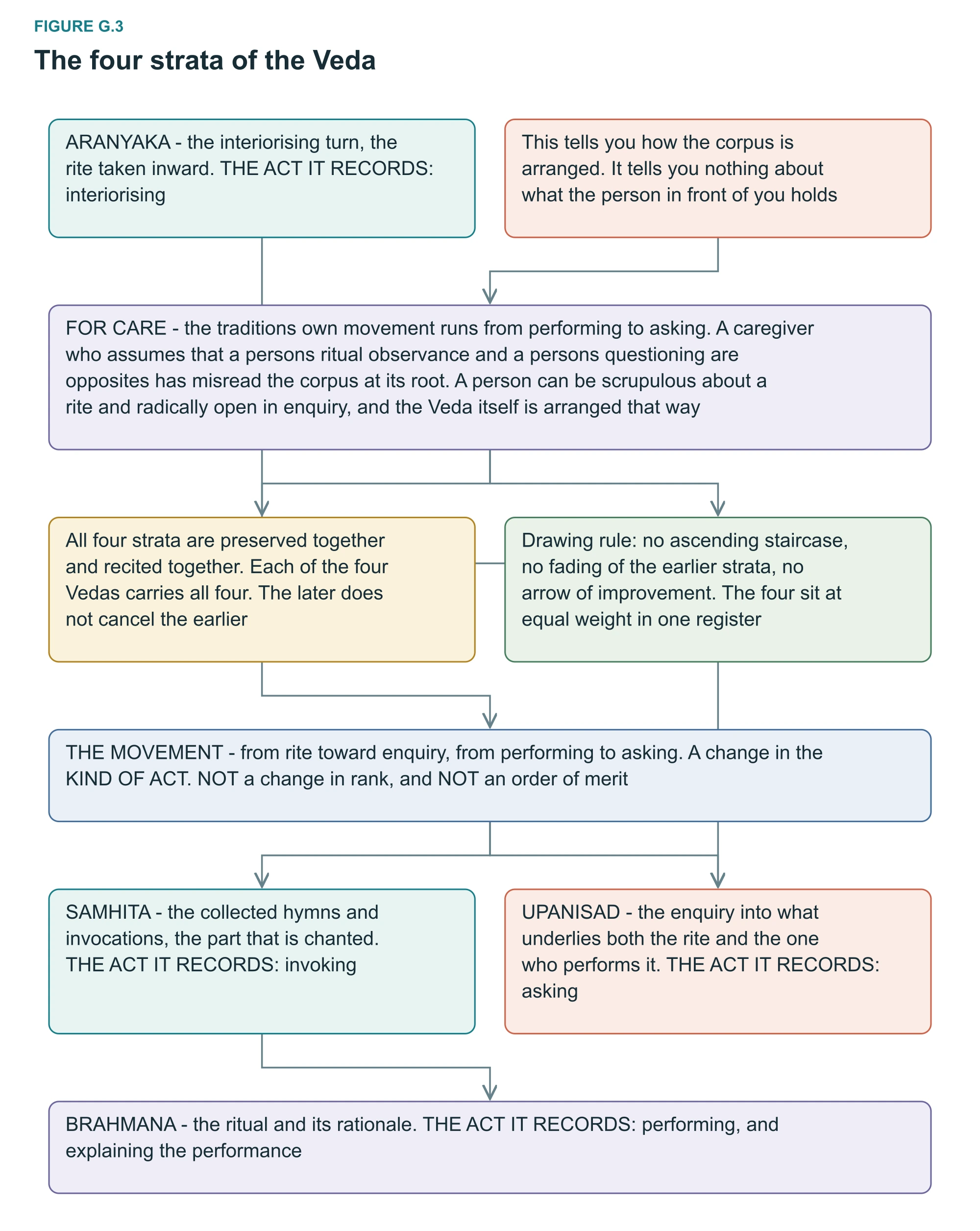
Figure G.3. The four strata of the Veda.
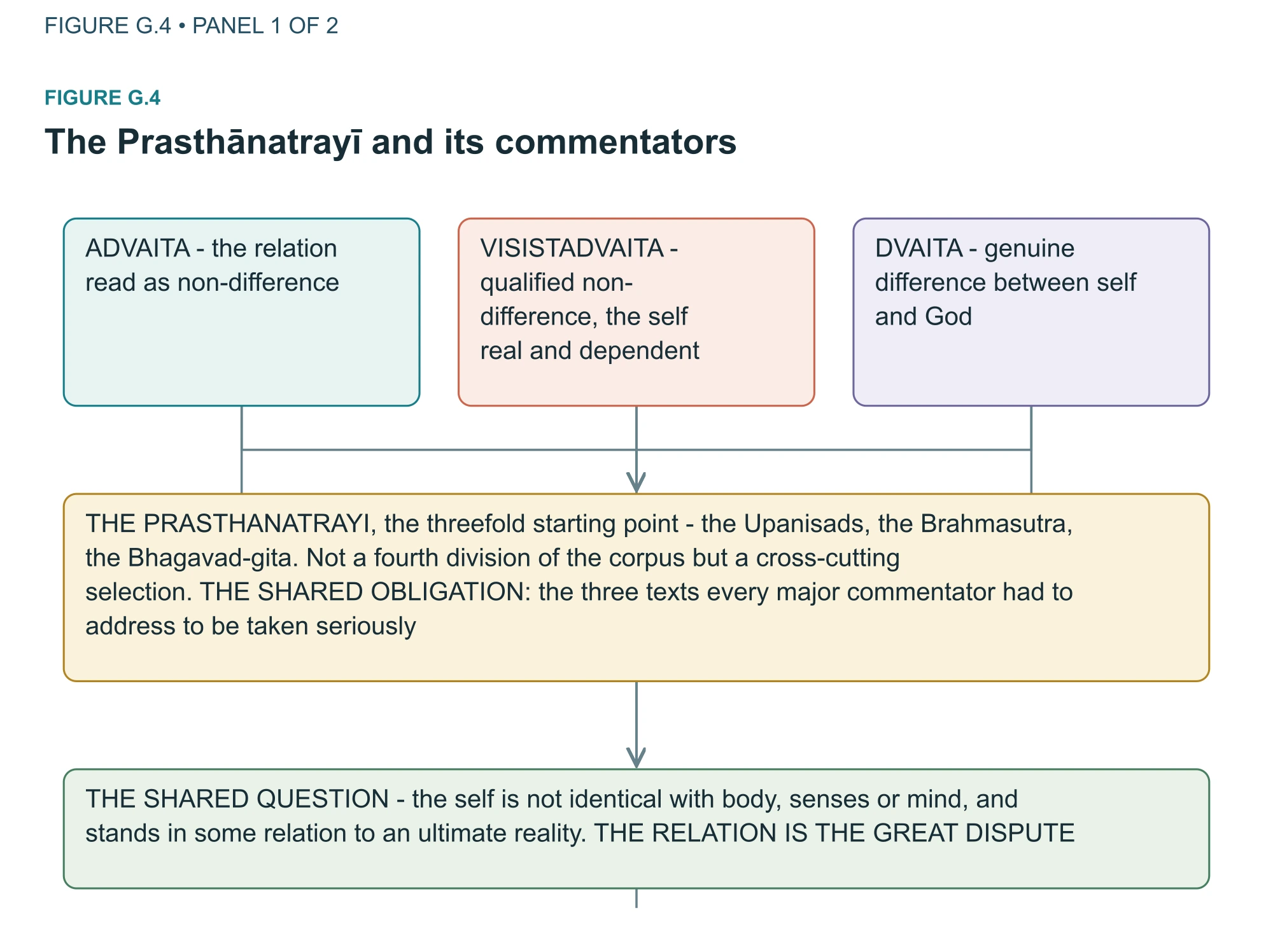
Figure G.4. The Prasthānatrayī and its commentators. Panel 1 of 2.
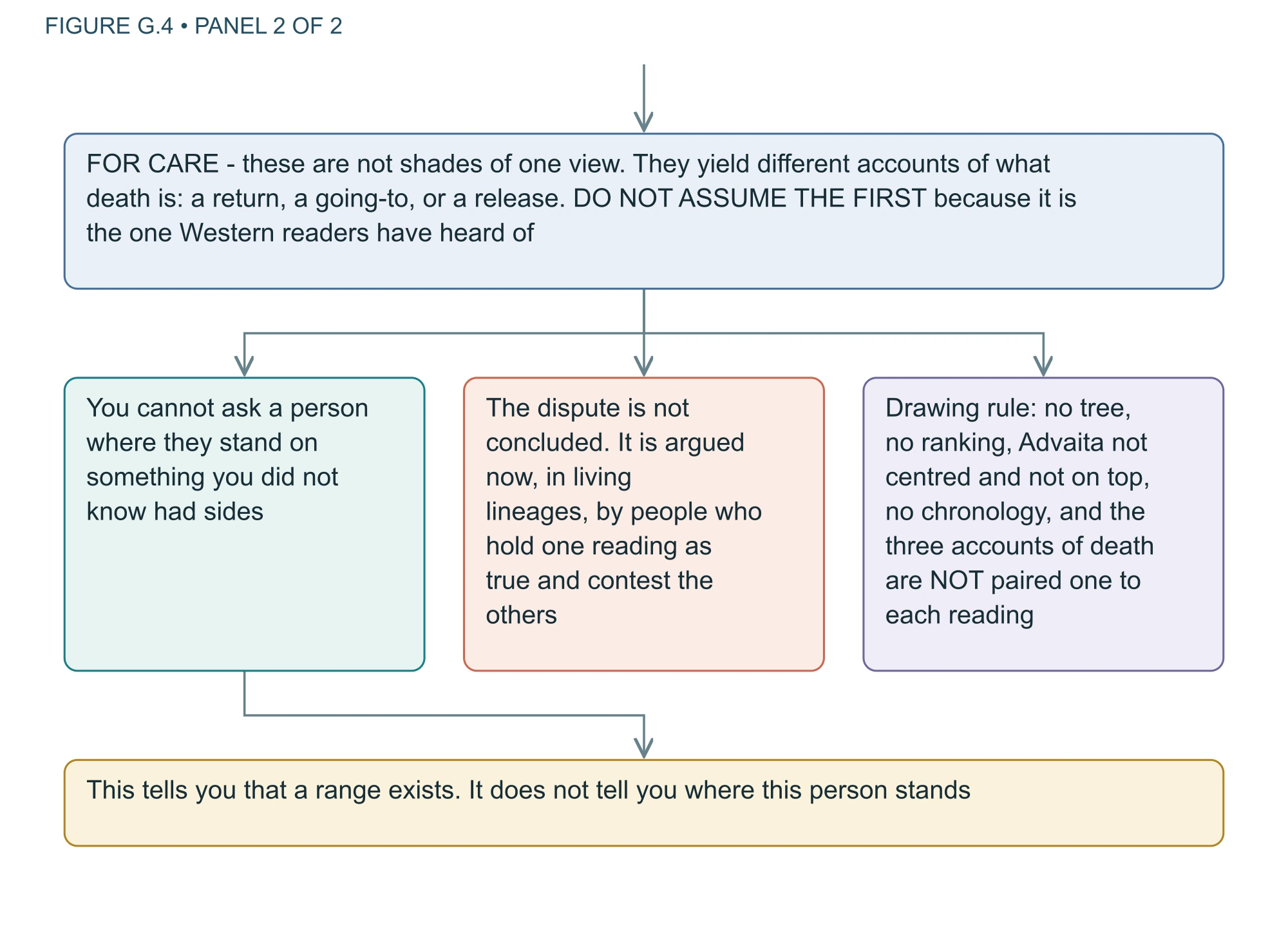
Figure G.4. The Prasthānatrayī and its commentators. Panel 2 of 2.
G.3 Where does a question live? The navigation table
This is the page to photocopy. It answers one question and it answers it deliberately narrowly: given what has just come up in this encounter, where in the tradition does this subject get treated, and what will I find when I look?
The point is navigation, not coverage. A caregiver does not need to have read the corpus. A caregiver needs to know that a question about the duties owed to a dying parent lives in a different part of the literature from a question about why this is happening to me, and that the two parts have different tempers.
The right-hand column is the one that keeps this table safe. Every row ends in what you must still ask, because in every row the text tells you what is available in the tradition and tells you nothing at all about what this person has taken from it.
Table G.3 takes ten questions in the form they actually arrive in - not as topics but as things people say - and routes each one.
Table G.3. Corpus-to-question navigation: where a care question lives.
Table G.3. Corpus-to-question navigation: where a care question lives. The table is for finding out what kind of thing a person is talking about, not for finding out what they think.
The question, as it actually arises | Where it lives | What you will find there | What you must still ask |
|---|---|---|---|
What am I supposed to do now, as a son, a wife, a mother? | Dharmaśāstra in principle; in practice the epics, family usage, and a local paṇḍit | Contextual obligation rather than universal rule, and a strong tradition of holding that rules do not fit every case | Whose account of the duty is operating here - theirs, a relative's, or a community's - and are those in conflict? |
What happens at and after a death, and what must be done? | Gṛhyasūtra and Dharmaśāstra material on antyeṣṭi; Purāṇa narratives; and, decisively, family and regional usage | Detailed rites, and wide variation in what is actually performed | What does this family do, and who in it decides? Chapters 17 and 19 and Appendix C Part B carry the bedside version |
Why is this happening to me? | Karma and rebirth material across the epics, Purāṇas and darśana literature; the Gītā | An account of consequence over more than one life, in several incompatible readings (Table G.4) | Whether they hold it as explanation, as consolation, as self-blame, or not at all. The same doctrine does all four |
How do I act when I cannot control the outcome? | Bhagavad-gītā, above all the niṣkāma karma material at BG 2.47 and 3.7 | Action performed fully with the fruit held lightly; a discipline of intention rather than a renunciation of work | Whether this is their resource or yours. Chapter 3 §5 imports it as the caregiver's stance; a dying person may hold it as their own practice |
What is a person, underneath all this? | Upaniṣads; Sāṃkhya and Vedānta texts; the pañcakośa material | ātman and its relation to brahman, in a range from non-dual to dualist; sheath and faculty analyses of the person | Nothing here licenses telling a person what they are. Ask what they take themselves to be losing |
What are my life's goods, and how do they rank? | The puruṣārtha material; Dharmaśāstra; epic narrative | Four goods held together rather than ranked once and for all: Dharma, Artha, Kāma, Mokṣa | Which of the four is under threat right now. Chapter 3 §5 sets out the axiology and Figure 4.4 carries the figure |
Is there a practice that would help? | Yoga and Tantra literatures; devotional and bhakti material; the Purāṇas | A very large repertoire, organised by disposition and stage rather than by indication | Whether they already have a practice. Appendices D, E and F carry what may be offered, and Chapter 9 §2 the reason it must not be prescribed |
Why do the texts contradict each other? | The commentarial tradition itself; Prasthānatrayī commentaries; śāstrārtha | Disagreement conducted as method, with the losing positions preserved (Table G.1) | Whether the contradiction is troubling them. Often it is troubling you |
Who is God, and how many? | Upaniṣads; Purāṇas; sectarian Āgama and devotional literature; ekaṁ sat viprā bahudhā vadanti, ṚV 1.164.46 | One reality spoken of in many ways, and also distinct deities with distinct devotional lives | Which name they use, and whether they would want it used aloud in this room |
What about time, and the shape of the world? | Purāṇa cosmology; yuga and kalpa schemes | Vast cyclical time, in which a single life is small and not thereby meaningless | Almost never a bedside question, and worth recognising when it is one, because it usually signals something else |
G.4 Key positions, shown as positions
Not what Hindus believe, but what is held, by whom, and where it is disputed. Every row of Table G.4 names at least one internal disagreement, and the rule is not decorative: a tradition presented as unanimous is a tradition misrepresented, and a caregiver who has been told there is one Hindu view of karma will hear the person in front of them as deviating from it rather than as holding one of the several views that are actually held.
The caregiver's real task is to hear which position this person holds, and the value of knowing that a range exists is that it makes the question askable. You cannot ask a person where they stand on something you did not know had sides.
Table G.4. Positions, their disputes, and what each changes in care.
Table G.4. Positions, their disputes, and what each changes in care. The third column is the one to read first: it is what makes the position a position rather than a fact about a population.
The position | What is held | Where it is disputed, and by whom | What it changes at the bedside |
|---|---|---|---|
ātman and brahman | That the self is not identical with body, senses or mind, and stands in some relation to an ultimate reality | The relation is the great dispute. Advaita reads it as non-difference; Viśiṣṭādvaita as qualified non-difference, the self real and dependent; Dvaita as genuine difference between self and God. These are not shades of one view; they yield different accounts of what death is | Whether dying is a return, a going-to, or a release. Do not assume the first because it is the one Western readers have heard of |
karma | That action has consequence beyond the immediate, carried across lives | Whether it explains a particular misfortune is disputed within the tradition, not only from outside it. Many hold that karma is a law rather than a ledger anyone may read, and that inferring a person's past from their present suffering is precisely the error | This is the one that hurts. A care recipient blaming themselves is holding one reading; the tradition contains resources against it, and they are not yours to deploy unasked |
The threefold division of karma | Saṃcita, the accumulated store; prārabdha, the portion that has begun to bear fruit and constitutes this life; āgāmī, what is being generated now | The status of prārabdha for the liberated person is a classical dispute, and the practical question of how much of a present situation is prārabdha and therefore to be borne, versus āgāmī and therefore still open, is contested in every direction | The division is why a person can hold both that this illness is theirs to bear and that how they meet it is still being decided. Figure G.5 draws it; the case chapters use it |
dharma | Obligation that is contextual - to role, stage, situation and capacity - rather than a universal rule | Whether śruti defines dharma, or reason (tarka), or the welfare of living beings, is argued inside the Mahābhārata itself, which has Kṛṣṇa decline the rules-based reading and define dharma as what sustains beings (Mahābhārata 8.49.48-50, quoted at second hand through Sutton et al. n.d.) | A person's duty may be genuinely undecidable rather than merely unclear, and the tradition says so. That is a resource, not an evasion |
The four puruṣārthas | Dharma, Artha, Kāma and Mokṣa as the goods of a life, held together | Whether mokṣa stands outside the other three as their supersession or completes them is disputed between schools; ascetic and householder readings differ sharply | Chapter 3 §5 sets this out as the axiology of care, with dharma glossed as what secures both abhyudaya and niḥśreyasa (VaiśS 1.1.2). Figure 4.4 carries the figure; it is not redrawn here |
mokṣa and the paths to it | Release, variously described, reached by more than one road: knowledge, action, devotion, disciplined practice | Which path is sufficient, whether they are ranked, and whether grace is necessary, divide the schools and the devotional movements alike | A person who says they are not religious but has a practice may be further inside the tradition than one who says the opposite |
māyā | That ordinary appearance is not the whole account of what is real | Whether this means the world is unreal, or real but dependent, or real and misperceived, is the sharpest of all the Vedāntic disputes | Never say to a bereaved person that the world is illusion. The reading that would license it is one position among several, and is not what most who use the word mean by it |
ekaṁ sad viprā bahudhā vadanti | One truth, spoken of by the wise in many ways (ṚV 1.164.46) | Read by some as pluralism about religions, by others narrowly about the Vedic deities, and by others as a claim about standpoint rather than about truth | Chapter 3 §5 grounds the ontology of the cared-for on it: one reality seen from many standpoints, so that no observation, the patient's least of all, is invalid |
āstika and nāstika | The classification of schools by whether they accept Vedic authority | The line itself is disputed, and the terms have been used polemically for so long that they now carry more heat than information | Chiefly useful for reading the secondary literature. Almost never useful at a bedside |
A note on the loci in this table, and it matters. The ṚV and VaiśS references are carried over from Chapter 3 §5, which uses them for the same claims. The Mahābhārata verses are quoted at second hand through Sutton et al. (n.d.), read at first hand for this appendix at printed pp. 71-73, where the English rendering is unattributed; both locus and translation are owed a check against a named edition. The Gītā loci at Table G.3 are carried over from Chapter 3 §5, where the verse numbering follows Bhawuk's edition (Chapter 3, Note 10). Nothing in this appendix is cited from memory, and where the tradition has no single canonical locus for a term the table says where the position is argued rather than manufacturing a chapter and verse.
G.5 The six darśanas, as contending schools
The six are conventionally paired, and the pairing is itself informative: each pair is a method joined to the account of reality that method produces. What they contend for matters less to a caregiver than the fact that they contend at all, in public, with the arguments preserved.
The right-hand column of Table G.5 is deliberately modest. Most of these schools will never come up by name. What comes up is their vocabulary, loose in ordinary speech, which is why a caregiver benefits from knowing where a word like guṇa or pramāṇa or puruṣa originally did its work.
Table G.5. The six darśanas: what each contends, and where it surfaces in care.
Table G.5. The six darśanas: what each contends, and where it surfaces in care. Read with Table G.1: these are ways of seeing that argue with each other, not denominations a person belongs to.
School | What it contends | Its characteristic move | Where a caregiver meets it |
|---|---|---|---|
Nyāya | That valid knowledge has identifiable means and that reasoning can be formalised and tested | Analysis of inference and of the conditions under which a claim is warranted | Indirectly, wherever pramāṇa language appears. This book's own discernment apparatus leans on it |
Vaiśeṣika | That reality is analysable into categories and ultimate particulars | Enumeration and classification of what there is | Chapter 3 §5's definition of dharma as what secures abhyudaya and niḥśreyasa comes from its sūtra (VaiśS 1.1.2) |
Sāṃkhya | That there is a fundamental duality of puruṣa, consciousness, and prakṛti, nature, and that the three guṇas compose the latter | Discrimination of the witnessing consciousness from everything it observes | The guṇa vocabulary is everywhere in ordinary speech about temperament, food, sleep and mood. Appendix E works with it |
Yoga | That the same discrimination is achieved by disciplined practice, not by analysis alone | A staged practical programme with its own psychology of the mind's activity | Appendix D. Also, and more often, in a person's own practice, which may be inherited rather than studied |
Mīmāṃsā (Pūrva) | That Vedic injunction and its correct performance are the primary matter, and that duty is established by textual authority | Rigorous hermeneutics of injunction and of what a text obliges | Rarely by name. Its instinct - that the rite performed correctly is the thing - is met constantly in families |
Vedānta (Uttara Mīmāṃsā) | That the enquiry of the Upaniṣads into the self and the ultimate is the primary matter | Systematic commentary on the Prasthānatrayī, in the sub-schools that Table G.4's first row divides | Most of what a Western reader has heard of as Hindu philosophy is one sub-school of this one, usually Advaita |
G.6 Practices in brief
This section is a recognition aid, not a repertoire. Its purpose is that a caregiver who walks into a room and sees a small lamp, a thread, a bowl of water, a book on a stand or a person mouthing something silently, knows what kind of act is going on and does not interrupt it.
What may be offered by a caregiver, at what dose, with what contraindications, is not here. It is in Appendices D, E and F, and Chapter 9 §2 gives the reason the distinction is enforced: a practice lifted out of the tradition's own grammar and re-described as a set of therapeutic tools for counsellors has been mistranslated, and Chapter 9 finds that mistranslation happening inside a Dharmic source rather than only in Western applied literature.
Table G.6 is therefore built around the third column, which is what you would see rather than what the practice means, because seeing is what a caregiver does first.
Table G.6. Practices you may actually meet, and what each is.
Table G.6. Practices you may actually meet, and what each is. The rightmost column exists so that this table cannot be used as a menu: every practice a caregiver might offer is treated somewhere that also states its limits.
Practice | What it is | What you might see at a bedside or in a home | Treated at length in |
|---|---|---|---|
pūjā | Devotional worship, domestic or temple, with offering and attention | A small shrine, a lamp, flowers, food set aside before eating, a photograph garlanded | G.8 for its variety; Chapter 9 §6 for the four modes of a caregiver's engagement with ritual |
sevā | Service, understood as itself a spiritual practice rather than as a supplement to one | Family members doing physical care they will not delegate, and being distressed if it is taken from them | Chapter 22; do not read refusal of help as denial |
japa and mantra | Quiet repetition of a name or a formula, counted or uncounted | Lips moving; a mālā in the hand or under a pillow; a phrase repeated at a difficult moment | Appendix D; Chapter 18 for a caregiver offering it in a home |
bhajan and kīrtan | Devotional singing, alone or in company; kīrtan typically call-and-response | Recordings played continuously in a room; a group arriving to sing; distress if the room is silent | Chapter 9 §6; Chapter 12 for the end-of-life register |
vrata and fasting | Vowed observance, often periodic, often keyed to a deity or a day | A refusal of food that is not anorexia and not protest, and that a dietician may misread | Ask before escalating. Appendix E for the Ayurvedic reading of depletion |
Pilgrimage and sacred place | Journey to, and the significance of, particular places; Kāśī and the Gaṅgā above all at the end of life | Water kept in a bottle; a request about where ashes go; grief at not being able to travel | Chapter 12 for the substitute at the bedside when Gaṅgā water cannot be had |
dhyāna and the yogic disciplines | Meditative and contemplative practice, in traditions with their own stages and cautions | Sitting practice; breath practice; a person who has a teacher and a schedule | Appendix D, including what is not known about harm |
svādhyāya | Study and recitation of text as a practice, not as scholarship | A book on a stand, read daily, often in a script the reader learned as a child | Chapter 9 §§2 and 6 |
The saṃskāras | The life-cycle rites; see G.7 | Most often met at their two ends, birth and death | G.7; Chapters 17 and 19 for antyeṣṭi |
Festival and domestic observance | The annual and weekly rhythm: Divālī, Holī, Navarātri, weekly days kept for particular deities | Distress at being in an institution on the day; family absent or suddenly all present | Appendix C A10, read from Chapter 20, for the institutional collision |
G.7 The life course, and the rites that mark it
The saṃskāras are the rites that mark passage through a life. Their number is not fixed: enumerations in the Gṛhyasūtra and Dharmaśāstra literature vary considerably, and the widely repeated figure of sixteen is one tradition's count rather than a settled canon . This appendix does not assert a list. What it asserts is the shape, because the shape is what a caregiver needs: a life understood as a sequence of marked passages, each with a rite, each involving a family rather than an individual, and with two of them - the rites around birth and the rites around death - accounting for nearly everything a caregiver in a health or detention setting will actually encounter.
Alongside them run the four āśramas, the stages of life - brahmacarya, the student; gṛhastha, the householder; vānaprastha, the stage of withdrawal; saṃnyāsa, renunciation. These are not a timetable most people follow, and were probably never a description of ordinary lives. They are a normative map, and their pastoral use is precise and limited: they give a person a way of understanding a change in what is required of them, which is exactly what illness, retirement, bereavement and imprisonment all impose.
Two cautions belong here, and both come from cases in this book. The first is that a stage cannot be conferred on someone by a caregiver. Chapter 16 turns on a caregiver retracting the suggestion that a woman had entered nivṛtti, withdrawal, when what she had entered was a cell. The second is that the āśrama scheme is one of the places where a caregiver's tidy knowledge is most likely to outrun a person's actual life, because the scheme is orderly and lives are not.
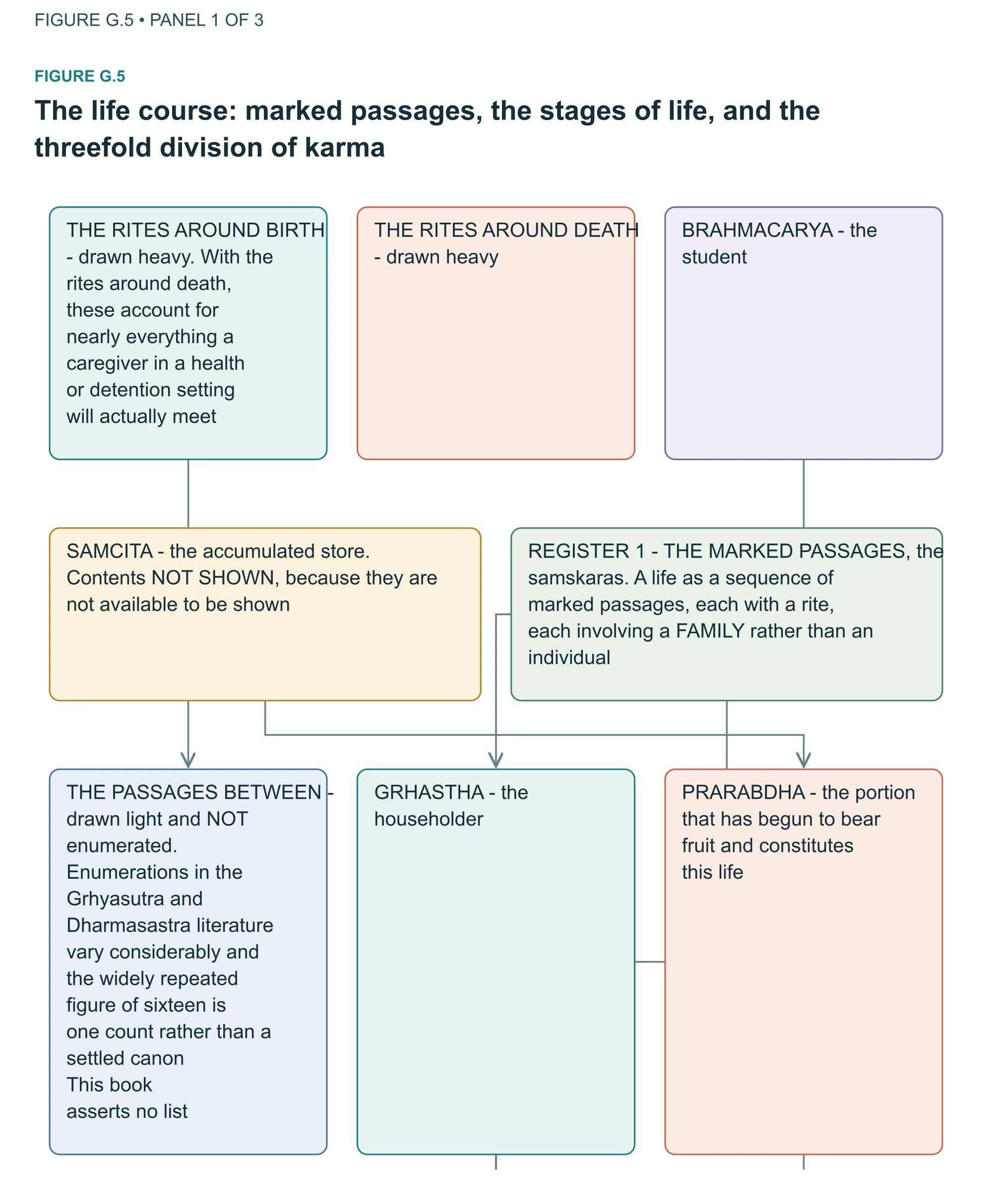
Figure G.5. The life course: marked passages, the stages of life, and the threefold division of karma. Panel 1 of 3.
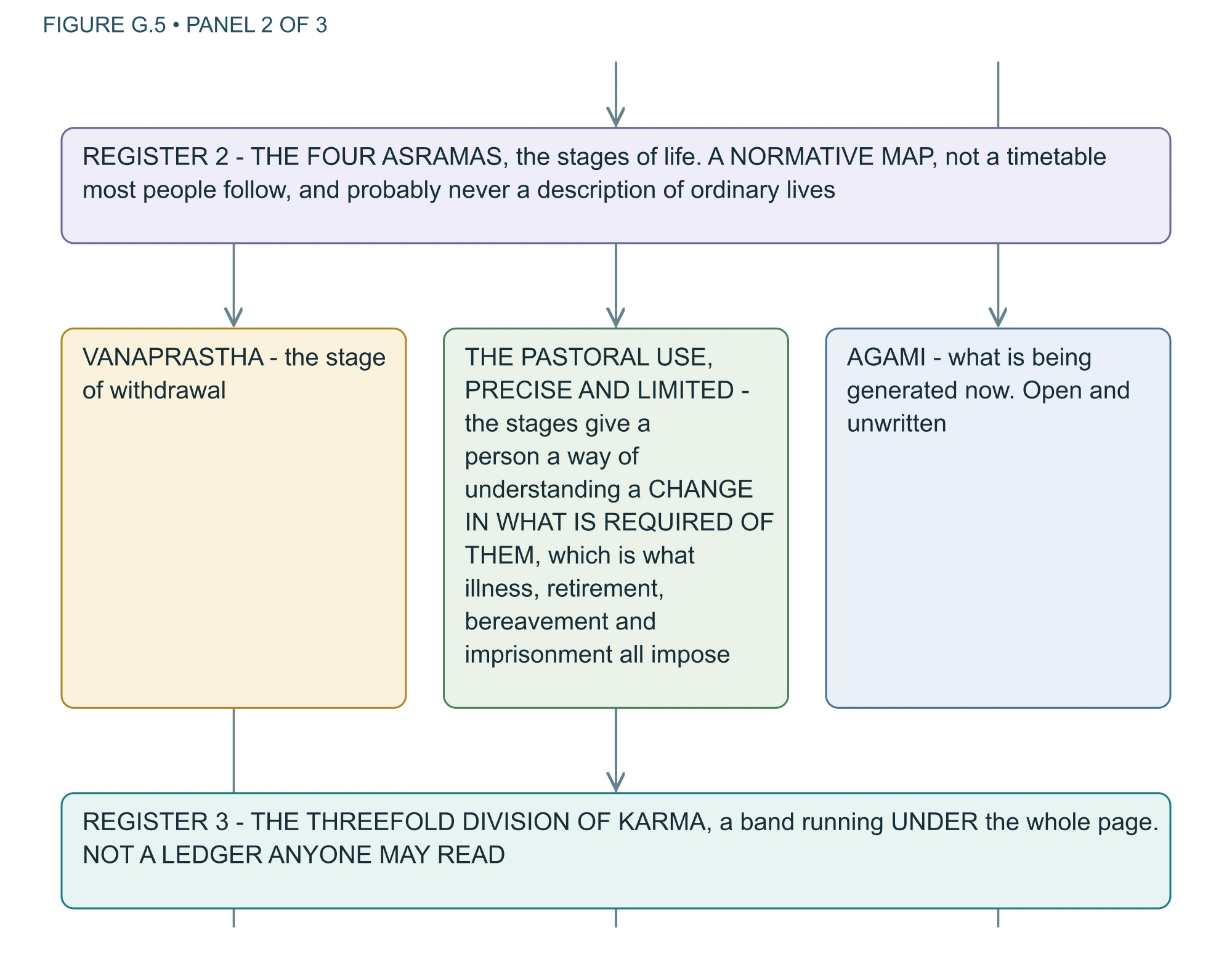
Figure G.5. The life course: marked passages, the stages of life, and the threefold division of karma. Panel 2 of 3.
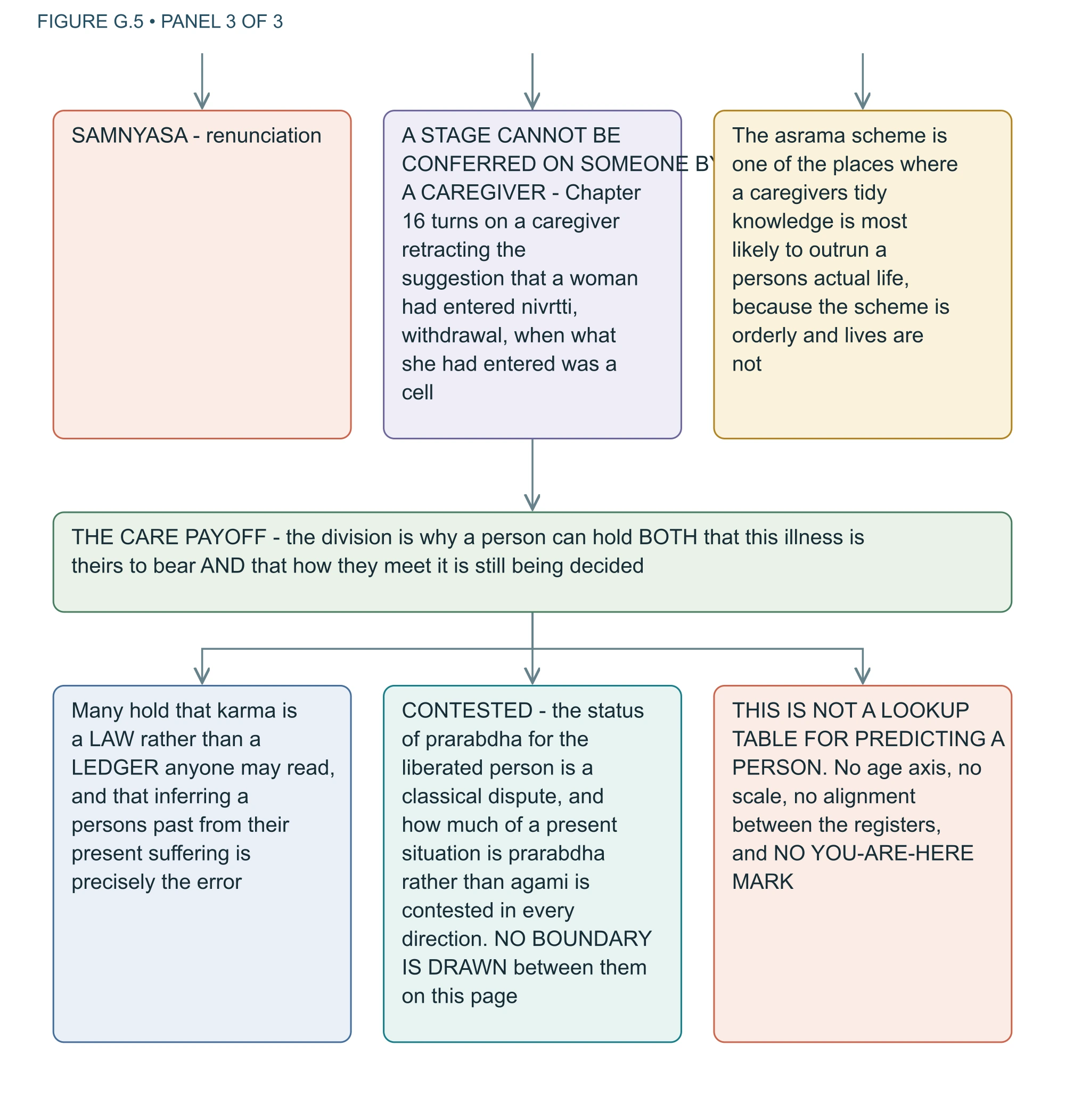
Figure G.5. The life course: marked passages, the stages of life, and the threefold division of karma. Panel 3 of 3.
G.8 Diversity, and the forms this book's readers will meet
Diversity is drawn here rather than asserted. The distinction matters. To assert diversity is to add a sentence saying Hinduism is very varied, which changes nothing a caregiver does. To draw it is to show along which axes it varies, so that a caregiver hearing an unfamiliar detail can tell whether they are meeting a sectarian difference, a regional one, a generational one, or simply this family's way.
Table G.7 names six such axes.
Table G.7. The axes along which what you meet will vary.
Table G.7. The axes along which what you meet will vary. A caregiver who can name the axis a difference sits on will ask a better question than one who has memorised a list of sects.
Axis | What varies along it | What a caregiver should do with it |
|---|---|---|
Orientation | Vaiṣṇava, Śaiva, Śākta, Smārta: which deity or configuration of deities is central, and the devotional life that follows | Learn which name is used in this house. Do not substitute a more familiar one |
School | The darśanas of Table G.5, and within Vedānta the sub-schools of Table G.4's first row | Rarely relevant directly. Relevant when a person is articulate about what death is |
Movement | The bhakti movements and their vernacular literatures; reform movements; teacher-centred lineages and sampradāya | A person may have a living teacher whose word outweighs any text, and who is the person to consult |
Region and language | Northern and southern forms; the vernacular in which devotion is actually conducted; regional festivals and rites | Often the strongest determinant of practice, and the one most often missed |
Generation | First-language shift; observance held, adapted or set down; what the elders do and the grandchildren do not | The commonest source of conflict inside a family at a bedside, and it is not yours to arbitrate |
Degree and kind of observance | From daily practice to none, with the whole range in between, and with observance that is cultural rather than devotional as a real and common position | Ask. There is no proxy for asking, and background predicts this badly |
The diaspora, and the Netherlands in particular
This book's readers will not, for the most part, meet the Hinduism a textbook on India describes. They will meet diaspora Hinduism, three or four generations settled, and in the Netherlands that means something specific.
The OCHS and VU Amsterdam course text, read at first hand for this appendix, records it plainly: in the Netherlands most Hindus migrated from Suriname and are of a North Indian background, notably from Uttar Pradesh and Bihar, and in Europe the Dutch community is the second largest after Britain's (Sutton et al. n.d., printed p. 48). The same passage makes the observation that matters most for care, and it is worth stating in the source's own terms: regional distinctions often inform a community's expression of Hinduism, sometimes even more than theological or sectarian ones. A caregiver who has learned the sects and not the regions has learned the less useful half.
It also records the generational language shift, which a caregiver meets constantly and rarely names: for the elders the native language is still widely used; the second generation are generally fluent in both and move between them; for the third and later generations the host country's language is generally the first (Sutton et al. n.d., printed p. 48). At a deathbed this is not a sociological observation. It determines who can pray with whom, which grandchild can say the words, and whether a rite performed in a language the family no longer commands consoles them or excludes them.
The archive this book draws on is full of this population, and two instances stand for many: a case in which a Hindustani woman consults a paṇḍit about a horoscope and a grahaśānti remedy while carrying somatic complaints, where the whole caregiving question is when to refer medically without dismissing the consultation (Chapter 8 §8); and a case in which the person's standing in her community - she cooked for every gathering it held - is central to who mourns her and how (Chapter 20).
What this section does not do, and the omission is the honest kind. It does not describe Surinamese-Hindustani religious life in any depth: its history of indenture and double migration, its distinctive institutions, the place of the Sarnāmi language, or the relative weight within it of Sanātan Dharm and reformist currents. This book has one source on the diaspora read at first hand, and it is a chaplaincy course text with a British centre of gravity that gives the Netherlands two sentences. Those two sentences are reported above and nothing has been extrapolated from them. A properly grounded treatment of Surinamese-Hindustani practice is owed, and needs sources this project does not yet hold. A reader should treat this subsection as a pointer to a gap rather than as an account of a community.
G.9 The caution, repeated
It was stated at G.0 and it is stated again here, because a caution given only at the front of a reference work is a caution nobody reads. This is not a lookup table for predicting a person.
Everything above describes what is available in a tradition. None of it describes what is held by the person in front of you. The two are not related in the way a reference work tempts a reader to assume: a person is not a sample drawn from their tradition's distribution, and the distance between what a tradition contains and what a person carries is not noise to be averaged out. It is the whole subject of this book.
There is a way to tell whether you are using this appendix well. After you have looked something up here, your next act should be a question to the person, not an entry in a file. If looking it up made you readier to ask, the appendix did its work. If looking it up made you feel you no longer needed to ask, close it: it has just done the summation the book exists to refuse, using the book's own reference material to do it, which is the most respectable-looking way that error can be made.
Chapter 3 argues that the Hindu living traditions supply a foundation the field otherwise lacks. This appendix supplies the furniture. Neither supplies the person.